Aphrodite Hills Travel Guide: Villages, Wine, Food & Luxury Villas
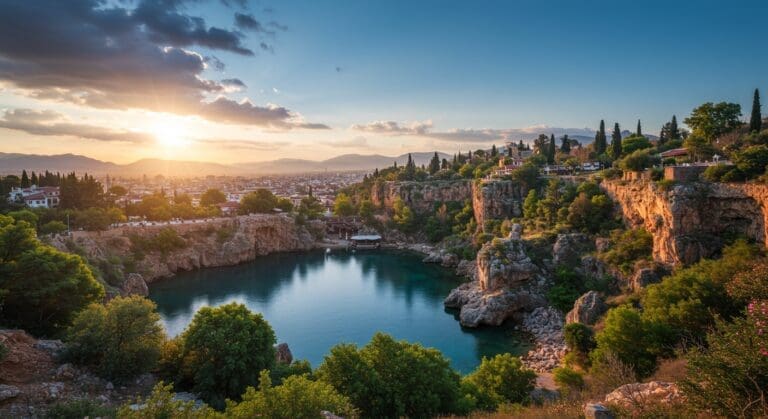
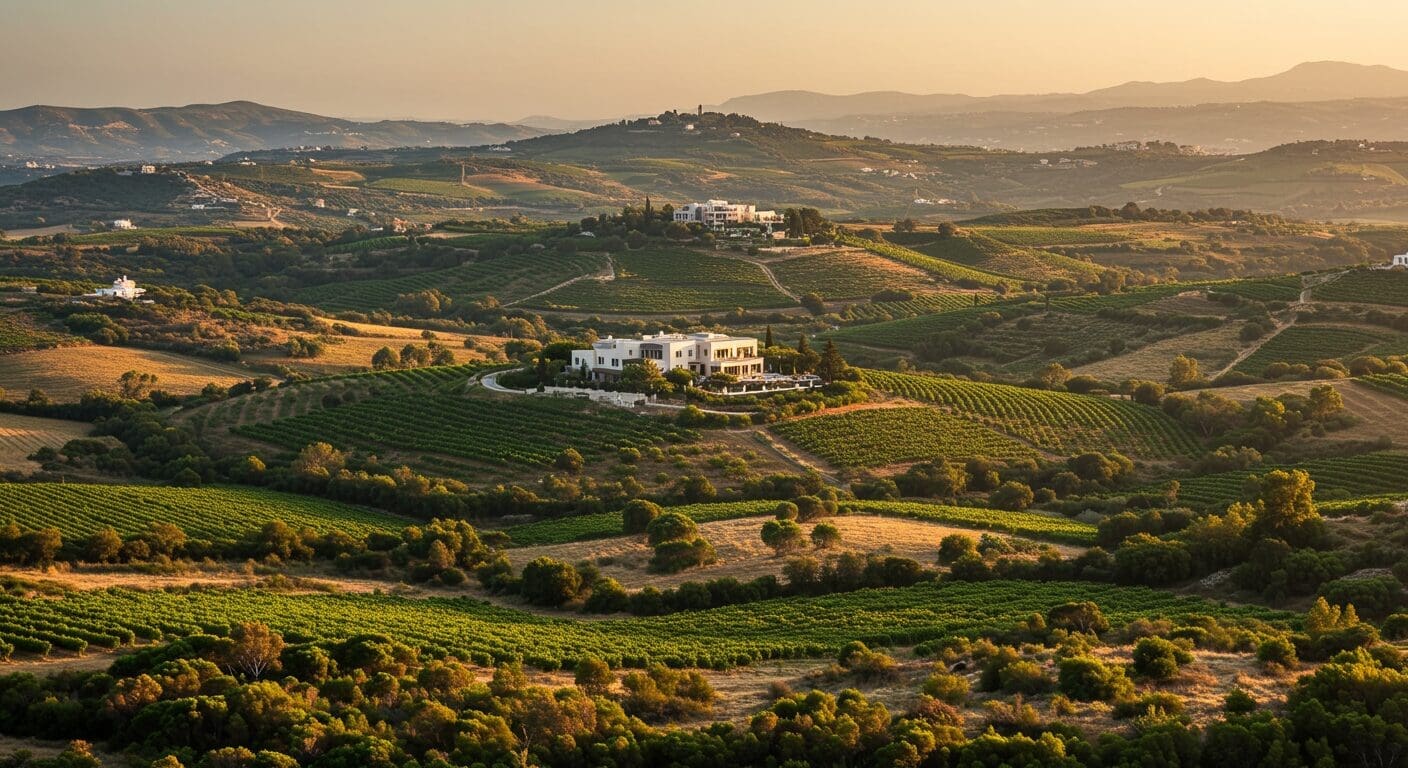
There is a particular kind of countryside that earns its light. Not just bathed in it, the way every Mediterranean brochure promises, but genuinely illuminated by it – the limestone catching the afternoon gold, the carob trees throwing shadows that seem almost composed, the Troodos foothills rolling away in the distance like an afterthought by a confident creator. Provence has the lavender and the mythology. Dordogne has the stone villages and the foie gras. But Aphrodite Hills, perched above the southern coast of Cyprus with the Mediterranean shimmering at its feet and three thousand years of civilisation at its back, has something those places can only approximate: the feeling that you have arrived somewhere genuinely, unhurriedly itself. It has not reinvented itself for you. It was already here.
The question of who belongs here is almost easier to answer by elimination. It is not for the traveller who needs a nightclub at 2am, or a beach bar with a DJ who considers subtlety a personal affront. But for everyone else – and that is rather a lot of people – Aphrodite Hills rewards richly. Families who want privacy, a private pool, and the freedom to let children run without the choreography of a resort timetable find it here. Couples on milestone trips – anniversaries, significant birthdays, the kind of holiday that is supposed to become a story – find the combination of landscape, food, and unhurried pace genuinely romantic rather than performatively so. Groups of friends who want space, a terrace large enough for an argument about wine, and enough activities to sustain a week find it well-suited. Remote workers – and yes, connectivity at Aphrodite Hills villas is solid enough to make the laptop a genuine option rather than a source of holiday anxiety – find that working with a view of the Mediterranean does remarkable things for productivity. And those who come specifically for wellness, drawn by the outdoor life, the spa facilities, the clean air and the kind of silence that a morning yoga session actually requires, find Aphrodite Hills more than accommodating. The destination has the rare quality of being several different holidays simultaneously. It simply does not announce this. It waits for you to notice.
Getting Here Is Part of the Pleasure (the Transfer, Less So)
Cyprus operates two main international airports, and for Aphrodite Hills the relevant one is Paphos International Airport – a journey of roughly 20 minutes by road, which is the kind of transfer that feels almost unreasonably civilised after a long-haul flight. Larnaca International Airport, the island’s larger hub, handles more routes and airlines including most major European carriers, but sits around 90 minutes to the west of the resort. If you have the choice, fly into Paphos. If you don’t, Larnaca is perfectly manageable, and the drive through the southern Cypriot countryside – particularly as you approach Limassol and swing towards the Paphos coast – has its own quiet pleasures.
Direct flights to Paphos operate from London Heathrow, Gatwick, Manchester, Edinburgh, and a growing number of European cities. British Airways, Ryanair, easyJet and Wizz Air all serve the route with varying degrees of legroom ambition. Flight time from the UK is approximately four and a half hours.
Car hire is the sensible option once on the ground – Cyprus drives on the left, which removes one variable for British travellers, and the roads around Aphrodite Hills are well-surfaced and largely straightforward to navigate. A hire car opens up the villages, wineries, and coastal roads that are, frankly, the point. Taxis and pre-arranged private transfers are widely available if you would rather leave the driving to someone else and arrive at your villa already holding a glass.
Where to Eat: From Meze Marathons to Terrace Dinners Worth Planning Around
Fine Dining
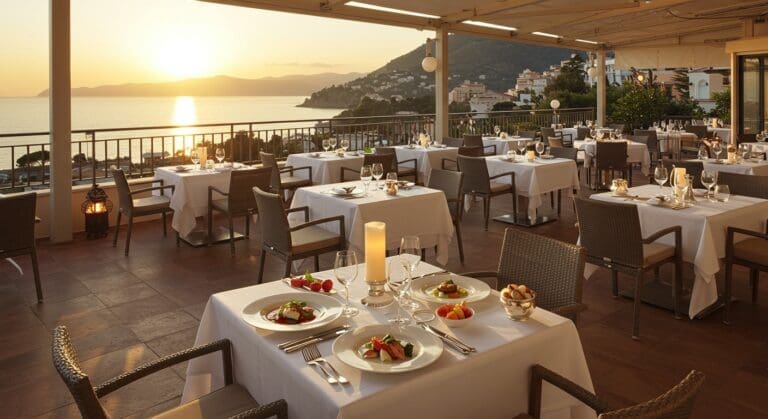
Within the Aphrodite Hills resort itself, Pithari Tavern earns its reputation as a proper dining destination rather than a convenient fallback. Situated next to the PGA National Cyprus Golf Course, it has a wide terrace that looks out over the Mediterranean and the 9th hole – a view that manages to be both dramatic and oddly calming. The kitchen, guided by Executive Chef Daniel Debattista, takes authentic Cypriot cuisine seriously: fresh island produce, classical technique, nothing that feels assembled. The meze nights with live music and dancing are a particular draw – the kind of evening that begins at eight and ends somewhere around midnight without anyone being quite sure how that happened.
The Golf Clubhouse Restaurant offers another on-site option with a different register – elegant, unhurried, overlooking the 18th green. The Sunday buffet with carvery is an event in itself, and the wine list does justice to both the local Cypriot producers and the broader Mediterranean. An extensive sushi menu sits alongside the Cypriot and international dishes, which sounds like a potentially confused identity but works rather well in practice.
Where the Locals Eat
The short drive to Kouklia village leads to Gabriel’s Tavern, which has a 4.7 rating from over 544 reviews – a number that, in the context of a small Cypriot village square, borders on the implausible. Gabriel, Sofia, and their family have been running this place since 2010 and have clearly decided that consistency and welcome are a more reliable business model than reinvention. The lamb shank, the beef stifado, the aubergines in tomato sauce, and the moussaka are the dishes to know. The orange cakes and baklava for dessert are mentioned in reviews with the kind of frequency that suggests they are not optional. Prices are genuinely reasonable. The Greek salad is exactly right. This is the place you will tell people about when you get home.
About five minutes further, Diarizos Tavern in Kouklia offers a warm, unfussy atmosphere and traditional Greek dishes built around whatever local produce is doing best that day. It sits conveniently close to Aphrodite’s Rock, which makes it a natural stop on the coastal exploration circuit – and the kind of lunch that turns into two hours with no particular regret.
Hidden Gems Worth Seeking Out
The drive to Yeroskipou on the edge of Paphos – around fifteen minutes from the resort – reveals 7 St Georges Tavern, which operates on an admirably confident premise: there is no menu. You sit down, and they begin bringing you dishes. This continues for some time. The meze is entirely organic, assembled from whatever the kitchen has sourced that morning, and it is very good indeed. Reservations are required, vegetarians and vegans are catered for, and the experience has the quality of a meal where you stop trying to manage it and simply surrender. Recommended, without qualification.
The Countryside Around Aphrodite Hills: Ancient Terroir, Modern Quiet
The landscape around Aphrodite Hills occupies a particular geographic sweet spot. To the south, the Mediterranean coast runs in long limestone cliffs and sandy coves. To the north and east, the land rises gradually through carob groves, vineyards, and terracotta-roofed villages towards the Troodos Mountains, which in winter carry a light dusting of snow that surprises visitors who assumed Cyprus was immune to the concept of cold. The countryside here has the quality of a place that has been continuously inhabited for so long it has ceased to be self-conscious about it. Villages like Kouklia, Nikokleia, and Pissouri sit in the hills with the composed authority of settlements that were old when most European capitals were still suggestions.
The drive from Aphrodite Hills towards the Troodos foothills is one of those journeys where stopping the car is not so much optional as inevitable. The terrain shifts through citrus and olive groves, past Byzantine monasteries and roadside honey sellers, into the cooler, vine-heavy villages of the Krasochoria – the “wine villages” – where the native Xynisteri and Maratheftiko grape varieties produce wines that bear almost no resemblance to what most people associate with Cypriot viticulture. This surprises people. It should not, but it does.
Closer to the resort, the walking is excellent. The coastline path above the sea cliffs offers genuine solitude most mornings – the kind that involves birdsong rather than other people with walking poles – and the village lanes around Kouklia reward slow exploration on foot. The ancient site of Palaepaphos, the sanctuary of Aphrodite herself, is a ten-minute walk from the village square and has the rare quality of a historic site that does not require a guided tour to be felt. You can simply stand there and consider the fact that pilgrims were making this journey three thousand years ago. It is a thought that does something interesting to one’s sense of proportion.
What to Do: Golf, Sea, History and the Productive Art of Doing Nothing
The Aphrodite Hills PGA National Cyprus golf course is the headline activity for many visitors, and it justifies the billing. Eighteen holes designed by Cabell B. Robinson across a clifftop site with views over the Mediterranean – it is the kind of course that makes golfers reassess their assumptions about what the sport can feel like. The back nine in particular, which winds closer to the sea cliffs, requires both concentration and a willingness to pause and look at the view. The two activities are not entirely compatible. Most golfers find a compromise.
Beyond golf, the activity calendar around Aphrodite Hills is broad enough to sustain a fortnight without repetition. The nearby Paphos Archaeological Park is a UNESCO World Heritage Site and an afternoon spent among its extraordinary Roman mosaics – some of the finest anywhere in the world, depicting scenes from Greek mythology in almost absurd detail – is time well spent. The town of Paphos itself, twenty minutes away, has a working harbour, a medieval castle, and a cultural calendar animated by its stint as European Capital of Culture in 2017, the effects of which linger pleasantly.
Day trips into the Troodos Mountains open up painted Byzantine churches (another UNESCO listing), the village of Omodos with its monastery and wine cellars, and the experience of being genuinely cool in Cyprus in August, which is a novelty worth travelling for. The boat trips along the coast to the sea caves and Aphrodite’s Rock at Petra tou Romiou are cheerfully touristy and worth doing anyway. Some things become clichés because they are genuinely good.
Adventure on the Water and in the Hills: For Those Who Need More Than a Sun Lounger
The coastline below Aphrodite Hills offers some of the clearest water in the Mediterranean, and the diving is exceptional. Visibility regularly exceeds 30 metres, and the underwater topography – sea caves, reefs, the occasional amphora from a Roman trading route that took an unexpected turn – makes it interesting rather than merely clear. Several dive centres operate out of Paphos and Coral Bay, running courses for beginners and guided dives for the certified. The snorkelling directly off the more accessible coves is rewarding even without tanks.
On land, cycling has become increasingly serious in Cyprus over the past decade. The Troodos mountain trails offer everything from gentle vineyard routes to genuinely demanding ascents, and the hire infrastructure has improved to match. Road cyclists with ambitions towards suffering will find the mountain roads around Platres and Kakopetria provide it in abundance. Those preferring a more contemplative relationship with two wheels will find the lower routes through the olive country equally pleasant.
Hiking trails throughout the Akamas Peninsula, roughly an hour’s drive north of Aphrodite Hills, offer one of the last genuinely wild stretches of the Cypriot coast. The Aphrodite Trail – a circular walk through the peninsula to the Baths of Aphrodite – takes around three hours and passes through a landscape of unusual botanical variety. The baths themselves, a shaded freshwater pool beneath a fig tree, are rather modest by mythological standards. Arrive with managed expectations and you will not be disappointed.
Water sports along the Paphos coast run to jet skiing, paddleboarding, kayaking, and sailing, with charter boats available for half-day or full-day excursions. Kitesurfing enthusiasts will find better conditions further east along the coast, but the area is not without its pleasures for those who simply want to be on the water rather than above it.
Aphrodite Hills with Children: The Holiday Where Everyone Actually Relaxes
The private villa with pool is the founding argument for Aphrodite Hills as a family destination, and it is a strong one. Children in a private pool with their own garden and no one else’s sunbeds to negotiate is a profoundly different proposition from a hotel pool at 10am in August. Parents who have experienced both do not require further persuasion.
Beyond the villa, the resort itself is well-configured for families. The Aphrodite Hills Tennis Academy runs junior programmes, the golf course offers beginner sessions, and the general atmosphere of the resort is relaxed rather than aggressively child-focused – which is, counterintuitively, exactly what most families want. The beaches around Paphos and Coral Bay are sheltered, sandy, and calm in summer, with the kind of gentle gradient into the sea that makes them ideal for younger swimmers. The sea here is clear, reliably warm from May through to November, and very shallow in the right places. Children tend to spend most of their time in it.
Culturally, the Paphos Archaeological Park has enough floor-level mosaics and underground tombs to capture young imaginations without requiring a lecture. The Tomb of the Kings – a series of underground burial chambers cut from the rock – is the kind of place that makes children immediately want to explore and simultaneously check that an adult is nearby. This is, most parents agree, the ideal calibration. The local taverna circuit is entirely family-friendly; Cypriot hospitality extends naturally to children, and Gabriel’s in Kouklia will accommodate a table of four generations without a visible change in expression.
History Here Isn’t in a Museum – It’s Under Your Feet
Cyprus has been on everyone’s list for roughly four thousand years, which explains both the richness of its archaeology and the occasional sense that it has seen rather a lot of empires come and go. The Egyptians, the Assyrians, the Persians, the Greeks, the Romans, the Byzantines, the Crusaders, the Venetians, the Ottomans, and the British all left something behind. What is remarkable is how much of it remains visible and accessible in the immediate area around Aphrodite Hills.
Palaepaphos – the ancient city of Paphos and site of the sanctuary of Aphrodite – sits in Kouklia, a four-minute drive from the resort. The sanctuary was one of the most important pilgrimage sites in the ancient world; the great conical stone at its centre, representing the goddess, is still present in the local museum and has a quality of unassuming gravitas that more spectacular exhibits rarely achieve. The nearby Paphos Archaeological Park contains Roman mosaics of extraordinary quality and ambition – the House of Dionysus alone, with its detailed depictions of mythological scenes in tesserae work that has survived two thousand years largely intact, is a genuine wonder that takes some time to properly absorb.
The Kolossi Castle, a 15th-century Crusader fortification near Limassol, and the medieval castle at Paphos harbour both reward visits. The Byzantine painted churches of the Troodos, several of which are listed by UNESCO, represent an entirely different register of historical experience – intimate, fragrant with incense, their interiors covered floor to ceiling with medieval frescoes in a state of preservation that seems miraculous given the centuries involved. The village of Lefkara, famous for its silver jewellery and intricate lace – allegedly admired by Leonardo da Vinci, though one treats the attribution with appropriate scepticism – offers artisan shopping with legitimate historical depth.
Shopping: What to Buy, Where to Find It, and What Not to Bother With
Paphos town is the main shopping base, and it offers the full range from the predictably tourist-facing to the genuinely worthwhile. The municipal market is the place for local produce – halloumi made within the region, commandaria wine (a sweet wine with a history stretching back to the Crusades, possibly beyond), carob-based products, olive oil, and the dried fruits and nuts that make excellent hand luggage additions. The market is most rewarding early in the morning when the produce is freshest and the photographers have not yet arrived.
Lefkara lace – handmade silverpoint embroidery with a history older than most European nations – is the premium craft purchase in the area. The genuine article takes weeks to produce and is priced accordingly. It is worth it. The village itself, about an hour’s drive east of Aphrodite Hills, is also worth the journey for its atmosphere and the silversmith workshops that line the narrow lanes.
Local wine is the other serious purchase. The Troodos wine villages produce bottles – particularly from the indigenous Xynisteri white and Maratheftiko red varieties – that do not travel widely enough and are priced in a way that makes stocking up a straightforward decision. Commandaria, the ancient sweet wine produced around Limassol, makes a distinguished and unusual gift for those who have moved beyond the obligatory fridge magnet phase of travel souvenir.
For contemporary design and fashion, the Kings Avenue Mall in Paphos covers the expected international brands efficiently. It is perfectly pleasant. It is also not why you came to Cyprus, but sometimes a reliable air-conditioned shopping centre on a particularly hot afternoon has its place in the itinerary.
The Practical Things Worth Knowing Before You Arrive
Cyprus uses the Euro, having adopted it in 2008. ATMs are widely available in Paphos and along the coast. Credit cards are accepted almost everywhere that sees tourists regularly, though some village tavernas and market stalls remain cash-preferring – worth keeping twenty euros in your pocket for exactly these situations.
The official languages are Greek and Turkish, though in practice English is widely spoken throughout the south of the island, and in tourist areas specifically, communication is rarely a difficulty. A few words of Greek – efcharisto (thank you) and yiamas (cheers) – are received with disproportionate warmth and are recommended on those grounds alone.
The best time to visit Aphrodite Hills for a luxury villa holiday depends on what you want from it. May, June, September, and October offer warm, dry weather, clear sea, and crowds that have not yet reached the level where restaurants require a fortnight’s notice. July and August are hot – seriously hot, with temperatures regularly exceeding 35 degrees – and the coast fills accordingly, though the private villa context mitigates most of this. Spring (March to May) is arguably the finest season for those who want to walk, explore, and see the wildflowers that cover the Akamas Peninsula with implausible generosity. Winter is mild by northern European standards – rarely below 10 degrees on the coast – and very quiet indeed.
Tipping is customary but not mandatory – 10% at restaurants is the working norm. Safety is excellent throughout the area; Cyprus consistently ranks among the safest destinations in Europe. Driving is on the left, the roads are generally good, and the speed limits are enforced with variable enthusiasm. The sun protection advice is not a formality: the UV index in high summer is unforgiving to those who underestimate it.
Why a Private Luxury Villa in Aphrodite Hills Is the Only Sensible Answer
The hotel versus villa debate resolves itself fairly quickly in a place like Aphrodite Hills. Hotels are excellent at certain things: daily housekeeping, a bar that opens at 11am, someone to carry your bags. But they are structurally incapable of giving you a private terrace at sunset with no one else on it, a pool that belongs exclusively to your party, a kitchen stocked before you arrive with halloumi and Cypriot wine, or the freedom to eat breakfast at 10.30 in your swimming costume without anyone’s judgement. The villa does all of this without requiring you to explain yourself.
For families, the logic is simple: private pool, private garden, private everything. Children swim when they want. Babies sleep on their own schedule. Teenagers, if they must be present, have somewhere to be without being visibly present. Parents eat dinner after 8pm like adults. The space that a well-chosen villa provides transforms the family holiday from a logistical operation into something that actually resembles relaxation.
For groups – friends celebrating significant birthdays, multi-generational families with differing schedules, colleagues combining work and recovery in approximately equal measure – the villa’s architecture of communal space and private retreat is exactly right. A large villa with multiple bedroom wings, a dining terrace built for ten, and a pool that fits everyone simultaneously is a social environment that hotels simply cannot replicate.
For couples, the privacy and the quality of space in a premium villa – the outdoor shower, the plunge pool, the terrace that catches the evening light across the Mediterranean – creates the conditions for a milestone trip that actually feels like one. Wellness-focused guests will find villa amenities at the higher end of the market increasingly comprehensive: private gyms, outdoor yoga decks, hot tubs, and pool terraces that function as open-air spas without the spa scheduling.
Remote workers – and the number of guests who want both a serious holiday and a functional workspace has risen considerably – will find that the best luxury villas in Aphrodite Hills are equipped with the connectivity to make it work. Fibre and, where available, Starlink provision mean that a full working day in the morning can be followed by an afternoon at the pool without the anxiety of a dropped connection during the important call. This is, arguably, the modern definition of having it all.
Excellence Luxury Villas offers a carefully curated collection of luxury villas in Aphrodite Hills with private pool – ranging from intimate retreats for couples to substantial properties for large groups and multi-generational families. Each property is selected on the basis that it should make this particular landscape feel like it belongs to you, at least for a week. Which, when you think about it, is the most civilised arrangement imaginable.
More Aphrodite Hills Travel Guides
What is the best time to visit Aphrodite Hills?
For most travellers, May, June, September, and October represent the sweet spot – warm enough to swim, dry and sunny, and without the intensity of the peak summer heat. July and August are hot (regularly above 35°C), busy, and best suited to those who plan to spend significant time in a private pool rather than exploring on foot. Spring is outstanding for walkers and anyone interested in the landscape at its most colourful. Winter is mild and very quiet, with good conditions for golf and cultural exploration.
How do I get to Aphrodite Hills?
The nearest airport is Paphos International Airport, approximately 20 minutes by road – the most convenient option by some distance. Larnaca International Airport is the island’s larger hub and handles more routes, but sits around 90 minutes from Aphrodite Hills. Direct flights to Paphos operate from London Heathrow, Gatwick, Manchester, Edinburgh, and numerous European cities, with British Airways, easyJet, Ryanair, and Wizz Air among the carriers. Hiring a car at the airport is strongly recommended – Cyprus drives on the left, roads are good, and independent mobility is what makes the most of the surrounding area.
Is Aphrodite Hills good for families?
Very much so – particularly for families who value privacy over the managed resort experience. The private villa with pool is the defining advantage: children swim freely, mealtimes flex to suit the family rather than the restaurant, and toddlers nap without hotel corridor diplomacy. The local beaches (Coral Bay is excellent for young children), the Paphos Archaeological Park, and the general warmth of Cypriot hospitality towards families all contribute. The resort’s own facilities – tennis, golf tuition, a range of activities – provide structure for older children without it being enforced. It is, in short, a holiday where the parents actually relax too.
Why rent a luxury villa in Aphrodite Hills?
Because the things that make Aphrodite Hills special – the landscape, the light, the unhurried pace – are best experienced from a private base rather than a hotel corridor. A luxury villa gives you a private pool, outdoor space that belongs to your group alone, a kitchen for leisurely breakfasts, and the freedom to set your own rhythm. The staff-to-guest ratio in a staffed villa, where relevant, is considerably more attentive than any hotel can manage. For families, the space transforms the experience. For couples, the privacy does. For groups, the communal architecture of a well-chosen villa is simply incomparable.
Are there private villas in Aphrodite Hills suitable for large groups or multi-generational families?
Yes – the villa market in Aphrodite Hills includes substantial properties capable of accommodating groups of ten to sixteen people across multiple bedroom wings, often with separate living areas that allow different generations to share a roof while maintaining a degree of independence. Private pools large enough for everyone, outdoor dining terraces, and the option of pre-arrival staffing including chefs and housekeeping make larger villas a genuinely practical – and rather pleasant – solution for extended family holidays or milestone group celebrations. Excellence Luxury Villas can assist in matching the right property to your group’s specific configuration and requirements.
Can I find a luxury villa in Aphrodite Hills with good internet for remote working?
Yes. The best luxury villas in Aphrodite Hills are increasingly well-equipped for remote working, with fibre broadband and, at the higher end of the market, Starlink satellite connectivity that delivers reliable high-speed internet regardless of local infrastructure. Many properties include dedicated workspace as standard – a study, a home office, or simply a well-positioned desk with a view that makes the working day considerably more tolerable. It is worth confirming connectivity specifications when booking; Excellence Luxury Villas can advise on which properties are best suited to guests who need both a serious holiday and a functional working environment.
What makes Aphrodite Hills a good destination for a wellness retreat?
Several things combine here. The outdoor lifestyle – walking the coastal paths, cycling the Troodos foothills, swimming in clear Mediterranean water, practising yoga on a private terrace at dawn – is built into the fabric of the place rather than offered as an add-on. The pace is genuinely unhurried. The air is clean, the light is extraordinary, and the food, built around fresh Cypriot produce, olive oil, fish, and vegetables, supports rather than undermines the wellness intention. The Aphrodite Hills resort has spa facilities, and many of the luxury villas include private amenities – outdoor hot tubs, plunge pools, gym equipment, and pool terraces – that function as personal wellness environments. It is a destination that makes healthy living feel like a pleasure rather than a programme.