
Best Restaurants in Arco da Calheta: Fine Dining, Local Gems & Where to Eat
Best Restaurants in Arco da Calheta: Fine Dining, Local Gems & Where to Eat
Here is a mild confession to begin with: Arco da Calheta is not, at first glance, the kind of place you visit for the food. You come for the beach – one of Madeira’s finest, with its imported golden sand and water so improbably clear it looks like someone has edited it. You come for the cliffs and the vineyards and the sense that the rest of the island has forgotten this quiet western parish exists. And then, almost by accident, you start eating. A grilled espada with banana at a terrace table above the sea. A poncha made the old way, in a place with no sign outside. A bread roll still warm from the oven, pulled apart over a paper tablecloth. That is when you realise that Arco da Calheta has been hiding something. The dining here is not the point of the trip. Until it is.
Understanding the Food Scene in Arco da Calheta
Arco da Calheta sits in the municipality of Calheta on Madeira’s southwest coast, and the food culture reflects everything about where it is: close to the sea, rooted in tradition, and entirely unbothered by trend. This is not a destination chasing Michelin recognition or reinventing Madeiran cuisine through the lens of Nordic minimalism. What it does instead is considerably more satisfying. It serves the real thing.
The local food vocabulary is built around fish pulled from the Atlantic that morning, meat slow-cooked in ways that suggest someone’s grandmother made this decision a long time ago and no one has seen reason to argue, and vegetables grown on the terraced hillsides you can see from your table. Calheta municipality as a whole has been quietly developing its food infrastructure over the past decade, and the village of Arco da Calheta and its surroundings now offer a genuinely varied spread – from smart hotel restaurants with serious kitchens to family-run tascas where the menu is whatever was good at the market that day.
Luxury travellers often arrive expecting to drive into Funchal for anything worth eating. That assumption deserves updating.
Fine Dining Near Arco da Calheta
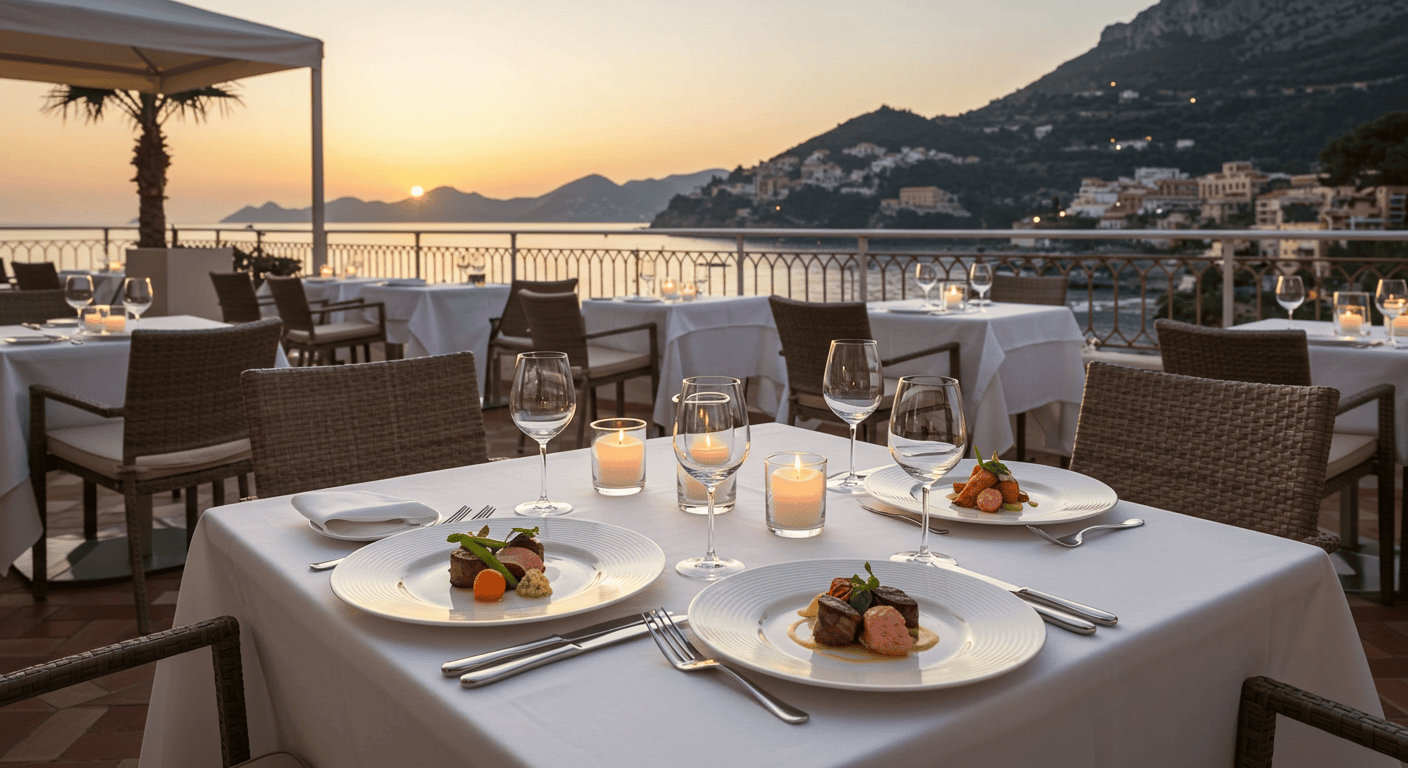
Madeira’s Michelin-starred dining is concentrated in Funchal, about an hour’s drive east – and if a special occasion demands that kind of formality, the journey is absolutely worth making. But the western coast has its own version of elevated dining, and it is arguably more interesting for being less expected.
The most accomplished kitchens in this part of the island tend to be attached to the area’s better hotels and resort properties, where investment in culinary talent has been steady and deliberate. These restaurants take Madeiran ingredients seriously – the espada (scabbardfish), the rich black pork, the local cheeses, the wild herbs that grow along the levada paths – and treat them with genuine technique rather than tourist-friendly simplification. Tasting menus, when offered, draw heavily on the island’s produce and often feature the Vinho Verde and local Madeiran wines that pair far better with the food here than anything imported.
Wine service at this level is worth paying attention to. Madeira wine is not merely the thing your uncle drinks at Christmas. The dry and medium-dry styles – Sercial and Verdelho in particular – work beautifully as aperitifs or alongside fish courses, and a knowledgeable sommelier at any of the better restaurants will guide you through the options without making you feel like you’ve asked a stupid question. (You haven’t. Most people don’t know either.)
Reservations at the finer establishments in this part of Madeira are advisable in high season – July and August especially – and worth confirming the day before regardless of when you visit. This is not Lisbon, and tables at the better places fill up faster than the modest surroundings might suggest.
Local Tascas and Traditional Restaurants
This is where Arco da Calheta earns its real reputation among travellers who take food seriously. The small, family-run restaurants scattered through the village and along the roads that wind up into the hills above it are not attempting to impress anyone. They are simply cooking in the way they always have, which turns out to be exactly what you want.
The espada com banana is the dish you will see on almost every menu, and you should order it every time, because no two kitchens cook it exactly the same way. The scabbardfish – an extraordinary-looking deep-water creature that bears no resemblance to anything else you’ve eaten – arrives pan-fried or grilled, the richness of the fish cut through by the sweetness of the banana alongside it. It sounds like a combination invented by someone in a fever dream. It is, in fact, perfect.
Espetada – beef skewered on a bay laurel branch and cooked over open coals – is the other essential. In the traditional tascas of western Madeira, this arrives hanging vertically from a hook at the table, slowly releasing its juices onto the bread below. If there is a better system for eating, it has not yet been invented. The meat is typically seasoned with garlic, salt and bay, nothing more, and the quality speaks for itself.
Milho frito – fried polenta cubes, crisp on the outside and soft within – arrives as a side dish almost everywhere and quickly becomes something you find yourself missing when you leave. Bolo do caco, the round flatbread cooked on a hot stone and served with garlic butter, is the bread basket upgrade you didn’t know you needed.
In the smaller places, menus may be handwritten or simply announced by whoever brings your water. Go with it. This is a feature, not a flaw.
Beach Clubs and Casual Dining by the Water
The beach at Arco da Calheta – properly speaking, Praia de Calheta, a short distance from the village – is the social anchor of the area in summer, and the eating options around it have evolved accordingly. The beach club atmosphere here is relatively relaxed compared to what you might find on the Algarve or the Balearics, which is either a drawback or a significant selling point depending on your position on the matter of Instagram-optimised loungers.
What the waterfront does well is simple food done properly: fresh grilled fish served with local wine while the sun drops toward the Atlantic horizon. Seafood rice – arroz de marisco – thick and slightly soupy in the Portuguese style, meant to be eaten slowly and in company, is the dish to order when the kitchen offers it. Limpets (lapas) grilled on the half shell with garlic and lemon are the snack that will ruin all other snacks going forward. They are served everywhere along this coast and they are worth the mess.
The beach clubs and waterfront terraces also do justice to the local drinks culture. Poncha – Madeira’s traditional spirit, made from aguardente de cana, honey and citrus – is served in small ceramic cups and is considerably stronger than it tastes. Approach accordingly. The local craft beer scene has expanded quietly over recent years, and several bars now carry Madeiran-made lagers that pair well with limpets in a way that requires no further justification.
Hidden Gems and Off-the-Beaten-Track Eating
The roads inland from Arco da Calheta – climbing through banana plantations and past levadas into the higher reaches of the municipality – pass through villages where restaurants exist in the loosest sense of the word. A room at the front of a house. A terrace that looks out over the coast. A proprietor who will ask how many you are and then disappear to begin cooking.
These places rarely appear on any list. They don’t need to. Their clientele is local, loyal and not especially interested in sharing the location. The best way to find them is to ask whoever is looking after your villa, or to simply drive slowly and follow the smell of espetada smoke on a Friday evening. This is a legitimate navigation system on Madeira’s western coast.
The levada walks that thread through this part of the island also pass, with pleasing regularity, through small communities where a café or a mercearia will serve coffee, home-made cake and sometimes a plate of cheese and cured meats to walkers. The cakes in particular – poncha cake, bolo de mel (a dark, dense molasses cake that improves with age), and regional pastries whose names differ by village – are worth planning a walk around. This is not laziness. This is itinerary planning.
Food Markets and Local Produce
The Mercado de Calheta in the nearby town serves the wider municipality and is the place to understand what is actually growing and being caught in this part of Madeira. It is a working market rather than a curated food experience, which means the produce is excellent and nobody is performing for you. The fish section in the morning, when the day’s catch comes in, is particularly good – espada and atum (tuna) dominating, along with whatever else the boats brought back.
Local cheeses from the island’s interior, smoked meats, handmade jams from passion fruit and guava, and the small, intensely sweet bananas grown on the terraces of western Madeira are all worth seeking out. The Madeiran banana is shorter, rounder and considerably more flavourful than the imported variety, and eating one will make the supermarket version feel like a mild deception.
If you are staying in a villa with a kitchen – or with a private chef – the market is the obvious starting point for any serious cooking. The quality of the raw ingredients here removes most of the difficulty from the job.
What to Drink: Madeira Wine, Poncha and Beyond
A brief word on Madeira wine, which deserves more than a brief word but will have to settle for one. The island’s fortified wines are among the most complex and age-worthy in the world – and among the least understood by most visitors, who associate them with cooking or Christmas and not much else. The dry styles work beautifully with the local food, particularly the richer fish dishes and the aged cheeses. The sweeter Malmsey style is the correct ending to a long dinner. If you leave this island without having drunk Madeira wine with serious intent, you have made a small but genuine error.
Poncha, as noted, is the local spirit and the social lubricant of the western coast. The traditional recipe uses aguardente de cana (sugar cane spirit), honey and lemon. Variations exist involving orange, passion fruit or whatever else the person making it considers appropriate. There is no wrong version. There are, however, consequences to treating it as a soft drink.
Craft beer, local mineral water, and fresh-pressed sugar cane juice (garapa) – sold from roadside stalls in the warmer months – complete the drinks landscape. The coffee, served as a bica (espresso) or in slightly larger form as a meia de leite, is taken seriously here, as it is everywhere in Portugal, and is the correct way to begin and end any meal.
Practical Tips: Reservations, Timing and What to Know Before You Eat
Lunch is the main meal of the day in this part of Madeira, and the traditional tascas fill up between noon and two o’clock in a way that can surprise visitors accustomed to eating later. If you want a table at the better local spots, arriving at 12:30 is sensible. Arriving at 2:15 and expecting the kitchen to still be running is optimistic.
Dinner service tends to start later than in northern Europe – eight o’clock is early, nine is normal – and the smarter hotel restaurants will accept reservations up to a month in advance in peak season. The casual beach club restaurants generally operate on a first-come basis and the waits in July and August can be lengthy. This is the correct time to order a poncha and watch the sea.
Many of the smaller local restaurants do not have English-language menus, and some may not have a written menu at all. A basic knowledge of Portuguese food vocabulary is helpful, though not essential – pointing, nodding and the phrase “o que recomenda?” (what do you recommend?) will take you most of the way. The staff at your villa can help with translation, local knowledge and, in many cases, recommendations that won’t appear anywhere online.
Credit cards are accepted at the larger restaurants and hotel dining rooms, but smaller tascas often prefer cash. It is worth carrying euros regardless. Tipping is appreciated but not as structured an expectation as in North America – rounding up the bill or leaving five to ten percent is standard and generous.
For travellers staying in a luxury villa in Arco da Calheta, the private chef option available through Excellence Luxury Villas offers a genuinely compelling alternative on evenings when the prospect of driving back up the hill after dinner feels unappealing. A chef who knows the local market, cooks to your preferences, and leaves the kitchen as they found it – all while you eat espetada on your own terrace with a glass of Sercial – is not an indulgence. It is a reasonable response to the situation.
For a broader guide to the area – beaches, levadas, what to do and when to go – the Arco da Calheta Travel Guide covers the full picture.
What are the must-try dishes when eating in Arco da Calheta?
The two dishes that define eating in this part of Madeira are espada com banana (scabbardfish with banana) and espetada (beef on a bay laurel skewer cooked over coals). Beyond those, order lapas (grilled limpets with garlic and lemon) as a starter, milho frito (fried polenta cubes) as a side, and bolo do caco (the local flatbread with garlic butter) whenever it is offered. For dessert, bolo de mel – a dense, dark molasses cake – is the traditional choice, and a glass of Malmsey Madeira wine alongside it is the correct finishing move.
Do I need to book restaurants in advance in Arco da Calheta?
For the smarter hotel restaurants and any fine dining experience in the Calheta municipality, reservations are strongly recommended in high season (July and August) and advisable year-round. The better restaurants fill up faster than their surroundings might suggest. For casual tascas and local family restaurants, bookings are less common but arriving at peak lunch hours – around 12:30 to 1pm – is the practical solution. For beach club and waterfront dining in summer, be prepared for a wait and treat that time as part of the experience rather than an inconvenience.
Is Arco da Calheta a good base for food and dining on Madeira?
Yes, more so than many visitors expect. The village and its surrounding area offer a genuine range of dining experiences – from traditional tascas serving authentic Madeiran cooking to elevated hotel restaurants with serious wine lists. The local market in Calheta town provides outstanding fresh produce, fish and local specialities. Funchal, which has the island’s finest and most formal dining including Michelin-starred restaurants, is around an hour’s drive east and worth a dedicated evening. Staying in a luxury villa in the area also opens up the option of a private chef, which many guests find becomes the highlight of the whole trip.

