Best Restaurants in Begur: Fine Dining, Local Gems & Where to Eat
There are places on the Costa Brava where the food is merely an afterthought – a way of fuelling up between beach visits, chosen by proximity and availability rather than any particular ambition. Begur is not one of those places. What this small medieval hill town manages, with a quiet confidence that the more famous resorts to the south could stand to study, is a dining scene that feels genuinely rooted in its landscape: in the catch landed at Aiguafreda before most tourists have located their sunscreen, in the rice grown in the flatlands below, in the Catalan traditions that have been refining themselves here for centuries without much interest in your approval. The food in Begur doesn’t try to impress you. It simply is impressive, which is an entirely different thing.
This guide covers the best restaurants in Begur – from fine dining with serious culinary ambition to the kind of terrace lunch where you order the fish because the fisherman is somebody’s uncle, and nobody bothers with a menu at all.
The Fine Dining Scene in Begur
Begur doesn’t have a Michelin star in the way that, say, Sant Pol de Mar or Girona’s El Celler de Can Roca have colonised that particular conversation. But to conclude that serious food therefore doesn’t happen here would be a mistake – the sort of mistake made by people who confuse the award with the cooking.
Restaurant Turandot, situated right at the entrance to the town just minutes from the historic centre, represents the most ambitious end of Begur’s dining spectrum. This is family-owned, which in Catalonia is rarely a qualifier and almost always a recommendation. The kitchen produces innovative Mediterranean cuisine with what the Catalan food guides have described as avant-garde flair – meaning dishes that respect their ingredients while refusing to be entirely predictable about them. It holds a 9.0 on Guiacat, which in a region where gastronomy is a civic matter of some gravity, means something. Dishes change with the seasons, as they should, and quality of sourcing is treated here as the non-negotiable foundation it ought to be everywhere but often isn’t. Book well in advance, particularly in high summer. The town is small; the secret got out some time ago.
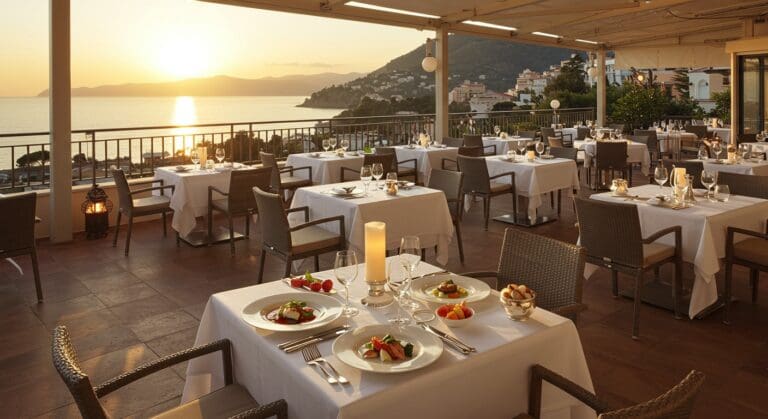
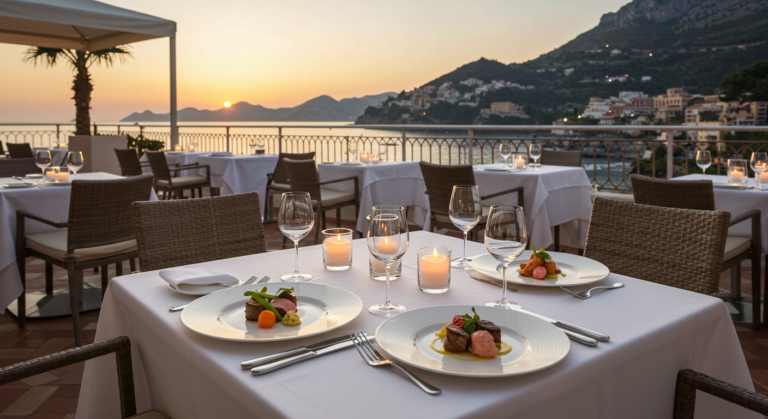
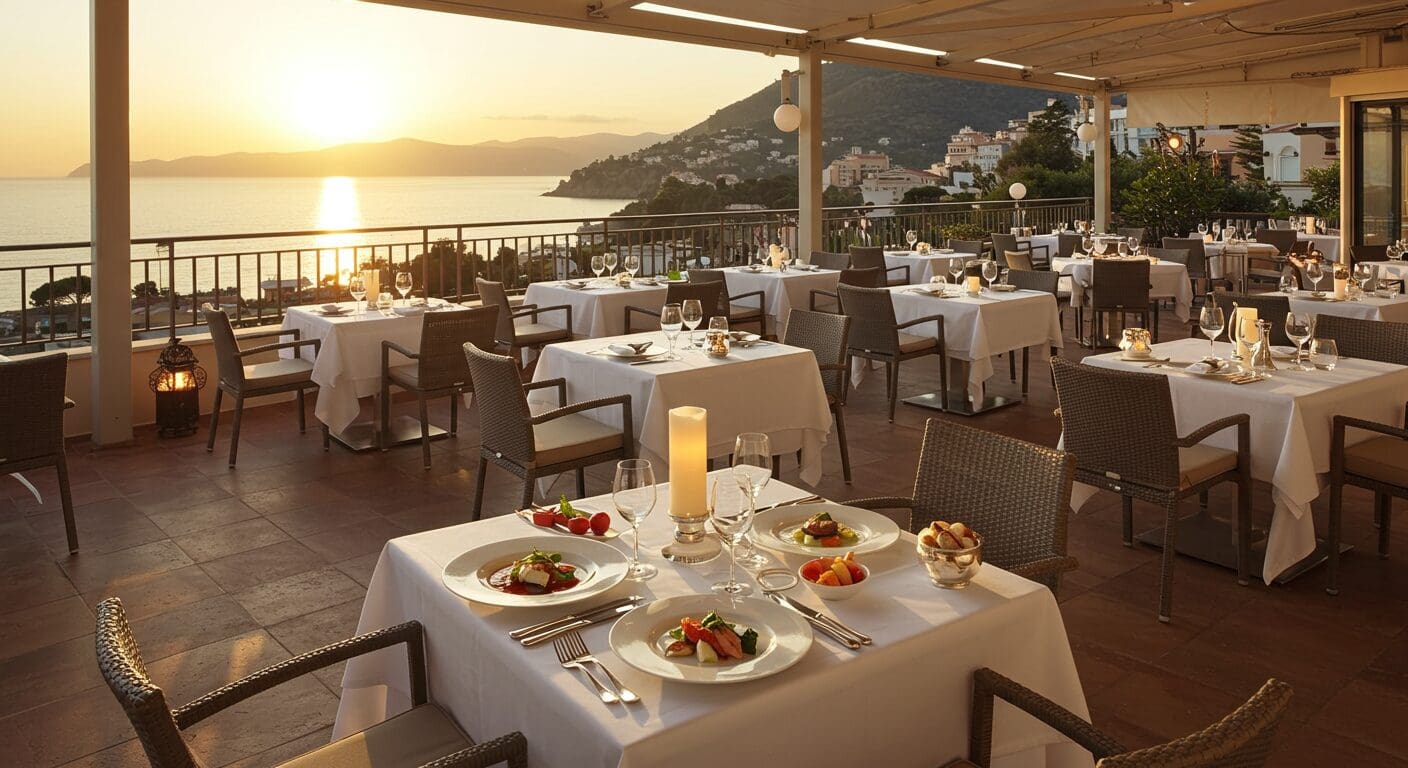
Diferent Restaurant, positioned near Begur Castle with views of the medieval fortifications above, occupies a similar register but with a different personality. It describes itself as an “art cuisine proposal” – which in lesser hands might make you reach for your coat, but here the ambition is backed by execution. The menu focuses on pinchos and tapas crafted from local products, presented with notable delicacy on the elegant terrace. Eating in the shadow of a castle turns out to be an entirely reasonable way to spend an evening. The outdoor space is particularly suited to groups who want to graze, compare, and order another round of something small and excellent.
Local Gems: Where Begur Really Eats
The restaurants that reveal a place most truthfully are rarely the ones with the longest waiting lists. They’re the ones where the tables have been there so long the floor has moulded around the legs.
Rostei is that kind of place. A family-run restaurant with a rustic dining room and a leafy terrace that catches the afternoon light in that particular way that makes you order a second glass before you’ve finished the first. The menu specialises in fish and regional rice dishes – not rice in the gesturing, decorative sense, but the real thing: properly constructed, properly cooked, the kind of arrós that makes you reconsider everything you thought you knew about the dish. The staff are friendly in the unselfconscious way that means they’ve been doing this a long time and genuinely enjoy it. Guiacat rates it 8.8, which for a restaurant of this unpretentious character is a quiet triumph.
Sa Rascassa, based at Hostal Sa Rascassa in the cove of Aiguafreda, earns its 9.2 rating with honest Catalan cooking served in a garden terrace setting that the more scenically aware among you will want to photograph before you remember you’ve decided to live in the moment. Fish dominates, because of course it does – the sea is right there, and the cooks understand what to do with what arrives. Typical Catalan dishes sit alongside the catch of the day; the combination is comfortable and entirely competent. It is also, predictably, popular. Consider this your formal warning to book ahead.
Beach Clubs and Casual Dining
Begur’s coastline is not a single beach but a succession of small coves – each one reached by the Camí de Ronda coastal paths through pine forest, and each one with its own character. The casual dining options that have grown up around these coves tend to reflect the same self-possession that defines the town itself: relaxed without being careless, simple without being cheap.
El Jardí de Can Marc occupies a category all of its own – part restaurant, part gastro-cocktail bar, part place-where-you-lose-an-afternoon-entirely-without-regret. Set in a beautiful garden with views across the Costa Brava, it operates a Chillout space where the music is low enough to qualify as atmosphere rather than noise, and the views extend far enough that you periodically forget what you came for. The cocktail list is considered and well-executed; the tapas menu is the kind that rewards sharing rather than staking territorial claims over individual plates. It is consistently well-reviewed and, perhaps more tellingly, consistently full.
For seafood eaten close enough to the water to make the provenance feel entirely plausible, the coves of Sa Tuna and Aiguablava both have simple chiringuito-style options where the point is freshness and the setting, rather than elaborate preparation. Order grilled fish, local bread with tomato, and something cold. This is not complicated. It doesn’t need to be.
What to Order: Dishes Worth Knowing
Catalan cuisine in this corner of the Costa Brava has a marine backbone and a land-based supporting cast. The signature dishes worth seeking out, in roughly ascending order of ambition, are these:
Pa amb tomàquet – Bread rubbed with ripe tomato and olive oil. It sounds so simple as to be barely worth mentioning. It is also the thing you will miss most when you get home.
Suquet de peix – A Catalan fish stew, the fisherman’s version of a bouillabaisse – robust, flavourful, built on whatever came in that morning. Order this if it’s on the menu. Don’t ask for substitutions.
Arròs negre – Black rice, cooked in squid ink with seafood. More dramatic to look at than it sounds, and thoroughly worth the experience. Rostei does an excellent rice; keep it in mind.
Gambas a la planxa – Prawns cooked on the griddle. The quality of the shellfish in this stretch of coast is such that minimal intervention is the correct approach, and most kitchens here understand this.
Crema catalana – The original from which a thousand lesser desserts have been derived. Here, in its home territory, it tends to be the real thing. Accept no imitations.
Wine and Local Drinks
The wine situation in and around Begur is better than many visitors expect, largely because most visitors arrive expecting Spain to mean Rioja and nothing else. The empordà designation – the DO covering this part of northern Catalonia – produces wines that are finding a well-deserved wider audience, with rosés in particular that are serious enough to drink with food rather than simply with sunshine.
Look for Empordà whites made from Garnacha Blanca and Macabeu, which have the kind of bright acidity that cuts through the richness of a fish stew or sits comfortably alongside grilled shellfish. The local rosés are dry, expressive, and frequently underpriced relative to their quality. Red wines from the region tend to be Garnacha-forward, with a warmth and roundness that suits the food well.
El Jardí de Can Marc takes its cocktail programme seriously enough that it’s worth arriving before dinner rather than moving on afterwards. The gin-and-tonic culture that has taken hold across Spain remains alive and well here – order one properly made with a Spanish gin, proper tonic, and actual garnish, and you’ll understand why the movement happened.
Cava, the Catalan sparkling wine produced a little further south in the Penedès, appears on most wine lists and makes an entirely appropriate aperitif with the kind of views available from Begur’s restaurant terraces. It is, at its best, genuinely excellent. It is also unfairly underrated by people who should know better.
Food Markets and Local Produce
Begur’s local market is a modest but genuine affair – the kind of market where locals actually shop rather than one constructed for the benefit of visitors looking for artisanal photo opportunities. Seasonal produce dominates: tomatoes of real quality in late summer, local olive oil, cheese, and cured meats from the hinterland beyond the coast.
The town of Palafrugell, a short drive south, has a larger and well-regarded market that draws serious cooks and those who simply enjoy being in the presence of very good ingredients without necessarily planning to do anything about it. The covered market in Girona – around 45 minutes inland – is worth the journey for those with a particular interest in Catalan gastronomy at its most comprehensive. The city itself, incidentally, rewards the trip.
For provisions at a villa – fresh fish, charcuterie, seasonal vegetables – the fish market at Palamós, slightly further south along the coast, is one of the finest on the Costa Brava. The late-afternoon auction, when the catch comes in, is something of a spectacle even for those who have no intention of bidding.
Reservation Tips and Practical Advice
July and August in Begur are not times for spontaneity, at least where food is concerned. The town fills considerably beyond its usual population, the terrace tables at Sa Rascassa and Restaurant Turandot become genuinely difficult to secure, and the kind of walk-in confidence that served you well in May will result in standing at bar counters eating crisps. This is not a tragedy, but it is avoidable.
Book the serious restaurants – Turandot, Sa Rascassa, Diferent – at least a week ahead during peak season, and longer if you’re planning a special occasion. Most take reservations by phone or email; some now have online booking. A basic understanding of Spanish is sufficient for most calls, though many staff in visitor-facing roles also speak English and French, as you’d expect from a town that has been welcoming foreign visitors with weary grace for several decades.
Lunch in Spain remains the more substantial meal, and Begur is no exception. A long lunch on a shaded terrace, beginning around 2pm and ending when everyone has finished their coffee and nobody has asked for the bill yet, is one of the genuine pleasures available here. Dinner tends to start late by northern European standards – before 8.30pm is considered optimistic, and before 8pm will earn you an almost imperceptibly raised eyebrow from the waiting staff.
For groups staying in a luxury villa in Begur, it’s worth knowing that several properties come with the option of a private chef – someone who will source the produce, navigate the market, and produce the kind of long Catalan dinner that you’ll be describing to people for years. When the kitchen is that good and the terrace has those views, the case for staying in becomes quite compelling. For everything else you need to know about the area before you arrive, the full Begur Travel Guide covers the town’s beaches, walks, history and practicalities in the depth they deserve.