
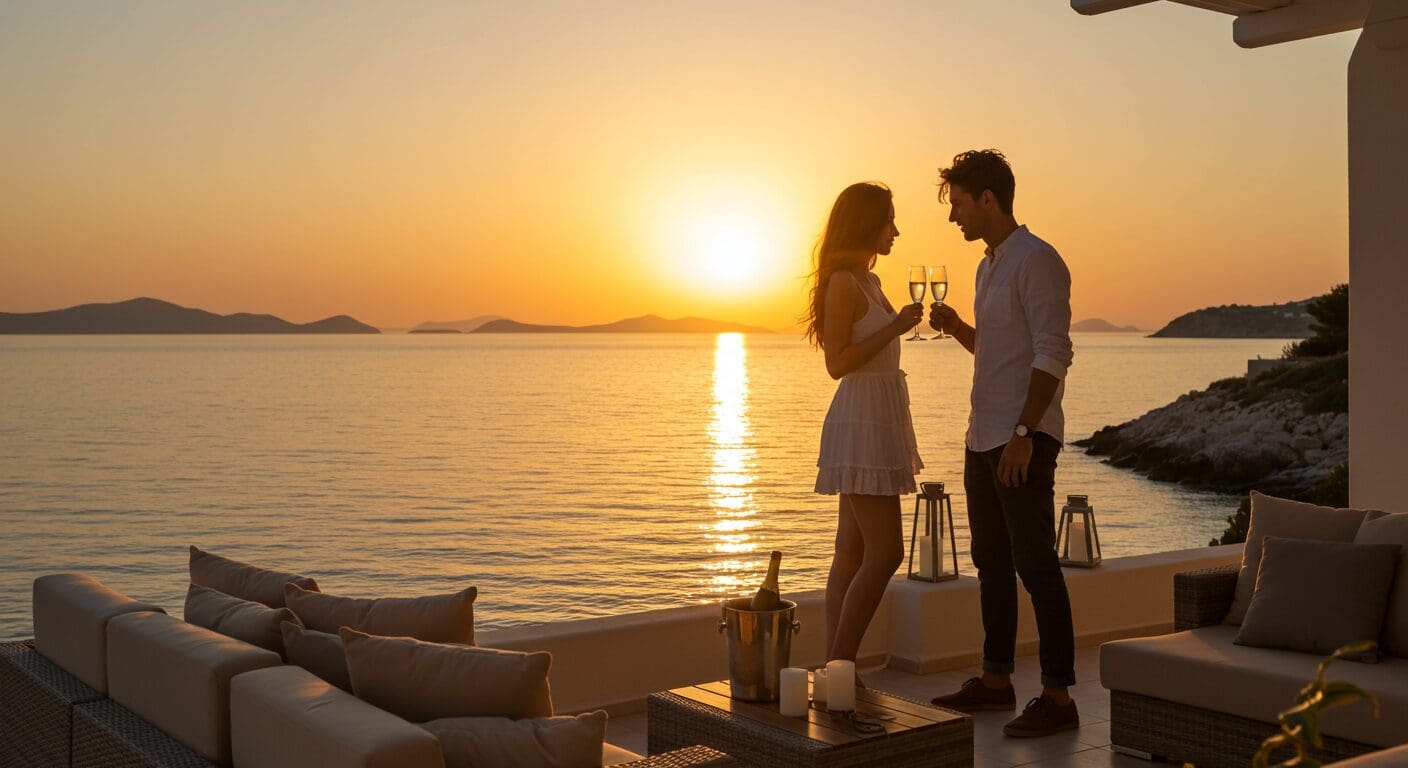
Romantic Benissa: The Ultimate Couples & Honeymoon Guide
Romantic Benissa: The Ultimate Couples & Honeymoon Guide
Most couples arrive on the Costa Blanca and turn left towards Calpe, or right towards Moraira, or follow some algorithm’s recommendation to a resort that could, in all honesty, be anywhere in coastal Europe. The ones who pause – who actually stop and look at Benissa – find something the others miss entirely: a medieval hilltop town of worn golden stone and church bells and jasmine-heavy air, sitting above a coastline of raw limestone cliffs and near-translucent water, largely undiscovered by the crowds that have long since conquered its neighbours. This is the thing about Benissa. It requires no effort to fall in love with it. It does, however, require you to find it first.
For a more complete picture of the area before you plan your trip, the Benissa Travel Guide covers everything from getting here to understanding the local landscape in depth.
Why Benissa Works So Well for Couples
There is a particular kind of romance that belongs to places that haven’t been curated for it. No heart-shaped menus, no designated sunset viewing platforms with sponsored champagne. Benissa offers something rather more honest than that – an authenticity that is increasingly rare on this coastline, and which turns out to be precisely what most couples are looking for without knowing they are.
The town itself sits inland at around 250 metres, its old quarter a tangle of cobbled lanes, Baroque church facades, and townhouses with ornate ironwork balconies from which someone’s grandmother is almost certainly watching you. It has the unhurried quality of a place that knows exactly what it is. Down below, the Benissa coast – a protected stretch running through Baladrar, Advocat, and La Fustera – is defined by calas (coves) tucked between rocks, accessible by path or by sea, where the water achieves shades of blue that seem genuinely implausible until you’re standing in them.
For couples, this split geography is the particular gift. Mornings on the water. Afternoons in the old town with a cold glass of something local. Evenings that last as long as you want them to. Nobody is rushing you anywhere. There are no queues for the view.
The Most Romantic Settings in Benissa
Begin with the old town at dusk. The Calle Mayor and the streets around the Iglesia Parroquial de la Purísima Concepción – a handsome late-Gothic church with a distinctive blue-tiled dome – take on a particular quality of light in the early evening, when the day-trippers have gone and the stone glows amber and the restaurant terraces start filling with the sound of conversation and ice in glasses. Walking here together, without a plan, is one of the more quietly romantic things you can do in the region.
For the coast, Cala Baladrar deserves special mention. A small, sheltered cove framed by pine-covered cliffs, it rewards those willing to arrive outside the high season peak hours – preferably early morning, when the light comes sideways off the water and the place belongs entirely to you. The rocky coastline path that connects several of these coves offers views of uninterrupted Mediterranean horizon, the kind that tends to produce a particular quality of silence between people.
The stretch between Benissa and the neighbouring town of Moraira – easily walked or cycled – passes through vineyards and low scrubland with the sea appearing in unexpected flashes below. It is, without exaggeration, one of the more beautiful short journeys on this coast.
Restaurants for a Romantic Dinner
The Costa Blanca north – and Benissa and its immediate surrounds in particular – punches considerably above its weight when it comes to dining. The area sits close enough to both Valencian rice country and the mountains to have access to serious local produce, and the restaurant scene reflects this without making a performance of it.
In and around Benissa and neighbouring Moraira, you will find small terrace restaurants serving fresh fish grilled simply over wood, local rice dishes cooked properly (which means with patience and the right stock and not for the benefit of a thirty-minute turnaround), and wine lists that lean heavily into the regional Alicante DO wines – Monastrell-forward reds and increasingly impressive whites that rarely make it outside Spain. Seek out the restaurants in the old town’s quieter lanes rather than those on the main through-roads, and book a table outside. The night air here in summer is warm without being suffocating. In spring and autumn it is close to perfect.
For a more elevated occasion, the restaurants near the Moraira marina are within a short drive and offer a more polished setting, though the cooking in Benissa’s own village restaurants is often their equal. The key, as so often in Spain, is to arrive when Spanish people eat – which is to say, later than feels comfortable – and to order without rushing.
Couples Activities: From Sailing to Spa Days
The coastline here is configured almost specifically for private sailing excursions. Charter boats depart from nearby marinas – Moraira and Calpe are both within fifteen minutes – and the calas accessible only from the water, including caves and hidden inlets along the Benissa coast itself, make for a half-day or full-day on the sea that is genuinely difficult to improve upon. Sunset returns, as the cliffs turn orange and the evening star appears over Africa, are the kind of thing that sounds theatrical on paper and turns out to be entirely real in practice.
Wine tasting in the local DO Alicante vineyards is an underused pleasure. The Moscatel de Alejandría grape – sweet, aromatic, grown in the hills behind the coast – produces a dessert wine of some distinction, and visiting a bodega in the hinterland, tasting through a range of local varieties with a knowledgeable guide, makes for an afternoon that is educational in theory and thoroughly enjoyable in practice. (It also pairs well with an early dinner and an early night, but that is your own affair.)
Cooking classes focused on Valencian and Alicantine cuisine – paella in its proper coastal forms, fideuà, local pastries – are available in the area and offer the dual pleasure of learning something useful and eating it immediately afterwards. For spa and wellness, several hotels and villa concierge services in the area offer in-villa treatments, which in the context of a private pool terrace overlooking the Mediterranean represents a fairly compelling alternative to any hotel spa you have ever visited.
The Most Romantic Areas to Stay in Benissa
Benissa’s most sought-after residential areas for couples tend to be those that balance privacy and views with access to both the coast and the old town. The hillside zones above the coast road – particularly the areas around La Fustera and Punta del Moraig – offer villas with panoramic sea views, morning light, and that particular sense of elevation that makes everything feel slightly more manageable and considerably more beautiful.
The urbanisations set into the pine-covered hillsides between Benissa and Moraira have long attracted a quiet, knowing crowd: people who have been coming to this coast for years and have absolutely no interest in telling anyone about it. Properties here tend to be discreet, private, and surrounded by enough garden and terrace to make leaving feel optional rather than necessary.
For those who want to be closer to the old town’s cobbled atmosphere, the periphery of the historic centre offers smaller, character-rich properties where the church bells will wake you (this is mentioned not as a drawback but as a clarification, since opinions vary).
Proposal-Worthy Spots in Benissa
A few words here to the planners in the room. The combination of specific location, good timing, and the right light matters considerably more than any pre-arranged setup. Benissa has several places that do the work for you.
The viewpoint above the old town looking south-west towards the sea and the silhouette of the Ifach rock at Calpe is one of the finest vantage points on the coast and requires only the presence of two people and a clear evening. The rocky promontory at Punta del Moraig, reached on foot along the coastal path, drops to a natural swimming hole of extraordinary clarity and is as close to a secret as anywhere on this coast gets. And then there is the simple, time-honoured option of a private villa terrace at the end of a long, good day – which has its own logic and requires no further argument.
Whatever location you choose: go at the right time of day. The light here in the hour before sunset will do half the work.
Anniversary Celebrations in Benissa
Anniversaries demand a higher calibre of effort than most people apply to them, and Benissa has the materials for something genuinely memorable. A private boat chartered for the day along the Benissa cala coastline, stopping to swim at inlets accessible only from the water, followed by a long dinner on a restaurant terrace with a bottle of something properly chosen – this is an anniversary that people actually remember rather than one they document for an audience.
Those seeking a longer anniversary experience might consider building a few days around a combination of old town exploration, a day trip into the inland mountain town of Guadalest (dramatically situated, deeply beautiful, quietly staggering), wine country visits, and evenings that find their own rhythm. The Costa Blanca north in shoulder season – May, June, September, October – is in many ways superior to August: the light is no less extraordinary, the water is warm, and you will not spend twenty minutes looking for somewhere to sit.
A private villa as your base transforms an anniversary stay from pleasant to exceptional. No shared hotel lobby, no neighbour’s early alarm, no competition for the best sunbed. Your own pool, your own terrace, your own schedule.
Honeymoon Considerations for Benissa
The case for Benissa as a honeymoon destination is, in many ways, the case against everywhere else that is more frequently recommended for the purpose. The Amalfi Coast in August. Santorini in July. These are places where everyone has precisely the same idea at precisely the same time, which is a fine way to celebrate other people’s honeymoons while experiencing significant stress of your own.
Benissa offers privacy by default. The infrastructure of a well-developed European coastal destination – excellent restaurants, good roads, easy international access via Alicante or Valencia airports – combined with a coastline and old town that have avoided the worst of mass tourism development. The water is reliably warm from June through October. The food and wine are exceptional. The pace of life is, in the most useful sense of the phrase, none of your business.
For honeymooners, a private villa stay here offers something that no hotel of any star rating can replicate: a home, for a week or two, that is entirely your own. Private pool, private kitchen for the mornings when you would rather not be sociable, private terrace for the evenings when the rest of the world can wait. The Benissa coast seen from a hillside villa at sunrise, with strong coffee and complete silence, is one of the more persuasive arguments for being alive that this corner of Europe has to offer.
Plan Your Romantic Benissa Escape
Every element of a romantic Benissa stay – the privacy, the views, the ability to set your own pace entirely – comes together most completely when you choose a luxury private villa in Benissa as your base. Whether you are planning a honeymoon, an anniversary, or simply a holiday that functions as a genuine reset for two, a private villa here offers a quality of experience that renders the question of alternatives somewhat academic. The Excellence Luxury Villas collection in Benissa brings together the finest properties on this coast, chosen for position, quality, and the particular kind of atmosphere that turns a holiday into something you will still be referencing in conversation five years from now.
When is the best time of year for a romantic trip to Benissa?
Late May through June and September through October are the sweet spots for couples visiting Benissa. The weather is warm and settled, the water temperature is comfortable for swimming, the light is exceptional, and the restaurants and coastal paths are considerably less crowded than in the peak weeks of July and August. For a honeymoon or anniversary trip where atmosphere and privacy matter, shoulder season is the clear recommendation. Winter visits are mild by northern European standards and have their own quiet appeal, particularly for those who want the old town and countryside largely to themselves.
How does Benissa compare to Moraira or Calpe for a romantic holiday?
Benissa occupies a distinctive position between its better-known neighbours. Moraira, directly to the south, is a well-heeled resort town with an attractive marina and good restaurants, and is a natural complement to a Benissa stay rather than a competitor. Calpe, to the north, is larger and more developed around the dramatic Peñón de Ifach rock, and has a busier resort character. Benissa itself – both the medieval old town and its largely unspoiled coastline – offers more privacy, more authenticity, and fewer of the crowds that come with greater fame. For couples who value those qualities, Benissa is typically the preferred base, with Moraira and Calpe easily accessible for day trips and dining.
What makes a private villa better than a hotel for a honeymoon or romantic stay in Benissa?
The honest answer is: almost everything that actually matters. A private villa in Benissa gives you complete control over your time and environment – no shared spaces, no fixed breakfast times, no lobby full of other guests. You have your own pool, your own kitchen and outdoor dining area, and in most cases a terrace with sea or countryside views that no hotel room can match. For honeymooners in particular, the combination of privacy, space, and the ability to treat the villa entirely as your own home for the duration of the stay creates an atmosphere of genuine relaxation that is difficult to achieve in even the most well-appointed hotel. Concierge services available through Excellence Luxury Villas can arrange everything from boat charters to private chefs and in-villa spa treatments, so the villa becomes the complete experience rather than simply the place you sleep.

