Central Macedonia Food & Wine Guide: Local Cuisine, Markets & Wine Estates
It begins, as most good things in Central Macedonia do, with a table. Not a restaurant table, necessarily – though those matter too – but the kind that appears without ceremony in a stone courtyard or under a pergola heavy with vines, sometime around noon, when the heat has settled in and nobody is in any particular hurry. There is bread. There is wine, poured generously. There is something braised low and slow that smells of thyme and wood smoke and a kind of confident patience that northern Greeks seem to carry in their bones. You haven’t ordered any of this. It simply arrived. That is, in essence, the Central Macedonia approach to hospitality – and to food.
This is a region that doesn’t ask for your attention. It has been quietly producing extraordinary wine, extraordinary olive oil, extraordinary cheese and extraordinary table moments for centuries, long before food tourism became a category. It is northern Greece at its most self-possessed. And for the traveller willing to dig past the obvious – the ancient ruins, the Byzantine grandeur of Thessaloniki – what awaits is one of the Mediterranean’s most compelling, and least advertised, culinary landscapes.
For context on everything else the region offers, our Central Macedonia Travel Guide is the place to start.
The Regional Cuisine: What Central Macedonia Actually Tastes Like
Central Macedonian cooking sits at a cultural crossroads, and you can taste it. Byzantine, Ottoman, Anatolian and Balkan influences have been layering themselves into the local repertoire for centuries, producing a cuisine that is richer, spicier and more complex than the sun-drenched simplicity of the Greek south. This is not the food of postcard Greece. There are no tavernas with checked tablecloths selling the same five dishes to the same five thousand tourists. Or at least, not everywhere.
The cooking here is built around slow time and good produce. Meat is braised or roasted with patience – lamb with orzo, pork with leeks, rabbit with wine and rosemary. The spice rack reaches further than most of southern Greece would dare: cinnamon in meat sauces, allspice in stuffed vegetables, a warmth that recalls the old trade routes running through this landscape. Legumes are treated with genuine respect rather than resigned duty – chickpeas and white beans appear in preparations of real depth, enriched with good oil and aromatics and left to speak for themselves.
Dairy deserves its own sentence. The sheep and goat cheeses of the wider Macedonian highlands – from fresh, crumbly whites to aged, assertive hard cheeses – are produced with a seriousness that is immediately apparent in the eating. The local variation on feta is creamier, saltier, more animal in character than the commercial version most of the world thinks it knows. Served simply, with oil and dried oregano, it is difficult to improve upon.
Seafood, despite the region being largely inland, makes an appearance – particularly in Thessaloniki, where the long waterfront tradition means fish and meze culture intertwine. Smoked mackerel, sea urchin, cured fish roe in the form of taramosalata far more flavoured than the pale pink paste found elsewhere – these are the city’s gifts to the table.
Thessaloniki: A Food City That Knows Exactly What It Is
Thessaloniki has a food identity so distinct that Greeks from other regions will freely admit the city does certain things better than Athens. The Thessalonians will not volunteer this information unprompted – they simply proceed on the assumption that you already know. The city’s meze culture is extraordinary: small plates of extraordinary variety, from fried mussels in mustard to grilled offal to trigona – crisp pastry horns filled with cream custard that disappear faster than any sensible adult would like to admit.
The city’s covered market, Modiano, is the essential food pilgrimage. Built in the 1920s with characteristic gravity and grandeur, it houses butchers, fishmongers, spice traders and cheese vendors in close, fragrant proximity. The collective smell – cured meat, brine, dried herbs, something sweet from the honey stall – is among the more memorable sensory experiences the city offers. Come in the morning, when it is loud and purposeful. Come with an empty bag.
Kapani Market, adjacent and older, is rougher and less curated – more workaday produce, more street food, more locals who are not doing this for Instagram. Which is, frankly, exactly the point. Between the two markets you will spend more money than you planned and carry home things you will spend the rest of your holiday trying to identify. This is not a warning. It is an endorsement.
For those wanting to do more than observe, cooking classes based in Thessaloniki offer hands-on introductions to Macedonian technique – from making spanakopita with wild greens to slow-cooking the kind of meat dishes that require half a day and the right conversation. Several operate out of well-equipped private kitchens or food-focused cultural spaces, and a good villa concierge will be able to arrange something appropriately tailored.
The Wine: Why Naoussa Deserves Your Full Attention
If you know one thing about Central Macedonian wine, you probably know the name Xinomavro. If you don’t, allow a brief introduction: this is one of Greece’s great red grape varieties, grown primarily in the Naoussa appellation on the slopes of Mount Vermio, and it produces wines of genuine nobility – tannic, aromatic, age-worthy, with a characteristic combination of red cherry, tomato leaf and dried herbs that is unlike anything else in the Mediterranean wine world.
Comparisons to Barolo are made frequently enough that they have almost become cliché, though the comparison is not without basis. Both grapes are high-acid, high-tannin, highly particular about where they are grown, and both reward patience from drinker and producer alike. The difference is that Naoussa wines cost considerably less, which the market has not yet fully corrected for. This is the kind of information that should be acted upon.
The Naoussa wine region is compact and navigable – a landscape of vines, stone villages and serious producers who have been making wine here since antiquity but have, in the last two decades, invested heavily in modern winemaking that brings out Xinomavro’s best rather than apologising for its worst. The result is a generation of wines that can compete at international level.
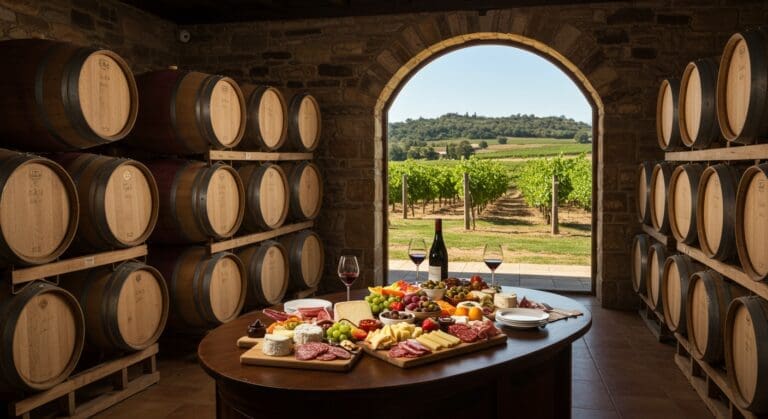
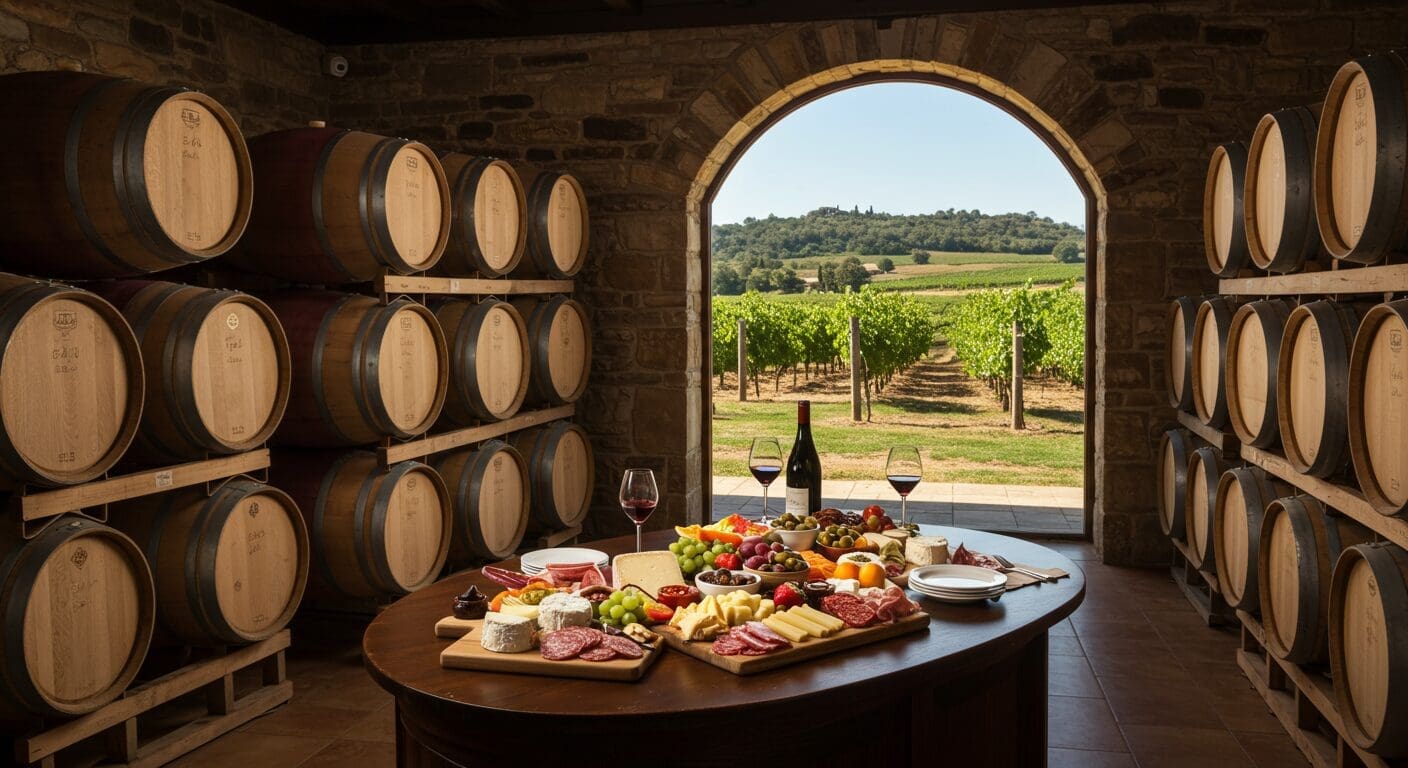
Estates in the area offer tastings and tours of real quality – many with the kind of cellar architecture and tasting room design that reflects the seriousness of the enterprise. Expect to taste across different styles: fresh, fruit-forward younger expressions alongside aged reserves that have been in barrel for years and show what Xinomavro becomes when it is left to develop at its own pace. Rosé made from Xinomavro is also worth seeking out – pale, dry, surprisingly elegant.
Beyond Naoussa, the Amyndeon appellation to the west produces high-altitude Xinomavro with a lighter, cooler character – finer tannin, more floral lift – and has been gaining deserved recognition. The sparkling wines from Amyndeon are particularly interesting: method traditional wines of real precision that remain almost entirely unknown outside Greece. Discovering them before everyone else does is one of the quiet pleasures available to the attentive visitor.
Wine Estates Worth the Drive
The wine estates of Central Macedonia are not merely places to taste wine. Several have evolved into genuinely immersive destinations – with vineyards to walk, cellar tours to take, estate restaurants or tasting tables that deploy the local cuisine to frame the wines properly. This is not incidental. Understanding what Xinomavro does alongside braised lamb or aged local cheese is a different kind of education to tasting it in clinical isolation.
Estates in the Naoussa appellation range from family-run operations working a handful of hectares with intense focus, to larger producers with export reach and the infrastructure to receive visitors properly. The best offer guided tastings with someone who actually knows the vineyard – the stories of particular parcels, difficult vintages, the way the mountain changes the growing season at different elevations. These are conversations worth having.
Several estates also operate accommodation or have arrangements with nearby properties, meaning a two or three day wine-focused itinerary – visiting multiple producers, dining well, walking the vines in the morning before the heat builds – is entirely achievable from a villa base. The distances are small. The rewards are not.
For visitors with a serious wine interest, the harvest period in September and October offers the possibility of tastings directly from the fermentation tanks – young, unyielding, alive in a way that only new wine is – and occasionally the chance to participate in picking, if the estate and timing align. This is the kind of experience that no amount of money can reliably guarantee, which makes it all the more worth pursuing.
Truffle Country and Other Woodland Gifts
The forests of Central Macedonia’s interior hold a secret that is only slowly becoming known beyond regional specialists and the restaurants fortunate enough to have reliable contacts. Black truffles – and in some areas, white – grow in the wooded hills of the region, foraged by people who have been doing it for generations and are understandably reluctant to become a tourist attraction. Which is, of course, precisely what makes finding a legitimate truffle hunting experience here so satisfying.
Properly arranged through a local guide or via a well-connected villa host, a truffle hunt in the Macedonian hills involves a dog with better instincts than any instrument yet invented, a walk through forest that would be worth the trip regardless, and the particular pleasure of watching something that smells of almost nothing to you cause another species to lose its professional composure entirely. What follows, in the cooking, is the point. Truffles shaved over eggs, over pasta, over risotto prepared simply to stay out of their way. It is a very good argument for autumn travel.
The forests also yield wild mushrooms in abundance – porcini and chanterelles among them – along with wild herbs that appear in the local cooking with a freshness that dried versions simply cannot replicate. Thyme, oregano, sage: picked from hillsides that have never seen a supermarket, cooked into dishes within hours. The gap between this and what most people experience as Greek herbs is considerable.
Olive Oil: The Liquid Measure of Everything
Central Macedonia is not the Peloponnese – it does not have the sheer volume of olive production that the southern regions command – but what it produces has character. The olives grown in the warmer, lower-lying parts of the region yield oils with a distinct personality: slightly more bitter, more peppery, more assertive than the mild oils that have conquered the export market. These are oils made for people who use olive oil as a principal ingredient rather than a lubricant.
Small producers in the region offer tastings with the same seriousness that wine estates apply to their vintages – different varieties, different harvest moments, fresh versus stored, understanding how heat and time change the profile. Tasting good olive oil properly, without bread, focusing on the back of the throat where the pepper hits and the bitterness lingers, is a brief act of sensory attention that most people never bother with. They are missing something.
The best local oils are available directly from producers, in quantities that make the flight home a mild logistical puzzle worth solving. Several estate-produced oils also make their way into the better food shops of Thessaloniki, where a well-stocked deli will carry local oils alongside the cheeses, cured meats and wine that constitute the serious Central Macedonian larder.
The Best Food Experiences Money Can Buy
There is a version of Central Macedonia food travel that is entirely available to anyone with a good guidebook and comfortable shoes. And then there is the version where the door that was previously closed has quietly been opened for you.
The latter includes private dinners hosted at working wine estates, where the winemaker sits at the table and the menu was built around the wine rather than the reverse. It includes cooking sessions in a farmhouse kitchen with a home cook who has been making the same dishes for fifty years and has no particular interest in streamlining the process for your convenience – which is the point. It includes early morning market visits with a chef who knows every stall holder by name and has an opinion, not always diplomatic, about every product on offer.
It includes, if the timing and connections are right, a private tasting at a small producer who doesn’t advertise, doesn’t export, and makes wine in quantities so limited that most people who drink wine professionally have never encountered it. The bottle you open that evening, back at the villa, will be the best thing you taste all trip. You will not be able to buy it anywhere. You will spend years trying to describe it to people who don’t believe you.
Helicopter transfers to remote estate lunches exist, for those for whom distance is an administrative problem. Foraging walks followed by private lunches using what was found can be arranged through specialist operators. Multi-day gastronomic itineraries, combining Thessaloniki’s markets with Naoussa’s wine estates and the truffle forests of the interior, are possible with the right organisation behind them. The region rewards ambition in this regard.
The foundation of any of this, practically speaking, is having the right base. A well-positioned villa – with a kitchen worth using, space for a private dinner, a terrace on which an estate winemaker might plausibly agree to sit – makes the difference between a series of excellent outings and an immersive experience. These are different things.
For the very best private properties in the region, browse our collection of luxury villas in Central Macedonia and let us help you plan something properly.