Central Spain Travel Guide: Where to Stay, Eat & Explore in Luxury
What if the most rewarding part of Spain wasn’t the coastline at all? The country has spent decades marketing itself on beaches, and very successfully too, but Central Spain – the vast, sun-scorched, historically extraordinary plateau at the country’s heart – rewards a different kind of traveller with something the coasts simply cannot offer: depth. Not the shallow depth of a quick city break, but the kind that arrives slowly, like the light over the Castilian meseta at dusk, when the ancient stone turns amber and you realise you’ve been staring at it for twenty minutes without once reaching for your phone.
This is a destination for people who want to feel somewhere rather than simply see it. Couples marking milestone anniversaries find in Central Spain a romance that feels earned rather than curated – dinner at a three-Michelin-starred restaurant in Madrid followed by three days of silence in a private villa overlooking olive groves tends to do that. Families seeking genuine privacy rather than the performative seclusion of a resort discover that the region’s grand rural estates and converted fincas offer space on a scale that European hotel suites can only dream about. Groups of friends ready for something more interesting than another Greek island will find the cultural programme alone could fill two weeks without repetition. Remote workers requiring reliable connectivity are increasingly drawn to villas in the Madrid commuter belt – within forty minutes of the capital but feeling entirely removed from it – and wellness-focused guests who want more than a spa menu find that the rhythm of life here, slower and more deliberate than anywhere on the coast, does the work for them before they’ve even booked a treatment.
Getting Into the Heart of It: Arrivals, Airports and Moving Around
Madrid Barajas Adolfo Suárez Airport is one of Europe‘s major aviation hubs, which means getting here is rarely the problem. Direct flights operate from virtually every significant city in the United Kingdom – London Heathrow, Gatwick, Stansted, Manchester, Edinburgh – as well as from the United States, with non-stop services from New York, Miami, Los Angeles and Chicago. Flying time from the UK is around two and a half hours. From the east coast of America, expect roughly eight to nine hours. Terminal 4 at Barajas is, by airport standards, genuinely good – airy, efficient, relatively calm. The Metro connects it directly to central Madrid in about twenty-five minutes, though if you’ve just flown transatlantic with luggage and ambition, a private transfer makes considerably more sense.
For exploring the wider region – Toledo, Segovia, Ávila, Cuenca, the Sierra de Guadarrama – a hire car is the most liberating option and the roads are excellent. Spain’s motorway network is fast, well-maintained and, outside Madrid itself, remarkably uncrowded. For day trips from the capital, the Renfe high-speed and regional rail network is quietly brilliant: Toledo is forty-five minutes from Madrid Atocha, Segovia just thirty minutes on the AVE. Within Madrid, the Metro is comprehensive and cheap, though for the serious restaurant circuit a taxi or Cabify account will serve you better. The city’s drivers are, on the whole, stoic about traffic in a way that suggests deep philosophical acceptance.
The Table as Destination: Eating and Drinking in Central Spain
Fine Dining
Madrid’s fine dining scene has, over the last decade, quietly become one of the most serious in Europe, and the flagship of the entire operation is DiverXO. This is the only three-Michelin-starred restaurant in Madrid, run by chef Dabiz Muñoz, whose “Flying Pigs Cuisine” tasting menu is less a dinner and more an event – bold, theatrical, operating somewhere at the intersection of Spanish technique and Asian sensibility, and designed to make you feel as though the rules of food have been temporarily suspended in your favour. Booking is competitive in the way that only truly sought-after things are. Plan ahead.
Coque, in the Chamberí neighbourhood, offers a different kind of theatre – two Michelin stars, seventy covers, and an experience that begins before you sit down. Chef Mario Sandoval’s team guides guests through a sequence of rooms – including, memorably, the wine room – serving aperitivos and thoughtful pairings as you go, building anticipation like a well-structured novel before the main event begins. The local sourcing is rigorous and the decor, colourful and slightly unexpected, prevents it from taking itself quite too seriously. Also worthy of serious attention is Paco Roncero’s restaurant at the Casino de Madrid – two Michelin stars housed in a setting of genuine grandeur, where the architecture gives the meal a context that modern dining rooms can rarely match. The views over Madrid alone are a conversation stopper.
For something quite different – but equally Michelin-starred – the drive to San Lorenzo de El Escorial to eat at Montia is one of the great pleasures of a luxury holiday central Spain offers. Chef Daniel Ochoa earned his star in 2015 and has built the restaurant around an almost dogmatic commitment to local sourcing: herbs and mushrooms foraged personally in the Sierra de Guadarrama, seasonal produce from markets within a short radius of the restaurant. In a region where terroir is taken seriously, Montia takes it personally. It is, as farm-to-table experiences go, the genuine article.
Where the Locals Eat
Madrid’s neighbourhood restaurant culture is one of its great, underappreciated pleasures. In Malasaña and Lavapiés – both revived, vivid barrios with serious eating credentials – small tiled tavernas serve croquetas that will recalibrate your understanding of the form, alongside cold beer and the particular contentment of having no particular plans. The city’s mercados have evolved well beyond tourist traps: Mercado de San Miguel near the Plaza Mayor is atmospheric if popular, while Mercado de Antón Martín in Lavapiés tends to attract a more local crowd and rewards the slightly more adventurous palate. Vermouth hour – la hora del vermut, roughly noon to two on weekends – is a Madrid institution that is not optional.
Beyond the capital, the towns surrounding Madrid have their own very particular food traditions. Cochinillo – roast suckling pig – is the dish of Segovia and the towns around it, and when done properly (genuinely, properly) it is one of those meals that stays with you. The classic test of a well-roasted cochinillo is that the chef serves it by cutting it with the edge of a plate, then smashing the plate on the floor. This is not a performance. It is a demonstration of tenderness. It is also good to witness at least once.
Hidden Gems Worth Seeking Out
Corral de la Morería in Madrid deserves a section of its own. Founded in 1956 and carrying a Michelin star, it is technically a restaurant with a flamenco show attached – but that description understates it considerably. The restaurant portion has only four tables for a maximum of eight guests, which means the intimacy is absolute and the reservations are hard-won. Many of flamenco’s greatest artists found their footing on this stage, and the weight of that history settles over an evening here in a way that is difficult to articulate and easy to feel. Book early. Book very early.
The Landscape That Made the Literature: Exploring Central Spain’s Geography
The meseta – the vast central plateau that occupies the geographical heart of the Iberian Peninsula – is not immediately seductive. It requires patience. Flat in places, dramatically interrupted in others, bleached ochre in high summer and unexpectedly lush after autumn rains, it is a landscape that rewards looking at rather than looking past. Cervantes set Don Quixote here deliberately. Driving through La Mancha, with its whitewashed villages and the occasional windmill on a ridge, it becomes clear why the landscape produced that particular kind of imagination – one that finds epic significance in the ordinary and creates adventures where the sensible person sees only open road.
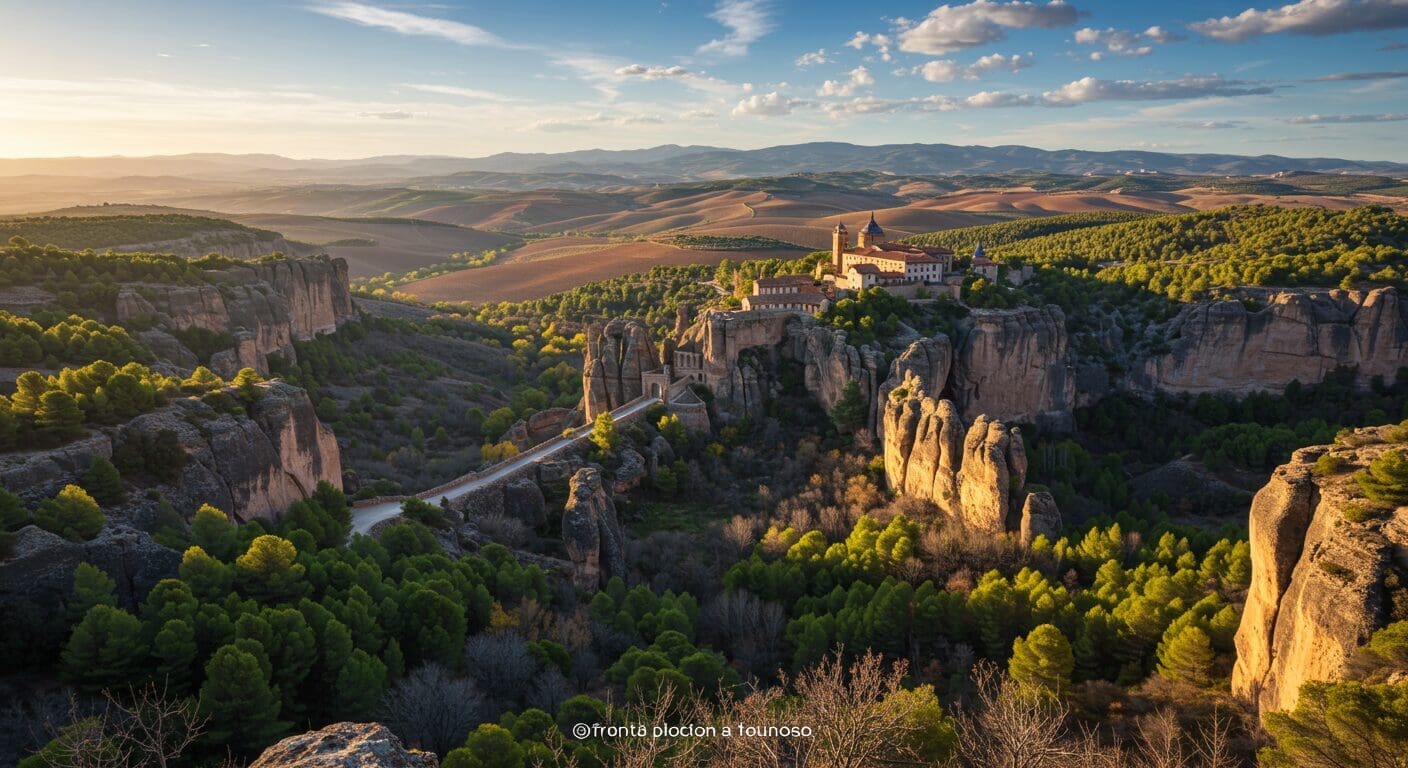
The Sierra de Guadarrama rises abruptly north of Madrid, offering altitude, pine forests and the kind of cool air that seems implausible given the heat of the capital thirty kilometres south. The national park here – designated in 2013 – protects one of the most accessible mountain ranges in Spain, and the variety of landscape packed into a relatively short drive from the city is genuinely impressive. Toledo sits on a granite hill above a bend in the Tagus river, its skyline essentially unchanged since El Greco lived and painted here, which makes approaching the city by road something that borders on the cinematic. Ávila is almost entirely encircled by medieval walls – original, intact, walkable – which earns it the kind of UNESCO listing that actually means something. Cuenca, built improbably on the edge of a gorge, looks like a decision someone made on a dare and turned into a World Heritage Site.
These are not isolated attractions. They are part of a continuous landscape – one that changes character every fifty kilometres and never quite lets you feel you’ve seen it all.
Things to Do That You Will Actually Remember
The list of activities available across Central Spain is broad enough to suit almost any travelling temperament, which is part of what makes planning a luxury holiday in central Spain so satisfying. Cultural immersion, outdoor pursuit and pure idle pleasure exist in unusually close proximity here.
Begin with flamenco – properly, not as a tourist checkbox but as an artistic experience. Cardamomo in Madrid is widely regarded as one of the best venues in the city for authentic tablao flamenco: intimate, technically serious and performed by artists who are there because they’re good rather than because you are. It is the kind of show where you realise twenty minutes in that you’ve been sitting completely still. The combination of guitar, song and dance at its best is one of those things that is difficult to explain to someone who hasn’t witnessed it and immediately obvious to anyone who has.
Beyond the performing arts, the day trip circuit from Madrid is genuinely exceptional. Toledo in a day is entirely achievable – the cathedral alone, with its extraordinary collection of El Greco paintings, is worth the forty-five-minute train journey. Segovia offers the Roman aqueduct (the engineering is jaw-dropping even by the standards of people who are, by now, fairly aqueduct-literate), the cathedral and the fairytale Alcázar, whose towers apparently inspired the Disney castle. This is mentioned not to diminish it but to note that the original is considerably more interesting than the derivative. The Real Monasterio de El Escorial – Felipe II’s vast, austere royal monastery-palace complex in San Lorenzo de El Escorial – is one of the more extraordinary buildings in Spain: enormous, deliberately severe, and somehow more powerful for it.
Within Madrid itself, the Prado alone justifies the trip. The collection – Velázquez, Goya, Titian, Rubens, El Greco – is of the first rank, and unlike some of the world’s great museums, it is a scale that remains navigable without eight hours and a floor plan. The Reina Sofía, housing Picasso’s Guernica, and the Thyssen-Bornemisza complete what locals call the Golden Triangle of Art. These three museums occupy a single walkable boulevard. This is, in art terms, an embarrassment of riches.
For Those Who Want to Work Hard in Beautiful Places: Adventure and Active Pursuits
The Sierra de Guadarrama and the wider Castilian highlands offer some of the best hiking in central Spain, with trails ranging from accessible day walks to serious multi-day routes through pine and rock. The GR10 long-distance path crosses the Sierra with views that explain, quite efficiently, why people choose to live up here. Mountain biking in the same range is increasingly popular, with well-marked trails that connect small villages and tend to end, helpfully, near somewhere that serves cold beer.
In winter, the ski resort at Navacerrada – just an hour north of Madrid – is modest by Alpine standards but wildly convenient, and the surrounding area offers snowshoeing and cross-country skiing for those who prefer their winter sports horizontal. The Somosierra and Guadarrama passes are popular with road cyclists who consider significant elevation gain a reasonable leisure activity, and in autumn the colour in the sierra forests is a genuine reason to ride here specifically.
Rock climbing has a long history in the region – La Pedriza, a natural granite landscape of extraordinary character just inside the national park boundary, attracts climbers from across Spain and beyond. The formations here are the kind that climbing magazines photograph and non-climbers find mildly alarming. Horse riding across the Castilian plains is an experience that connects you to a landscape in a particular way that no other mode of travel quite replicates – several stud farms and equestrian estates around Ávila and Salamanca offer guided rides across private land, including some that end, quite reasonably, with dinner.
Bringing the Children (And Actually Enjoying It)
Central Spain rewards family travel rather more than its reputation for serious culture might suggest. The combination of space, outdoor opportunity and child-friendly infrastructure makes it an excellent choice – particularly for families who have outgrown the beach holiday but whose children haven’t quite outgrown needing a pool.
The region’s landscapes are a gift for families travelling with curious children. The aqueduct at Segovia tends to produce genuine awe in young people (it was built without mortar – no concrete, no metal fasteners, just gravity and precision, by engineers working two thousand years ago) and the Alcázar’s castle aesthetics translate immediately. The Parque Warner theme park outside Madrid is excellent for families with older children and offers a full-day programme without the logistical complexity of the major European parks. Madrid’s own Parque del Retiro is one of the great city parks in Europe – large enough to contain an entire afternoon, with rowing boats on the lake and enough space for children to run without parental anxiety.
The practical case for a private luxury villa in Central Spain with families is straightforward: shared pools, private gardens, multiple bedrooms with genuine soundproofing, and the ability to eat at eight rather than fighting for a restaurant table at seven. Children sleep in their own wing. Adults have an evening. Everyone is, against expectation, content.
Five Centuries in an Afternoon: Culture, History and the Weight of Time
Central Spain is where Spanish history happened. This is not modest: the region contains some of the most consequential architecture, art and historical narrative in Europe, and the density of it within a manageable geography makes the cultural programme here almost unreasonably rich.
Madrid became Spain’s capital in 1561 under Philip II – relatively recently, in the context of the region’s history – and the city’s architecture reflects successive layers of imperial ambition, Bourbon refinement and twentieth-century transformation. The Royal Palace, the largest functioning royal palace in Europe by floor area, is extraordinary even by the standards of people who have toured a few. The Puerta del Sol and the Plaza Mayor represent different aspects of the city’s historical self-image – the former frenetic and commercial, the latter composed and theatrical.
Toledo was for centuries a city where Christian, Muslim and Jewish communities coexisted with a cultural productivity that left the city physically layered in ways that remain visible and navigable today. The old city is a UNESCO World Heritage Site that earns the designation: the streets are genuinely medieval, the architecture genuinely mixed, the cathedral genuinely one of the great Gothic buildings in Spain. El Greco painted here obsessively and the museo dedicated to his work – modest in size, exceptional in quality – is the kind of gallery visit that recalibrates how you see the city’s particular light.
Local festivals throughout the year add another dimension. San Isidro in Madrid in May is the city’s patron saint celebration – bullfighting at the Ventas bullring draws the most devoted aficionados of the season, while the surrounding events include concerts, processions and the particular energy of a city celebrating itself. For those interested in flamenco’s deeper roots, festivals in the region throughout summer bring serious artists to intimate venues far from the tourist circuit.
What to Buy and Where to Find It
Madrid is, without argument, one of the great shopping cities in Europe. The Golden Mile of luxury retail runs along Calle Serrano and the surrounding streets of the Salamanca neighbourhood – every significant European house is represented, alongside Spanish brands that have the advantage of being here rather than exported. Loewe, born in Madrid in 1846, should be visited at source. The leather is exceptional and the flagship store on Calle Serrano is a retail experience worth having regardless of buying intention.
For something more local, El Rastro is Madrid’s famous Sunday flea market in the La Latina neighbourhood – chaotic, atmospheric and genuinely old things sitting next to definitely not old things, which keeps the experienced eye usefully alert. The Barrio de las Letras (the literary quarter, between the Prado and Lavapiés) has a concentration of independent bookshops, print studios and design-forward homeware shops that reward careful walking. Toledo is the historic home of Damasquino – a technique of inlaying gold or silver wire into steel, originating with the Moorish craftsmen who worked here – and the quality ranges from tourist trinket to genuinely collectible. Choosing carefully matters.
Edible souvenirs from Central Spain travel well and mean something specific to this landscape: marzipan from Toledo (the local version is the definitive one and they will tell you so), saffron from La Mancha (the most expensive spice in the world, and the quality here is the standard by which others are judged), and Manchego cheese, which at its best – aged, raw milk, bought from a specialist – is nothing like the version that turns up on European cheese boards without much ceremony.
The Practical Things You Actually Need to Know
Spain operates on the Euro. ATMs are widely available and credit cards accepted almost everywhere in Madrid and the larger towns; cash remains useful in smaller villages and rural markets. The language is Castilian Spanish, which is to say the Spanish that the rest of the Spanish-speaking world either uses or uses as a benchmark. English is widely spoken in Madrid and tourist areas, though a few words of Spanish – even poorly pronounced – produces a warmth that the alternative does not.
The best time to visit Central Spain for a luxury holiday depends on what you want from it. Spring (April to June) is exceptional – warm, clear, not yet hot, and the landscapes are in colour. September and October offer golden light, harvest-season food and a city that has recovered its composure after August, when Madrid empties of locals in the way that only a city that fully believes in holiday can. July and August in Madrid are serious heat – 38°C is not unusual – which requires planning: an air-conditioned villa, late dinners, afternoon rest. The city at this point is largely given over to tourists, which is worth noting. Winter brings cold clear days that suit museum visits and long lunches, and the Sierra has snow.
Tipping is customary but not compulsory – rounding up or leaving five to ten percent in restaurants is appreciated. Safety in Madrid is broadly comparable to any major European capital: common sense applies, particularly around the more heavily touristed areas. The Spaniards eat late by the standards of most visitors – lunch from two, dinner from nine – and adjusting to this rhythm, rather than fighting it, makes the entire trip better. This is not advice that sounds important until you ignore it.
The Villa as a Base Camp for Living Well: Private Rentals in Central Spain
There is a particular logic to choosing a private luxury villa in Central Spain that becomes clear about twenty-four hours into a stay, when you realise that the villa is not simply where you sleep but where you actually live for the duration. This is a meaningful distinction.
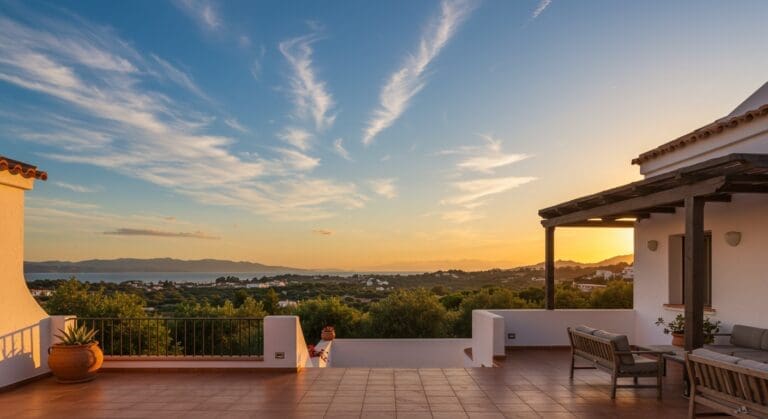
Central Spain’s villas range from converted farmhouses in the Sierra with original stone walls and contemporary interiors to grand aristocratic estates near Toledo with private pools and staff quarters intact. What they share is scale – the kind that allows a family of eight to have breakfast together without it being a logistical exercise, or a group of friends to share a week without feeling each other’s presence as an intrusion. Multiple bedrooms across separate wings, private pools that belong to nobody but you, gardens that are yours to use or ignore. This is space as a luxury good, and it is one that hotels – for all their room service and marble bathrooms – cannot replicate.
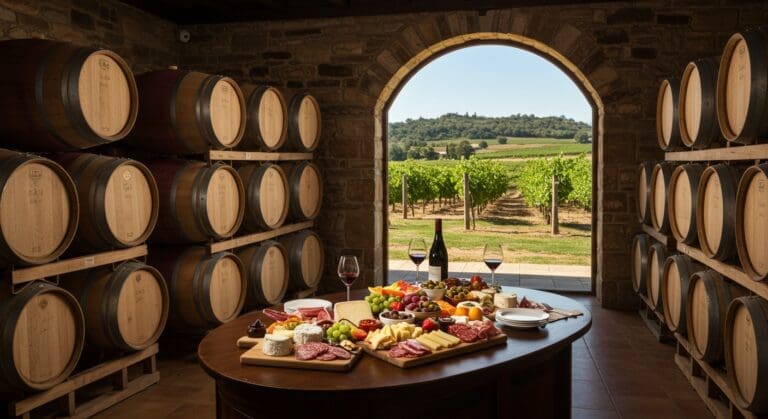
For couples on milestone trips, the intimacy of a private villa – a kitchen where you can have coffee before anyone else is awake, a pool where swimming at midnight is not a policy question – creates an experience that feels genuinely private rather than privately performed. For remote workers requiring reliable connectivity, the growing number of villas in the Madrid commuter belt and Sierra foothill towns now come equipped with fibre broadband or Starlink, which means trading a city-centre apartment for a villa with a private pool and a view of pine forest doesn’t require sacrificing a working week. For wellness-focused guests, the unhurried pace of villa life in Central Spain – long lunches in private gardens, morning walks in the Sierra, evenings that start with a glass of Ribera del Duero and end when they naturally end – has a restorative quality that no spa timetable can entirely replicate.
With over 27,000 properties worldwide, Excellence Luxury Villas has the range and the local knowledge to find the right property for the right trip. Whether that’s a converted finca within day-trip distance of Toledo, a Sierra retreat with mountain views and log fires for winter, or an estate outside Madrid large enough for a multi-generational family gathering – the portfolio covers it. Browse our full collection of luxury holiday villas in Central Spain and find the base from which everything else becomes possible.
More Central Spain Travel Guides
What is the best time to visit Central Spain?
Spring (April to June) and early autumn (September to October) are the most rewarding times to visit Central Spain. Both seasons offer warm, settled weather without the intensity of July and August, when Madrid temperatures regularly exceed 38°C. Spring brings green landscapes and lower visitor numbers; autumn delivers excellent food (harvest season, truffle markets, new wine) and a city returned to its natural rhythm after the summer exodus. Winter is cold but clear and suits culture-focused trips – the major museums are quieter and the Sierra has reliable snow from December onwards.
How do I get to Central Spain?
Madrid Barajas Adolfo Suárez Airport is the primary gateway to Central Spain and one of Europe’s major international hubs. Direct flights operate from across the United Kingdom (London Heathrow, Gatwick, Stansted, Manchester, Edinburgh), from the United States (New York, Miami, Los Angeles, Chicago) and from most major European cities. Flying time from the UK is approximately two and a half hours; from the US east coast, eight to nine hours. From the airport, the Metro reaches central Madrid in around twenty-five minutes. Private transfers to villas in the wider region typically take between forty-five minutes and two hours depending on location.
Is Central Spain good for families?
Yes, genuinely so. The combination of outstanding cultural sites accessible to children (the Roman aqueduct at Segovia, the castles of Toledo and Ávila, the Parque del Retiro in Madrid), excellent outdoor opportunities in the Sierra de Guadarrama, and the practical advantages of private villa accommodation makes Central Spain an excellent family destination. The Spanish approach to children in restaurants and public life is relaxed and inclusive – families with young children are not made to feel like an imposition. A private villa with a pool removes the logistical friction of hotel family rooms and gives children space and adults privacy in equal measure.
Why rent a luxury villa in Central Spain?
A private luxury villa transforms the Central Spain experience from a tour into a stay. The key advantages over hotel accommodation are scale (multiple bedrooms, private gardens, dedicated living spaces), privacy (a pool that is yours alone, meals on your own schedule, no lobby), and flexibility (a kitchen for breakfast, a terrace for wine at midnight, no dining room booking required). Many villas in the region also come with dedicated staff – housekeeping, a concierge, and in some cases a private chef – which delivers the service standards of a five-star hotel without surrendering the privacy of a private home. For families and groups particularly, the value calculation relative to multiple hotel rooms is often compelling.
Are there private villas in Central Spain suitable for large groups or multi-generational families?
Yes. The region has a significant stock of large estate properties – converted aristocratic residences, working fincas, and purpose-designed luxury villas – capable of accommodating groups of ten to twenty guests or more. Many feature separate sleeping wings (ideal for multi-generational trips where grandparents and grandchildren can coexist with their own space intact), multiple private pools, outdoor dining areas designed for large gatherings, and staff quarters for live-in or daily housekeeping and catering. For milestone celebrations – significant birthdays, anniversary gatherings, family reunions – these properties offer a setting that no hotel event space quite matches.
Can I find a luxury villa in Central Spain with good internet for remote working?
Increasingly, yes. Villas in and around the Madrid metropolitan area and in the Sierra de Guadarrama foothill towns typically have access to fibre broadband connections capable of supporting video calls, large file transfers and simultaneous devices without issue. More remote rural properties may rely on Starlink or equivalent satellite connectivity – worth confirming at booking stage – which now delivers performance adequate for serious remote work in most conditions. Many guests working from Central Spain villas report that the combination of strong connectivity, private outdoor workspace and proximity to Madrid (for occasional in-person meetings) makes the arrangement more productive than a conventional office, which is either an advertisement for remote working or a comment on offices.
What makes Central Spain a good destination for a wellness retreat?
Central Spain offers a form of wellness that is less programme and more pace – the region’s unhurried rhythms, clean mountain air, exceptional food culture and abundant outdoor space create conditions for recovery and restoration without requiring a structured retreat. The Sierra de Guadarrama provides world-class hiking, cycling and open-water swimming. Several luxury spas operate within driving distance of the major towns, and many villas in the region come equipped with private pools, outdoor hot tubs, gym facilities and large gardens suited to yoga or simply sitting quietly for an extended period. The local diet – olive oil, legumes, fresh vegetables, excellent fish from the Atlantic coast, and some of Spain’s finest wine from nearby Ribera del Duero and Rueda – does additional work without announcing itself.