
Best Restaurants in Charente-Maritime: Fine Dining, Local Gems & Where to Eat
It begins, as so many good things in this part of France do, with an oyster. You’re sitting somewhere along the Seudre estuary or the Bassin de Marennes, at a table that probably has paper on it, a carafe of something cold and local in front of you, and a man in waterproof trousers is bringing you a dozen oysters that were in the sea roughly two hours ago. Someone at the table makes a remark about iodine. You eat one. You eat another. By the third, conversation has stopped entirely – not out of rudeness, but because there is simply nothing more to say. This is the rhythm of eating in Charente-Maritime, and once you’ve felt it, restaurant meals elsewhere have a tendency to feel faintly like an apology.
The Charente-Maritime is not, strictly speaking, a destination that gets the gastronomic headlines that Bordeaux or Lyon do. This suits it rather well. The food here is rooted in the Atlantic – in salt marshes and oyster beds, in fishing boats and market stalls – and it has a confidence that comes from not needing to perform. You’ll eat exceptionally well here. You may not always know the chef’s name. That’s fine. For those who want both – the theatre of serious cooking and the pleasure of a properly good moules-frites eaten with your shoes off – the region obliges generously.
This guide to the best restaurants in Charente-Maritime is organised to help you navigate everything from Michelin-starred tables to the sort of place where the menu is written on a board and changes when the catch does.
The Fine Dining Scene: Serious Cooking by the Atlantic
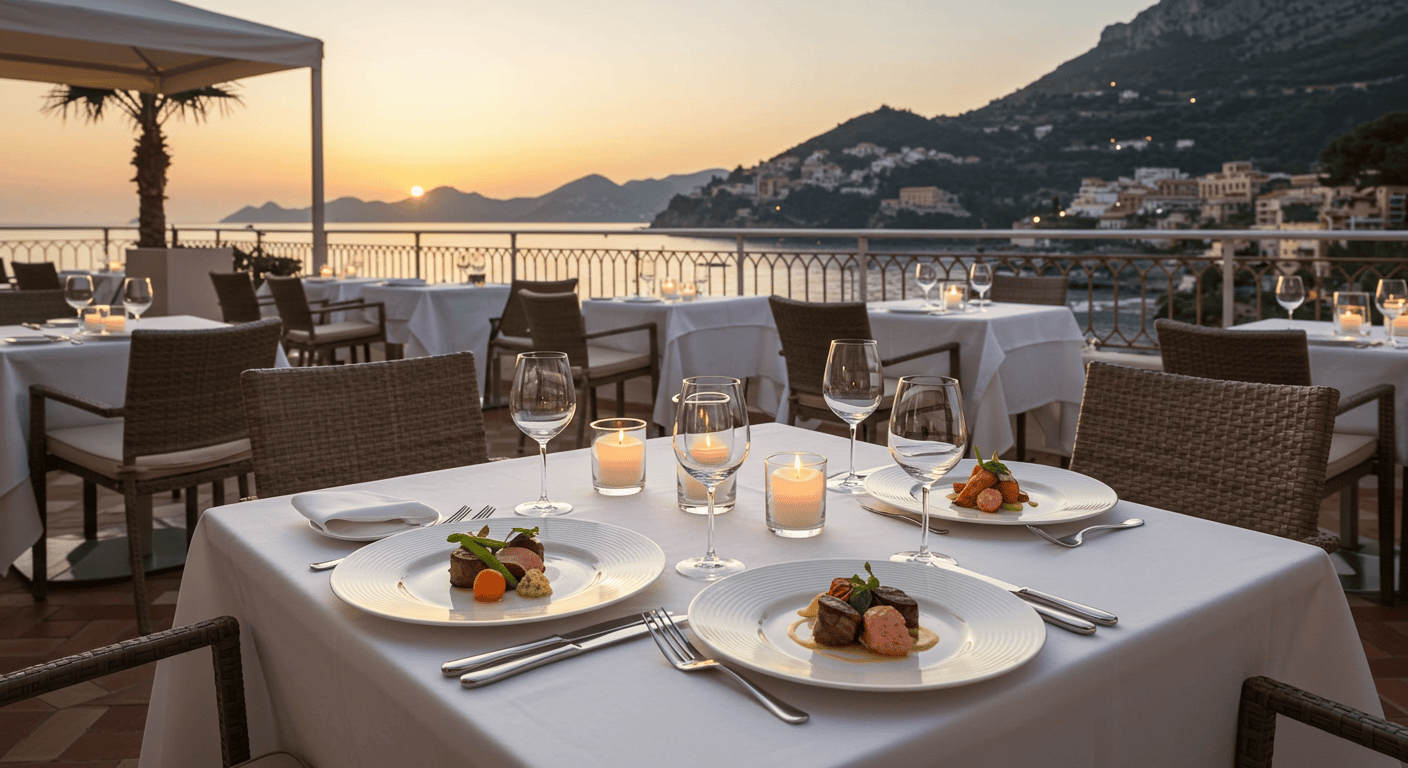
Charente-Maritime has a quietly serious fine dining scene that rewards those who seek it out rather than advertising itself aggressively. The region has Michelin-recognised restaurants, particularly around La Rochelle – a city that punches considerably above its weight gastronomically and has done for decades. La Rochelle’s position as a working port, combined with a relatively affluent population and steady stream of discerning visitors, has produced a concentration of skilled kitchens that treat the local larder with genuine intelligence.
The cooking at the top end here is characterised by restraint rather than showmanship. Chefs working in this region tend to be fluent in classic French technique but anchored to what arrives from the sea and the surrounding marshland. You’ll encounter Marennes-Oléron oysters prepared with the lightest possible hand, Charentaise butter used without apology, and fish – sea bass, sole, mullet – that tastes like fish is supposed to taste when it hasn’t travelled far. There is a sense, eating in the better restaurants here, that the kitchen’s job is largely not to ruin what the sea has already perfected.
Île de Ré has also produced some polished dining rooms, where the visual language is bleached linen and sea light, and where the cooking tends toward the elegant rather than the elaborate. If you’re planning a special occasion meal, book several weeks ahead – the island’s capacity doesn’t expand for summer, but the number of people wanting tables very much does.
Local Bistros and the Backbone of Charentaise Eating
Here is where Charente-Maritime really lives. The local bistro in this region – call it a café, a brasserie, a restaurant du quartier – operates with a kind of cheerful authority that is deeply French and deeply reassuring. The menus are short because the ingredients are good and nobody is trying to confuse you. The wine list has a local section that you should pay attention to. The server may or may not smile at you, depending on the season and their general view of humanity, but they will bring things promptly and know exactly what you should be ordering.
In the market towns of the inland Charente-Maritime – Saintes, Jonzac, Saint-Jean-d’Angély – you’ll find proper lunch culture still intact. The two-course formule at midday, a glass of something from the Cognac country, a table of retired men arguing gently about something agricultural. This is the daily rhythm of eating here, and it is one of the most quietly civilised things about France in general and this region in particular.
Look for restaurants that take the mouclade seriously – this is the local mussel dish, cooked with cream and a splash of Pineau des Charentes, and it varies considerably from kitchen to kitchen. A well-made mouclade is a reliable indicator of a kitchen that understands what it’s doing. An indifferent one is equally instructive. The dishes to order across the region include grilled fish from local day boats, éclade (mussels cooked over pine needles, which sounds eccentric and tastes extraordinary), and anything involving the local butter, which deserves its own paragraph but will have to wait.
Oyster Shacks, Beach Clubs and Casual Dining by the Water
Let’s be honest about something. Some of the best eating in Charente-Maritime doesn’t happen in restaurants at all. It happens at wooden tables set up next to oyster beds, at market stalls where a producer hands you something briny and cold and charges you almost nothing, and at beachside spots on Île de Ré or Île d’Oléron where the cooking is simple because simplicity is entirely appropriate when you’re looking at that particular view. (This is not an excuse for poor cooking. It is, rather, an acknowledgement that context is a powerful seasoning.)
The oyster shacks of the Marennes-Oléron basin are not to be missed. These are working producers who sell direct – you’ll find them along the coast road, often with hand-painted signs and a bucket of ice – and the experience of eating oysters with a glass of Muscadet or chilled Entre-Deux-Mers at the source, in the morning, watching herons pick their way through the salt flats, is one of those travel experiences that bypasses the intellectual entirely and goes straight to something more fundamental.
Beach clubs on Île de Ré have become increasingly sophisticated – there are now several that would look at home in Saint-Tropez, with proper kitchens, curated wine lists, and the kind of loungers that make an afternoon disappear entirely. They serve well-executed versions of Méditerranée classics alongside Atlantic seafood, and they understand that the setting is doing considerable work so the food needs to keep up. For a long, slow lunch with your feet in the sand, they’re genuinely hard to beat.
Food Markets: Where to Shop and What to Buy
The market culture of Charente-Maritime is excellent and taken seriously by locals in the way that only food cultures with genuine depth actually are. La Rochelle’s covered market – the Marché Central – is a destination in its own right, operating daily and selling everything from live shellfish to farmhouse Charentaise butter to truffles in season, with a focused intensity that makes most British farmer’s markets look like a car boot sale with aspirations.
The island markets deserve particular attention. The market at Saint-Martin-de-Ré is one of the great pleasures of visiting Île de Ré – busy, colourful, local and tourist in roughly equal measure – and the produce quality is consistently high. Arrive early, before the heat and the crowds make the whole thing feel like a test of endurance. The market at Le Bois-Plage is smaller and more relaxed, and therefore somewhat easier on a summer morning.
In the markets, look for: Marennes-Oléron oysters, fleur de sel from the Île de Ré salt marshes, Charentaise butter (the proper stuff, salted, from local dairies), Cognac-country walnuts in autumn, and the local goat’s cheeses which are mild and fresh and entirely underrated. If you’re staying in a villa with a kitchen, the combination of a good market morning and a private terrace supper is one of the better arguments for self-catered travel.
Hidden Gems: Where the Locals Actually Eat
Every region has them – the restaurants that don’t advertise, have no website, and are somehow full every service with people who look like they’ve been coming for years. Charente-Maritime has its share. They tend to be in the smaller villages of the interior, in the Cognac country around Cognac and Pons, or tucked into the quieter corners of the islands. Finding them requires one of two methods: asking someone who lives here (the most reliable approach), or wandering somewhere you weren’t planning to go at lunchtime and following the sound of conversation.
The fishing villages along the Côte Sauvage on Oléron have a handful of these – places where the daily menu is whatever was caught that morning, written in handwriting that suggests someone was in a hurry, and where the room is full of fishermen and their families at noon and tourists looking slightly confused at one o’clock. The confused tourists are, on this occasion, in exactly the right place. These restaurants rarely take bookings. Arrive early or accept that you’ll be eating somewhere else. Both outcomes are, in this part of France, entirely manageable.
Wine, Cognac, Pineau and What to Drink
To drink well in Charente-Maritime you need to recalibrate slightly from the Bordeaux-or-Burgundy default that governs most serious wine thinking in France. The region produces Cognac, obviously – among the finest in the world, and available to try at distilleries throughout the Cognac country in a manner that is considerably more accessible than comparable experiences in Champagne or Bordeaux. But Cognac is not, generally, what you drink with food.
What you drink with food, if you drink it intelligently, is Pineau des Charentes – the local aperitif made from grape juice and Cognac, served chilled. It is sweet, complex, slightly honeyed, and pairs with extraordinary effectiveness with the local oysters, which is either a happy accident or the sort of thing that happens when a food culture evolves over centuries in a single place. Order it as an aperitif. Order it again. Someone will tell you it’s an acquired taste. They are wrong.
For table wine, the local Vins de Pays Charentais are worth exploring – light, often from Ugni Blanc or Colombard grapes, undervalued and under-priced. The Muscadet of the Loire is the region’s other great seafood companion, widely available and rarely disappointing. For red wine, look to the broader south-west of France rather than reaching automatically for Bordeaux: the Bergerac and Marmandais appellations offer character and value that the more famous neighbour increasingly struggles to match at the price points that actually get ordered.
Reservation Tips and Practical Wisdom
July and August in Charente-Maritime present a specific logistical problem that no amount of positive thinking resolves: there are an enormous number of people who want tables at a fairly limited number of restaurants, and the better restaurants have known this for years. Book ahead. Book considerably ahead. For anything with a Michelin distinction or a strong local reputation, two to three weeks minimum in peak season is not excessive – it is merely prudent.
Several practical points worth noting. Lunch is frequently better value than dinner in the formal restaurants, and in some cases the cooking is identical. The concept of the set lunch menu – often three courses at a price that would buy you a starter in London – remains intact in this region in a way that feels almost sentimental in the best possible sense. If you can arrange your days to allow for a proper sit-down lunch rather than a sandwich in the car, do so. The restaurants are better for it. So are you.
For island dining on Île de Ré or Île d’Oléron, note that many of the better restaurants close on certain weekday evenings out of season, and some close entirely in winter. Check before travelling. The French have no particular obligation to be open when it’s inconvenient for you, and they exercise this right with admirable consistency.
Finally: speak French, or try to. Even a halting attempt produces a visible relaxation in the room that affects service in directly positive ways. This is not a generalisation. It is the result of observation across many years and many meals.
Dining from Your Villa: Private Chefs and the Ultimate Table
There is an argument – and it is a good one – that the finest meal you’ll eat in Charente-Maritime will happen at your own table. Not because the restaurants aren’t worth visiting: they are, and you should. But because Charente-Maritime’s raw ingredients are so exceptional that having a private chef source them from the morning market and cook them for you on a terrace overlooking the vines or the salt marshes, with a cold bottle of Pineau and nobody to share the view with except the people you chose to bring, is a form of eating that even the best restaurant in the region can’t quite replicate.
A luxury villa in Charente-Maritime with a private chef option transforms the food culture of the region from something you visit into something you inhabit. Your chef can work with local producers, adapt to dietary requirements without fanfare, and create the kind of long, unhurried meal that the French have always understood is really the point. It’s also, for a group, often more economical than a string of restaurant dinners – though economy is probably not the main reason you’re considering it.
For more on planning your time in the region – where to stay, what to see, how to move between the islands and the interior – see our full Charente-Maritime Travel Guide.

