Dominican Republic Travel Guide: Where to Stay, Eat & Explore in Luxury
In January, something remarkable happens in the warm shallows of Samaná Bay. Two thousand humpback whales – forty tons apiece – arrive from the North Atlantic to court, calve and, by all accounts, make an extraordinary amount of noise. The rest of the Dominican Republic, meanwhile, is basking in the kind of clear, dry warmth that makes January arrivals from the United Kingdom go slightly glassy-eyed with gratitude. Temperatures hover in the low-to-mid twenties. The trade winds keep things civilised. The light, particularly in the late afternoon, has that thick golden quality that makes everything look vaguely important. This is the Dominican Republic at its most persuasive – and it has been persuading people for centuries.
What surprises many first-time visitors is quite how much country there is here. The Dominican Republic shares the island of Hispaniola with Haiti and occupies its eastern two-thirds – a fact that becomes meaningfully apparent when you start moving around and discover that “the Caribbean” is doing an enormous amount of heavy lifting as a descriptor. There are rainforests and alpine peaks, merengue-loud cities and villages that barely register on a map, beach clubs built for spectacle and coves that feel genuinely undiscovered. It is a destination that works beautifully for families who want privacy and space without sacrificing quality, for couples marking a milestone who want somewhere that feels genuinely romantic rather than manufactured, for groups of friends who want serious beach time with serious food to match. Increasingly, it attracts remote workers who have discovered that high-speed internet and a private infinity pool are not mutually exclusive, and wellness-focused travellers drawn by the combination of warm water, outdoor living and a pace of life that gently insists you slow down. The luxury villas Dominican Republic offers today – and there are properties here that will properly recalibrate your sense of what a holiday can be – are a large part of why it keeps drawing repeat visitors.
Getting Here Without the Drama: Arrivals, Airports and Getting Around
The Dominican Republic is well-connected in a way that makes reaching it considerably less fraught than many Caribbean destinations of comparable quality. Punta Cana International Airport (PUJ) is the country’s busiest and handles direct long-haul flights from across Europe and North America, making it the default entry point for most villa guests heading to the east coast. Las Américas International Airport (SDQ), which serves Santo Domingo, is the smarter choice if you’re planning to base yourself in the capital or explore the south and southwest. Cibao International Airport (STI) handles Santiago and the Cibao Valley, and is worth knowing about if you’re travelling through the island’s interior.
From the United States, flights from New York, Miami and Atlanta to Punta Cana take between three and four hours. From the United Kingdom, expect roughly nine to ten hours direct. Most premium villa rentals include airport transfer coordination as standard – a private vehicle meeting you at arrivals rather than a shared shuttle is both worth arranging in advance and more or less essential if you have small children or large quantities of luggage.
Within the country, the picture is more complicated. Driving is entirely possible but requires a particular kind of confidence – road conditions vary considerably, signage is optimistic at best, and motorcycles called motoconchos operate on an entirely self-authored set of traffic rules. For serious exploration between regions, domestic flights between Santo Domingo, Punta Cana, Santiago and Samaná save significant time. If you’re staying in a villa with concierge support, use it – locally organised private transfers are usually excellent value and save the considerable mental energy of improvising.
The Table Is Set: Eating Well in the Dominican Republic
Fine Dining
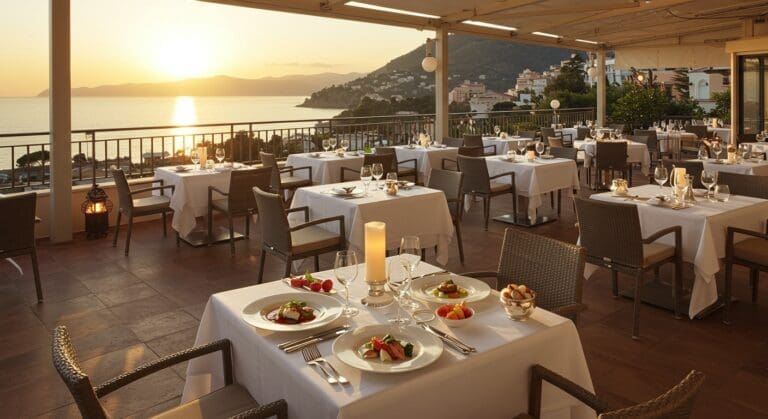
The Dominican Republic’s fine dining scene is considerably more serious than its reputation as a beach resort destination might suggest, and Santo Domingo – a city that rewards more exploration than most package tourists give it – is where the best of it lives. La Cassina is the name most consistently spoken by people who know: a modern Mediterranean restaurant that has collected awards with the kind of quiet consistency that suggests it genuinely deserves them. The seafood is the reason to go, though the meats give it strong competition. There is a wine cellar of real ambition, a cocktail trolley that arrives at your table with pleasing ceremony, and a sliding roof above the tropical garden that opens to let the evening in. Live music on Thursdays. It is sophisticated without being stiff, which is harder to achieve than it sounds.
Don Pepe, on Porfirio Herrera Street, takes a different approach – classic Spain-inflected cooking applied to excellent local ingredients, with seafood and steak both outstanding and a wine list that reflects serious intent. The service is the kind that makes you feel attended to rather than managed. Also in Santo Domingo, El Mesón de la Cava requires a brief mention of its setting before anything else: it is built inside a natural cave, which means that dinner here involves descending into the earth while someone brings you very good Dominican food. The romance of it is entirely real, and the cooking delivers on the promise of the setting.
In Punta Cana, La Yola at the Puntacana Resort & Club floats above the Caribbean on a structure designed to resemble a traditional fishing boat, which might sound like a gimmick but is executed with enough elegance that you stop thinking about it fairly quickly. The seafood is as fresh as the ocean view suggests it should be, and the service has earned La Yola a consistently strong reputation on OpenTable – including particular praise from vegetarian diners, which is not something you can say about every Caribbean restaurant.
Where the Locals Eat
Venture beyond the resort zone in any direction and you will quickly find the Dominican Republic that locals actually inhabit. The national dish is la bandera – literally “the flag” – a combination of white rice, stewed red beans and braised meat, usually chicken or beef, served with fried sweet plantains. It is filling, honest food, and eating it in a roadside comedor (a simple local eatery with plastic chairs and no pretensions whatsoever) is one of the more grounding experiences the island offers. Order the sancocho if you see it – a long-simmered stew of multiple meats and root vegetables that tastes like someone has been paying close attention all day, which they have.
In coastal towns, fresh ceviche and grilled whole fish arrive without ceremony and need none. Beach bars across the north coast serve Presidente beer at the kind of price that makes you double-check the bill. Markets in Santiago and Santo Domingo’s Mercado Modelo are worth an hour of anyone’s morning – the produce, the noise and the specific energy of a working Dominican market is a more authentic experience of the country than a week at a swim-up bar.
Hidden Gems Worth Seeking Out
Jellyfish Restaurant on Bávaro Beach in Punta Cana has built its reputation away from the resort bubble by offering beachfront dining that works equally well for a quiet lunch and a private event. The architecture is distinctive – open to the sea in ways that make the setting an active part of the meal – and the fresh seafood comes at prices that compare well with the resort alternatives. It is the kind of place that people return to each trip and quietly keep to themselves. Consider this your briefing.
Beyond that, ask your villa manager. This is not a deflection – local knowledge in the Dominican Republic is genuinely the best navigation tool available, and the person managing your villa has almost certainly eaten more interesting meals within five kilometres of your property than any guidebook has yet documented.
A Country That Doesn’t Fit in a Single Postcard: Exploring the Regions
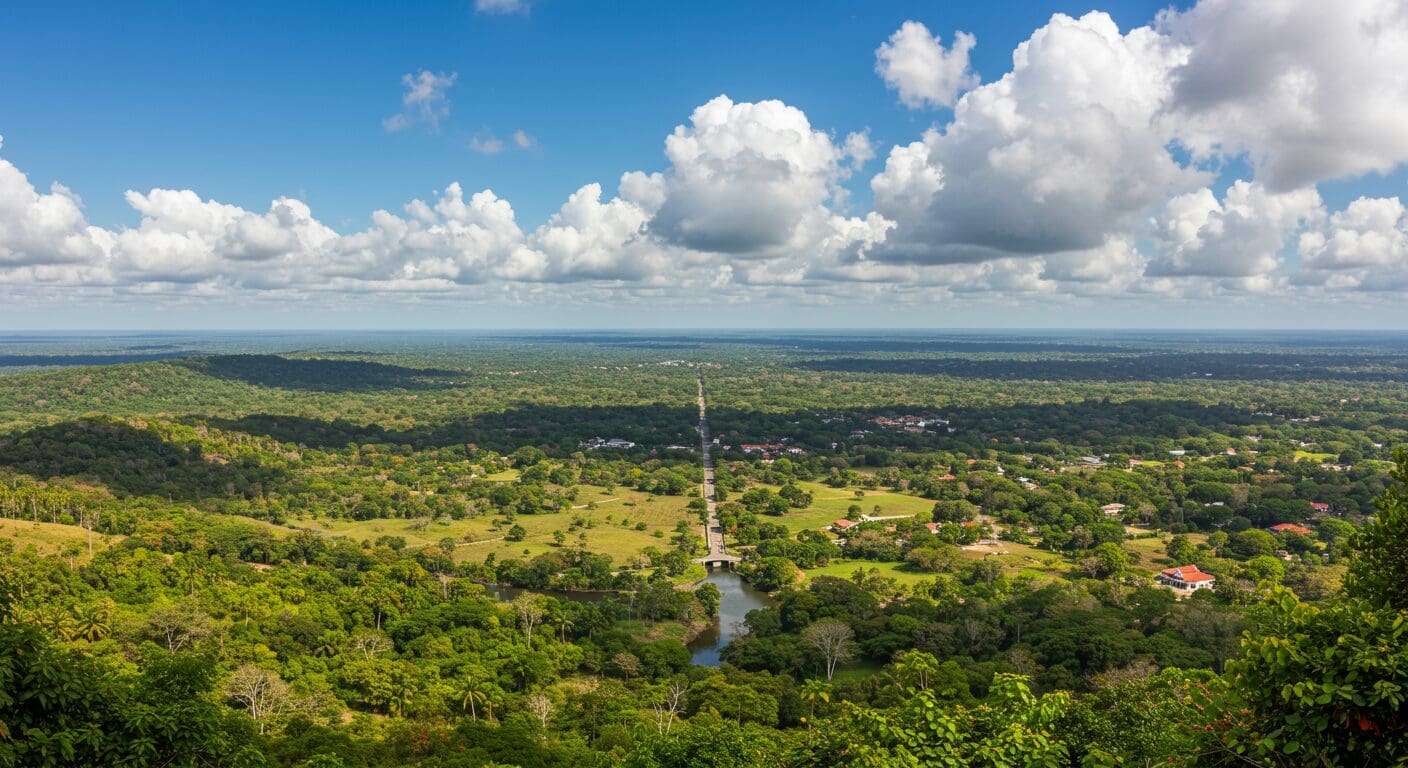
The geography of the Dominican Republic is the thing that surprises people most, and most pleasantly. This is a country with the highest peak in the Caribbean – Pico Duarte at 3,098 metres – and also some of the lowest land on Earth. It has pine forests in the central Cordillera and mangrove lagoons at the coast. The north coast, centred on Cabarete and Sosúa, is where the trade winds blow most reliably and where a surf and outdoor sports culture has developed over decades. The Samaná Peninsula to the northeast feels like a separate country entirely – lusher, greener, quieter, its hillsides dropping into turquoise bays that don’t appear to be trying particularly hard.
Punta Cana and the Bávaro coast to the east is where most international tourism concentrates, and there are good reasons for that: the beaches here are genuinely world-class, the infrastructure is well-developed, and the villa stock is among the best in the Caribbean. But treating Punta Cana as the totality of the Dominican Republic is like landing in Cancún and concluding you’ve seen Mexico.
Santo Domingo deserves at least two full days. Founded in 1496, it is the oldest continuously inhabited European city in the Americas, and the Colonial Zone (Zona Colonial) is a UNESCO World Heritage Site that manages to be genuinely historically significant without feeling like a museum. Cobblestone streets, cathedral towers, colonial palaces converted into boutique hotels – it is a living city that happens to be very old, which is a different thing from a preserved one.
The Jarabacoa and Constanza regions in the central mountains offer a version of the Dominican Republic that most beach visitors never see: cool temperatures, strawberry farms, and rivers fed by actual waterfalls that you can swim in without competing for space. For those staying in a luxury villa Dominican Republic-style and looking for day trip options that involve altitude rather than altitude sickness, this is excellent territory.
What to Actually Do: Activities That Make the Journey Worth It
The humpback whale watching in Samaná Bay is, without exaggeration, one of the natural world’s genuine spectacles. Between January and March, around two thousand humpback whales congregate in the warm, protected waters of the bay to breed – a fact that becomes viscerally real when you are in a small boat and a forty-ton animal breaches completely clear of the water approximately forty metres away. It takes a few moments to process. Samaná has been a designated whale sanctuary since 1986, and the operators who run boats there are governed by strict protocols that prioritise the animals’ wellbeing. Book with a reputable local operator, go in February when activity peaks, and arrive prepared to feel very small in the best possible way.
Inland, the waterfalls of Jarabacoa – particularly Salto de Jimenoa – are accessible by hiking trails of varying difficulty and offer swimming conditions that are cool, clean and enormously satisfying after the walk in. The 27 Charcos de Damajagua, near Puerto Plata on the north coast, involves jumping and sliding through a series of natural limestone pools – it is part adventure sport and part water park, and adults enjoy it as much as anyone else, regardless of what they claim before they arrive.
Catamaran sailing, deep-sea fishing, diving in La Caleta National Marine Park, ATV tours through the countryside around Punta Cana – the activity infrastructure here is mature and well-run. This is a destination that has been hosting international visitors long enough to have worked out how to do it properly.
Wind, Waves and White Knuckles: Adventure Sports in the Dominican Republic
Cabarete, on the north coast, has a legitimate claim to being the kitesurfing and windsurfing capital of the Caribbean – a title earned by the consistency of its trade winds and the depth of its instruction culture. The town has been drawing serious riders since the 1990s and has built an ecosystem of schools, rental operations and repair shops that reflects that history. Conditions are reliably good from June through August when the winds blow strongest, though the season extends well beyond that. Beginners can learn here; experienced riders can push themselves. The town also has a nightlife that manages to be animated without being oppressive, and a restaurant scene that punches well above its size.
For surfers, Playa Encuentro just west of Cabarete offers the best waves on the island – a break that works well across a range of experience levels and is nowhere near as crowded as its quality would suggest it should be. Scuba diving is excellent at several points along the coast; the wrecks near La Romana have attracted a resident population of marine life that has made itself thoroughly at home. Hiking in the Cordillera Central – including the multi-day ascent of Pico Duarte – is for the genuinely committed, but the rewards include cloud forest, clear mountain streams and a view from the summit that encompasses a significant portion of the Caribbean.
Mountain biking, white-water kayaking on the rivers around Jarabacoa, paragliding near Jarabacoa – the Dominican Republic’s adventure credentials are considerably more varied than its beach reputation suggests. It is a destination for people who want to do things, not only people who want to sit near things.
A Holiday That Works for Everyone (Including the Eight-Year-Old): Families in the Dominican Republic
The Dominican Republic is one of the more genuinely family-friendly destinations in the Caribbean – not because it has been engineered to be, but because the combination of calm water beaches, warm climate, short flight times from major hubs, and a local culture that is actively welcoming towards children makes it work without effort. The beaches around Punta Cana and Bávaro are particularly well-suited to younger children: the water is shallow for a long way out, the waves are gentle, and the sand is the kind that sticks to everything and washes off easily. Parents have been making this discovery for decades.
The particular advantage of renting a luxury villa in the Dominican Republic rather than booking a hotel or resort is the amount of space and control it provides. A private pool that your family is not sharing with thirty strangers. Mealtimes that are not dictated by a restaurant’s sitting schedule. A kitchen for the children who will only eat pasta, and a terrace for the adults who would like to have a conversation in relative quiet after eight o’clock. The 27 Charcos de Damajagua, the whale watching in Samaná, horse riding, quad bikes – there is no shortage of things to do with children of most ages, and the infrastructure around the main tourist areas means that organised activities are accessible and well-run.
Multi-generational groups – grandparents, parents, children – find the larger villa properties here particularly well-suited to their needs, with enough space for everyone to share without anyone needing to spend more time with their in-laws than is strictly enjoyable.
Five Hundred Years in the Making: Culture, History and Local Life
Santo Domingo’s Zona Colonial is the oldest European settlement in the Americas, and the weight of that history is worn with surprising lightness. The Catedral Primada de América, completed in 1541, sits at the centre of the old city with the unhurried dignity of something that has survived a great deal and expects to survive considerably more. The Alcázar de Colón – the palace built for Diego Columbus, son of Christopher – has been restored and converted into a museum that puts the colonial period in context with more honesty than the original occupants would have appreciated. Walking the Calle Las Damas in the early morning, before the heat builds and the tourists arrive, is a genuinely affecting experience.
Dominican culture has a vitality and confidence that comes from several centuries of negotiating between African, European and indigenous Taíno influences. Merengue – fast, percussive, danced in close proximity – is the national music and is not, as some visitors assume, something performed for tourists. It is played at weddings, quinceañeras, Carnival celebrations and street corners, with or without an audience. Bachata, originally considered too melancholy for respectable company (it is very much the people’s music), has since conquered the world. February brings Carnival, which is celebrated with particular exuberance in La Vega and Santo Domingo – elaborate costumes, satirical masks called vejigantes, and a level of collective energy that is either exhilarating or slightly overwhelming depending on your constitution.
Amber, formed from the resin of extinct trees and found in large quantities in the north of the country, is the Dominican Republic’s most distinctive natural product. The Amber Museum in Puerto Plata is small, very good, and contains a piece with a mosquito trapped in it that inevitably prompts someone to make a Jurassic Park reference. This is unavoidable and should be treated with equanimity.
What to Bring Home (That Isn’t a Fridge Magnet): Shopping in the Dominican Republic
The Dominican Republic produces several things worth taking seriously as purchases. Amber, as noted, is the obvious one – the blue amber found in the Cordillera Septentrional is the rarest and most sought-after variety in the world, and buying from reputable dealers in Puerto Plata or Santo Domingo ensures authenticity. Larimar, a pale blue volcanic stone found only in the southwest of the country near the town of Barahona, makes jewellery of real beauty – it is found nowhere else on Earth, which gives it a specificity that most souvenir shopping lacks.
Dominican rum – Barceló, Brugal and Bermúdez being the main producers – is excellent and considerably underpriced by international standards. A bottle of Barceló Imperial or Brugal 1888 brought home will convert at least one sceptic. Dominican coffee and cacao are both of genuinely high quality, and the organic chocolate from producers in the Cibao Valley and around San Francisco de Macorís has attracted international attention in recent years.
Craft markets in tourist areas sell the expected: paintings on wood, hand-embroidered tablecloths, carved figures. Quality varies. The Mercado Modelo in Santo Domingo is the largest and most comprehensive, and while it is geared toward tourists, the sheer volume means that interesting pieces exist alongside the generic ones. Bargaining is expected and is, if approached with goodwill rather than aggression, a perfectly pleasant transaction for everyone involved.
Before You Go: Practical Things Worth Knowing
The Dominican peso (DOP) is the local currency, though US dollars are widely accepted in tourist areas and at most villa properties. ATMs are available in all major towns and resort areas. Credit cards are accepted at restaurants and shops of any ambition, though carrying some cash is sensible for markets, rural areas and motoconchos. The official language is Spanish, and while English is spoken fluently in most tourist-facing contexts, learning a few words of Spanish will earn you disproportionate goodwill – Dominicans are warm towards visitors who make any effort at all.
Tipping is customary and expected: 10-15% at restaurants if service charge is not included, small amounts for housekeeping and drivers. At all-inclusive properties, the culture around tipping is specific to each property – your villa concierge will advise.
The best time for a luxury holiday Dominican Republic-style is between November and April, when rainfall is low, temperatures are comfortable and the northeast trade winds keep the humidity manageable. The shoulder seasons of May and October offer good value with only slightly higher rain probability. Hurricane season runs from June through November, with the peak risk concentrated in August and September – not impossible times to visit, but worth understanding before you book.
In terms of safety: the Dominican Republic is a safe destination for tourists who exercise standard urban awareness. The resort areas and villa zones are well-policed and present no particular concerns. Solo women travellers should apply the same common sense they would in any unfamiliar city. The tap water is not recommended for drinking – stick to bottled water and you will have no issues. The Dominican Republic travel guide wisdom on this one is consistent: don’t risk it, the coconut water is better anyway.
Why a Private Villa Changes Everything: Staying in the Dominican Republic Properly
There is a version of a Dominican Republic holiday that involves a wristband, a buffet breakfast, and the vague sensation of being processed. There is another version that involves waking up in a villa where the pool is yours alone, breakfast arrives when you want it, and the only decision required before noon is whether you prefer the lounger by the garden or the one closer to the sea view. The difference between these two experiences is not merely financial – it is architectural, in the sense that one is designed around the guest and the other is designed around throughput.
The luxury villas Dominican Republic has developed over the past decade – particularly around Punta Cana, Casa de Campo, Cabarete and the Samaná Peninsula – now represent some of the finest private accommodation in the Caribbean. Properties with five, eight, ten bedrooms. Infinity pools that appear to continue into the ocean. Full kitchen and chef services, so that dinner can be prepared to your specification and served at a table that is, crucially, yours. Private gyms for the wellness-focused guest. Dedicated workspaces with high-speed connectivity for the remote worker who needs to keep one eye on their inbox while keeping the other on something considerably more appealing.
For families, the calculation is particularly clear: the cost of a large villa divided among several couples or across a multi-generational group typically compares very favourably with an equivalent number of hotel rooms, while delivering something a hotel room structurally cannot – the sense that you are living somewhere, briefly, rather than passing through. Children can make noise without consequence. Adults can have a conversation without curating it for public consumption. Groups of friends can have a genuinely private dinner without the ambient sound of forty other people’s holidays.
Concierge services at premium villa properties here are excellent – the best of them will arrange whale-watching boat reservations, restaurant bookings at La Cassina, private transfers, yacht charters, and in-villa spa treatments with the same fluency. The villa staff ratio at a well-run property is one of the things that distinguishes this kind of holiday from anything else: you are not sharing their attention with two hundred other guests. You are, for the duration of your stay, their specific and sole concern.
For anyone seriously considering how to experience the Dominican Republic at its fullest, the starting point is browsing our collection of private villa rentals in Dominican Republic – where over 27,000 properties worldwide means there is something exactly right for your particular version of paradise, whatever that turns out to be.
More Dominican Republic Travel Guides
What is the best time to visit Dominican Republic?
The peak season runs from mid-November through April, when the weather is at its most reliable – warm and dry, with the northeast trade winds keeping conditions comfortable rather than oppressive. February and March are particularly good for whale watching in Samaná Bay. If you are flexible and looking for value, the shoulder months of May and early June offer good weather with lower villa rates before the hurricane season risk builds. August and September carry the highest hurricane probability and are best avoided if your holiday dates are moveable.
How do I get to Dominican Republic?
Punta Cana International Airport (PUJ) is the main international gateway, with direct flights from the United Kingdom, across Europe and major US cities including New York, Miami and Atlanta. Flying time from the UK is approximately nine to ten hours direct. Las Américas International Airport (SDQ) serves Santo Domingo and is the better choice for travellers based in the capital or exploring the south of the country. Cibao International Airport (STI) near Santiago handles some international routes and is useful for the north-central region. Private airport transfers are strongly recommended for villa guests and can usually be arranged through your property’s concierge service.
Is Dominican Republic good for families?
Very much so. The beaches around Punta Cana and Bávaro are exceptionally well-suited to young children – shallow water, calm surf and clean sand. There is a wide range of family-friendly activities including the 27 Charcos de Damajagua waterfall pools, whale watching in Samaná, quad biking and catamaran sailing. The real advantage for families is renting a private villa: a dedicated space with a private pool, flexible mealtimes, a kitchen for children who have complicated views about food, and enough room that multiple generations can co-exist without anyone’s nerves fraying by day three.
Why rent a luxury villa in Dominican Republic?
A private luxury villa delivers what hotels structurally cannot: space that is entirely your own, a private pool without timetables or wristbands, mealtimes that answer to your schedule rather than a restaurant’s, and a staff-to-guest ratio that means you receive genuine personal attention. For families, the space and flexibility alone justify the comparison with hotel costs. For couples, the privacy transforms the experience. For groups, the shared cost often compares very favourably with equivalent hotel accommodation while delivering a holiday with an entirely different quality of experience – one that feels lived-in rather than processed.
Are there private villas in Dominican Republic suitable for large groups or multi-generational families?
Yes – the Dominican Republic has an excellent range of large villa properties, particularly around Punta Cana, Casa de Campo and Cabarete. Properties sleeping ten, twelve or more guests are available, many with multiple private pool areas, separate wings or guest houses that allow different family units their own space, and full household staff including private chefs. Multi-generational groups find these properties particularly well-suited: grandparents get the quiet terrace, the children get the pool, and the adults in the middle get an actual holiday rather than a logistical exercise.
Can I find a luxury villa in Dominican Republic with good internet for remote working?
Yes. Connectivity at premium villa properties in the Dominican Republic has improved significantly in recent years, with many properties in the main villa zones now offering high-speed fibre or Starlink-backed connections that are reliable enough for video calls, file transfers and whatever else modern work requires. When booking, it is worth confirming connection speeds with the property directly or through the concierge – Excellence Luxury Villas can advise on which specific properties are particularly well-equipped for remote work. A dedicated workspace, reliable internet and a private pool visible from the desk is an arrangement that makes the working from home concept feel considerably more aspirational.
What makes Dominican Republic a good destination for a wellness retreat?
The combination of warm climate, outdoor living, high-quality local produce and a genuinely unhurried pace of life makes the Dominican Republic well-suited to wellness-focused travel. Many premium villa properties offer private gyms, yoga decks, in-villa spa treatments and pools designed for therapeutic use as much as recreation. The natural environment supports active wellness too – hiking in the Cordillera Central, swimming in natural waterfall pools, paddleboarding on calm Caribbean water. The local diet, built around fresh fish, root vegetables, tropical fruit and good coffee, is straightforwardly healthy. Samaná in particular, with its green hills, quiet bays and relatively low tourist density, has developed a reputation as one of the more genuinely restorative corners of the Caribbean.