
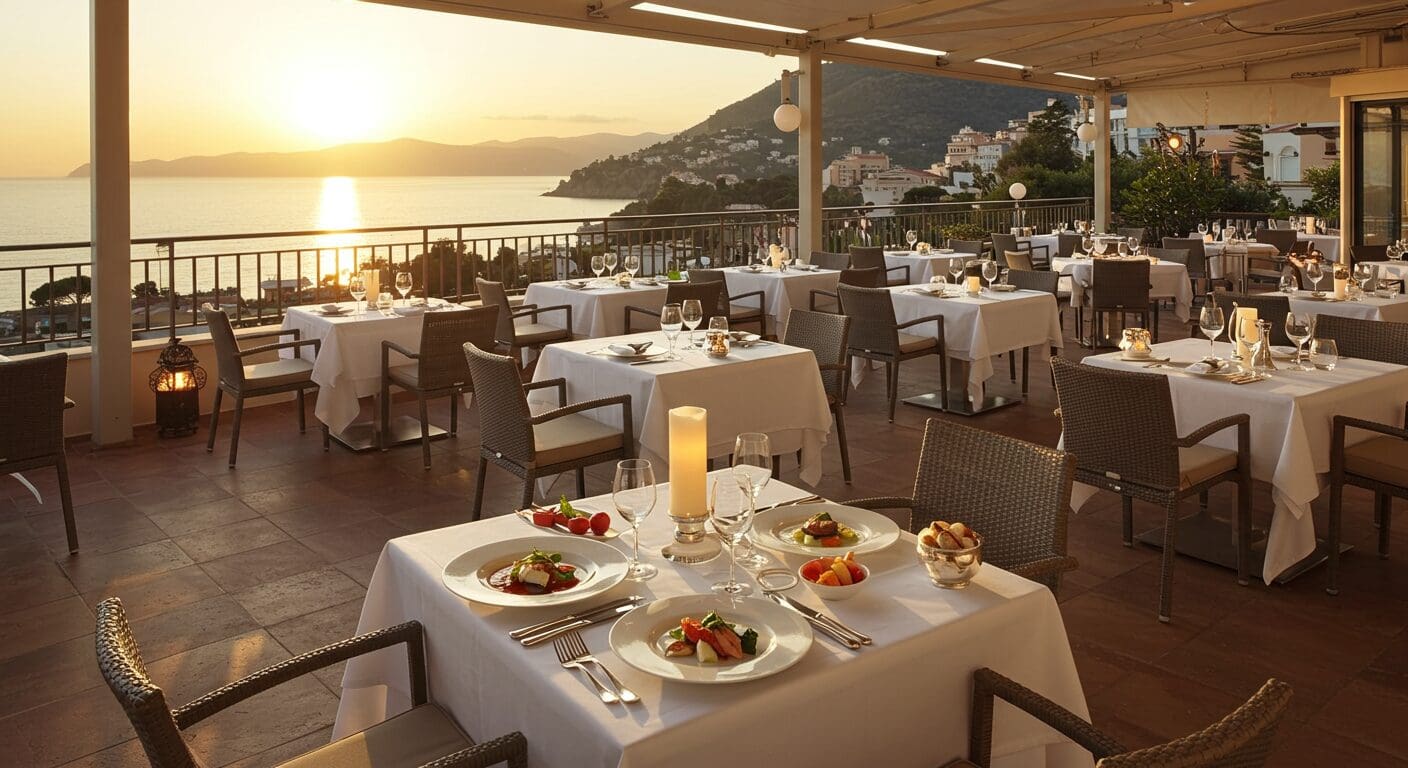
Best Restaurants in Elounda: Fine Dining, Local Gems & Where to Eat
The sun is already warm on your shoulders before you’ve finished your first coffee. Below the terrace, the water of the Gulf of Elounda shifts between colours that painters have been attempting and failing to name correctly for centuries. Somewhere in the distance, the ghost of the ancient sunken city of Olous sits quietly beneath the surface, minding its own business. By midday you’ll be eating grilled seafood so fresh it barely needs a lemon. By evening, you’ll be watching the light go amber over Spinalonga with a glass of Cretan white in hand, wondering, not for the first time, why you don’t do this every year. Elounda has always attracted the kind of travellers who know the difference between being on holiday and actually living well. The food, it turns out, is a significant part of that difference.
Crete has one of the most serious food cultures in the Mediterranean – and Elounda, despite its reputation as a luxury resort enclave, hasn’t lost touch with that. You’ll find ultra-refined dining alongside tavernas where the owner’s grandmother still makes the dolmades on Tuesdays. This guide covers the full spectrum: where to dress up, where to kick your sandals off, what to order, what to drink, and how not to find yourself eating a mediocre moussaka at a tourist trap simply because you didn’t read far enough ahead.
The Fine Dining Scene in Elounda
Elounda sits at the upper end of Crete’s dining ambitions. The cluster of ultra-luxury resorts along this coastline – some of the most celebrated in Europe – has cultivated a fine dining scene that would hold its own in any major city. You won’t find Michelin stars attached to specific Elounda village restaurants at present, but the standard of cooking in the area’s best establishments is quietly, confidently excellent. Think carefully sourced ingredients, menus that change with the season, and chefs who understand that restraint is often more sophisticated than extravagance.
Ergospasio Restaurant deserves particular attention. Housed in a beautifully repurposed former carob processing factory – which is, objectively, a more interesting backstory than most restaurants can claim – it sits in an elevated position above the sea that manages to be genuinely dramatic without being showy about it. The menu is built around Mediterranean flavours using the finest Greek produce, with fresh seafood at its core. The wine list rewards exploration, and the sunset views from here are the kind that make you put your phone away entirely, which is really saying something. Reviewers consistently praise not just the food but the way it’s presented and paced – this is a place that understands the difference between a meal and an experience. Book ahead. The terrace fills early for good reason.
For special occasions or simply an evening that feels like it merits a little ceremony, Lotus Eaters is a name you’ll hear repeatedly among visitors who take their dining seriously. The welcome here is genuinely warm rather than performatively so, and the kitchen takes confident swings at dishes that aren’t always safe choices on a Mediterranean menu. Moroccan lamb and perfectly executed lamb chops feature prominently in the enthusiasm of those who’ve eaten here, and the Bailey’s cheesecake has achieved a mild local fame of its own. On evenings when live traditional Greek music is playing, the atmosphere tips into something genuinely memorable. It’s the sort of place you mention to other travellers in the way you share something you’re slightly reluctant to give away.
Local Tavernas & Village Restaurants: Where Elounda Actually Eats
There’s a certain kind of traveller who flies to Crete, checks into a five-star hotel, eats exclusively at its restaurants for a week, and leaves having experienced approximately none of the island. Don’t be that traveller. Elounda’s village dining scene is where you find the food that has been here far longer than the luxury resorts, and it’s entirely capable of being the highlight of your trip.
Marilena Restaurant sits in the heart of the fishing village and operates with the quiet confidence of somewhere that doesn’t need to try particularly hard, because it’s been doing this well for a long time. The front terrace is ideal for a leisurely lunch – positioned perfectly for watching village life go about itself, which is its own form of entertainment. When you want to escape into something more tranquil, there’s a garden shaded by grapevines at the back that feels like a different world entirely. The signature dish is the Psarosoupa Marilena – a fish soup that carries the restaurant’s name for good reason. Order it. It’s the kind of dish that is deceptively simple on the surface and quietly extraordinary once you’re eating it.
The Hope Mezestaurant earns its local-favourite status through a combination of honest cooking, generous portions, and a terrace perched on a hill with sea views that fishermen once used to read the next day’s weather. There’s a pleasing poetry to eating meze in a spot where people used to stand at dusk trying to work out whether to take their boats out in the morning. The atmosphere is family-run in the best possible sense – unhurried, friendly, and unpretentious – and the prices are remarkably reasonable given what you’re getting. Several visitors have been known to return twice in a single week’s stay, which is probably the most honest review any restaurant can receive.
Then there is the Ferryman Taverna, which occupies a uniquely storied spot along the walk from Elounda’s harbour to the ancient sunken city of Olous. Named after Charon, the mythological ferryman of the dead – cheerful name for a restaurant, admittedly – it’s also where much of the BBC television series Who Pays the Ferryman was filmed, lending it a particular atmosphere for a certain generation of visitors. The food is homemade and genuinely tasty: fresh bread, home-grown vegetables, and Cretan cooking done with care and without fuss. The walk to get here is part of the charm. Arrive hungry.
Beach Clubs & Casual Dining
Elounda’s coastline lends itself naturally to the kind of casual, unhurried eating that is, if we’re being honest, one of the primary purposes of a Mediterranean holiday. Lunch at a beach-side table, feet still faintly sandy, a cold Mythos or a glass of something crisp and Cretan – this is not a complicated pleasure, but it is a genuine one.
Several of the larger resort properties along the Elounda peninsula operate beach clubs that are open to non-residents for dining, and the standard at these tends to be higher than you might expect from the casual setting. Seafood mezedes, fresh salads, grilled fish ordered by weight from a display – this is the format that works, and the kitchens here know it. For those staying in private villas, the beauty of Elounda is that a number of these beach-side spots are genuinely reachable on foot or by water taxi, which adds a pleasing sense of expedition to the occasion.
For lighter daytime eating, the harbour area of Elounda itself offers a string of cafes and casual spots where the line between breakfast, lunch, and mid-afternoon meze becomes helpfully blurred. Fresh spanakopita, honey and yoghurt, small plates of olives and cheese – the kind of eating that feels virtuous even when you’ve been doing it for three hours.
What to Order: Dishes You Shouldn’t Leave Without Trying
Crete has its own distinct food identity within Greek cuisine, and Elounda gives you access to some of its best expressions. A few non-negotiables:
Dakos – the Cretan bruschetta, built on a soaked barley rusk with fresh tomato, crumbled mizithra cheese, and good olive oil. It sounds humble. It is not.
Fresh grilled octopus – ideally eaten close to the sea, which is not difficult to arrange in Elounda. The key is the char and the olive oil. Ask where it came from if you like, but you probably already know.
Lamb in all its forms – slow-cooked, grilled, in stew, as chops. Cretan lamb is genuinely different from what most visitors are used to, raised on wild herbs on the mountainside above you. The lamb chops at Lotus Eaters, specifically, have received the kind of attention normally reserved for things considerably more expensive.
Psarosoupa Marilena – already mentioned, bears repeating. Order it at Marilena Restaurant. It is the house dish for a reason.
Kalitsounia – small sweet or savoury Cretan pastries, often made with local cheese or honey. The kind of thing that disappears from a shared plate faster than anyone intended.
Wine, Local Drinks & What to Sip
Crete is one of Greece’s most serious wine-producing regions, and the grape varieties here – Vidiano, Vilana, Kotsifali, Mandilari – are not always familiar to visitors but are consistently worth exploring. A well-chosen Cretan white alongside fresh seafood on an Elounda terrace is one of those combinations that seems almost unfairly good.
Ergospasio has an interesting and thoughtfully assembled wine selection that leans into Cretan and broader Greek producers – it’s worth asking what they’re currently pouring by the glass rather than defaulting to the familiar. Elsewhere in Elounda, most tavernas and restaurants will carry a house carafe of local wine that is frequently better than its unpromising description suggests.
Raki – or tsikoudia as it’s properly called in Crete – will arrive at the end of most meals uninvited. This is not optional, and attempting to decline is socially awkward at best. It is clear, potent, and tastes of the islands in a way that is difficult to articulate. Accept it graciously. It’s a small bottle of hospitality, essentially.
For something longer and cooler, the local craft beer scene has grown considerably in recent years, and a cold Mythos or a well-made local lager alongside beach-side meze is not to be dismissed. Freshly squeezed orange juice in the mornings, thick Greek coffee at any other point, and the occasional Aperol Spritz on a harbour terrace at six in the evening because, well, why not.
Hidden Gems & Local Secrets
The best-kept secret of eating well in Elounda is not a single restaurant but a behaviour: follow the fishing boats. The harbour area in the early morning tells you everything you need to know about what will be fresh that day. The tavernas and restaurants that have direct relationships with local fishermen – and several do – will quietly reflect this in their daily specials rather than their printed menus. Ask what’s just come in. It’s a question that is always rewarded.
The walk from Elounda harbour toward Olous is worth doing not just for the Ferryman Taverna but because it takes you along a causeway that separates the salt flats from the sea, past flamingos if the season is right, and through a landscape that reminds you Crete is considerably stranger and more ancient than its reputation for good beaches and warm hospitality suggests. Having a destination that involves lunch at the other end is, frankly, excellent trip design.
For those staying a week or more, it’s worth seeking out the smaller villages slightly inland or north of Elounda where the dining remains entirely local. These are not signposted as experiences. They are just tavernas where people eat because the food is good and the wine is cold. These places don’t have Google profiles worth speaking of. You find them by asking, or by wandering, or by noticing where the tables are always full at one in the afternoon.
Food Markets & Provisions
The weekly market in nearby Neapoli – a short drive from Elounda – is the most significant local market in the region and worth visiting even if you have no intention of cooking anything. Cretan honey, olive oil, cheeses, olives, herbs, fresh produce and the particular pleasure of watching serious local commerce conducted at full volume: it’s worth the trip.
In Elounda itself, a small number of excellent specialist food shops stock local products that make genuinely good things to bring home – Cretan olive oil in particular travels well and is consistently among the best in the Mediterranean. Thyme honey from the mountains above is another thing to look for. These are not souvenirs in the fridge-magnet sense. They are useful, beautiful things that will improve your cooking for months after you return.
For guests staying in private villas, many of the local producers around Elounda are accessible directly – olive growers, cheesemakers, small winery operations – and arranging a visit through your villa concierge or host adds a dimension to the food experience that restaurants alone can’t quite provide.
Reservation Tips & Practical Advice
In peak season – July and August particularly – Elounda’s best restaurants fill early and fill completely. Ergospasio and Lotus Eaters in particular are worth booking well in advance if you have a specific evening in mind, especially for sunset-hour tables. The Ferryman Taverna and The Hope Mezestaurant tend to be slightly more forgiving but still benefit from a call ahead during busy periods.
For waterfront spots specifically: request outside tables when booking and be specific about it. Inside is always a fallback, but you didn’t come to Crete to sit indoors. Dress codes at Elounda’s finer restaurants are smart casual at most – you are unlikely to need a jacket, but you will feel better for not arriving in what you wore to the beach. Dinner in Greece runs considerably later than Northern Europeans expect: kitchens are still busy at ten-thirty in the evening, and arriving before eight-thirty will often land you in an empty restaurant, which is technically fine but misses the atmosphere entirely.
Tipping is customary and appreciated: five to ten percent is standard and genuinely means something to the staff in smaller family-run establishments.
The Perfect Base: Villa Dining in Elounda
For all the excellent options across Elounda’s restaurant scene, there is something to be said for the evenings when you don’t go anywhere at all. A luxury villa in Elounda with a private chef option transforms the whole equation: market-fresh Cretan ingredients, prepared in your own villa kitchen, eaten at your own table with the sea below you and no need to find a taxi home afterwards. Several of the finest villa properties in the area offer private chef arrangements – either for the full duration of your stay or for select evenings – and the experience of eating this way, with menus built around what’s best that day rather than what’s printed on a laminated card, is quietly one of the best things you can do on a Cretan holiday. It’s worth building at least one such evening into your plans.
For everything else you need to know about the area – beaches, boat trips, what to do with the days between the exceptional meals – the full Elounda Travel Guide covers the destination from every angle.


