Elounda Travel Guide: Where to Stay, Eat & Explore in Luxury
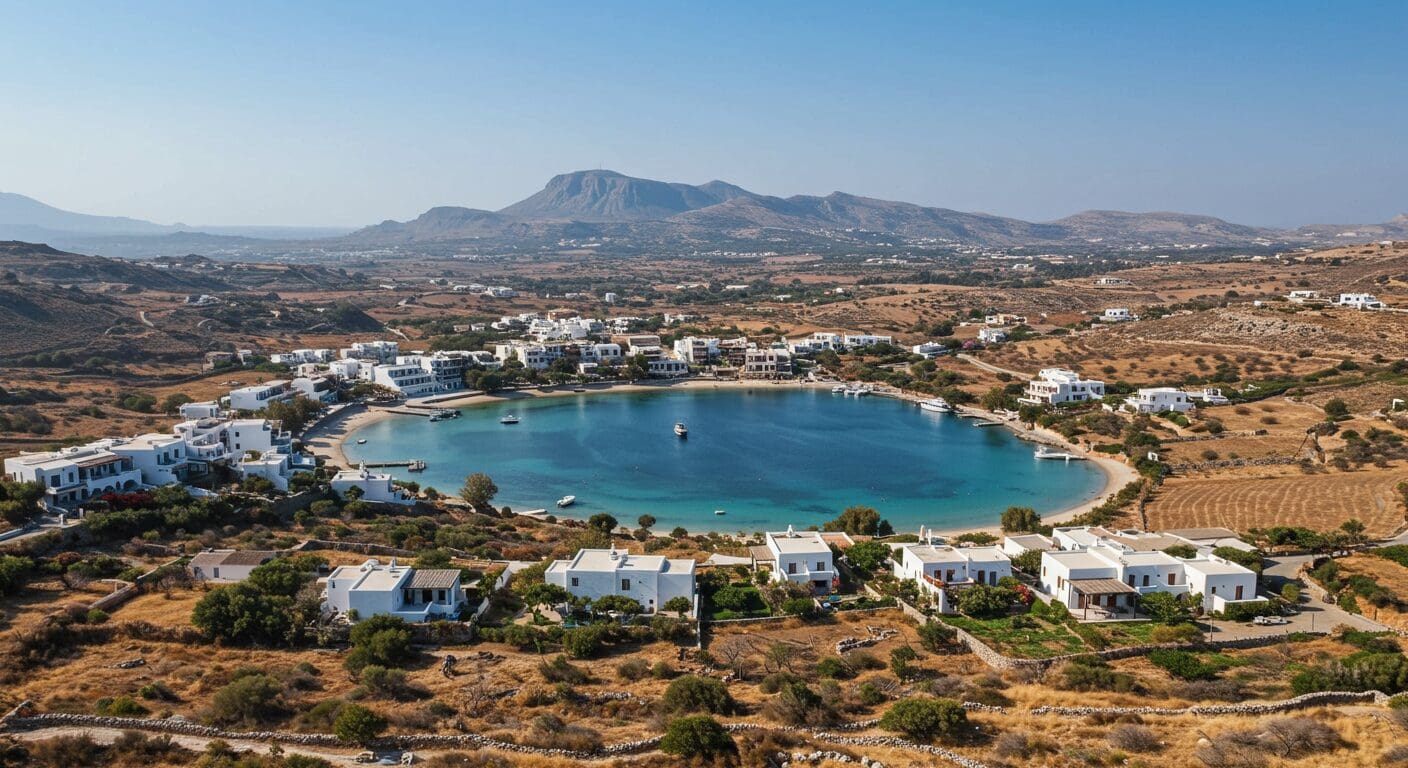
First-time visitors to Elounda almost universally make the same mistake: they assume it’s just another Greek beach resort. They picture sun-bleached tavernas, cheerful chaos, the gentle drone of a moped. What they find instead is something considerably quieter and more composed – a crescent of calm water on the northeastern coast of Crete where the sea is so reliably flat and so improbably blue that you spend the first day half-convinced someone has installed a very large swimming pool and forgotten to mention it. Elounda doesn’t shout. It doesn’t need to. This is a place that has quietly become one of the most sought-after luxury holiday destinations in the whole of Europe, while somehow maintaining the unhurried rhythm of a small Cretan fishing town. The tavernas are still there. The mopeds too, occasionally. But so are some of the finest private villas in Greece, and a quality of light that makes even the most cynical photographer stop and reach for their phone.
The second mistake is assuming Elounda is for one kind of person. It isn’t. Couples arrive for milestone celebrations – significant birthdays, anniversaries, the kind of trip that needs to feel genuinely special rather than just expensive. Families with children old enough to appreciate snorkelling and young enough to be thrilled by a boat find it close to perfect: calm, safe waters, a villa with a private pool, and very little chance of accidentally ending up somewhere edgy. Groups of friends who have reached the stage of life where they’d rather split a six-bedroom villa than share a hotel corridor come here and wonder why they didn’t start doing this sooner. Remote workers who need reliable connectivity and a view that makes nine hours of video calls feel less like a punishment rent villas here for months at a time. And the wellness-inclined – those who want sea swims before breakfast, long walks in hill villages, and the specific satisfaction of eating extremely well without any of it feeling indulgent – find that Elounda suits them almost suspiciously well.
The Journey In: Getting to Elounda Without Losing Your Patience
The nearest airport is Heraklion Nikos Kazantzakis International Airport (HER), which sits roughly 65 kilometres from Elounda – a drive of around one hour on the E75 highway that hugs the northern coast of Crete. The road is genuinely beautiful, the kind that makes you forget you’re on an airport transfer, which is not something you can say about many airport transfers. Lassithi Plateau and Sitia Airport (JSH) to the east is a smaller option for those arriving from certain European hubs, though it serves fewer routes. For most visitors, Heraklion is the answer.
Direct flights serve Heraklion from across the United Kingdom throughout the summer season, with British Airways, easyJet, Jet2 and Ryanair all operating routes from various UK airports. The season runs roughly April to October, with peak services in July and August when the island is at its busiest. Private charter is increasingly popular among villa guests who would rather spend the journey time drinking rather than queuing, which is, all things considered, entirely reasonable.
Once you’re on the ground, a pre-arranged private transfer is the most civilised way to reach your villa. Taxis are available, car hire is straightforward for those who want flexibility during their stay, and the roads around Elounda itself are manageable once you accept that Greek road-markings are more of a general suggestion than a commitment. The town is small enough to walk most of it, with a hire car or scooter useful for reaching the villages and beaches further afield.
Where to Eat in Elounda: From Harbour Catches to Hilltop Tables
Fine Dining
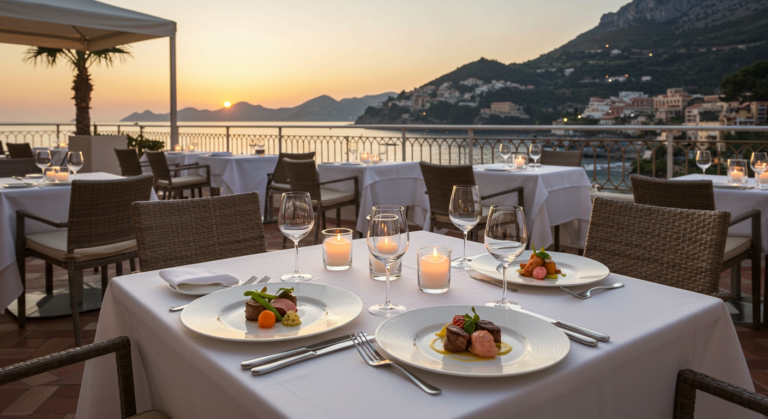
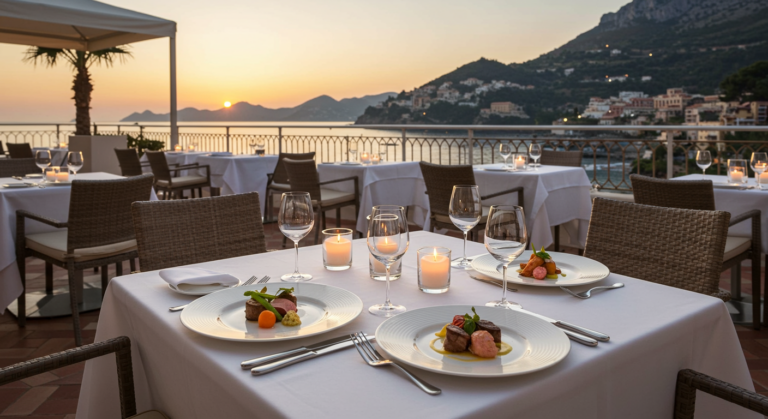
Ergospasio is the name you’ll hear most often from people who actually live here, and it deserves every mention. Housed in a former carob processing factory above the sea – a setting that sounds like it was invented by a prop designer but is entirely real – it serves Mediterranean food built around the finest Greek ingredients, with fresh seafood at its heart. Go at sunset and order generously from the wine list, which is interesting in the way that wine lists at genuinely good restaurants are: the wines have been thought about, not just assembled. The service is impeccable without being formal, and the food is the kind that makes you quietly rearrange your plans for the evening because leaving the table suddenly feels like a terrible idea.
For something with a different register entirely, The Hope Mezestaurant earns its place at the serious end of the dining conversation. Perched on a hill with a wooden balcony and sea views that would be considered excessive in any other context, it has a cosy family-run feeling that the views haven’t managed to spoil. The food is Mediterranean, generous in portion, and made with evident care – the staff are the kind of kind that isn’t performative. It takes its name from the fishermen who once gathered on this spot to assess the next day’s weather, which is a better story than most restaurants can tell about themselves.
Where the Locals Eat
Kanali sits right on the water’s edge and doesn’t bother pretending to be anything other than what it is: a fresh seafood restaurant where the fish comes directly from Elounda’s own harbour and is grilled in front of you. Swordfish, sea bream, lobster – the menu is defined entirely by what arrived that morning, which is as it should be. The setting, with mountains behind and sea in front and rustic white furniture that’s clearly been chosen with more taste than it lets on, is the kind of thing travel writers try too hard to describe. Sit outside. Order the fish. Stop overthinking it.
Marilena Restaurant sits in the heart of the village and operates at a pace that the rest of the world would do well to study. A front terrace ideal for watching the world arrange itself slowly around you, and a peaceful garden shaded by grapevines for when the world gets to be a bit much. The signature dish is Psarosoupa Marilena – a fish soup that has its own legend locally and is worth ordering even if you think you’re not a soup person. You may revise this position.
Hidden Gems Worth Seeking Out
Lotus Eaters is the kind of place that doesn’t advertise itself with particular energy but has somehow accumulated a devoted following who return season after season and bring friends. The owners welcome guests with the warmth of people who run a restaurant because they enjoy feeding people, which – more than you’d think – is not always the case. The lamb chops are exceptional. The Moroccan lamb suggests someone in the kitchen has an interesting backstory. The fried courgettes with homemade tzatziki are the sort of thing you order as a side and then privately consider as the highlight. And the cheesecake – specifically a Baileys cheesecake that guests describe, without embarrassment, as out of this world – is the kind of dessert that causes actual conversation to pause. Come without a booking if you must, but it would be wiser not to.
Exploring the Region: What Elounda’s Geography Actually Looks Like
Elounda occupies a protected bay in the Lasithi regional unit of eastern Crete, and the geography here is doing rather a lot of work. The Gulf of Mirabello – one of the largest natural bays in the Mediterranean – stretches out to the south, with a depth and clarity that would be considered suspicious if you hadn’t verified it with your own eyes. The Kolokitha Peninsula curves around to the west, creating the sheltered lagoon that gives Elounda its characteristically calm water. The town itself is small and manageable, arranged along a waterfront that rewards an early morning walk before the day has properly started.
Beyond the bay, the landscape shifts quickly. Drive twenty minutes inland and you’re in the foothills of the Dikti mountain range, where stone villages sit at altitudes that justify a jumper even in summer. The village of Kritsa is among the most rewarding – one of the largest villages in Crete, famous for its weavers and its Byzantine church of Panagia Kera, where frescoes survive in a state of preservation that puts many larger museums to shame. Agios Nikolaos, the regional capital, is a twenty-minute drive south and offers a harbour town with genuine character, good restaurants, and a lake so small and so perfectly positioned that it looks like it’s been placed there on purpose.
The coastal road east toward Sitia passes through some of Crete’s least visited and most rewarding scenery – olive groves of biblical age, small fishing villages that haven’t yet been noticed by most guidebooks, and beaches where the absence of sun loungers is itself a kind of luxury. Elounda is, in other words, not just a destination in itself but an excellent base for understanding what Crete actually is, rather than what a package holiday brochure says it is.
Things to Do in Elounda: A Complete Guide to the Best Experiences
The single most iconic thing to do from Elounda – and one of the best things to do in Elounda by some considerable margin – is a boat trip to Spinalonga Island. The small fortress island sits just offshore at the mouth of the gulf, and its history is as layered as its stone walls suggest. It served as a Venetian fortification, an Ottoman settlement, and finally – and most famously – as a leper colony until 1957, making it one of the last active leprosaria in Europe. The island was immortalised by Victoria Hislop’s novel The Island, which sent an entire generation of readers scrambling for a ticket to Crete, not entirely without reason. The boat crossing takes minutes. The island takes considerably longer to properly absorb – the Venetian gate alone, through which patients once passed on arrival, is worth the journey.
Back on the water, the bay rewards exploration by kayak, paddleboard, or small motor boat. The Spinalonga lagoon is shallow enough in places to see the seabed clearly from the surface, and the islet of Kolokitha – connected to the peninsula by a narrow sand bar – is reachable by a pleasant open-water swim for those so inclined. Glass-bottom boat tours run from the harbour for those who would like the underwater views without getting wet, which is a perfectly reasonable position to take.
On land, a visit to the salt flats at the southern end of the Elounda peninsula is one of those low-key experiences that ends up being oddly memorable. The ancient salt pans were used by the Minoans, which is the kind of historical continuity that reorients the brain rather usefully. Flamingos occasionally visit in the wetter months, which nobody really believes until they see them.
Adventure Sports and Active Experiences: Elounda Beyond the Sun Lounger
The diving around Elounda is among the most accessible in Crete, with the protected bay offering conditions that reward beginners without boring experienced divers. There are several PADI-certified centres operating in the area, offering everything from introductory sessions to serious wreck and cave dives further along the coast. The visibility in the Gulf of Mirabello is consistently excellent, and the underwater topography is genuinely varied – rocky outcrops, sea grass meadows, and drop-offs that appear without warning in the nicest possible way.
Snorkelling from the shore or from a boat requires no qualifications and almost no effort in Elounda, which is rather the point. The lagoon around Spinalonga and the rocky coves of the Kolokitha Peninsula offer clear water and abundant marine life within easy reach of a towel and a cold drink. Windsurfing and kitesurfing are less dominant here than in some parts of Crete – the bay’s calm water is a virtue for swimming but a limitation for those who need significant wind – though equipment hire is available for days when conditions cooperate.
Hiking in the hills above Elounda rewards early starters. The walk between the ancient site of Olous – a submerged Minoan city now visible as a ghostly outline in the shallows at the southern edge of the bay – and the village of Elounda along the old causeway is flat, atmospheric, and requires almost no effort, which makes it ideal for the morning after the night at Ergospasio. More ambitious walkers can access trails in the Dikti range, where the E4 long-distance path crosses Crete from west to east and offers sections of serious mountain walking through landscapes that have changed very little in several thousand years.
Cycling is growing in popularity in this part of Crete, with electric bikes now available for hire making the hilly terrain considerably more achievable. Sailing and yacht charter from Elounda allows for exploration of the wider Gulf of Mirabello coastline, including small beaches and coves inaccessible by road – this is, frankly, one of the most rewarding ways to spend a day in the region.
Elounda with Children: Why Families Return Year After Year
Elounda is one of those places that works for families in ways that are hard to engineer and impossible to fake. The water in the bay is calm, warm, and clear enough for children to see fish from the surface without any equipment, which settles approximately forty-five minutes of “are we nearly there yet” in a single moment of delight. There are no significant currents, no surf, and a gently shelving seabed in most areas – the kind of swimming environment that allows parents to actually sit down for a moment rather than performing perpetual vigilance.
The boat trip to Spinalonga works for children old enough to handle history that is genuinely moving rather than sanitised for comfort – roughly ten and above – and for many families it provides the best conversation of the holiday. Younger children are equally well served by the spectacle of the crossing itself, the fortress walls, and the various ice creams that the surrounding area will offer at appropriate intervals.
The practical advantage of renting a luxury villa in Elounda rather than a hotel becomes particularly clear when travelling with children. A private pool means swimming happens entirely on your schedule rather than the hotel’s, there is no negotiating towel territory at 8am, and the separate living spaces mean that children going to bed at 9pm does not automatically mean adults going to bed at 9pm. For multi-generational groups – grandparents, parents, children, the occasional honorary uncle – a large villa with several bedroom configurations provides a degree of togetherness and privacy simultaneously that hotels simply cannot replicate. The kitchen, for the inevitable morning when someone decides they only eat a very specific brand of cereal, is not a small thing.
History, Culture and the Weight of the Past: Elounda’s Deeper Story
Elounda sits on land that has been continuously settled since at least the Minoan period, and the evidence of this has a way of appearing unexpectedly. The submerged city of Olous – a prosperous Greco-Roman settlement that sank into the bay centuries ago, possibly as a result of tectonic activity – can be seen from the old causeway on a calm day, its walls still dimly visible beneath the surface. A Minoan sanctuary has been excavated nearby. A Byzantine mosaic survives in a small church that most visitors walk past without noticing. Elounda does not labour its history. It simply has it, embedded in the landscape like geology.
Spinalonga provides the most concentrated historical experience in the area. The Venetians built the fortress in the late 16th century and held it against the Ottoman Empire until 1715, making it the last Venetian outpost in Crete – a significant footnote in the long, complicated history of who has controlled this island and why. The subsequent use of the island as a leper colony from 1903 until 1957 represents a more recent and more human history, one that is documented in the island’s small museum and felt, rather than explained, in the streets of the settlement itself. Walking through the abandoned houses is not comfortable. It is not meant to be.
The wider region offers a remarkable density of cultural heritage. The Minoan palace at Malia is accessible as a day trip. The Lassithi Plateau, an extraordinary upland plain ringed by mountains where windmills once pumped water from the ground, was the hiding place of the infant Zeus in Cretan mythology – a claim that the landscape, frankly, supports. The cave of Diktaion Andron, associated with that same mythology, is on the plateau and can be reached on a half-day excursion that combines scenery, archaeology, and a reasonable amount of stair-climbing.
Local festivals animate the calendar in ways that are entirely genuine rather than staged for tourism. Crete’s Orthodox Easter is observed with particular intensity – this is not the place to arrive expecting everything to be open on Good Friday – and summer festivals in the hill villages involve music, food, and the particular pleasure of watching an entire community celebrate with complete conviction.
Shopping in Elounda: What to Take Home and Where to Find It
Elounda’s shopping scene is proportionate to its size, which is to say it is focused, unhurried, and rather better than you might expect from a small coastal town. The waterfront and main street offer a mix of boutiques selling locally made jewellery, ceramics, and textiles alongside the usual resort-town offerings, which can be navigated with moderate selectivity. The rule of thumb here – as in most of Crete – is that anything handmade by a local artisan is worth the asking price, and anything decorated with a cartoon Minotaur probably isn’t.
Cretan olive oil is among the finest in the world and travels home exceptionally well. The local producers sell direct from small shops in Elounda and the surrounding villages, and a few hours spent on a drive through the olive-growing areas west of Agios Nikolaos will turn up farm shops where the oil is pressed on site. Cretan honey – particularly thyme honey from the mountain villages – has a complexity that bears no resemblance to the supermarket version. It makes an excellent and genuinely useful gift for people you actually like.
The village of Kritsa, twenty minutes’ drive from Elounda, is the best single destination for local crafts. Its weavers have been producing textiles on traditional looms for generations, and the quality is immediately apparent to anyone who looks at the fabric rather than the price tag. Handmade lace, woven blankets, and embroidered linens are all made here by artisans who have inherited the skill through family lines. This is the kind of shopping that feels less like commerce and more like paying attention to something worth preserving.
What You Actually Need to Know Before You Go
The currency is the euro. Tipping in restaurants is expected and appreciated at roughly 10 per cent, though rounding up generously is equally welcome and infinitely easier to calculate after two glasses of local wine. English is spoken widely in Elounda – more widely than in many parts of Crete – but a few words of Greek will earn you a disproportionate amount of goodwill. Efcharistó (thank you) and kalimera (good morning) take approximately thirty seconds to learn and pay returns for the duration of the holiday.
The best time to visit for a luxury holiday in Elounda depends, with unusual honesty, on what you’re after. May, June and September offer the ideal combination: reliable warmth, clear water, and the kind of crowd levels that allow you to actually get a table at Kanali without planning three days in advance. July and August are hotter, busier, and perfectly enjoyable if you have a private villa pool and no particular need to interact with peak-season tourism. October is increasingly popular with those who want warmth without crowds and have the flexibility to arrive after the school holidays end – the sea remains swimmable well into mid-October, the light is extraordinary, and the restaurants are visibly relieved.
Crete is safe and well-organised by any reasonable measure. The main practical considerations are the heat in peak summer (significant, plan activities accordingly), the roads in rural areas (narrow, occasionally optimistic in their signage), and the risk of overcommitting to the food (entirely real and entirely worth it). Sunscreen of serious SPF is not optional in July and August. The Cretan sun is making a point.
Why a Private Villa is the Only Logical Way to Experience Elounda
There are hotels in Elounda – some of them very good ones, as it happens, with names recognised across the international luxury circuit. But the guests who return to Elounda year after year tend to do so in villas, and the reasons accumulate rather quickly once you’ve experienced both. A private villa means a private pool. It sounds simple until you’ve spent a single morning of a Greek summer negotiating a hotel pool in peak season, at which point it starts to sound like a human right.
Privacy is the deepest luxury that Elounda offers, and a villa captures it in ways a hotel cannot. There are no corridors, no shared breakfast rooms, no careful management of volume after 10pm. A villa with four bedrooms belongs entirely to its occupants: the terrace is yours, the kitchen is yours, the pool is yours, the hours are yours. For families – particularly multi-generational groups where a ninety-year-old grandmother and a seven-year-old with opinions about mealtimes need to coexist happily – this spatial generosity is not a perk. It is the whole point.
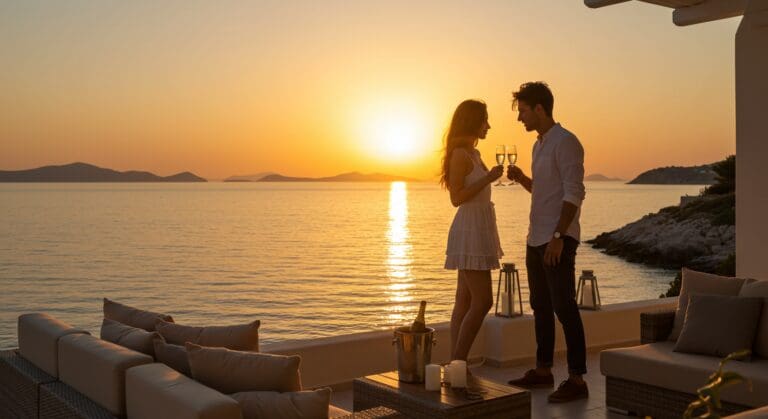
For couples on milestone trips, the seclusion of a private villa above the Gulf of Mirabello – mornings that begin with coffee on a private terrace and a view that most people save as a screensaver – produces a quality of experience that no hotel breakfast buffet, however well-stocked, can replicate. For groups of friends, splitting a six or eight-bedroom villa across a week is not only more affordable per head than comparable hotel rooms but categorically more enjoyable: a shared table every evening, a shared pool every afternoon, and the specific pleasure of genuinely deciding what you feel like doing without consulting a hotel programme.
Remote workers – and Elounda has quietly become a destination of choice for those combining a sustained period of work with a change of scenery – will find that villa rentals in this part of Crete increasingly come equipped with fibre broadband and, in some cases, Starlink connectivity. The combination of a reliable internet connection, a private workspace with natural light, a pool for the lunch hour, and the Gulf of Mirabello as a view is, admittedly, difficult to justify to colleagues who have not experienced it. The justification tends to come later, in results rather than words.
Wellness-focused guests find villas in Elounda particularly well-suited to the kind of retreat that doesn’t involve a schedule. A private pool for early-morning laps. A kitchen for preparing the extraordinary local produce picked up at the Agios Nikolaos market. Space enough for a yoga mat on the terrace, with a view that provides motivation that no studio instructor can match. Some villa properties in the area include private gym facilities, treatment rooms, and the option of in-villa massage or nutrition services – the kind of wellness that is curated rather than commodified, and entirely on your terms.
Concierge services available through Excellence Luxury Villas can arrange everything from private chef dinners on the terrace to yacht charters, guided historical tours, transfers, and restaurant reservations at the places you actually want to get into. The logistics, in other words, are handled. What remains is Elounda itself – the light, the water, the food, the history, the considerable pleasure of a place that has no particular interest in performing for you. Explore our private villa rentals in Elounda and find the one that fits your particular version of a perfect trip.
More Elounda Travel Guides
What is the best time to visit Elounda?
May, June and September are the sweet spot for most visitors – warm enough for daily swimming, calm enough for easy restaurant bookings, and busy enough to feel alive without tipping into overwhelming. July and August are hotter and busier, but perfectly manageable if you’re based in a private villa with a pool. October stretches the season usefully for those who can travel after school holidays end: the sea stays warm, the crowds thin considerably, and the quality of light in the afternoons becomes genuinely extraordinary.
How do I get to Elounda?
The nearest and most practical airport is Heraklion Nikos Kazantzakis International Airport (HER), roughly 65 kilometres west of Elounda – approximately one hour by road along the northern coastal highway. Direct flights serve Heraklion from across the UK and Europe throughout the summer season. Lassithi Sitia Airport (JSH) to the east serves fewer routes but is closer for those arriving from specific hubs. Pre-arranged private transfers are the most comfortable option from either airport, though car hire is straightforward for those who want flexibility during their stay.
Is Elounda good for families?
Genuinely yes. The bay offers calm, clear, shallow water ideal for children, with no surf and gentle shelving – the kind of swimming environment that allows parents to sit down without performing perpetual vigilance. The boat trip to Spinalonga works well for children aged ten and above. The practical case for renting a villa rather than a hotel is strongest with families: a private pool removes the early-morning sun-lounger calculation entirely, and separate living spaces mean children’s bedtimes don’t dictate the adults’ evening. Large villas accommodate multi-generational groups with their own bedroom wings and outdoor spaces – a configuration hotels cannot replicate.
Why rent a luxury villa in Elounda?
The honest answer is privacy, space, and the complete absence of shared pool territory disputes. A private luxury villa in Elounda means a private pool, a terrace that belongs to your group alone, a kitchen stocked with local produce, and hours that follow your rhythm rather than a hotel programme. The staff-to-guest ratio in a well-appointed villa – particularly with concierge and optional chef services – frequently exceeds what a hotel can offer, with the entire arrangement focused on one group rather than hundreds. For couples, families, or groups who want the experience of Elounda on their own terms, a villa is the logical conclusion.
Are there private villas in Elounda suitable for large groups or multi-generational families?
Yes – the villa inventory in Elounda and the surrounding area includes properties ranging from intimate two-bedroom retreats to expansive eight or ten-bedroom estates designed for large groups and multi-generational families. Many feature separate bedroom wings that provide genuine privacy within the shared property, multiple living areas, large private pools, and outdoor dining spaces designed for entertaining at scale. Concierge services, private chefs, and household staff can be arranged to match the size and requirements of the group. Excellence Luxury Villas can advise on the best configuration for specific family or group dynamics.
Can I find a luxury villa in Elounda with good internet for remote working?
Connectivity in Elounda has improved significantly in recent years, and many premium villa rentals now come equipped with fibre broadband or Starlink satellite internet capable of supporting video calls, large file transfers, and simultaneous users without difficulty. When booking, it’s worth specifying your connectivity requirements so the right property can be matched – the team at Excellence Luxury Villas can confirm speeds and setup in advance. Many villas also offer dedicated workspace areas with natural light, which makes a meaningful difference over the course of a working day, particularly when the alternative view is the Gulf of Mirabello.
What makes Elounda a good destination for a wellness retreat?
Several things converge usefully here. The bay provides calm, clean water for open-water swimming at any hour. The surrounding hills offer hiking trails that reach mountain villages with minimal effort and significant reward. The local food culture – built around olive oil, fresh fish, legumes, vegetables, and herbs – aligns naturally with most wellness approaches without requiring any particular discipline. Many villas in the area include private pools for lap swimming, gym facilities, and outdoor spaces large enough for yoga or meditation. In-villa massage and wellness services can be arranged through concierge. And the pace of life in Elounda – unhurried, unshowy, genuinely calm – does the rest.