Espace Killy Travel Guide: Skiing, Luxury Chalets & Après Ski
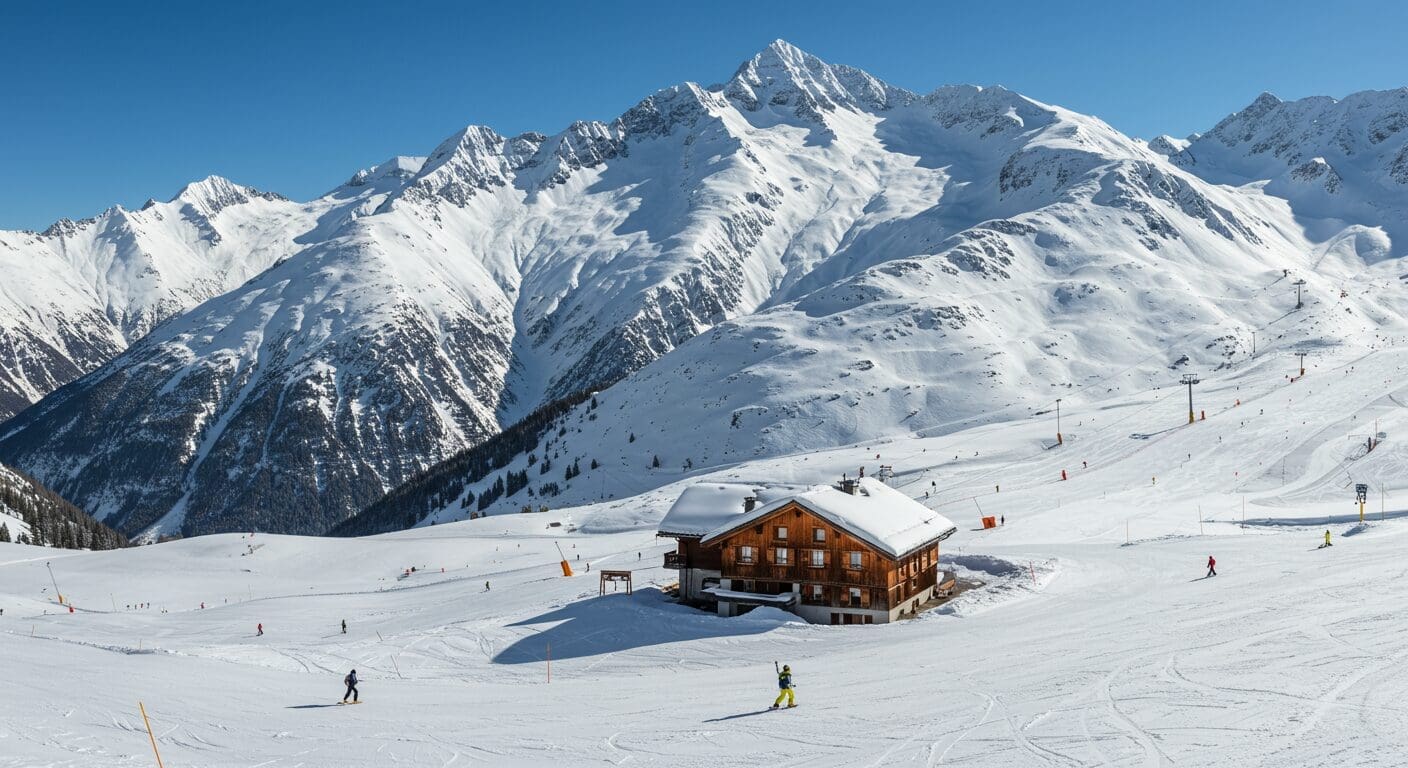
It is seven in the morning and the mountain is entirely yours. The lifts don’t open for another forty minutes, but you are already standing outside in ski boots, coffee in hand, watching the sky above Val d’Isère turn from slate to rose gold to something that has no name in English but probably does in French. The air is cold in the specific, clarifying way that only high altitude manages – not unpleasant, just honest. Your chalet sits behind you, warm and improbably well-appointed, smelling faintly of woodsmoke and last night’s raclette. By nine you will be at 3,456 metres on the Grande Motte glacier. By noon you will be eating duck confit on a sun-drenched terrace at altitude. By three you will have skied somewhere that required a guide and a certain willingness to forget how far down the valley is. And by six, with the kind of guilt-free tiredness that only a truly physical day can produce, you will be back in the hot tub watching the light leave the mountains. This is what Espace Killy does to you. It is difficult to leave. Most people don’t, really – they just go home and spend the following eleven months planning when to return.
Espace Killy – the linked ski domain of Val d’Isère and Tignes, named after the Olympic champion who grew up here and probably still skis better than you – is one of those rare destinations that manages to be simultaneously world-class and deeply personal. It attracts a specific kind of traveller. Families who have outgrown the package holiday and want somewhere with genuine privacy, a kitchen that works, and enough space that the teenagers can exist in a different postcode of the chalet. Couples marking a significant birthday or anniversary who want more than a hotel room and a good view. Groups of friends who skied together twenty years ago and have decided, sensibly, to do it properly this time. Remote workers who have discovered that fibre broadband and a mountain backdrop are not mutually exclusive, and that a Monday morning video call is considerably more bearable when conducted with fresh Alpine air coming through the window. And wellness-focused guests who have worked out that altitude, physical exertion, thermal baths, and restorative sleep in a very comfortable bed constitute a retreat more effective than anything you can do in a city. All of these people come to Espace Killy. Most of them come back.
Getting to the Top of the World: Arrivals, Airports & the Transfer Up
Geneva is your most likely point of entry, and a very civilised one at that. The airport is efficient, the car rental desks are well-staffed, and the drive to Val d’Isère takes roughly two and a half to three hours depending on traffic on the N90 through the Tarentaise valley – a valley that, for the record, becomes progressively more spectacular with every kilometre. Lyon Saint-Exupéry is the other sensible option, slightly further at around three hours, but useful if you’re flying from somewhere that doesn’t connect directly to Geneva. Chambéry airport is technically closer but operates a more limited schedule, typically swelling to usefulness during peak ski season with charter flights from the UK and beyond.
The drive is worth doing at least once, especially if you approach in the late afternoon when the light comes sideways across the mountains. That said, a private transfer is the more intelligent choice for groups arriving with ski bags, children, and the ambition of reaching the chalet before dinner. Several premium transfer companies operate the Geneva-Val d’Isère route in vehicles that have actual legroom, which after a transatlantic or long-haul flight feels like an act of genuine kindness.
Val d’Isère sits at 1,850 metres in the Haute-Savoie corner of the French Alps, in the broader sweep of Auvergne-Rhône-Alpes. Getting around the resort itself is straightforward – free shuttle buses connect the main areas of Val d’Isère (La Daille, the centre, Le Fornet) and the lift pass covers Tignes, which is connected by piste and cable car. If you are staying in a private chalet, having your own vehicle for the transfer makes life considerably easier, even if the ski buses are competent.
Where to Eat in Espace Killy: Two Michelin Stars, One Great Wine Cellar, and a Menu That Confused Everyone (Pleasantly)
Fine Dining
The undisputed apex of dining in Espace Killy is L’Atelier d’Edmond, a two Michelin-starred restaurant that sits in the hamlet of Le Fornet at the far end of Val d’Isère’s valley. This is the kind of place that regulars talk about with a proprietary affection – the tone of someone describing a very good friend who happens to be famous. The menu is sophisticated without being intimidating, the room is warm without being fussy, and the chef visits tables with the ease of someone who is genuinely interested in whether you are enjoying yourself. He is. The reviews are almost uniformly rapturous: “the gold standard for fine dining” is a phrase that recurs with enough frequency to suggest it is simply accurate. For peak season – Christmas to New Year, February half-term, the high weeks of March – reservations made two to three months in advance are not overcautious. They are necessary. Book when you book your chalet.
A single star down in the constellation, and still firmly in the realm of exceptional, is La Table de l’Ours at the Hôtel Les Barmes de l’Ours. Chef Antoine Gras works with Alpine ingredients in a way that feels both rooted and inventive – Savoyard classics alongside eclectic choices that shouldn’t work together on paper but do on the plate. The dining room is beautiful. The kind of beautiful that makes you sit up slightly straighter without quite knowing why.
Where the Locals Eat
For something less formal and considerably more fun – though not without its own pleasures – La Baraque in Val d’Isère is where the mountain guides eat when they’re not on the mountain, where the ski instructors gather after the school day ends, and where you will feel most immediately like someone who actually lives here rather than someone visiting. The food is honest, the atmosphere is convivial, and the prices are not attempting to recoup the cost of a full mountain rescue. In a resort where a vin chaud can occasionally arrive with the ambition of a mortgage, this matters.
The mountain lunch culture in Espace Killy is particularly strong – arguably the strongest argument for skiing here rather than anywhere else. At altitude, on the mountain, with skis parked outside and the sun doing something generous to your jacket and goggles, the combination of hunger and elevation makes almost any decent food taste extraordinary. This is physics, not snobbery.
Hidden Gems Worth Seeking Out
La Fruitière, at La Daille (2,400 metres, which is worth stating again because it remains impressive), is attached to the legendary La Folie Douce entertainment complex but operates at a deliberately different register – table service, a serious wine list, and an interior styled as an alpine milking parlour that is considerably more elegant than that description suggests. The outdoor terrace catches afternoon sun with the reliability of a south-facing solar panel. What makes it genuinely worth seeking out, though, is the wine cellar beneath the restaurant: a long communal table, unusual wines from across France, and cheeses sourced with the seriousness that the French apply to cheese sourcing. It is the best unexpected afternoon you will have on skis. Go after lunch, before the last lifts.
For something entirely different – and by different, the word is doing real work here – La Mourra restaurant at the La Mourra Hotel Village offers a Franco-Japanese fusion menu that should not work in a traditional Alpine resort but does. Sushi alongside Wagyu beef as a starter. Skipjack tuna or duck filet for main. Yuzu soufflé with coriander sorbet to finish. The reviews suggest it proves popular every year, which is the Alps quietly confirming that it is more cosmopolitan than it is sometimes given credit for. It is best suited to a sophisticated evening after a long day on the mountain, when you are tired enough to find the menu delightfully confusing.
The Skiing: 300 Kilometres of Why Everything Else Can Wait
There are bigger ski areas, technically speaking. The Trois Vallées, of which the likes of Courchevel is a part, covers more kilometres on paper. But Espace Killy – 300 kilometres of piste connecting Val d’Isère and Tignes across 154 marked runs – has something that raw statistics struggle to capture: a quality of terrain that consistently rewards the skier who wants more than a groomed motorway between lunch and the lift. This is an area that was designed, partially by accident and partially by Jean-Claude Killy, for people who actually ski.
The piste variety is genuine. Beginners are accommodated – there are gentle areas and a thorough ski school infrastructure – but the area’s reputation rests on its intermediate and expert terrain. The Bellevarde face, accessed from the main gondola in Val d’Isère, offers a range of red and black runs that remain interesting across multiple descents. The Face de Bellevarde is where the men’s downhill was held during the 1992 Winter Olympics and it skis exactly as dramatically as that implies. The Solaise sector offers a slightly different character – more varied, more sheltered, particularly useful in high wind days.
Tignes adds altitude and reliability. The Grande Motte glacier (3,456 metres, accessed via a funicular that goes through the mountain, which is the sort of engineering decision that makes you appreciate the French approach to infrastructure) offers skiing well into summer and genuinely extends the season. December skiing in Tignes, when the lower parts of other resorts are still willing snow into existence, is often excellent.
The off-piste situation is serious. The area around Val d’Isère, particularly the Vallée Perdue and the long powder fields beneath the Pissaillas glacier, produces the kind of off-piste days that skiers tell stories about for years. A local guide is not negotiable for anything serious – not because the terrain is necessarily beyond a competent skier but because avalanche conditions change quickly and local knowledge is, in the most literal possible sense, life-saving. The ESF and several independent guiding companies operate throughout the season.
Après-ski is its own event. La Folie Douce in Val d’Isère is the most famous – outdoor stages, live music, dancing in ski boots, the particular social event of the mountain that requires no further description if you have been and no amount of description if you haven’t. More civilised options include the bar at Les Barmes de l’Ours and various spots along Val d’Isère’s main street where the altitude and the wine combine to produce opinions about skiing that are expressed with great confidence.
Beyond the Pistes: What to Do When You Are Briefly Not Skiing
The non-skiing activities in Espace Killy are more varied than the area’s reputation as a pure ski destination might suggest. Ice diving in the lac de Tignes – under the frozen surface of a mountain lake, guided, cold in the way that reminds you that warmth is not guaranteed – is the kind of experience that exists on the narrower end of most people’s comfort zones and is precisely the better for it. Ice climbing on frozen waterfalls around Val d’Isère runs on a similar principle.
Snowshoeing deserves more credit than it typically receives. The trails above Tignes and around the Vanoise National Park borders offer access to a winter landscape that the ski lifts don’t reach – quieter, slower, and genuinely affecting in a way that is harder to achieve at speed. The Parc National de la Vanoise, which borders the resort, is the oldest national park in France and harbours populations of ibex, chamois, and golden eagle that are considerably less interested in your ski pass than you are.
Ice skating on the outdoor rink in Val d’Isère centre is a reliably pleasant way to spend an afternoon with children or a morning when the legs have categorically refused to ski again. The skidoo tours and dog sledding operations that run from both Val d’Isère and Tignes are popular for good reason – a dog sledding excursion through a silent Alpine landscape at dusk is the kind of experience that you remember with the specific clarity that most holidays fail to provide.
The spa culture is strong. Most of the larger hotels operate serious wellness facilities, and several independent spas in both resort centres offer treatments calibrated to post-ski recovery: deep tissue massage, hydrotherapy, cryotherapy. If your chalet comes with its own hot tub – and the best ones do – you will find that a forty-minute soak watching the stars appear above the treeline is the most effective form of recovery medicine available at any price.
Adventure Properly Done: Off-Piste, Ice Diving and the Vanoise Backcountry
Espace Killy draws the adventure-focused traveller not just for its on-piste variety but for the calibre of its wilder terrain. Ski touring – earning your turns rather than relying on a lift – has grown significantly here, with several established touring routes that access the backcountry of the Vanoise massif. The route from Val d’Isère to the Refuge du Prariond is an accessible introduction; more serious routes connect into the national park’s interior, requiring overnight stays in mountain refuges that are, by any measure, not luxury accommodation but are memorable in an entirely different way.
Heli-skiing is not permitted in France – a source of polite disagreement with the Swiss and Italians, whose borders are close enough that the options are clearly visible from the mountaintop – but this has done nothing except ensure that the off-piste powder in Espace Killy remains less tracked than equivalent terrain in heliskiing destinations. With a guide, the freshest lines in the area are accessible on foot (skins, a short hike) in ways that reward the physically willing.
In summer, which is a separate conversation but worth noting, the terrain transforms into one of Europe’s finest high-altitude cycling and hiking destinations. The Iseran pass – at 2,770 metres the highest paved mountain pass in the Alps – is a genuine landmark for road cyclists, appearing in Tour de France lore with the kind of frequency that tells you what the professionals think of it. The mountain bike trails that open as the snow retreats are technical, varied, and serviced by a summer lift infrastructure that gives riders access to terrain that would otherwise require most of a day to reach.
Espace Killy with Children: The Family Holiday That Nobody Wants to Leave
It is a truth not universally acknowledged but consistently demonstrated that a ski holiday in a well-chosen resort is one of the most effective family holidays available. Children who would mutiny at the suggestion of culture or museums will ski for six hours, eat enormous quantities of carbohydrates, sleep with the depth of genuine physical tiredness, and repeat this for seven days without complaint. Espace Killy facilitates this beautifully.
The ski school infrastructure – ESF being the largest, with several independent alternatives – is well-organised and long-established. The children’s ski garden areas, particularly in Val d’Isère, are genuinely excellent: gentle slopes, engaging instruction, and the particular triumph of a small person skiing independently for the first time, which is one of those parenting moments that compensates for considerable prior effort. From age three, children can be enrolled; the more capable ones quickly find that they can outski their parents, which is both impressive and slightly deflating for the parents.
The practical advantages of a private villa for families are not minor. The ability to eat breakfast in ski boots, to have lunch at a time that suits the children rather than the restaurant, to debrief the day’s near-misses and achievements without conducting the conversation at a table six inches from strangers – these are real benefits that accumulate. Private chalets in Espace Killy typically offer ski rooms with boot warmers, direct or near-direct piste access, and the space that families genuinely need: separate bedrooms, living areas, and the option to exist in different rooms simultaneously. The hot tub, universally, is the most popular feature among the under-twelves and something of a diplomatic masterstroke when it comes to getting everyone back to the chalet by a reasonable hour.
A Valley with History: Jean-Claude Killy, the Savoyard Tradition and the Village Behind the Resort
Val d’Isère is not, despite appearances, a purpose-built resort. The village existed as a farming and pastoral community for centuries before anyone thought to strap boards to their feet and slide down the surrounding mountains commercially. The traditional Savoyard architecture – stone walls, heavy timber, pitched roofs built for the specific purpose of surviving serious snowfall – is visible underneath the resort’s modern additions, particularly in the older parts of Val d’Isère village and in Le Fornet, the hamlet at the far end of the valley that feels, on a quiet morning, like the resort hasn’t quite arrived yet. This is where L’Atelier d’Edmond sits, and the combination of two Michelin stars and genuine village quiet is a specific pleasure.
The Savoie region has its own cultural identity – distinct from broader French identity in language inflection, food, architecture, and a relationship with the mountains that is not romantic in the tourist sense but practical in the generational one. The tartiflette, raclette, fondue and reblochon that feature so heavily on local menus are not concessions to Alpine tourism nostalgia. They are the traditional food of people who spent winters at altitude and needed the calories.
Jean-Claude Killy – born in Val d’Isère in 1943, three Olympic gold medals in the 1968 Grenoble Winter Olympics, possibly the most decorated Alpine skier in history – remains the area’s presiding spirit. The resort was renamed Espace Killy in his honour in 1992, the year the area hosted those Olympic events. The Face de Bellevarde downhill course, which drops 895 vertical metres at gradients that look different from the bottom than they do from the top, is the most direct connection you can make to that legacy. The less bold can appreciate it from the gondola.
Shopping in the Snow: What to Bring Home and Where to Find It
Val d’Isère is not a shopping destination in the Courchevel sense – it has not yet reached the point where you can buy a Hermès scarf between the ski rental shop and the lift. This is, in the view of many regulars, one of its more attractive qualities. What it does offer is more interesting: proper ski equipment retailers where the staff ski seriously themselves, boutiques selling locally produced Savoyard food products, and a handful of alpine clothing shops that stock the kind of mid-layer technical wear that you will actually use rather than wear once and regard with vague guilt.
The local food products are the best thing to bring home. Reblochon and beaufort from the valley’s dairies are genuine regional products – not the supermarket approximations available elsewhere. Wines from Savoie – the crisp, mineral jacquère whites, the mondeuse reds – are not widely exported and are best purchased here, where they are available at prices that reflect their actual rather than their scarcity value. A few bottles of génépi, the local herbal liqueur that tastes exactly like the mountains smell at altitude, make an excellent souvenir. They are also, genuinely, good.
The Wednesday market in Val d’Isère village centre is worth a morning: local producers, mountain equipment, the particular pleasure of choosing cheese from someone who made it.
Practical Information That Is Actually Useful
The currency is euros. France. Yes, still. Tipping is appreciated but not the source of the social anxiety it produces in some other countries – rounding up or leaving five to ten percent at a good dinner is perfectly calibrated. The language is French, though the resort’s international clientele means that English is widely spoken in shops, restaurants, and lift queues. Speaking a few words of French remains appreciated and, in Le Fornet and the older parts of the village, occasionally necessary.
The best time to visit depends on what you want from the snow. December has festive atmosphere and the high-altitude terrain is already excellent, though lower runs can be thin. January is quieter, often the best month for powder conditions, and the prices reflect the lower demand: this is the insider’s choice. February half-term (UK school holidays in particular) is busy, expensive, and energetic – the resort at full capacity, which is impressive but not restful. March offers long days, excellent spring snow conditions, strong sunshine, and the particular pleasure of outdoor terrace dining in ski clothing. Easter can be excellent or unreliable depending on the year; the glacier at Tignes provides insurance.
Safety on the mountain: respect the avalanche bulletins, which are published daily and taken seriously by everyone except the people you occasionally see ignoring them. Wear a helmet. Carry a piste map for the first few days until the terrain is familiar. Off-piste always, always with a guide and a transceiver. The mountains are beautiful because they are indifferent to your welfare, and keeping that in mind is how you continue to find them beautiful.
The altitude affects some visitors in the first day or two – mild headaches, earlier tiredness, occasional breathlessness. This is normal, passes quickly, and is best addressed by hydration, moderate exertion on the first day, and early sleep. The sleep, incidentally, is extraordinary at altitude. Deep, dreamless, and restorative in a way that flatland insomniacs find frankly miraculous.
Why a Luxury Villa in Espace Killy Changes the Entire Shape of the Holiday
The standard hotel experience in Espace Killy is perfectly good. The best hotels – Les Barmes de l’Ours, Avenue Lodge, Le Blizzard – are genuinely excellent by any measure. But a private luxury villa in Espace Killy operates at a different level, and not simply because of the thread count or the kitchen specification. It is about the shape of the day.
A hotel structures your holiday around its own rhythms: breakfast service hours, check-out logistics, the awareness that forty other people are also having their holiday around you. A villa gives you the day in its entirety. You decide when breakfast happens, who makes it and what it consists of. You decide whether the hot tub is occupied at seven in the morning or eleven at night. You decide if the group wants a lazy afternoon in the living room or if the mountain is calling. Nobody is trying to turn the room over. Nobody requires that you vacate anywhere by a particular hour.
For families, this is not a luxury in the abstract sense – it is a practical necessity. Children ski hard and need to eat earlier than restaurant dinner service typically accommodates. Teenagers need their own space or they will aggressively occupy yours. Multi-generational groups – grandparents, parents, children across three age ranges – need the kind of configuration that only a private property provides: multiple living areas, bedrooms that don’t share walls, a kitchen that can produce a birthday dinner without requiring a reservation four months in advance.
The connectivity question matters more than it once did. The best luxury chalets in Espace Killy now come with high-speed fibre and, increasingly, Starlink where the fibre infrastructure is less consistent. For remote workers – and there are now genuinely many people who ski four days a week and work two, finding that this ratio is more sustainable than the office had suggested – a reliable connection, a dedicated workspace, and the mental reset that comes with altitude and physical exertion produces a clarity of thinking that any productivity consultant would struggle to replicate at their standard day rates.
Wellness amenities in the better private chalets go beyond the hot tub, though the hot tub remains the most-used. Private saunas, steam rooms, massage rooms bookable with in-chalet therapists, home gyms with altitude-adapted equipment: these are no longer exceptional features but expected ones in the premium tier. A ski holiday that incorporates serious recovery – daily massage, evening sauna, altitude sleep – is measurably different from one that treats recovery as optional. The body skis better. The mind is quieter. The holiday is longer, effectively, because you are not losing days to fatigue.
Privacy and seclusion are, ultimately, the thing that no hotel can offer regardless of its star rating. The ability to be completely alone with the people you chose to bring, in a property that is entirely yours for the week, with no lobby and no corridors and no dining room where you recognise the couple who were arguing the night before – this is the irreducible advantage. It is why people who stay in private luxury chalets in ski resorts rarely return to hotels. Not because hotels are inadequate but because this is simply better.
Browse our collection of luxury chalets in Espace Killy with hot tub and find the right property for your group – whether that is a couple celebrating something significant, a family of four who want space and a ski room, or a group of twelve who have decided, correctly, that this year they are going to do it properly.
More Espace Killy Travel Guides
What is the best time to visit Espace Killy?
January is the insider’s choice: quieter than the school holiday peaks, excellent snow conditions, and lower prices. March is the connoisseur’s alternative – long sunny days, strong spring snow, and outdoor terrace lunches in ski gear that feel thoroughly earned. February half-term (particularly UK school holidays) is the busiest and most expensive period but has an energy and atmosphere that some guests specifically want. For guaranteed snow at altitude regardless of season, Tignes’ Grande Motte glacier operates from late October through the spring. Early December offers festive atmosphere with good conditions on higher terrain.
How do I get to Espace Killy?
Geneva Airport is the primary gateway, approximately two and a half to three hours from Val d’Isère by road via the N90 through the Tarentaise valley. Lyon Saint-Exupéry is the alternative, around three hours. Chambéry airport is technically closer and operates increased charter services during peak ski season. Private transfers are strongly recommended for groups with ski equipment – several premium transfer operators run the Geneva to Val d’Isère route in vehicles sized for luggage and skis. Driving is straightforward in good conditions; snow chains or winter tyres are mandatory above certain altitudes during the season and should be treated as non-negotiable rather than optional.
Is Espace Killy good for families?
Exceptionally so, with the right approach. The ski school infrastructure in Val d’Isère is well-developed, with children accepted from age three and a strong independent school sector alongside the ESF. Children’s ski garden areas are genuinely excellent for beginners. The terrain variety means that mixed-ability family groups can ski different areas and reconnect at mountain restaurants without anyone feeling constrained. Private villa accommodation, rather than hotels, significantly improves the family experience: flexible mealtimes, ski rooms with boot warmers, space for different age groups, and the kind of evening flexibility that hotel dining rooms don’t accommodate well for tired children.
Why rent a luxury villa in Espace Killy?
A private luxury chalet in Espace Killy offers the kind of holiday structure that no hotel can replicate: complete privacy, your own schedule, a kitchen and living space entirely yours for the week, and a staff-to-guest ratio that larger properties can bring to a level that genuinely resembles having a private household. For groups and families, the space advantage is significant – multiple living areas, bedrooms configured for the actual group, a ski room with boot warmers, and typically a hot tub or sauna that becomes the de facto social centre of the week. The ability to eat breakfast before the lifts open, to come back for lunch, to have dinner when the children need it rather than when the restaurant is ready: these are real benefits that accumulate into a meaningfully better holiday.
Are there private villas in Espace Killy suitable for large groups or multi-generational families?
Yes – the premium chalet market in Espace Killy includes properties that accommodate groups of twelve to twenty comfortably, with bedroom configurations that work for multi-generational families: en-suite rooms sized for grandparents who need ground-floor access, bunk-room configurations for children, and master suites for parents who have earned them. The better properties in this size bracket come with separate wings or floors that give different family units genuine independence while sharing common spaces – a living room, a dining table that seats everyone, a hot tub that accommodates the whole group. Private chef services and in-chalet childcare can be arranged through the concierge function of the better chalet management companies.
Can I find a luxury villa in Espace Killy with good internet for remote working?
Increasingly, yes. The best luxury chalets in Val d’Isère and Tignes now specify their connectivity as a feature rather than an afterthought, with high-speed fibre available in most premium properties and Starlink becoming a standard upgrade in locations where fibre infrastructure is less consistent. For remote workers planning to ski four days and work three – a ratio that the mountains strongly encourage – it is worth confirming upload as well as download speeds, and whether there is a dedicated workspace separate from the main living area. A number of the better properties now include a study or home office specifically because the demand exists and the mountains, it turns out, make excellent thinking environments.
What makes Espace Killy a good destination for a wellness retreat?
The combination of altitude, physical exertion, clean air, and deep sleep that Espace Killy provides is more effective as a wellness intervention than most formal retreats manage to be. Skiing is serious cardiovascular exercise conducted in clean mountain air at altitude – the body responds. The sleep at 1,850 metres and above is physiologically different from sea-level sleep: deeper, more restorative, and often longer. Private chalets with hot tubs, saunas, and steam rooms extend the recovery infrastructure beyond the mountain itself, and several in-chalet massage therapists operate throughout the season. The Vanoise National Park borderlands offer snowshoeing and ski touring for those who want meditative movement rather than adrenaline