Best Restaurants in Faro: Fine Dining, Local Gems & Where to Eat
There are cities that feed you well, and cities that feed you well while making you feel like you’ve discovered something. Faro does the latter. It lacks the tourist-thickened restaurant streets of Lagos or Albufeira, which turns out to be entirely its point. What you get instead is a working Algarvian capital with a market that locals actually use, tascas that haven’t rewritten their menus since 2003 (a compliment, not a criticism), and a waterfront that faces the Ria Formosa rather than a beach – which means the mood is altogether quieter, saltier, more considered. The seafood doesn’t travel here. It simply arrives. That distinction matters more than it sounds, and it shows up immediately on the plate.
Whether you’re here for a long weekend or using Faro as a base for exploring the wider Algarve, understanding where and how to eat is one of the more rewarding things you can do. This guide covers the full range – from the fine dining scene to the hidden tascas, from beach clubs to food markets, plus what to drink, what to order, and when to book.
The Fine Dining Scene in Faro
Faro is not a city that has chased Michelin stars the way some Portuguese destinations have. This is not a failing. It is, arguably, one of its better qualities. What exists here instead is a serious, thoughtful approach to Algarvian cooking – rooted in technique, respectful of the region’s produce, and largely uninterested in performing for the guidebooks. The quality is there. The theatre, mercifully, is not always.
The city’s better restaurants tend to operate at what you might call considered luxury – not white-glove formality, but the kind of kitchen confidence that comes from knowing your suppliers personally and changing your menu when the boats come in rather than on a seasonal schedule decided in advance. Several restaurants in the city centre and old town area have earned strong regional reputations for their elevated takes on traditional Algarvian dishes: cataplana prepared with precision, razor clams that arrive still tasting of the lagoon, wild sea bass treated with something approaching reverence.
What Faro’s fine dining scene offers luxury travellers specifically is intimacy. Rooms are small, reservations matter, and the service often comes from the family rather than a training manual. If you prefer your fine dining accompanied by a view over the Ria Formosa, tables on the waterfront at the better-regarded restaurants fill quickly – especially in high summer. Book a week ahead minimum. In August, book the moment your flights are confirmed.
Local Tascas and the Real Faro Eating Experience
If you want to understand what Faro actually tastes like – not what it serves to tourists, but what it feeds itself – the tascas are where to go. These are small, often family-run restaurants that operate with very little fuss and very considerable skill. The menus are handwritten, sometimes translated into a version of English that has made its own creative decisions, and the wine list is short. None of this should put you off. Quite the opposite.
The old town – the Cidade Velha – and the streets immediately around it contain several of these quietly excellent spots. Look for places where the lunch crowd is predominantly local, where the daily specials are written on a board rather than printed on laminate, and where someone’s grandmother may or may not be visible through a hatch. The cataplana here is the genuine article: a copper-pot stew of clams, pork, and whatever the cook has decided you need that day. The amêijoas à Bulhão Pato – clams in white wine, garlic, and coriander – are as good a reason to sit down as any.
Portions are generous to the point of being faintly alarming. Ordering a starter and a main for two is usually sufficient for three. No one will tell you this in advance. Consider yourself told.
Waterfront and Ria Formosa Dining
The Ria Formosa is one of the defining natural features of southern Portugal – a protected lagoon of extraordinary richness, stretching along the coast and producing shellfish of a quality that has made the region internationally recognised among serious food people. Eating alongside it, with the flat water and the barrier islands visible in the middle distance, is one of Faro’s particular pleasures.
The waterfront promenade near the marina has a cluster of restaurants ranging from the casual to the properly serious. The best of them focus on what the lagoon produces: oysters from the Ria Formosa have a distinctive minerality and clean brine that distinguishes them from their Atlantic counterparts; local clams are sweeter and smaller than you might expect; and the percebes – goose barnacles, which look extraordinary and taste even better – turn up on menus here with more regularity than almost anywhere else in the Algarve.
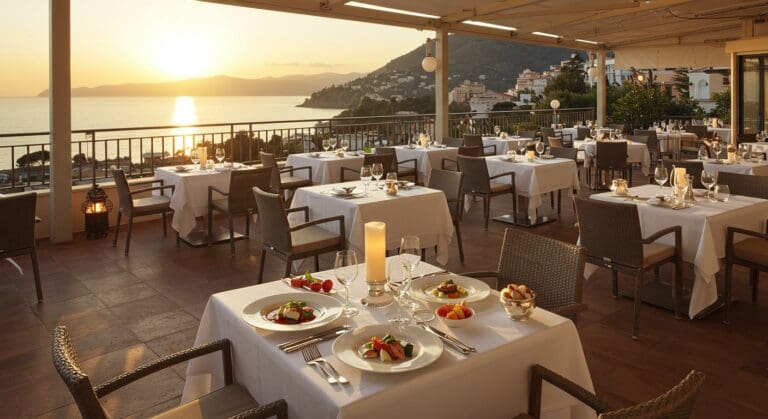
The setting does a certain amount of the work, which is no reason not to be selective. A table with a view of the lagoon at the right restaurant, as the sun drops behind the city, is genuinely one of those evenings you mention years later.
Beach Clubs and Casual Dining Around Faro
Faro’s beaches are reached by ferry across the lagoon – a short, rather lovely journey that immediately adjusts your expectations for the afternoon. The barrier islands, particularly Ilha de Faro and Ilha Deserta, have their own eating options ranging from beach kiosks to more developed beach clubs with proper kitchens and, in the case of Ilha Deserta, a restaurant that has built a serious reputation for fish dishes served in a genuinely remote location. The experience of eating simply grilled fish at a table on an almost uninhabited island in the middle of a protected lagoon is, not to put too fine a point on it, rather good.
Closer to the city, the beach club options lean casual – grilled fish, salads, local beer, the sound of the Atlantic in the background. These are not places for lengthy tasting menus. They are places for sardines, a glass of vinho verde, and the particular kind of doing-nothing that Portugal has quietly perfected.
Food Markets and Culinary Culture
The Mercado Municipal de Faro – the city’s main covered market – is a working market in the best possible sense. It opens early, it smells correctly of fresh fish and ripe stone fruit, and it contains the ingredients for everything you have eaten since arriving in Portugal. Going on a weekday morning, when the stalls are fully staffed and the local restaurants are doing their own shopping, gives you an unusually honest picture of what the Algarve actually produces.
The fish hall is the centrepiece: whole sea bass and bream alongside the inevitable but justified fresh sardines, octopus displayed with a casual confidence, and the shellfish that make this corner of Portugal worth paying attention to. There is also excellent local cheese, dried figs, almonds, and a section of prepared foods that serves as an unofficial guide to regional cooking. A coffee at one of the market’s small cafes, taken standing at the counter like a sensible person, costs approximately nothing and tastes considerably better than the hotel breakfast you skipped to get here.
What to Order: Essential Dishes in Faro
The Algarve has its own culinary vocabulary and Faro is where it is spoken most fluently. Several dishes are simply not optional.
The cataplana is the region’s signature preparation – a slow-cooked copper-pot dish that traditionally combines clams and pork with tomato, garlic, and sweet peppers, though variations involving lobster, monkfish, or prawns appear regularly on better menus. It arrives at the table in the sealed copper vessel, which is opened with a small ceremony. The steam that escapes smells like an argument for Portugal being the best country in Europe.
Bacalhau – salt cod – appears in dozens of preparations across the country, and Faro is no exception. The local restaurants do it well in the traditional forms: bacalhau à brás (with eggs, onion, and thin potato chips), bacalhau com natas (with cream, baked), or simply grilled with olive oil and chickpeas. Fresh grilled fish – peixe grelhado – is always reliable here, particularly the sea bream and sea bass, served with roasted potatoes and a salad dressed in good olive oil.
For something simpler: a plate of percebes, a glass of cold white wine, and a seat facing the water. Some things require very little assistance.
Wine, Local Drinks and What to Order in Them
The Algarve has its own wine appellation and its wines are better than their international reputation suggests – which is to say, they are mostly unknown outside Portugal despite being genuinely worth knowing. The regional whites, made from grapes like Arinto, are fresh and mineral with enough acidity to handle the seafood that dominates the local diet. They are exactly the right thing to drink in a fish restaurant by a lagoon in southern Portugal, which turns out to be where you are.
Vinho verde from the Minho remains the national default for casual seafood dining – light, slightly effervescent, reliably pleasant. For red wine drinkers, the Alentejo and Douro regions are well represented on most Faro wine lists, and local Algarvian reds from the Portimão and Lagos appellations are worth trying with the meat-based preparations.
The local medronho – a spirit distilled from strawberry tree berries – is offered as a digestif at most traditional restaurants and functions as a perfectly adequate reason to sit a little longer. Sagres and Super Bock are the dominant beers, both cold, both inoffensive, both preferable to whatever imported lager the tourist menu might suggest. Finish with a bica – a short, properly made espresso – and you have done the afternoon correctly.
Practical Tips: Reservations, Timing and Table Manners
Faro operates on Portuguese time, which is to say that lunch is between one and three, dinner rarely starts before eight, and anyone eating at six-thirty is immediately identifiable as a tourist (which is fine, but worth knowing). The better restaurants fill up genuinely quickly in July and August, and the phenomenon of walking in on a Friday evening in high season and finding a table is increasingly optimistic. Book in advance. Most restaurants accept reservations by phone or email; a growing number are on booking platforms.
For the tascas and market-adjacent spots, arriving at opening time – usually noon for lunch – secures both a table and the best of the daily specials. By one-fifteen, the good tables in the good places are gone.
Tipping is appreciated but not mandatory in the aggressive way it operates elsewhere. A round-up or a modest addition to the bill is received warmly. The bread and olives that arrive before you order are not free – they will appear on the bill as couvert – and it is entirely acceptable to send them back if you do not want them. Most people do not send them back. The olives are usually very good.
Hidden Gems: Where the Locals Actually Eat
The genuinely local restaurants in Faro are in the streets away from the waterfront and the old town’s main routes – the kind of places without much of an online presence, where the menu is a single laminated sheet and the owner is also the waiter and possibly the cook. These exist in most Portuguese cities but Faro has preserved more of them than most, partly because the city’s tourism has historically been lower-key than the western Algarve and partly because the locals have simply refused to give them up.
Finding them requires a modest investment in wandering. The neighbourhood around the train station and the streets inland from the marina tend to reward exploration. Look for places that serve a set lunch menu – entrada, prato, sobremesa, coffee – for somewhere between eight and twelve euros. These lunches are not a consolation prize. They are often the best meal you will eat in Faro, cooked by someone who has been making this food for thirty years and sees no reason to change.
The local desserts deserve a mention: the Algarve’s pastry tradition involves almonds, figs, carob, and honey in various combinations, and the Dom Rodrigos – a sweet made from egg yolk and almond wrapped in a distinctive foil – are specific to the region and available at any decent confeitaria in the city. They are better than they sound, which is fortunate because they sound quite rich.
Planning Your Stay: Villas, Private Chefs and the Full Faro Experience
For those who want to take the Faro food experience properly seriously – and there are worse ambitions – staying in a luxury villa in Faro with a private chef option transforms the culinary possibilities entirely. A chef sourcing directly from the Mercado Municipal, preparing cataplana to order in a fully equipped villa kitchen, serving a Ria Formosa oyster course on a private terrace with the evening light across the lagoon – this is not an upgrade on the restaurant experience. It is a different thing altogether.
The flexibility matters as much as the luxury. A private chef can adapt to what arrived at the market that morning, accommodate preferences across a group, and produce the kind of effortless dinner that restaurants spend considerable effort trying to replicate. For families, for larger groups, or simply for those who prefer the evening to unfold at their own pace, it is an arrangement that Faro – with its exceptional local ingredients and its working market – is particularly well set up to support.
For everything else you need to plan your time in the city – the islands, the old town, the best beaches, the practical logistics – the Faro Travel Guide covers the full picture.