Free municipal consortium of Ragusa Food & Wine Guide: Local Cuisine, Markets & Wine Estates
Free Municipal Consortium of Ragusa Food & Wine Guide: Local Cuisine, Markets & Wine Estates
There is a particular hour in late morning, somewhere between the market stallholders beginning to pack up and the first tables being set for lunch, when the air in Ragusa carries everything at once: roasting almonds, citrus peel, something meaty and slow-cooked drifting from a doorway that appears to lead nowhere useful. It is the smell of a cuisine that has had centuries to settle into itself and sees no reason to apologise for that. The Free Municipal Consortium of Ragusa – the administrative heart of the Iblean plateau in southeastern Sicily – does not shout about its food. It barely raises its voice. But eat here for three days and you will understand why those in the know rank this corner of Sicily among the most rewarding food destinations in the entire Mediterranean.
For a broader introduction to the region, the Free Municipal Consortium of Ragusa Travel Guide covers the full landscape – history, culture, and how to orient yourself across this remarkable baroque province.
The Character of Iblean Cuisine
Ragusano cooking is not Palermitan. It is not Catanese either. This distinction matters more to locals than it might initially seem to visitors, and understanding it unlocks the food entirely. The Iblean plateau sits inland and elevated, shaped by cattle farming, sheep grazing, and centuries of carob and almond cultivation. The Arab influence that defines so much of western Sicilian cooking fades here into something more austere and agricultural – less sweet, more earthy, built on technique rather than spice. What you find instead is a cuisine of extraordinary raw materials treated with a kind of respectful restraint.
The cornerstone of the table is dairy. Ragusa province produces some of the finest cheese in Italy, full stop. The cattle – predominantly the Modicana breed, a hardy ancient variety that wandered these limestone hillsides before most of Europe had developed an opinion about terroir – produce milk of unusual richness and complexity. Everything flows from this fact. The cooking uses it. The cheese culture is built on it. The identity of the region rests, to a quite remarkable degree, on what comes out of a cow.
Pork, wild herbs from the plateau scrubland, freshly caught fish from the nearby Sicilian coast, and a reverence for seasonal vegetables round out a table that feels both deeply traditional and quietly sophisticated. There is nothing fussy about it. Which, in its own way, is the most sophisticated thing of all.
Signature Dishes You Must Eat Here
Caciocavallo Ragusano DOP is the dish and the ingredient simultaneously. This aged stretched-curd cheese – formed into large rectangular blocks and hung to mature in pairs over wooden beams – has a flavour that moves from milky and yielding when young to sharp, crystalline, and almost aggressive with age. Eat it at every opportunity. On bread. With honey and walnuts. Shaved over pasta. Sliced alongside local salumi at the start of a meal. The aged version, in particular, rewards serious attention.
Scacce ragusane deserve their own moment. These folded flatbreads – thin dough wrapped around fillings of tomato and onion, or ricotta and sausage, or aubergine and local cheese – are baked until crisp and eaten as street food, antipasto, or a perfectly respectable lunch. They look humble. They taste extraordinary. Finding a version made by someone’s grandmother in a small alimentari is among the more quietly triumphant experiences this region can offer.
Pasta con le sarde alla ragusana diverges slightly from the Palermitan version, using wild fennel from the plateau and leaning on the grassier, more mineral notes of local olive oil. Coniglio all’agrodolce – rabbit in sweet and sour sauce with olives, capers, and a generous pour of local wine – is slow-cooked peasant food elevated by time and good ingredients. And for dessert, mpanatigghi: small pastry half-moons filled with a mixture of dark chocolate, ground meat (a historical oddity that confused everyone then and continues to confuse visitors now), and almonds. They are better than they have any right to be.
The Wines of the Iblean Plateau
Nero d’Avola is Sicily’s ambassador grape to the world, and a significant portion of the best examples come from this southeastern corner of the island. The Iblean plateau’s calcareous soils and warm days tempered by altitude and sea breezes produce wines of structure and complexity – deeper, more mineral, and more age-worthy than the rounder, fruitier interpretations you find further west. If your understanding of Nero d’Avola was formed by an anonymous bottle at a trattoria in the early 2000s, the wines coming out of this territory today will require you to revise that opinion entirely.
Frappato is the other grape worth knowing. Lighter in body, higher in acidity, with an almost ethereal quality – crushed cherry, dried flowers, a whisper of volcanic mineral – it has found particular fame in the Cerasuolo di Vittoria DOC, the only DOCG in Sicily, which blends Nero d’Avola and Frappato in a wine of genuine elegance. Vittoria sits within the consortium’s territory, and the wines produced here represent the pinnacle of Sicilian fine wine by most serious measures.
Local white production, including wines from Grillo and Grecanico, has improved dramatically in recent years. These are not wines anyone writes sonnets about yet, but paired with grilled local fish and eaten outside in good company, they do exactly what they need to do.
Wine Estates Worth Visiting
The wine estates of the Iblean plateau are not the grand theatrical affairs of Bordeaux or Tuscany. They tend toward the understated – family-run operations on stone farmland, often with no signage visible from the road. This is entirely in keeping with the regional character. What they offer in place of spectacle is authenticity, generosity of spirit, and wine that tastes unmistakably of the place that made it.
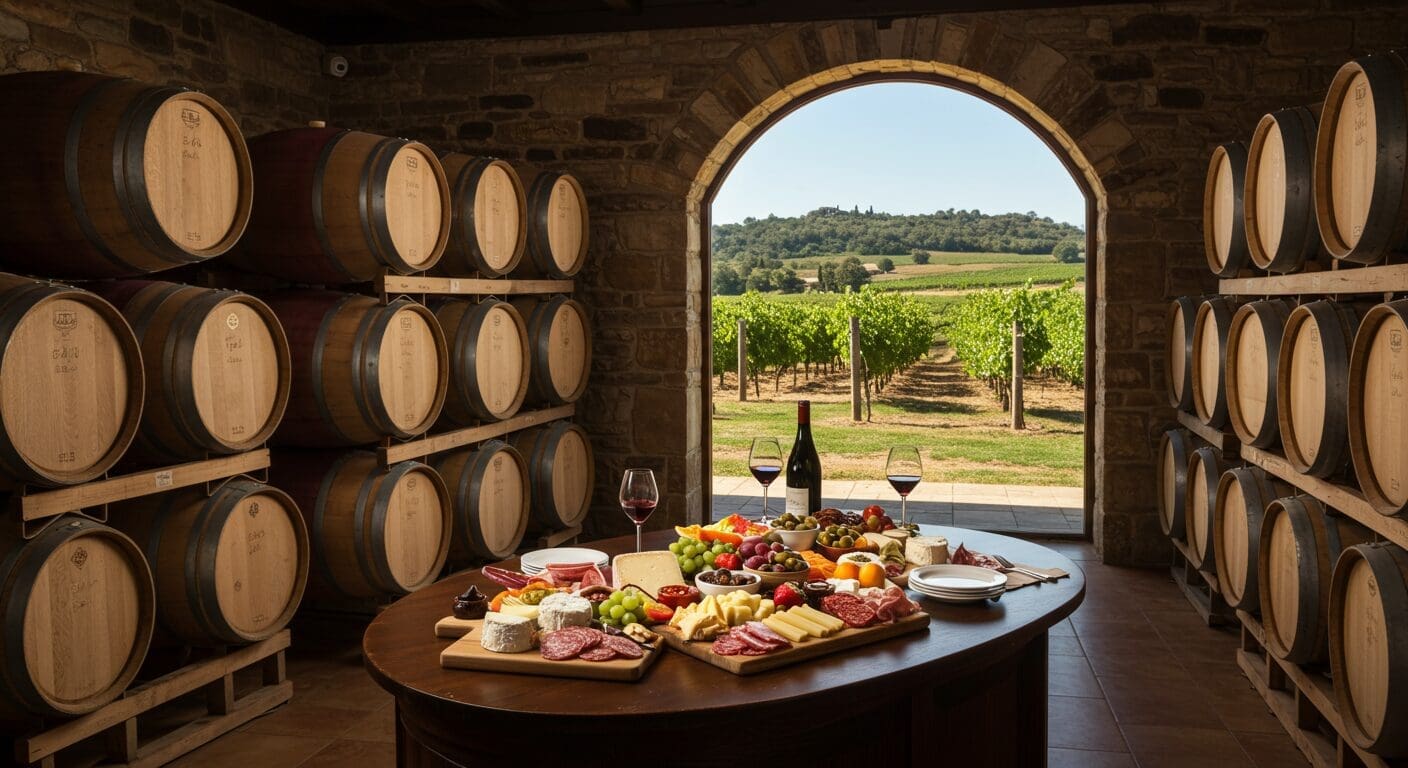
The Vittoria and Acate areas are the focal point for estate visits. Producers here typically receive visitors by appointment, and the experience – a walk through the vines, a tasting in an old masseria courtyard, perhaps a plate of local cheeses and preserved vegetables – is among the more genuinely pleasurable ways to spend a morning in southeastern Sicily. The conversation tends to be good too. These are people who chose to make wine in a place others had not fully discovered yet. They are usually interesting.
Seek out estates working with certified organic or biodynamic viticulture, a growing movement in this territory that suits both the soils and the temperament of the newer generation of producers. Olive trees frequently grow between the vine rows here – the same estate may produce both wine and olive oil of serious distinction, which is convenient if you enjoy carrying both home in your luggage.
Food Markets and Where to Shop Like a Local
Ragusa Ibla does not have a vast market culture in the manner of Palermo’s Ballarò or Catania’s Pescheria. What it has instead are smaller, more intimate weekly markets where the transaction between producer and buyer remains genuinely personal. The markets of Ragusa, Modica, and the smaller comuni within the consortium run on a schedule of their own devising that does not always correspond neatly with what you read online. Going early is always correct.
The things worth buying: local ricotta when it is still warm, which occasionally happens and is among the more transcendent agricultural experiences available to the human palate. Dried oregano from the plateau scrubland, which smells nothing like the jar in your kitchen at home. Carob syrup – a local sweetener with a deep, slightly smoky character that makes excellent use in cocktails and on cheese. And almonds, which grow prolifically here and are sold in forms ranging from raw to roasted to pasted to formed into marzipan sculptures of baroque elaboration.
Specialty food shops throughout Ragusa Ibla and the town of Modica stock the full range of DOP and IGP products from the province. These are not tourist traps. They are where locals shop when they want to buy something to give as a gift or take to a dinner party. Follow their lead.
Chocolate: The Modica Phenomenon
No food guide to this territory can sidestep Modica chocolate, even though Modica sits just outside the city of Ragusa proper and is really its own subject. The chocolate produced here – made using an ancient method that involves no tempering, no added cocoa butter, and no dairy, resulting in a grainy, intensely flavoured bar that crumbles rather than snaps – is one of those things that either makes complete sense to you immediately or requires several attempts. The flavours range from pure cocoa to spiced, citrus, or carob. The texture is singular. If you have only eaten smooth Swiss or Belgian chocolate your entire life, this will seem like a completely different foodstuff, which in a sense it is.
Visiting a chocolate producer in or around Modica and watching the cold-process method in action is a worthwhile experience for anyone with even a passing interest in food craft. Several producers offer tastings and small workshops. The quality varies, and the most visited shops are not always the best. Ask locally.
Cooking Classes and Culinary Experiences
The most rewarding cooking experiences in the Free Municipal Consortium of Ragusa tend to be small-scale and personal – not the organised group class in a purpose-built kitchen, but an arrangement with a local cook, sometimes operating from a working farmhouse, to spend a morning learning the scacce or the mpanatigghi or the proper technique for stretched-curd cheese. These experiences require some advance organisation and often come via a villa concierge or a well-connected local contact. They are worth the effort.
More formally, several agriturismi and masserie within the territory offer structured cooking workshops, usually built around seasonal ingredients and the rhythms of what’s actually growing and being produced that week. These tend to be excellent value and include lunch, which is the correct way to end any cooking class. You have, after all, earned it.
Market tours combined with cooking sessions are available through various local operators. The model – early morning market visit, produce selection, return to a kitchen, cook, eat – is reliable and well-executed in this territory. What makes it particularly good here is the quality of what’s available at the market. Starting with exceptional raw materials makes learning enjoyable rather than merely instructional.
Olive Oil and the Iblean Plateau
The olive oil produced on the Iblean plateau is among the finest in Sicily and, by extension, among the finest in the world. The DOP Monti Iblei designation covers several sub-zones, each with its own character, but the unifying theme is intensity – these are oils of considerable presence, herbaceous and peppery, with a finish that sits at the back of the throat long after the bread has been set down. They are not subtle. They are not trying to be.
The predominant variety is Tonda Iblea, a small round olive that produces oil of great personality. Visiting an oil producer during the November harvest – when the presses are running and the new oil is being tasted, still cloudy, straight from the centrifuge – is one of the more purely sensory experiences this region offers. The smell of fresh-pressed oil in a working frantoio is something that requires no context or explanation. You simply understand it.
Several estates sell directly, and buying oil to take home is one of the more considered souvenirs you can acquire here. A good bottle of Monti Iblei DOP will outlast any piece of artisanal pottery and improve every meal you cook for the next twelve months.
The Best Food Experiences Money Can Buy
For those who prefer their culinary experiences to arrive with a degree of curation and comfort, the territory around Ragusa delivers at the highest level. Private dining experiences within restored masserie – the great stone farmhouses of the plateau, many now operating as exceptional accommodation or event venues – offer the chance to eat regional food at genuinely long tables, with local wine poured freely and producers sometimes present to explain what you’re drinking and eating. This is the format the food and setting were designed for.
Private truffle experiences are available in season – Sicilian truffles are less famous than their Umbrian or Périgord counterparts but entirely serious, and a morning with a local truffle hunter and their dog in the Iblean woodlands is both absorbing and delicious, particularly when it ends with whatever was found being incorporated into lunch.
Bespoke wine itineraries built around the DOCG Cerasuolo di Vittoria and surrounding producers, arranged through a specialist guide with genuine relationships in the wine community, represent perhaps the finest way to understand what makes this territory extraordinary. Tasting the same grape grown on different soils, in different altitudes, by producers with different philosophies, over the course of a single unhurried day – then eating well that evening – is the kind of experience that changes how you drink wine permanently. Not a bad return on an afternoon.
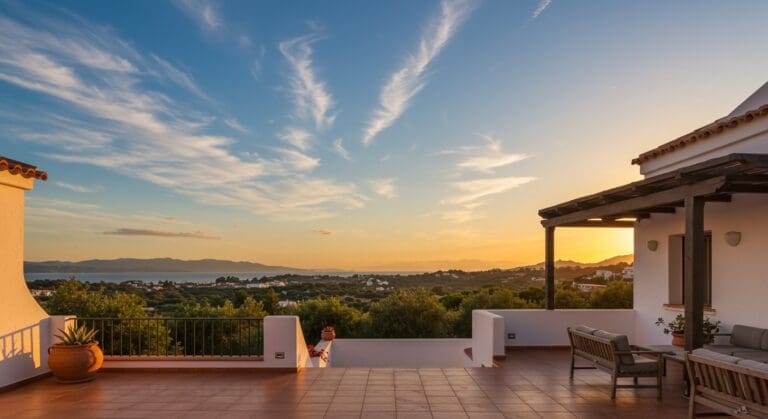
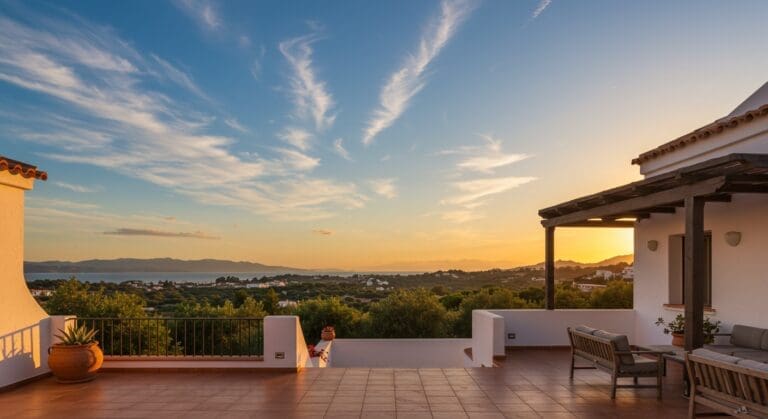
For those staying in private villas within the territory, a private chef sourcing from local producers and markets and cooking a full regional menu in the villa kitchen is the definitive expression of what this food culture can offer. Everything arrives at the table with provenance and intention. The setting – a terrace over the Iblean countryside, a stone dining room open to the evening air – does the rest.
If you are planning to experience all of this properly, start by finding the right base. Browse our selection of luxury villas in Free Municipal Consortium of Ragusa and secure a property with the space, kitchen, and setting that this food culture deserves.
What is the best time of year to visit the Free Municipal Consortium of Ragusa for food and wine experiences?
Late September through November is the most rewarding period for food and wine visitors. The grape harvest runs through September and October, olive pressing begins in October and peaks in November, and the autumn markets are at their most abundant with seasonal produce. Spring – particularly April and May – is excellent for wild herbs, early vegetables, and the broader wine tourism season. Summer is high season for visitors and can be intensely hot, though food quality remains high and evening dining is at its most atmospheric.
Which wines from the Ragusa area should I look for?
Cerasuolo di Vittoria DOCG – a blend of Nero d’Avola and Frappato – is the region’s most distinguished wine and the only DOCG in Sicily. Within that, look for Cerasuolo di Vittoria Classico, produced from a more restricted zone and to higher standards. Frappato as a single-varietal wine is also worth seeking out for its elegance and freshness. Pure Nero d’Avola from the Iblean plateau tends toward greater minerality and structure than versions produced in warmer coastal areas. Asking at an estate directly, or at a good wine shop in Ragusa Ibla, will produce better guidance than any list.
Can I arrange private food and wine experiences directly from a villa in the Ragusa area?
Yes, and this is often the best approach. Many luxury villas in the territory work with trusted local contacts – chefs, producers, guides, and market specialists – who can arrange experiences ranging from private in-villa dining with a regional chef to bespoke winery visits, olive oil tastings, and cooking classes. Organising these through your villa rather than through generic tour operators typically results in more personal, higher-quality experiences with genuine access to producers who do not routinely deal with the general public. Communicating your interests before arrival allows the villa team to make arrangements in advance.