
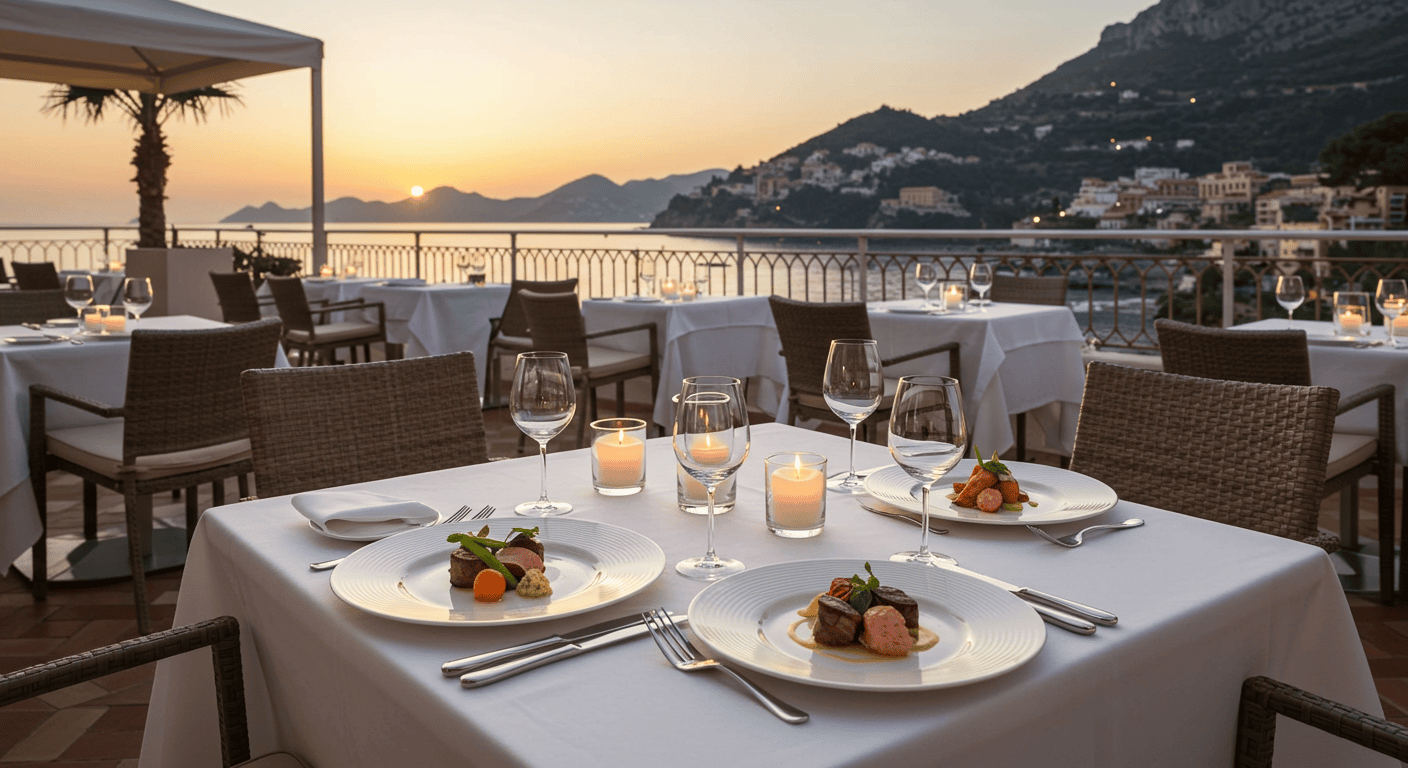
Best Restaurants in Gers: Fine Dining, Local Gems & Where to Eat
Best Restaurants in Gers: Fine Dining, Local Gems & Where to Eat
Come to Gers in autumn and you will understand, almost immediately, why people who visit once tend to start quietly rearranging their lives. The light turns amber and stays that way. The vineyards go gold. The morning air smells faintly of woodsmoke and something earthy and serious that turns out, eventually, to be truffles. The markets fill with duck confit, armagnac-soaked prunes, and wheels of cheese that have been ageing longer than some marriages. Gers in the Gascony region of southwest France is not a place that whispers subtly about its food culture – it announces it, confidently, through the front door, with a glass of Floc de Gascogne already poured. Eating well here is not a bonus. It is the entire point.
This guide covers the best restaurants in Gers across every register – from Michelin-recognised kitchens to village bistros that seat eighteen people and take bookings only if they feel like it, through to the food markets, the wine cellars, the hidden producers and the dishes that will make you question every meal you ate before arriving. For the broader picture of this remarkable region, our Gers Travel Guide is the place to start.
The Fine Dining Scene in Gers
Gers operates at a curious remove from the French fine dining establishment. It is not a region that has historically sought the spotlight – it is too busy producing extraordinary ingredients to spend much time marketing itself. And yet, serious kitchens have quietly taken root here, drawing chefs who want direct access to the best raw materials in France without the noise and theatre of Paris or Lyon.
The fine dining philosophy in Gers tends to be product-led rather than technique-led. You are unlikely to find elaborate theatrical flourishes or dishes that require a verbal explanation longer than the course itself. What you will find is Gascon duck prepared with an almost reverential precision, foie gras treated as the serious luxury ingredient it is, and seasonal menus that genuinely change because the region changes – not because a marketing calendar suggests they should.
Several restaurants across the department carry Michelin recognition, and a number of chef-led tables have built strong reputations with discerning French and international visitors. Auch, the departmental capital with its magnificent cathedral, has a notable fine dining presence. The kitchen culture here respects classical technique while remaining unapologetically local – you will not be served a Japanese-inflected foam where a proper Gascon sauce is called for. Reservations at the better tables are essential from spring through early autumn and should ideally be made weeks in advance. These are not restaurants that have empty tables on a Saturday evening waiting for walk-ins. They have regulars. You will need to earn your seat.
Local Bistros and Village Restaurants Worth Finding
If fine dining represents the formal argument for Gascon cuisine, the village bistro makes the same case more loudly and with considerably more bread. These are the restaurants that do not appear on international lists, are not discussed in trend pieces, and are consequently full of local farmers, retired couples, and the occasional suspicious visitor who stumbled in and never quite left.
The format is consistent across the region: a handwritten menu on a chalkboard, a prix-fixe lunch that costs roughly what a single cocktail costs elsewhere, a carafe of local wine that arrives without being asked for, and food that is unapologetically generous. Duck in various stages of preparation will feature. So will cassoulet, particularly as the weather cools. Pâtés and terrines arrive as a matter of course, not as a special request. Dessert will involve either armagnac, prunes soaked in armagnac, or an Armagnac ice cream. The region has clearly made a decision about armagnac and is committed to it.
The villages around Condom, Lectoure, and the Ténarèze wine country are particularly well supplied with this kind of cooking. Look for restaurants attached to local farms or those that advertise a menu du terroir – this is not marketing language in Gers, it is a statement of intent. The best of these places source ingredients from their own land or from producers within a few kilometres. The farm-to-fork movement, it turns out, is not a trend in Gascony. It is simply how things have always been done.
Food Markets and Producers: Eating Like a Local
The markets of Gers are not a tourist attraction. They are a functioning part of the food system, and they are extraordinary for it. Turn up on a market morning in a Gascon town and you will find local producers selling directly from their farms, arguing cheerfully about the correct way to prepare something, and occasionally offering you a small piece of something from behind the stall with a look that suggests refusal would be rude.
Auch holds one of the best weekly markets in the region, spreading around the cathedral square with a focus on local produce. Condom, Mirande, and Fleurance also run strong markets, each with their own character and their own particular local specialities. Mirande’s weekly market has a reputation that extends well beyond the town’s modest size – the foie gras, the charcuterie, and the seasonal game are exceptional.
If you visit in winter, the marchés au gras – the special fat markets dedicated to foie gras and preserved duck – are an education in how seriously Gascony takes its duck. These markets operate on a different emotional register to a normal shopping trip. People arrive with cool boxes. Transactions are conducted with quiet intensity. A perfect lobe of foie gras is held up to the light with the solemnity of a jeweller examining a diamond. To witness it is to understand why Gers produces some of the finest duck liver in the world.
Beyond the markets, seek out local armagnac producers who offer cellar visits and tastings. The Ténarèze and Bas-Armagnac appellations each have their own character, and the smaller family domaines offer a intimacy and generosity that larger operations cannot match. This is a drink best understood through the people who make it, ideally sitting somewhere warm with no particular schedule to keep.
What to Order: The Essential Dishes of Gers
Arriving in Gers without a working knowledge of the key dishes is not a disaster, but it is an avoidable inefficiency. The canon is well established and worth respecting. Duck confit is the regional signature – slow-cooked duck legs preserved in their own fat, served with sarladaise potatoes or a simple green salad to cut through the richness. When it is properly made, it bears no resemblance whatsoever to the version you may have encountered at an airport brasserie. The comparison is unkind to both parties.
Foie gras in Gers is treated with the seriousness it deserves. It appears as a terrine, pan-seared, or occasionally alongside a glass of Sauternes or the local Floc de Gascogne in a combination that should probably be prescribed rather than merely recommended. Magret de canard – duck breast from the same birds used to produce foie gras – is leaner and more robust, often served pink with a sauce built on armagnac or local wine. Cassoulet, that great southern French debate, appears on menus across the department. The Gascon version uses duck confit in place of the Toulouse sausage-heavy original. Both sides of the argument are convinced they are correct. This is a dispute with no foreseeable resolution.
Garbure is the region’s great peasant soup – a thick, fortifying broth of vegetables, beans, and preserved duck that is essentially a meal held together with a spoon. Order it on a cold day and it will rearrange your understanding of what soup can be. Finish with a pastis gascon, a paper-thin pastry tart made with apples and armagnac, and consider the meal complete.
Wine and Local Drinks: Beyond Bordeaux
Gers sits within or alongside several significant wine appellations, and the local drinking culture is its own considerable pleasure. The Côtes de Gascogne wines – light, aromatic whites produced largely from Colombard and Ugni Blanc – are the everyday wine of the region, and they are better than their modest price suggests. They are crisp and fresh and work beautifully with the rich food of the area in the way that wines and cuisines that develop together in the same place tend to do.
Madiran, produced from the Tannat grape in the foothills to the south, is a red wine of genuine substance – dark, tannic, built for long meals and longer cellaring. It pairs with the duck and the game and the cassoulet with an authority that lighter wines cannot match. Pacherenc du Vic-Bilh, the white counterpart from the same area, appears in both dry and sweet styles and deserves considerably more international attention than it currently receives.
And then there is armagnac. France’s oldest distilled spirit, produced in Gers and the surrounding departments since at least the fifteenth century, is the region’s great liquid export and its most underappreciated luxury. Single-vintage armagnacs, aged in black oak and marked with a specific year, are available direct from small producers at prices that would cause genuine distress in London or New York. Buy several bottles. Carry them carefully. They are worth the weight allowance they consume.
Floc de Gascogne – a blend of unfermented grape juice and young armagnac – functions as the regional aperitif, served cold as a welcome drink or alongside foie gras. It comes in both white and rosé styles. Both are worth your time.
Reservation Tips and Practical Advice for Eating in Gers
Gers operates on French time, which is to say that lunch is a serious commitment taken between roughly noon and two-thirty, and dinner rarely begins before seven-thirty. Attempting to eat outside these windows is not impossible, but it is the kind of thing that will earn you a look from restaurant staff that politely communicates their views on the matter.
The better restaurants – particularly those with any kind of reputation or Michelin recognition – should be booked well in advance during the peak summer months of July and August. Easter and the autumn truffle and foie gras season from October through December also fill up quickly with French visitors who know the region well. Booking directly with the restaurant by phone or through their website is generally preferred to third-party platforms in smaller establishments. A phone call in French, even imperfect French, is received considerably more warmly than an online form.
Sunday lunch in Gers is an institution. Families gather, multiple courses materialise, and the afternoon dissolves at the table in the way it was designed to. If you have the chance to experience a long Sunday lunch at a good Gascon restaurant – perhaps somewhere in the Armagnac country with a terrace overlooking the vines – do not allow any other consideration to interfere with it. Itineraries can be adjusted. Sundays in Gascony cannot be recovered.
Village restaurants outside the main towns can have irregular hours and may close on certain days without significant warning. Calling ahead is always sensible, and a degree of flexibility in your plans will serve you better than a rigid schedule. The best meals in Gers often happen when you allow them to, rather than when you have planned for them to.
Staying Well: Villas, Private Chefs and Eating at Home in Gers
For travellers who want to bring the food culture of Gers fully inside their own experience, there is an argument to be made for a luxury villa in Gers with access to a private chef. This is not an indulgence for its own sake – in a region this well supplied with extraordinary raw ingredients, having a chef who knows where to shop, which producers to visit, and how to compose a meal from what the market offers that morning is a genuine luxury. Picture a kitchen terrace looking out over Gascon rolling countryside, a table set for dinner, and dishes built from the morning’s market find. That particular pleasure is available here in a way that it is not in most places. The villa becomes the restaurant. The countryside becomes the cellar. The evening takes care of itself.
Whether your approach to eating in Gers involves booking months ahead at a celebrated kitchen, wandering into a village bistro on spec, or cooking with a private chef in your own rented farmhouse kitchen, the destination rewards serious appetite. This is a region that has been feeding people extraordinarily well for centuries. It has, it is fair to say, had some practice.
What is the best time of year to eat well in Gers?
Gers rewards visitors year-round, but autumn – from October through December – is particularly remarkable for food. This is the season of the marchés au gras, when fresh foie gras and preserved duck products are at their peak, truffles begin to appear, and the armagnac harvest fills the region with activity. Spring brings lighter markets and excellent lamb from the local farms. Summer is ideal for long terrace lunches with Côtes de Gascogne whites. The only genuinely quiet period is deep January, when some village restaurants close and the region takes a collective breath before the new season begins.
Do restaurants in Gers cater for dietary requirements?
The honest answer is that Gascon cuisine is built around duck, pork, and rich animal products, and the kitchen philosophy in many traditional restaurants is not naturally oriented towards extensive dietary substitution. That said, the region produces excellent vegetables, cheeses, and vegetarian-friendly dishes, and any restaurant worth visiting will make a genuine effort for guests who communicate their requirements clearly in advance. Calling ahead and explaining dietary needs – ideally in French, or with the help of your villa concierge – is strongly recommended. Fine dining restaurants are generally more adaptable than traditional village bistros, where the menu is often fixed and the kitchen small.
Is armagnac very different from cognac, and where can I taste it properly in Gers?
Armagnac and cognac are both French brandies, but they are distinct in character, production method, and geography. Armagnac is distilled once in a continuous still rather than twice in a pot still, which gives it a richer, more rustic complexity and a broader range of flavour. It is also produced in smaller quantities by individual estates, meaning that vintage-dated single-estate armagnacs offer a specificity that cognac rarely matches. In Gers, the best way to experience armagnac properly is to visit a small producer directly – the Ténarèze and Bas-Armagnac appellations are both within the department. Many domaines offer informal tastings and will walk you through aged vintages with a generosity that formal tasting rooms elsewhere rarely match. Your villa host or private chef can often arrange introductions to local producers.

