
Best Restaurants in Granada: Fine Dining, Local Gems & Where to Eat
Here is the thing about Granada that no other Spanish city can quite claim: they still give you free tapas with every drink. Order a glass of Rioja at a bar in Madrid and you will receive a glass of Rioja. Order the same in Granada and a small plate of food will materialise beside it, unbidden and unpaid for, as though the city considers eating alone a mild form of antisocial behaviour. It is, in the most literal sense, the most generous food culture in Spain – and for a discerning traveller who has eaten their way through Seville, San Sebastián and Barcelona, that single custom makes Granada feel like a very pleasant discovery indeed.
But Granada’s dining scene goes considerably deeper than free food. This is a city shaped by Moorish history, mountain geography, and a university population that demands quality at every price point. The result is a table culture that ranges from centuries-old bodegas pouring house vermouth from wooden barrels to contemporary Andalusian kitchens reimagining the flavours of the Sierra Nevada. Whether you are looking for a long, elegant dinner with a view of the Alhambra or a bar stool and a plate of fried fish, Granada will oblige with remarkable enthusiasm.
This guide covers the full spectrum – the finest restaurants in Granada, the local institutions you should not overlook, what to drink, what to order, and how to navigate a city where the food culture is as layered as the architecture.
The Fine Dining Scene in Granada
Granada does not currently hold a Michelin star – a fact that surprises visitors more than it should, and probably says more about the Michelin committee’s travel schedule than it does about the quality of the cooking here. What the city does have is a growing number of serious, ambitious restaurants producing food that comfortably rivals starred establishments in larger Spanish cities, at prices that will make you feel slightly smug about your choice of destination.
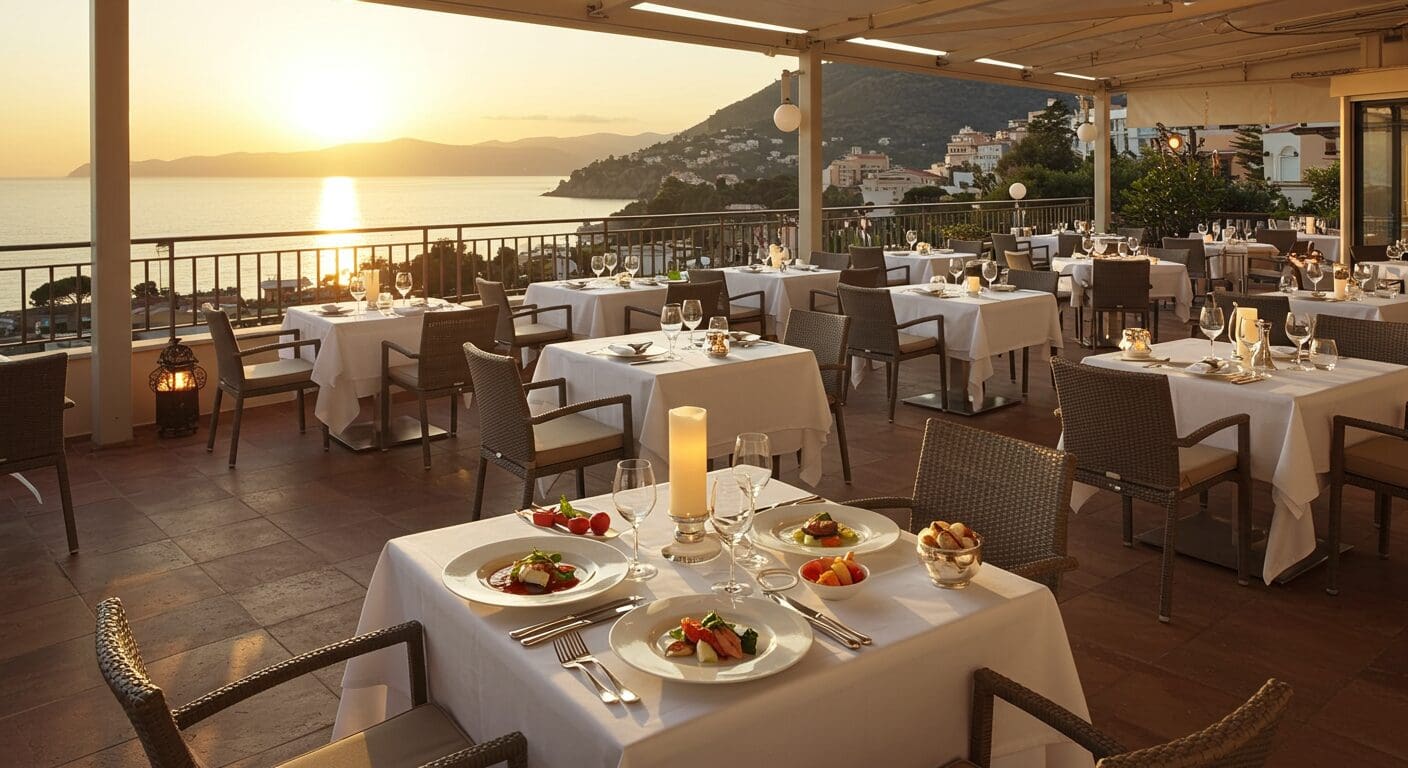
La Auténtica Carmela, in the historic El Realejo neighbourhood close to Plaza Nueva and Granada Cathedral, is the name that comes up most reliably when serious food is the subject. This is an award-winning restaurant with the confidence to present modern Andalusian cuisine without either apologising for its roots or drowning them in foam. The menu leans on local ingredients – produce from the Vega de Granada, fish from the Mediterranean coast, the spices and dried fruits that speak quietly of the city’s Moorish past – and handles them with precision and imagination. The atmosphere is intimate without being hushed, elegant without being stiff, and the terrace seating, available in both summer and winter configurations, makes it one of the better options for a special occasion dinner in the city.
This is the kind of restaurant where you should book ahead, dress with a degree of intention, and allow the evening to extend further than you planned. It will.
For those who want fine dining with a view to match the food, Restaurante Mirador de Morayma in the Albayzín neighbourhood occupies a position that other restaurants would pay a considerable amount to replicate. Dining here means looking directly at the illuminated Alhambra Palace across the valley – a view that has been known to render first-time visitors briefly speechless, which at least gives you a moment to look at the menu. The interior is extraordinary: part restaurant, part informal museum, with historic artefacts, paintings and sculptures filling rooms that feel more like the private home of an eccentric collector than a commercial dining room. The food is traditional Andalusian cuisine elevated with warming spices and fresh Mediterranean flavours – hearty, considered, and very much in conversation with the landscape around it.
Book the terrace. Book it early. Book it as soon as you know your travel dates.
Local Institutions You Should Know
Every great food city has its institutions – the places that predate trends, outlast fashions and simply continue being excellent through sheer force of character. Granada has several, and they reward the traveller who moves beyond the obvious tourist orbit around Plaza Nueva.
Bodegas Castañeda is the clearest example. Open since 1927 on Calle Almireceros in the heart of the city, this is a bodega in the original and most complete sense: floor-to-ceiling wine barrels behind a traditional bar, a bohemian atmosphere that has been accumulating character for nearly a century, and a house vermouth served from wooden wall-mounted barrels that is among the better things you will put in your mouth in Andalusia. The tapas are traditional and genuinely good – oxtail slow-cooked to the point of surrender, jamón sliced from legs hanging above the bar, simple plates of cheese and pickles that make excellent company for a glass of something cold. The place is consistently busy with both tourists and locals, which is a combination that usually signals trouble but here simply reflects the fact that Bodegas Castañeda is doing something right that it has been doing right for a very long time.
Then there is Restaurante Chikito, which opened in 1976 on the site of the legendary Café Alameda – the café where Federico García Lorca and the great literary and artistic minds of Granada would gather in the early twentieth century. There is still a statue of García Lorca in the corner, which gives the room a quality that no amount of interior design budget could manufacture. The menu is traditional Granadino cooking – hearty, confident, deeply rooted in the flavours of the region – and eating here carries the particular pleasure of occupying a space with genuine cultural weight. It is the sort of restaurant that reminds you Granada is not merely a backdrop for tourism but a city with an intellectual and artistic history that runs very deep indeed.
Seafood, Fried Fish and Casual Dining
Granada sits approximately an hour from the Mediterranean coast, which means that fresh seafood arrives in the city with admirable regularity and is treated here with the respect it deserves. The Andalusian tradition of fritura – the art of frying fish in light batter at high heat until the exterior is crisp and the interior remains tender and sweet – is one of the great simple pleasures of southern Spanish cooking, and nowhere in Granada does it better than Bar Los Diamantes.
The story of Bar Los Diamantes is a good one. It began in 1933 as a small food shop, developed a reputation for excellent seafood, and gradually evolved into a tapas bar specialising in fried fish that now has five locations across the city. Since 1942 it has been serving fish fritters, clams in sauce, prawns cooked with precision and care, calamari that bears no resemblance to the rubber rings served under the same name in lesser establishments, and an exclusive Russian salad made to a secret family recipe that regulars will defend with a fervour usually reserved for football clubs. The vibe is lively, the prices are honest, and the fish is genuinely fresh. No frills, no theatre – just very good seafood eaten at a bar in Granada, which is one of the finer ways to spend a Tuesday afternoon.
For casual dining with slightly more comfort, the tapas bars around the Albayzín and Realejo neighbourhoods offer the full Granada experience: order a drink, receive a tapa, order another drink, receive another tapa, repeat until the evening has developed its own pleasant momentum.
What to Order: Dishes That Define Granada
Granada’s cuisine draws on three distinct culinary traditions – Moorish, mountain, and Mediterranean coastal – and the best dishes reflect all three simultaneously. Knowing what to order is half the battle.
Plato alpujarreño is the mountain dish in its most complete form: fried eggs, potatoes, blood sausage, chorizo and cured ham, served on a single plate with a generosity that suggests the kitchen does not entirely trust you to feed yourself otherwise. It is the cooking of the Sierra Nevada – substantial, warming, not remotely apologetic about its caloric content.
Rabo de toro – oxtail braised slowly in red wine until the meat falls from the bone – appears on menus across the city and should be ordered wherever it is offered. Bodegas Castañeda’s version is a reliable benchmark.
Tortilla del Sacromonte is Granada’s own variation on the Spanish omelette, made with brains, kidney and vegetables – an acquired taste that is very much worth acquiring.
The city’s Moorish heritage expresses itself in dishes sweetened with honey, spiced with cumin and cinnamon, and in the use of dried fruits alongside savoury ingredients. Mirador de Morayma handles these flavours particularly well. Look also for habas con jamón – broad beans cooked with cured ham – a simple dish that appears on almost every traditional menu and rarely disappoints.
And naturally: eat the free tapas. All of them. This is not the moment for restraint.
Wine, Vermouth and Local Drinks
Granada sits within the Contraviesa-Alpujarra wine region, producing wines from high-altitude vineyards that are still finding their audience outside Andalusia – which means excellent bottles at prices that reflect the relative obscurity rather than the quality. White wines made from Vijiriega grapes have a freshness and minerality that pair beautifully with the city’s seafood; the reds, particularly those from Garnacha grown at altitude, have a structure that handles the heartier mountain dishes with ease.
Vermouth – vermut in the local parlance – has experienced a cultural renaissance across Spain in recent years, but in Granada it never really went anywhere. The house vermouth at Bodegas Castañeda, poured from those wooden wall barrels with no particular ceremony but considerable expertise, is the definitive local version: aromatic, slightly bitter, served cold with a slice of orange. It is the correct drink with which to begin any evening in Granada, and possibly the correct drink with which to begin any afternoon.
For something non-alcoholic, agua de limón – the local lemon water served in tall glasses, slightly sweetened and extremely cold – is ubiquitous and welcome, particularly in summer when Granada’s inland heat is a serious proposition.
The city’s North African connections also mean that you will find very good Moroccan mint tea in the tea houses around the Albayzín, a neighbourhood where the boundaries between Spanish and Moorish culture remain productively blurred.
Food Markets and Culinary Exploration
The Mercado de San Agustín, located close to Granada Cathedral, is the city’s main covered market and the best place to understand what Granadino cooking is built from. Stalls selling local cheeses, Sierra Nevada honey, cured meats, seasonal vegetables from the Vega, and fresh fish from the coast provide the raw material for the city’s kitchens – and for visitors who have access to a private kitchen in their accommodation, it is an excellent place to spend a morning with genuine purpose.
The market is busiest in the earlier hours of the morning, when professional cooks do their shopping alongside domestic ones, and the quality of produce reflects the demands of both. Arrive before ten, walk slowly, ask questions if your Spanish extends to it, and buy the jamón even if you have nowhere obvious to put it. You will find somewhere.
The neighbourhood of Alcaicería – the former Moorish silk market close to the Cathedral – now mixes spice shops and souvenir stalls with a few genuinely good food vendors selling saffron, dried herbs, and the kinds of spice blends that will make your kitchen smell considerably more interesting for months after you return home.
Reservation Tips and Practical Advice
Granada operates on Spanish dining hours, which is to say that lunch begins at 2pm and extends comfortably to 4pm or beyond, while dinner rarely starts before 9pm and often continues past midnight. Attempting to dine at 7pm will result in largely empty restaurants and staff who are visibly puzzled by your optimism. Adjust your schedule accordingly – this usually means a light breakfast, a substantial lunch, a strategic afternoon rest, and dinner that begins when the light has fully left the sky.
For fine dining establishments like La Auténtica Carmela and Mirador de Morayma, reservations are strongly recommended and should be made at least several days in advance, longer in high season (July, August, and the Easter Semana Santa period, when the city fills entirely). Both accept bookings online and by phone.
Bodegas Castañeda and Bar Los Diamantes do not take reservations in the traditional sense – the culture is walk-in, and queues form naturally outside the best spots. Arrive at opening, or accept that you will wait. The wait, it should be said, is generally worth it.
For the tapas crawl – the tapeo – the key is to move between bars rather than settle at one. Order one drink per bar, accept the tapa, assess the quality, and move on. This requires a certain lack of sentimentality, but the rewards are significant. The streets around Calle Elvira, Calle Navas, and the lower Albayzín are the natural geography for this particular exercise.
Finally: if you are staying in a luxury villa in Granada, many properties can be arranged with private chef services, which transforms the experience entirely. A private chef who knows the Mercado de San Agustín, who can prepare a menu built around the best of the morning’s market produce, and who can serve it in a private courtyard or on a terrace with a view of the Sierra Nevada – this is not an indulgence so much as a logical extension of the city’s food culture, applied in the most civilised possible setting. For a special occasion dinner, or simply for an evening when the pleasure of staying in rather than going out is overwhelming, it is an option worth knowing about.
For more on planning your time in the city, including what to see, where to stay and how to make the most of the Alhambra, our full Granada Travel Guide covers everything you need before you arrive.


