La Quinta Travel Guide: Where to Stay, Eat & Explore in Luxury
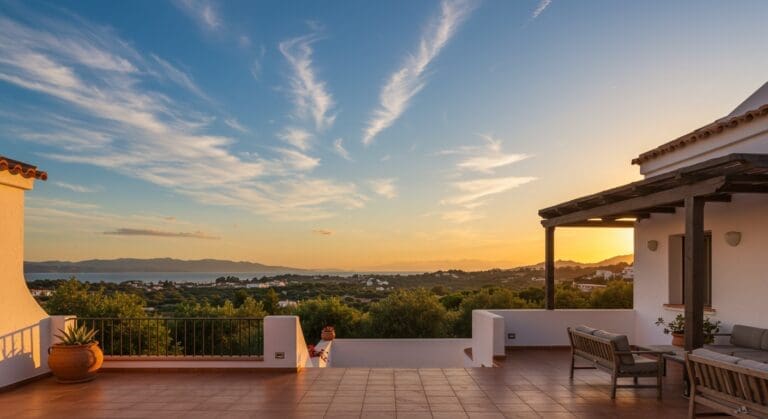
It’s seven in the morning and the Coachella Valley is doing that thing it does – the one where the light arrives sideways across the Santa Rosa Mountains and turns everything gold and amber and slightly unreal, as though someone has applied a very expensive filter to the actual world. You’re in the water before breakfast, the pool cool and perfectly still, a cup of coffee balanced on the coping stone, the desert floor stretching out ahead of you in every direction. Later, there will be golf. Then a long lunch somewhere with a patio and a wine list that deserves serious attention. Then, possibly, a hike up into the coves as the sun drops and the valley floor glows. This is what a luxury holiday in La Quinta looks like. It is, to be direct about it, not a bad way to spend a week.
La Quinta is one of those places that gets under the skin of a very particular kind of traveller. Couples celebrating something significant – an anniversary, a significant birthday, the successful completion of a decade together – find exactly the romantic seclusion they were promised. Families travelling with grandparents in tow, needing space and privacy and a pool that belongs entirely to them, discover that the villa model was essentially invented for this destination. Groups of friends who’ve been meaning to do a golf trip for three years and finally committed to it will find nine championship courses waiting with unusual patience. Wellness-focused guests looking for a genuine reset – morning hikes, evening spa treatments, days structured around nothing more demanding than deciding where to swim – have found their place. And the growing tribe of remote workers who’ve realised that a Californian desert with reliable high-speed connectivity and year-round sunshine is a more functional office than the one they left in London or New York: La Quinta serves them beautifully too. In the broader landscape of United States luxury travel, few destinations manage to combine sporting prestige, natural drama, and genuine relaxation with quite this much ease.
Getting Here Without the Faff: Airports, Transfers & Getting Around
The nearest and most convenient airport is Palm Springs International (PSP), sitting roughly 20 miles northwest of La Quinta. It’s a refreshingly civilised airport – small enough that you’re in a rideshare or private transfer within minutes of landing, without the ritual purgatory of a major hub. Direct flights connect Palm Springs to Los Angeles, San Francisco, Seattle, Denver, Dallas, Chicago, and New York, among others. If you’re arriving internationally, Los Angeles International (LAX) is the logical hub, around two hours by road depending on traffic and the particular mood of the I-10 that day.
Private airport transfers are the obvious choice for a luxury villa stay – pre-arranging a car means you arrive at your property without standing in a taxi rank questioning your life choices. Once you’re in La Quinta, a car is essentially mandatory. This is the Californian desert. Things are spread out. The distances between a golf course, a restaurant, and a trailhead that would be entirely walkable in, say, a European city are here measured in miles rather than minutes on foot. Rideshare apps work well throughout the Coachella Valley. If your villa comes with a concierge – and the better ones do – they will sort all of this before you even think to ask.
Where to Eat in La Quinta: A Valley That Takes Its Tables Seriously
Fine Dining
The headline act, and has been for the better part of a century, is Morgan’s in the Desert at the La Quinta Resort and Club. Open since 1926 – when it was already drawing celebrities and the kind of people who travelled with trunks rather than suitcases – it has aged into genuine elegance. The kitchen works with locally sourced ingredients, the plating is serious without being theatrical, and the atmosphere on a warm desert evening is quietly, confidently romantic. It earned a 2024 OpenTable Diners’ Choice Award, which is the industry’s way of confirming what regulars have known for years.
Also at the La Quinta Resort, Adobe Grill takes a different direction entirely – Oaxacan cuisine, executed with a kitchen that clearly understands Mexican culinary heritage rather than approximating it for a tourist audience. The balance of traditional flavour and contemporary technique is handled with real intelligence, and the fresh ingredients show. Another 2024 OpenTable Diners’ Choice Award, deservedly. Two restaurants at the same resort winning the same award in the same year is either exceptional kitchen culture or an extraordinary coincidence. Almost certainly the former.
For something with a different kind of drama, La Quinta Cliffhouse delivers it architecturally before you’ve ordered a drink. Jutting from a rock outcropping above the desert floor, the views across the valley are the kind that make you put your phone away and simply look. The menu – American classics with a focus on premium steaks and seafood – is built for the setting: unfussy, well-executed, and confident in the quality of the ingredients. It’s lively rather than hushed, which after three days of serenity can feel exactly right.
Where the Locals Eat
Lavender Bistro earns its reputation on atmosphere as much as the plate – the award-winning patio strung with thousands of lights and fresh flowers has the kind of warmth that makes a two-hour dinner feel like twenty minutes. The menu sits in the New American territory: fine meats, freshly caught seafood, organic where possible. Live music on the right evening tips it from excellent dinner into genuinely memorable one. OpenTable’s recognition for best ambiance in La Quinta is not flattery – the patio alone is worth the reservation.
Arnold Palmer’s Restaurant handles a different register entirely. This is a steakhouse with personality – the dining room covered in Palmer memorabilia, a practice putting green outside, Arnie’s Pub for a more relaxed drink, and a wine list that takes the New American menu seriously. The service has been specifically recognised by OpenTable as best-in-class among La Quinta restaurants, which in a town full of hospitality professionals is a distinction worth noting. Whether you care about golf or not, you will enjoy yourself here.
Hidden Gems Worth Seeking Out
La Quinta’s Old Town – the compact historic district around Calle Estado and Avenida La Fonda – has a cluster of independent restaurants, wine bars, and casual spots that reward wandering without a plan. The pace here is slower and less resort-polished, which is precisely the point. Farm-to-table cooking has deep roots in the Coachella Valley thanks to the extraordinary agricultural productivity of the surrounding region – dates, citrus, organic produce of every kind – and smaller independent kitchens tend to make the most creative use of it. Ask your villa concierge what’s opened recently. The turnover of interesting small restaurants in this part of the desert is high, in the best possible way.
Reading the Landscape: The Coachella Valley and What It Does to You
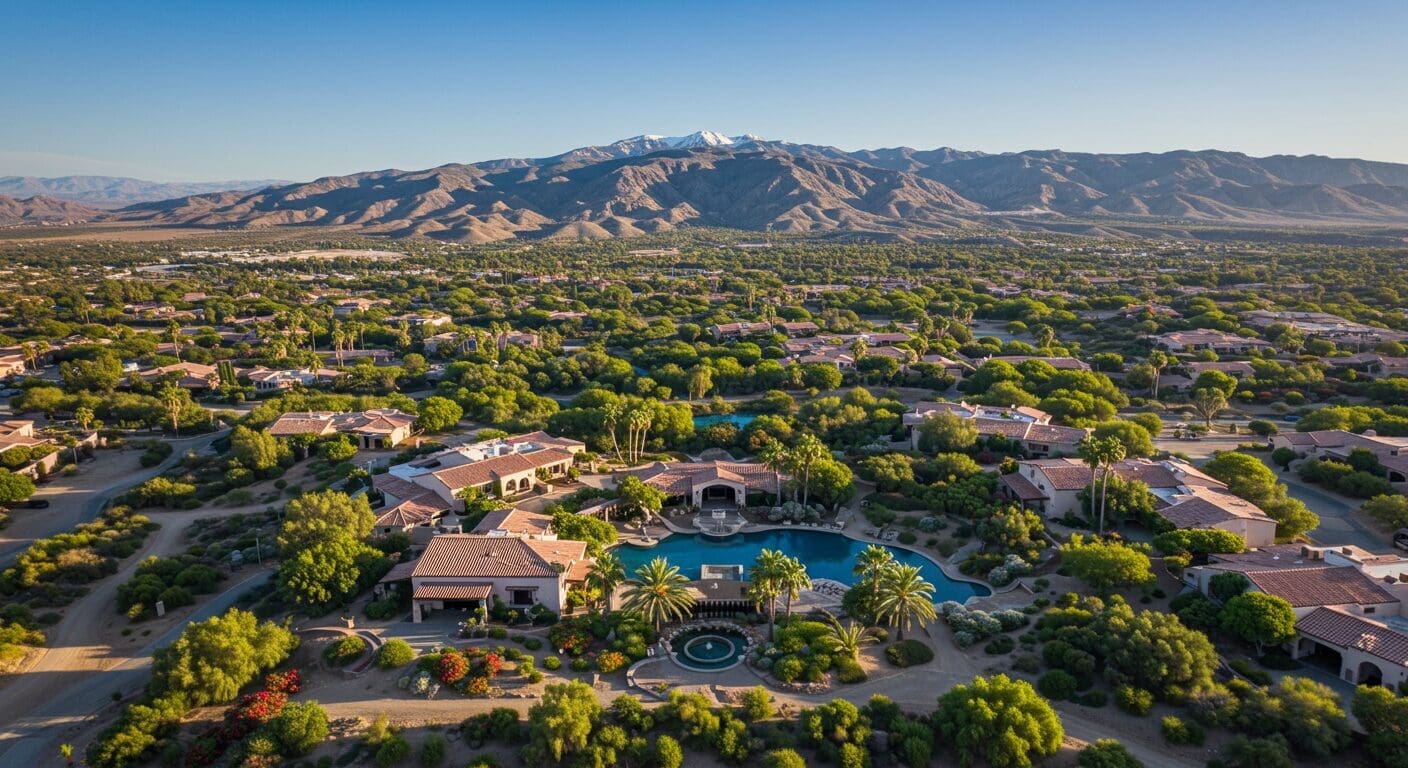
La Quinta sits at the southeastern end of the Coachella Valley, ringed by the Santa Rosa Mountains to the south and west, with the broader desert floor stretching northeast toward Palm Springs and beyond. The geography here is not subtle. These are serious mountains – rising to over 8,000 feet in places – and they give La Quinta a character distinct from the flatter, more commercial stretches of the valley. The coves carved into the mountain base by the ancient Lake Cahuilla give the town its distinctive topography and its most beloved hiking terrain.
The desert itself is worth understanding on its own terms. This is not empty land. The Sonoran and Colorado Desert ecosystems meet here, producing a landscape of extraordinary biodiversity – ocotillo, cholla, palo verde, the ubiquitous California fan palm – that rewards genuine attention. The light changes the landscape hour by hour in a way that never becomes ordinary. Sunrise and sunset are events here, not coincidences. The best luxury villas in La Quinta are positioned to make the most of all of it – mountain views, desert light, the particular silence of a place that the 20th century arrived in relatively late and has never quite managed to fully domesticate.
Beyond La Quinta proper, the wider Coachella Valley offers easy day trips to Joshua Tree National Park (roughly 45 minutes away, and not something to skip), the Living Desert Zoo and Gardens in Palm Desert, and the broader resort corridor from Rancho Mirage to Palm Springs. Each has its own character. Palm Springs alone – mid-century modern architecture, a serious art scene, an outdoor dining culture that feels twenty years ahead of most American cities – could occupy two days without effort.
What to Do: Nine Courses, Countless Trails, and an Embarrassment of Options
Golf is, if not the reason La Quinta exists, certainly a large part of the reason it has become what it is. PGA WEST is the headline – a destination with nine championship courses, five available for public play, and the PGA WEST Golf Academy for anyone whose game requires professional intervention. The Stadium Course, designed by Pete Dye, has a reputation that precedes it considerably and a difficulty level to match. SilverRock Resort’s Arnold Palmer Classic Course takes a more welcoming approach – designed by Palmer himself, it hosted the Bob Hope Classic (now The American Express) between 2008 and 2011, and remains one of the valley’s most engaging public rounds. Playing a course that The King designed on the land that defines his adopted home valley is a particular kind of afternoon. Even non-golfers tend to understand the appeal.
Beyond the fairways, the valley’s cultural calendar peaks with the Coachella Valley Music and Arts Festival in April – two weekends of international music, art installations, and the kind of collective experience that has become genuinely difficult to replicate anywhere. The nearby Stagecoach Country Music Festival follows immediately after. These events transform the region and require forward planning; villas book up well in advance for festival weekends, which tells you everything you need to know about their popularity.
The date gardens of the Coachella Valley – responsible for the majority of America’s date production – offer a surprisingly interesting half-day. The Shields Date Garden in Indio has been here since 1924 and takes its subject with appropriate seriousness. The medjool dates are exceptional. The date shakes are, depending on your perspective, either revelatory or an acquired taste. Probably both.
Into the Mountains: Hiking, Cycling and the Active Desert
The Cove to Lake Trail, which sets out from La Quinta Cove, is the essential introduction to hiking in this part of the desert. Moderate in difficulty, it connects the historic cove neighbourhood with the ancient shoreline of Lake Cahuilla – a lake that existed here for thousands of years before retreating, leaving behind the distinctive topography that gives La Quinta its name. The trail rewards early starters; by ten in the morning from May through September, the desert floor has opinions about physical exertion that are difficult to argue with.
The Santa Rosa and San Jacinto Mountains National Monument, which effectively begins at La Quinta’s back door, offers trails ranging from gentle valley-floor walks to serious multi-day backcountry routes. The Bear Creek Canyon Trail and the Boo Hoff Loop are both worth the effort, with mountain views and desert flora that shift dramatically with elevation. For those who prefer their altitude gained mechanically, the Palm Springs Aerial Tramway – a short drive up the valley – ascends nearly 6,000 feet in ten minutes and deposits you in an entirely different climate and landscape. In summer, this is not a gimmick. It is a necessary service.
Cycling is increasingly well-served throughout the Coachella Valley, with dedicated paths and relatively flat terrain making it accessible at every level. Mountain biking in the coves and lower desert is more technical and more rewarding for those who want it. Several outfitters in the valley offer guided rides, e-bike rentals for those who prefer to arrive at lunch without having trained for it, and routes calibrated to every ability level.
La Quinta for Families: Space, Privacy, and a Pool That’s Actually Yours
Few destinations in the American Southwest work as well for multi-generational family travel as La Quinta. The key is the villa model – when you have teenagers who need space, grandparents who need quiet, and small children who need a pool that doesn’t require negotiating with strangers, a property that offers all three simultaneously is not a luxury but a practical necessity. A private luxury villa in La Quinta with its own pool and outdoor space transforms what might otherwise be a logistical challenge into a genuinely restorative family experience.
The activities divide naturally across generations. Golf keeps the adults occupied. The Living Desert Zoo and Gardens in Palm Desert – a serious natural history institution as well as a zoo – handles younger visitors with both authority and imagination. Joshua Tree National Park has a rare quality of captivating children and adults simultaneously, the landscape alien enough to read as adventure to anyone under twelve and beautiful enough to read as art to anyone over forty. Evening meals in the valley’s better restaurants are family-friendly in a way that California tends to manage better than most places – outdoor terraces, unhurried service, kitchens that regard the concept of a children’s menu without contempt.
The private villa with pool comes into its own in the shoulder months – March, April, October, November – when the weather is warm enough for daily swimming but cool enough for morning walks without an emergency. During school holidays, villas in La Quinta are in high demand. Book early and book specifically – not all properties are equally configured for families, and the difference between a villa designed for privacy and one designed for groups matters considerably when you’re travelling with mixed ages.
A Town With Layers: History, Art and Desert Culture
La Quinta’s name – “The Fifth” in Spanish – reflects its origins as one of five working ranches established by the Hacienda del Gato land grant in the 19th century. Long before that, the Cahuilla people inhabited these valleys and mountains for thousands of years, leaving behind a cultural heritage that the region’s museums and cultural centres now work to preserve and communicate with genuine seriousness. The Agua Caliente Cultural Museum in Palm Springs is the most significant institution for understanding the deep history of this valley – beautifully designed and intellectually substantive, it reframes the entire landscape.
The La Quinta Museum, modest in scale but specific in focus, covers the town’s history from its Cahuilla origins through the early resort era of the 1920s and 1930s – when the original La Quinta Hotel (now the Resort and Club) attracted Hollywood’s creative class. Frank Capra wrote several screenplays here. Greta Garbo was a regular. The guest book alone would constitute a significant cultural document. That founding instinct for creative retreat has persisted in the town’s character – La Quinta has a lively arts community, an annual Arts Under the Stars festival, and a concentration of galleries around the Old Town district that reward an afternoon’s wandering.
The broader Coachella Valley has become an unlikely centre for public art and contemporary art institutions – the Palm Springs Art Museum is a serious collection in a serious building, and the region’s history of mid-century modernist architecture (roughly 2,500 examples, many perfectly preserved) has created a genuine pilgrimage circuit for design-minded visitors. The annual Modernism Week in Palm Springs every February is eight days of architectural tours, lectures, and parties that has grown from a local enthusiasm into an international event.
Shopping: Markets, Galleries and Things Worth Bringing Home
Old Town La Quinta offers the most concentrated and characterful shopping in the immediate area – boutiques, galleries, jewellers, and home goods stores occupying a compact walkable district that feels genuinely local rather than resort-generic. The La Quinta Arts Foundation’s annual Arts Festival in March is one of the most respected juried fine art festivals in the American Southwest, drawing artists and collectors from across the country for four days of serious work in an outdoor setting that gives the desert light the last word.
For broader retail, El Paseo in Palm Desert is the valley’s answer to Rodeo Drive – a long boulevard of luxury brands, independent boutiques, restaurants, and galleries that takes itself seriously and largely delivers. It’s the kind of shopping street where you can buy a painting, a pair of shoes, and a very good lunch in a two-hour loop without ever feeling like you’re in a mall.
What to bring home: Coachella Valley dates are the obvious answer – the medjool and deglet noor varieties are exceptional, and the packaged selections from the valley’s date gardens travel well. Local ceramics and textile work by regional artists from the Old Town galleries have the additional virtue of being genuinely one-of-a-kind. The valley’s olive oils and citrus products – from the agricultural land that still operates between resort developments – are harder to find but worth seeking out through the local farmers’ markets that run through the cooler months.
The Practical Stuff: What to Know Before You Arrive
La Quinta sits in the Coachella Valley in Riverside County, California. The currency is US dollars. English is the primary language; Spanish is widely spoken and practically useful. Tipping norms follow standard American practice – 18 to 20 percent at restaurants, $2 to $5 per bag at hotels, standard rideshare gratuities. Service industry workers in resort communities depend on tips in a way that doesn’t require further elaboration.
The best time to visit is broadly October through May – the “season” that the desert resort world has organised itself around since the 1920s and for very good reason. Peak months of January through March offer daytime temperatures in the mid-20s Celsius (low 70s Fahrenheit), clear skies, and the valley in full social operation. April and May warm up quickly and offer extraordinary value relative to peak season, with wildflower blooms in the surrounding desert as a bonus. Summer (June through September) is genuinely hot – temperatures regularly exceed 43°C (110°F) – and while villas with pools and air conditioning manage it perfectly well, it is not the moment for outdoor activity beyond approximately 7am. The valley quiets considerably in summer; prices drop steeply. Some visitors find the dramatic heat and the relative solitude have their own strange appeal. They are not wrong, exactly, but they are probably in a minority.
California’s tap water is safe to drink. The desert air is extraordinarily dry – more so than most visitors expect, and more so at altitude. Hydration requires active attention rather than passive assumption. Sun protection is non-negotiable and needs to begin before you step outside, not after you’ve been outside for an hour and noticed. The desert has very clear rules. It enforces them without exception.
Why a Private Villa Changes Everything About La Quinta
There is a version of La Quinta that happens in hotel rooms, and it is perfectly pleasant. Then there is the version that happens in a private villa – with a pool that belongs entirely to you, a kitchen that a private chef can work in if you want them to, an outdoor terrace where the morning light arrives in exactly the way the desert intended, and the quiet that comes from not sharing a building with two hundred other guests. These are not the same experience.
The villa model suits La Quinta particularly well for several reasons. First, space: the properties here tend to be genuinely generous in both interior footprint and outdoor living area, with the indoor-outdoor California lifestyle making the most of the climate for nine or ten months of the year. Second, privacy: for couples on milestone trips, the seclusion of a walled private villa with its own pool is simply not replicable in even the most luxurious hotel suite. Third, configuration: multi-generational families and groups of friends benefit from separate wings, multiple bedroom suites, and shared living spaces that allow togetherness and retreat in roughly equal measure. A family of eight sharing a villa is a fundamentally different proposition from the same family occupying four hotel rooms on different floors.
For wellness-focused guests, the villa format is transformative. Morning yoga beside a private pool, afternoon swim, evening soak – a routine that fits itself entirely around your own schedule rather than class timetables or shared facilities. Many properties come equipped with outdoor fitness equipment, hot tubs, steam rooms, and dedicated relaxation spaces that make the villa itself a wellness destination. For remote workers – and La Quinta has become a quietly serious destination for those who have understood that reliable connectivity plus sunshine plus a home office with pool access is a more productive environment than any co-working space – the better villa properties offer high-speed internet, dedicated workspace, and the kind of environment that makes a four-hour work morning feel entirely sustainable before a two-hour afternoon swim.
Staff and concierge options at the premium end are comprehensive. Private chefs, housekeeping, pre-arrival grocery stocking, tee time bookings, spa therapists brought to the property, private transfer arrangements – the infrastructure of a luxury hotel is available, without the hotel. It is, in the most literal sense, private luxury on your own terms. Excellence Luxury Villas offers a portfolio of carefully selected luxury villas in La Quinta with private pool – browse the collection and find the property that matches exactly what this particular trip needs to be.
More La Quinta Travel Guides
What is the best time to visit La Quinta?
October through May is the sweet spot, with peak season running January to April when daytime temperatures sit in the mid-20s Celsius, skies are reliably clear, and the full range of restaurants, events, and activities is in operation. March and April offer the additional advantage of desert wildflower blooms and the La Quinta Arts Festival. November and December are excellent value relative to the January peak and have genuinely beautiful weather. Summer months (June to September) bring extreme heat – regularly above 43°C – and reduced activity options, though villa rentals with private pools manage the season perfectly well and prices are considerably lower.
How do I get to La Quinta?
The closest airport is Palm Springs International (PSP), approximately 20 miles from La Quinta and served by direct flights from major US cities including Los Angeles, San Francisco, Seattle, Denver, Dallas, Chicago, and New York. For international arrivals, Los Angeles International (LAX) is the main gateway, with La Quinta roughly two hours by road via the I-10. Private airport transfers are available and strongly recommended for villa arrivals. Once in La Quinta, a car or rideshare is essential – this is the California desert, and distances between properties, restaurants, golf courses, and trailheads require transport rather than footwear.
Is La Quinta good for families?
Exceptionally so, particularly for multi-generational groups. The combination of a private villa with pool (removing the shared-facilities issue entirely), a range of activities that work across age groups, and a climate that enables outdoor living for most of the year makes La Quinta one of the American Southwest’s best family destinations. Joshua Tree National Park captivates both children and adults. The Living Desert Zoo and Gardens in nearby Palm Desert is a genuine natural history institution. Golf keeps older family members occupied while younger guests have the pool and outdoor space. October through May offers the best family weather, with school holiday periods booking up quickly for villa properties.
Why rent a luxury villa in La Quinta?
The villa experience in La Quinta offers something that even the best hotel cannot replicate: complete privacy, space that scales with your group, and a pool that belongs entirely to you. For couples, the seclusion is total. For families and groups, the configuration of separate bedrooms and shared living spaces creates a dynamic that hotel rooms simply cannot. Villa staff ratios – private chefs, dedicated housekeeping, concierge services – often exceed what a hotel provides, but delivered entirely within your own property. The indoor-outdoor lifestyle that La Quinta’s climate enables for most of the year is best experienced from a villa, where the terrace, pool, and outdoor living areas are yours to use on your own schedule.
Are there private villas in La Quinta suitable for large groups or multi-generational families?
Yes – La Quinta’s villa inventory includes properties designed specifically for large groups, with multiple bedroom suites, separate wings for privacy, multiple bathrooms, expansive shared living and dining areas, and private pools large enough to accommodate everyone simultaneously. Multi-generational configurations – where grandparents, parents, and children share a property but have genuine separation when needed – are well served by the larger villa options. Many properties include outdoor kitchens, multiple seating areas, and staff quarters for private chefs or housekeeping, making week-long group stays genuinely comfortable rather than logistically complicated.
Can I find a luxury villa in La Quinta with good internet for remote working?
La Quinta and the broader Coachella Valley have good broadband infrastructure, and premium villa properties are generally well-equipped with high-speed fibre or cable internet suitable for video conferencing, large file transfers, and sustained remote work. When searching for a remote work-suitable villa, it is worth specifically confirming connection speeds and whether a dedicated workspace is available – some properties offer home-office configurations with desks and ergonomic seating rather than just a laptop-on-the-kitchen-table situation. The Excellence Luxury Villas team can identify properties that specifically meet remote working requirements, including connectivity specifications.
What makes La Quinta a good destination for a wellness retreat?
La Quinta’s combination of desert landscape, exceptional climate, and villa infrastructure makes it one of the American Southwest’s most naturally suited wellness destinations. Morning hiking trails through the La Quinta Cove offer altitude, fresh air, and genuine natural beauty. The valley’s spa culture – centred on the La Quinta Resort and several independent wellness centres – provides professional treatments from massage to hydrotherapy. Private villa amenities including pools, hot tubs, steam rooms, and outdoor fitness equipment allow a personal wellness routine entirely on your own schedule. The desert’s quality of light and silence – genuinely difficult to find in most holiday destinations – has a restorative quality that doesn’t require any programme or schedule to access. Simply being here, with adequate time and a good pool, tends to do much of the work.