
Best Restaurants in Lagoa: Fine Dining, Local Gems & Where to Eat
There is a particular quality to early evening light in Lagoa that does something rather unfair to your appetite. The air carries char from someone’s grill, the faint brine of the Atlantic drifting up from the coast, and the distant clink of ceramic plates being set on terrace tables. It is approximately six o’clock. You are not yet hungry. And then you are, immediately, completely, with the kind of conviction that only the Algarve seems capable of producing. This is the right frame of mind in which to approach eating here.
Lagoa is not, it should be said, the Algarve’s most obvious culinary destination. That distinction tends to go to the bigger resort towns, the ones with the glossy magazine write-ups and the queues outside every half-decent fish restaurant by half past seven. Lagoa is quieter about its credentials. It lets the food do the talking. And the food, as it turns out, has rather a lot to say – from two Michelin stars on the clifftop to a neighbourhood taberna where the wine list fits on a chalkboard and nobody is performing for anybody.
Whether you are here for a week in a private villa or a long weekend chasing the best restaurants in Lagoa across fine dining rooms and market stalls alike, what follows is your guide to eating and drinking in one of the Algarve’s most quietly serious food destinations.
Fine Dining in Lagoa: Where the Algarve Takes Its Best Shot
The Lagoa municipality punches significantly above its weight when it comes to Michelin-recognised cooking. Two restaurants within its borders currently hold stars, which is remarkable for an area better known for golden clifftops than gastronomy press coverage. Together, they represent the full spectrum of what elevated Portuguese cooking can achieve.
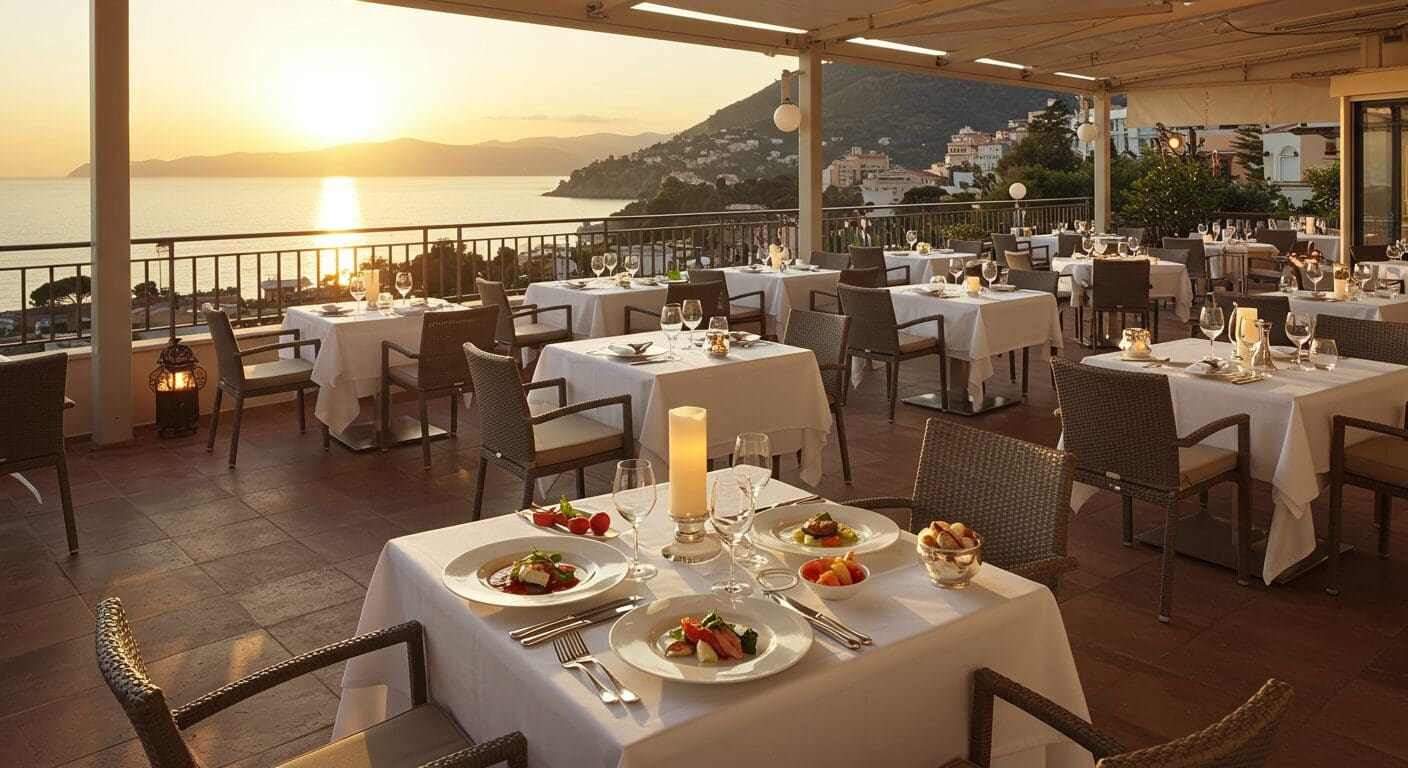
At the upper end – literally and figuratively – sits Ocean Restaurant at Vila Vita Parc in Porches, the kind of restaurant that makes you immediately reassess what dinner can be. Two Michelin stars, held consistently since 2011, and the creative vision of Austrian chef Hans Neuner, who has somehow become one of the most important figures in contemporary Portuguese cuisine. The view from the dining room is the Atlantic in its full theatrical sweep, which is either a remarkable backdrop or a considerable distraction depending on your ability to concentrate. The tasting menus are long, intricate, and grounded in the produce of the Portuguese coastline and countryside – this is not fusion cooking for its own sake, but a precise conversation between one chef’s European rigour and the extraordinary raw materials Portugal provides. Book well in advance. Weeks in advance. Possibly before you book your flights.
The other starred restaurant in Lagoa is Bon Bon in Sesmarias, near Carvoeiro, and it operates with a different but equally compelling logic. Chef Louis Anjos earned the restaurant’s first Michelin Star in 2015 and has held it every year since, built around what he calls the Essence Menu – a tasting experience that moves through the Algarve’s landscapes as much as its ingredients, from the sea to the mountains to the local countryside. The dining room is elegant in a way that feels considered rather than decorated, with a striking central wrought-iron fireplace that earns its place regardless of the season. On fine days, the terrace is where you want to be. The cooking is precise, personal, and – rare thing – actually surprising. Not a place for people who want to know exactly what they are getting.
The Local Gems: Neighbourhood Restaurants Worth Seeking Out
Between the Michelin rooms and the tourist strip lies the real texture of eating in Lagoa, and this is where the municipality’s most enjoyable surprises tend to live. The key is to resist the pull of the obvious – the laminated menus facing the street, the eager hosts with the clipboard – and lean into the places that assume you already know why you are there.
O Casarão, in the town centre of Lagoa itself, is one of the warmest and most consistently praised traditional Portuguese restaurants in the area. It is the kind of place where the cooking is honest, the atmosphere is genuinely convivial, and nobody is trying to be anything other than what they are – which is a very good neighbourhood restaurant serving very good food. The traditional Portuguese menu leans into the classics with confidence: expect slow-cooked meats, robust stews, and fish prepared with the respect it deserves rather than the fuss it doesn’t need. It sits a short walk from Lagoa’s central hotel and has built its reputation the old-fashioned way, one returning customer at a time.
A Paleta, on the Lagoa to Carvoeiro road, operates with a slightly broader brief – seafood, Mediterranean, Portuguese, European – but carries it off without any of the dilution that breadth usually implies. The menu is extensive and the prices are, by the standards of the region’s better restaurants, genuinely reasonable. Their T-bone steak has developed something of a following among regulars, which is not what you expect to be ordering in a coastal Portuguese municipality, but sometimes the data is the data. The homemade desserts are worth leaving room for, which is the sort of advice that sounds obvious but is easy to forget after a very good main course.
Taberna Algarvia 31 in Lagoa town rounds out the local picture with the confidence of a restaurant that knows exactly what it is and sees no reason to pretend otherwise. A 9.1 rating from TheFork users is the kind of score that reflects not one excellent meal but consistent, reliable, unpretentious quality – the hardest thing to maintain, and the most useful to find when you are staying somewhere for more than a single night.
What to Order: Dishes and Drinks That Define the Region
The Algarve’s larder is considerably more interesting than the average tourist itinerary suggests. The cataplana – a copper clam-shaped pot used to steam shellfish, fish and chorizo together in their own juices – is the region’s signature dish and is done well in several of the restaurants listed here. Order it when you see it, particularly if it is made to order and requires a wait. That wait is information: it means they are not reheating it.
Fresh grilled fish – dourada (sea bream), robalo (sea bass), and the frankly enormous specimens that appear on the menus of the better coastal restaurants – should be ordered as simply as possible. Olive oil, lemon, perhaps some boiled potatoes alongside. The Algarve’s olive oil is excellent and treated accordingly. Percebes (barnacles), amêijoas (clams), and carabineiros (scarlet prawns) appear on the higher-end menus and repay your attention generously.
Lagoa itself is wine country in a way that surprises many visitors. The municipality sits at the heart of the Lagoa DOC wine region, producing full-bodied whites and structured reds from Negra Mole, Crato Branco and other indigenous varietals that rarely make it onto export lists. This is genuinely good reason to drink local. The regional wine selection at Bon Bon and Ocean is extensive, and even the neighbourhood restaurants will stock bottles from producers you will not find anywhere else. Medronho – the firewater distilled from the arbutus berry – is the appropriate end to a long dinner. It is an acquired taste. Most worthwhile things are.
Beach Clubs and Casual Dining
Carvoeiro, technically within the Lagoa municipality, gives access to some of the coast’s most appealing casual eating – cliffs, small coves, and the kind of seafood restaurant terrace from which it is essentially impossible to leave before the sun has fully set. The beach clubs along this stretch tend toward the relaxed and the genuinely beautiful, and the standard of cooking at the better ones has improved considerably over the past decade. Grilled fish, cold local wine, a view of the sea: this is the Algarve eating at its most uncomplicated, which is not the same as ordinary.
For those who prefer their poolside eating to involve rather more in the way of service and wine list depth, Vila Vita Parc operates multiple dining concepts across its grounds, and the quality floor across all of them is higher than most resorts manage at their best. The arrival of a good beach club lunch can do remarkable things for a day that had not previously required improvement.
Food Markets and Casual Discoveries
Lagoa’s municipal market is the right place to understand why the restaurants here cook the way they do. The produce – particularly the figs, almonds, carob, and citrus that define the Algarve’s agricultural identity – is sold by people who grew it, which tends to cut out quite a lot of the usual ambiguity about provenance. Go in the morning. Bring a bag. The cheese and smoked sausage section rewards careful attention.
The wider region’s farmers’ markets operate on a rotating schedule across the municipality’s villages – Porches, Estômbar, Ferragudo – and each has its own character. Ferragudo in particular, a small fishing village at the mouth of the Arade estuary, has a cluster of restaurants and a morning fish market that together constitute a very persuasive argument for arriving hungry.
Reservation Tips and Practical Advice
The Michelin-starred restaurants – Ocean and Bon Bon – require advance reservation, particularly in summer, and particularly at weekends. Ocean’s tasting menu experience benefits from arriving without hunger-induced urgency, so plan your afternoon accordingly. Bon Bon’s terrace tables go first; if the weather looks reasonable, request one when you book.
For the neighbourhood restaurants, booking the day before is usually sufficient outside peak season (July and August), though O Casarão fills up on Friday and Saturday evenings in a way that suggests its reputation has travelled further than its address might imply. A Paleta is generally more accommodating for walk-ins at lunch than dinner. Taberna Algarvia 31 rewards a phone call rather than an email – the personal approach is better received.
Dinner in the Algarve runs later than northern Europeans expect and considerably earlier than the Spanish would consider acceptable. Eight o’clock is the comfortable middle ground. Arriving at six-thirty is possible; it just means you will be eating while the staff are still adjusting the furniture.
The Complete Picture: Eating and Drinking Well in Lagoa
What makes the best restaurants in Lagoa collectively so rewarding is the range they offer without any apparent effort to cater to every possible visitor. This is not a destination performing a version of itself for external consumption. The Michelin rooms are here because two chefs decided to cook seriously in a place with extraordinary ingredients. The neighbourhood restaurants are here because the people who live here eat out. The wine exists because the land produces it.
For the luxury traveller, the combination is close to ideal: fine dining that would be remarkable anywhere in Europe, neighbourhood cooking that asks very little of you beyond turning up, and a regional wine culture worth exploring at your own pace. If you are staying in a luxury villa in Lagoa, many properties offer the option of a private chef – which means you can bring the best of the local market into your own kitchen, eat exactly when you want, and save your reservation energy for the evenings that genuinely require it. Sometimes the best table in the municipality is the one on your own terrace with a bottle of Lagoa DOC and someone who actually knows what they are doing in the kitchen.
For everything else you need to know about the area – beaches, wine routes, village life, getting around – the full Lagoa Travel Guide covers the municipality in the depth it deserves.


