Marche Travel Guide: Where to Stay, Eat & Explore in Luxury
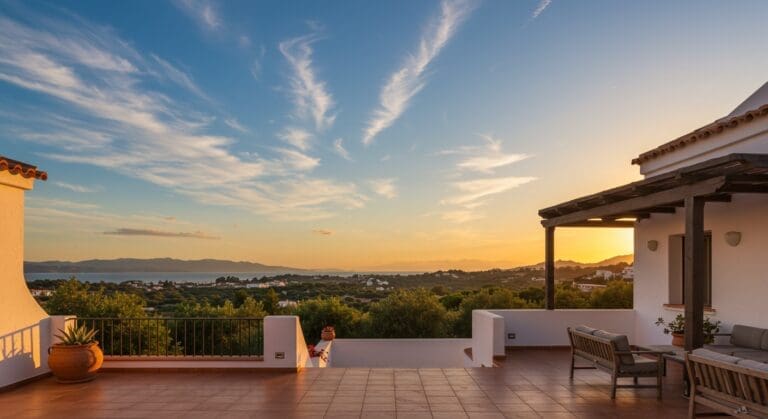
It’s ten in the morning and you’re sitting on a stone terrace somewhere above the Esino valley, coffee in hand, watching a farmer coax a tractor along a ridge so narrow it looks like a dare. The hills in front of you roll south in long unhurried waves, each one a slightly different shade of green or gold depending on the season and the angle of the light, and somewhere below you – invisible but knowable – the Adriatic is doing its brilliant blue thing. You haven’t checked your phone. You’re not entirely sure what day it is. Later, perhaps, you’ll drive down to Senigallia for lunch at a three-Michelin-star restaurant on the seafront. Or you won’t, and you’ll just open another bottle of Verdicchio and watch the light change. Both are excellent choices. This is Marche. It has been quietly waiting for you to notice it, and it is extremely pleased you finally have.
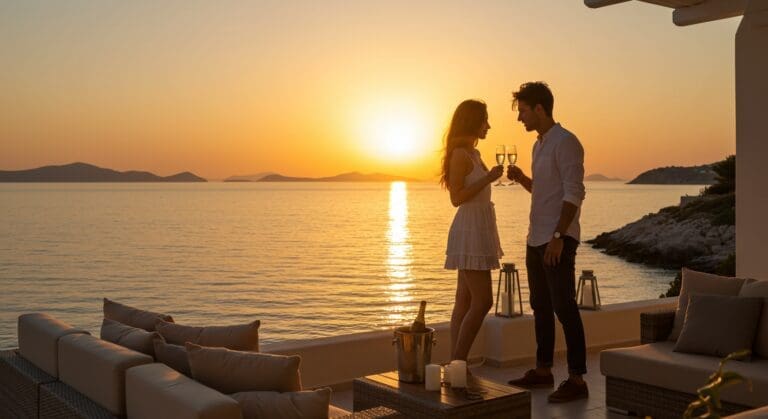
The region rewards a specific kind of traveller – one who has, as the saying goes, done Tuscany. Couples marking a significant anniversary who want something with a little more texture and a little less coach-party find that Marche delivers rather brilliantly. So do families seeking genuine privacy, the sort that comes from a hilltop villa with a private pool and no neighbours in immediate shouting distance. Multi-generational groups – grandparents, parents, small children running amok on terraces – find the space and pace here perfectly calibrated. Wellness-focused guests discover that the combination of hiking trails, thermal springs, clean Adriatic air and the meditative slowness of rural Italian life does more for the nervous system than any spa programme. And an increasing number of remote workers, lured by the scenery and the (surprisingly good) connectivity of restored farmhouses, are discovering that a deadline feels considerably less oppressive when you’re staring at the Sibillini mountains while you work.
How to Actually Get Here – and Why the Journey Is Part of It
Marche sits along Italy’s Adriatic coast, running roughly from Pesaro in the north to Ascoli Piceno in the south, with the Apennines pressing in from the west. It is not especially hard to reach, though it rewards a little planning. The most practical gateway for most visitors is Ancona Falconara Airport (AOI), which receives direct flights from several European cities, including London, and is well connected via Ryanair and other carriers. Bologna is a credible alternative for the northern reaches of the region – about two hours by road – and Rome Fiumicino serves the south, particularly if you’re heading for Ascoli Piceno or the Sibillini. Pescara in neighbouring Abruzzo is also worth knowing about if you’re arriving from further afield.
From any airport, hiring a car is not optional – it is essential. Marche is a region of winding roads, hilltop villages and vineyards connected by lanes that don’t appear on every map. This is precisely the point. The A14 autostrada runs along the coast and is useful for covering distance quickly, but the real Marche is accessed via the SS76 heading inland toward Fabriano, or the impossibly scenic roads that thread up into the Monti Sibillini. Allow more time than you think you need. You will stop. You will get out of the car. You will stand in a field looking at a view. The schedule will not survive first contact with the landscape, and this is fine.
Eating in Marche: A Region Serious About Its Dinner Table
Fine Dining
Marche has, by any reasonable measure, an extraordinary restaurant scene – one that is almost comically underappreciated relative to its quality. The region has a higher density of top-tier accolades per square kilometre than anywhere else in Italy, which is a remarkable sentence to type about somewhere most of your friends have never heard of. The apex of this is Uliassi in Senigallia, which holds three Michelin stars and appears annually in the World’s 50 Best Restaurants. It is run by chef Mauro Uliassi and his sister Catia, who manages the front of house with a warmth and precision that makes the whole experience feel both rarefied and oddly personal. The cooking is seafood-forward, technically dazzling, and rooted in the Adriatic in a way that feels essential rather than decorative. One of the menus focuses entirely on raw fish, which sounds alarming until the first course arrives. Book well in advance. Book very well in advance.
A few kilometres down the coast, in the small town of Marzocca, Madonnina del Pescatore offers a second argument for Senigallia’s improbable status as a serious food destination. Chef Moreno Cedroni holds two Michelin stars here and brings a more experimental sensibility to the Adriatic larder – inventive, occasionally playful, always grounded. The fact that a town of 45,000 people contains both of these restaurants side by side is the kind of statistical anomaly that food writers tend to get quite excited about, and not without reason.
Further inland, tucked into the Sibillini mountains in the tiny village of Montemonaco, Il Tiglio offers something altogether different. Chef Mazzaroni holds one Michelin star and a Green Star for sustainability, and his cooking is a precise expression of place – zero-kilometre vegetables and herbs grown on site, locally sourced meats, game and truffles, all woven into a tasting menu that feels like a quiet lecture on the terroir of the mountains. The setting is unassuming to the point of surprise, which is, of course, the whole point. In Loreto, Andreina continues the region’s starred tradition with one Michelin star, consistently reconfirmed year after year. And Nostrano in Pesaro rounds out a constellation of excellence that, were it located in Tuscany, would have been the subject of approximately forty food documentaries by now.
Where the Locals Eat
Away from the starred tables, Marche feeds you with the quiet confidence of a region that has never needed to perform. Osterie and trattorie in the hill towns serve vincisgrassi – the local lasagne, richer and more complex than its Bolognese cousin – alongside brodetto, the Adriatic fish stew that varies slightly from port to port as if each town has taken a personal position on the matter. Along the coast, beach clubs and casual seafood restaurants serve fritto misto so fresh and light it barely seems to have passed through oil. The wine to drink is Verdicchio dei Castelli di Jesi – crisp, mineral, affordable, and deeply underrated outside the region. Markets in towns like Fano, Urbino and Ascoli Piceno are excellent on Saturday mornings, selling local salumi, cheese, seasonal vegetables and the olive ascolane that are, in this particular corner of Italy, a genuine point of regional pride.
Hidden Gems Worth Seeking Out
The best meals in Marche often happen in places with no social media presence whatsoever. Farmhouse agriturismi serving fixed menus of whatever was harvested that week. Small enoteca in Jesi or Matelica where the owner is also the sommelier and also possibly the grandfather of whoever made the wine. Ask your villa manager or concierge – they will know. This is one of the practical advantages of a well-staffed villa that rarely appears in the brochure copy but matters enormously on the ground.
The Landscape of Marche: Mountains, Valleys, Coast and Everything In Between
What makes Marche geographically unusual – and unusually satisfying for the traveller – is the way it contains entire different worlds within a relatively compact space. You can, on a good day with sensible planning, swim in the Adriatic in the morning and be walking in alpine meadows in the Monti Sibillini by afternoon. This is not a boast; it is simply a description of the topography.
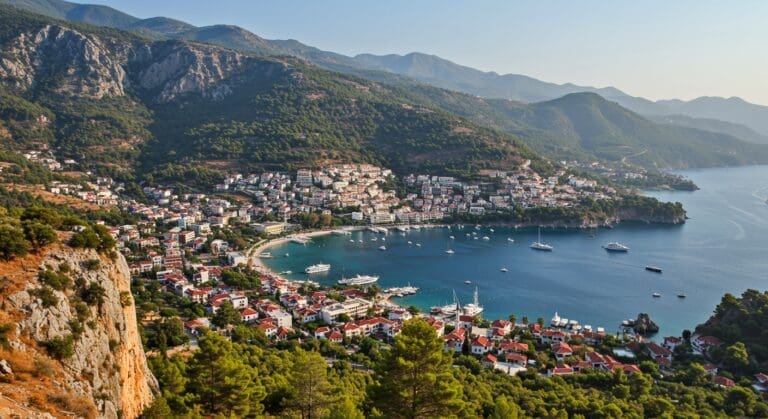
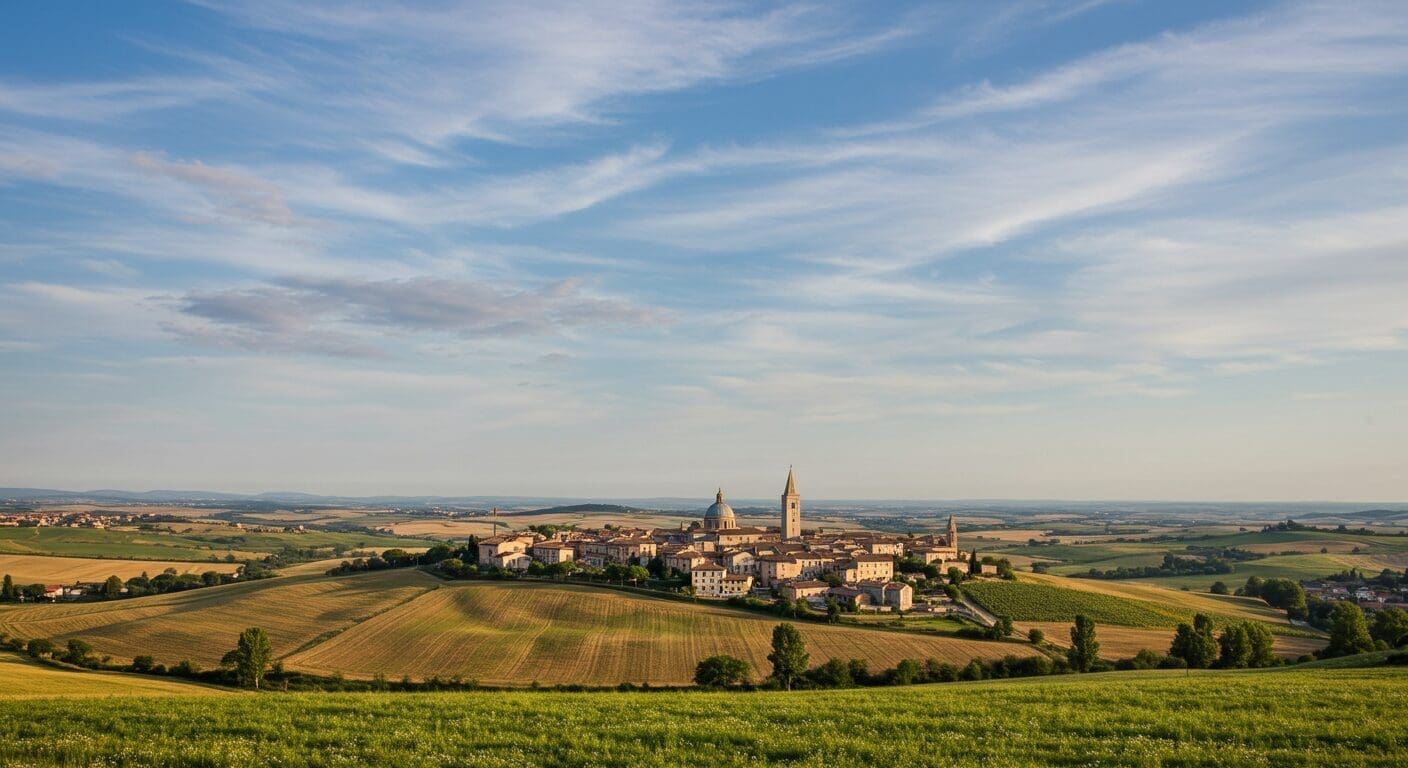
The coast runs for roughly 170 kilometres, alternating between broad sandy beaches at resorts like Senigallia, Pesaro and Porto San Giorgio, and quieter stretches backed by low cliffs where the crowd thins considerably. Inland, the landscape climbs steadily through vine-covered hills, medieval hill towns perched on ridgelines, and river valleys – the Esino, the Metauro, the Tronto – that cut east-west through the landscape like natural corridors. Further west, the terrain sharpens into the Apennine foothills, and then, in the south, into the dramatic peaks of the Sibillini, which breach 2,000 metres and form one of Italy’s most genuinely wild national parks.
The Piano Grande di Castelluccio – a high plateau in the Sibillini, at around 1,300 metres – is one of those landscapes that photographs cannot adequately represent. In late spring and early summer, it erupts in wild flowers: lentil fields bordered by poppies and cornflowers in improbable quantities. People drive several hours to see it. They are correct to do so.
Things to Do in Marche: From Truffle Hunts to Thermal Waters
The best things to do in Marche are mostly the things you didn’t plan. But a few deliberate choices help. Truffle hunting with a local guide and trained dogs in the hills around Acqualagna – Italy’s undisputed truffle capital – is an experience that is equal parts rural theatre and genuine insight into how one of the world’s most expensive ingredients is actually found. Acqualagna hosts major truffle fairs in the autumn, and the towns surrounding it offer truffle-focused meals that range from the refined to the bracingly rustic.
The thermal baths at Terme di Acquasanta, in the river gorge south of Ascoli Piceno, are one of the region’s less publicised treasures – sulphurous hot springs built into a dramatic canyon setting, where you can soak in naturally heated water with very few other people around. Similarly, the spa facilities at various hotels and agriturismo across the region offer a quieter alternative to the crowded wellness circuits of more famous Italian destinations.
Cooking classes focused on regional pasta-making, wine tastings at family-run Verdicchio estates in the Castelli di Jesi zone, cycling through the hills between Macerata and Tolentino, boat trips along the coast from Numana or Portonovo – the range is wide, the crowds are thin, and the quality of the underlying experience is high throughout.
Adventure in the Apennines: What Marche Offers the Active Traveller
For those who consider a holiday incomplete without some elevation gain, Marche is quietly excellent. The Sibillini National Park contains hundreds of kilometres of marked trails, ranging from gentle valley walks accessible to older children to serious multi-day routes across high ridges. Monte Vettore, at 2,476 metres, is the highest peak and offers a full-day ascent that rewards with views across four regions on a clear day. The mountain biking in the foothills is increasingly well-organised, with dedicated trails around Camerino and through the Frasassi gorge area.
Climbers find good rock at several crags in the Gola della Rossa natural reserve, and the Frasassi Gorge area offers via ferrata routes for those who want exposure without full alpine commitment. The Adriatic coast supports a decent water sports scene in summer – particularly around Senigallia and Porto Recanati, where sailing, windsurfing and kite surfing are available – though the sea here is gentler than the wilder coasts of southern Italy, which suits families considerably well.
In winter, the Sibillini do receive snow, and while Marche is not a ski destination on the scale of the northern Alps, the resort at Bolognola and the lifts near Frontignano offer a serviceable week of skiing for those who find themselves here between December and March, which is a sentence most people planning a Marche trip have never needed to read before.
Marche with Children: The Private Villa Advantage
Marche is exceptionally well suited to families, partly because of what it offers and partly because of what it doesn’t. What it offers: safe, shallow Adriatic beaches with Blue Flag status at numerous points along the coast; outdoor activities ranging from gentle cycling to cave exploration; historic towns that children find less tedious than they expect; excellent food with a broad enough range that even the child who will only eat pasta is catered for. What it doesn’t offer: the industrial-scale tourist infrastructure that turns certain more celebrated Italian regions into a logistical obstacle course in August.
The private villa with a pool is, for families travelling in Marche, not a luxury but a practical masterstroke. Children swim on their own schedule. Nap times are respected. Dinners happen when they happen, not when a restaurant’s reservation system permits. Teenagers who have expressed theatrical indifference to the whole enterprise discover that a private pool and a terrace with a view are, in fact, tolerable. Multi-generational groups – the sort where three different age groups have three different ideas of what constitutes a good day – find that the villa’s space creates enough separation that everyone can have their version without negotiation. The ratio of private space to shared experience is simply unachievable in any hotel.
The History and Culture of Marche: More Renaissance Per Square Kilometre Than Anywhere Else
Marche’s cultural credentials are, on examination, somewhat startling. Raphael was born in Urbino. So was Bramante. The Ducal Palace at Urbino – home to one of the finest collections of Renaissance painting in Italy, including Piero della Francesca’s haunting portrait diptych of the Duke and Duchess of Urbino – is a UNESCO World Heritage Site and among the most beautiful buildings in the country. It receives approximately one tenth of the visitors that comparable sites in Florence attract. Draw your own conclusions about what this means for the quality of the experience.
Loreto, home to the Basilica della Santa Casa, is one of Italy’s most important pilgrimage sites – a vast, somewhat overwhelming complex built around what tradition holds to be the house of the Virgin Mary, transported here from Nazareth in the thirteenth century. Whether or not one engages with the theology, the architecture and the art are extraordinary. Ascoli Piceno, in the south, contains one of the most beautiful medieval squares in Italy – the Piazza del Popolo, lined with travertine porticoes and largely free of the crowds that have made equivalent spaces in more famous cities feel like airports.
The region has a strong tradition of opera – Rossini was born in Pesaro, which celebrates his legacy with the Rossini Opera Festival each August, a serious international event that draws audiences from across Europe. The Teatro delle Muse in Ancona and the Sferisterio in Macerata – the latter an extraordinary open-air opera venue with near-perfect acoustics – round out a cultural offer that would be remarkable anywhere.
Shopping in Marche: Ceramics, Leather, Truffles and Things You Won’t Find Elsewhere
Marche is not a shopping destination in the sense that Milan or Florence are shopping destinations, which is to say you will not find twelve branches of the same international luxury brand arranged around a historic square. What you will find is considerably more interesting. Ceramics from Pesaro and Urbania have been made here since the Renaissance – majolica in the traditional style, available from workshops that have been producing it for generations. The technique and the designs are specific to the region and make for gifts that are both beautiful and traceable in a way that duty-free perfume is not.
Leather goods and handmade shoes are produced by small artisans in towns throughout the region, particularly around Civitanova Marche and Montegranaro, which have long histories in footwear manufacturing. Acqualagna is the obvious destination for truffle products – oils, pastes, dried truffle – while local salumi producers across the region sell cured meats that are almost impossible to replicate outside Italy and a source of considerable sadness at customs on the way home. The weekly markets in towns like Jesi, Fabriano and Fermo are the best place to absorb all of this in a single morning.
What to Know Before You Go: The Practical Bits, Handled
Italy uses the euro, and Marche is, by the standards of Italian tourism, reasonably priced – significantly more so than Tuscany or the Amalfi Coast for comparable quality of accommodation and food. Tipping is appreciated but not expected in the way it is in the United States; rounding up the bill or leaving a few euros at the end of a meal is the normal register. Service charges at high-end restaurants are typically included.
The best time to visit is May, June and September – warm enough for the beach and outdoor activities, cool enough for long walks and comfortable al fresco dinners, and sufficiently uncrowded that you can park in a medieval hill town without treating it as a competitive sport. July and August are hot, busy on the coast, and still perfectly pleasant if a private pool is in the itinerary. October brings truffle season, harvest, the golden light that photographers specifically rearrange their lives around, and an almost complete absence of tourists. It is arguably the best month of all.
Italians appreciate the basic courtesies – greeting shopkeepers, attempting even a few words of Italian, dressing appropriately when entering churches. Marche, being less worked-over by tourism than some regions, retains a genuine local character that responds well to being treated as exactly that.
Luxury Villas in Marche: Why a Private Villa Is the Only Way to Stay
There are hotels in Marche. Some of them are very good. But a hotel, however well-appointed, presents the same structural problem it always presents: other people’s schedules, other people’s children at breakfast, the muffled sounds of someone else’s anniversary through a wall that isn’t quite thick enough. A private luxury villa in Marche offers something categorically different, and it does so against a backdrop – rolling hills, ancient stone walls, olive groves, unbroken views to the Adriatic – that no hotel lobby was ever designed to compete with.
The practical advantages compound quickly. A private pool means swimming at six in the morning or midnight, with no one watching and no towel reservation required. Space means that a group of twelve people, or a family of five with a toddler operating on a schedule all her own, can coexist without the geometry of compromise. A well-staffed villa – with a housekeeper, a private chef who sources from local markets, a concierge who knows which truffle hunter actually finds truffles and which one just takes tourists for a walk – transforms a holiday into something considerably richer than a sequence of beautiful days.
For those working remotely, the villas available in Marche increasingly come equipped with high-speed broadband and, in more remote hilltop properties, Starlink connectivity – fast enough for video calls, reliable enough that a morning’s work genuinely gets done before the pool calls in the afternoon. The wellness-focused traveller, meanwhile, finds that a villa with a private pool, a yoga terrace, access to hiking trails and proximity to the thermal waters of Acquasanta needs very little supplementing.
Luxury villas in Marche represent, in the broader Italian landscape, a remarkable value proposition relative to equivalent properties in Tuscany or the Cinque Terre – more space, more privacy, more genuine immersion in a region that hasn’t yet been flattened into a postcard version of itself. That won’t last forever. Now is, genuinely, the time. Browse our collection of luxury villas in Marche with private pool and find the one that makes you forget what day it is.
More Marche Travel Guides
What is the best time to visit Marche?
May, June and September are the sweet spot – warm, uncrowded, and with long evenings that seem designed for outdoor dining. October is exceptional for those interested in truffle season, harvest festivals and the extraordinary quality of the autumn light. July and August are popular on the coast and perfectly enjoyable if you have a private villa with a pool, though coastal towns can become busy. Spring and early autumn offer the best conditions for hiking in the Sibillini mountains.
How do I get to Marche?
The primary gateway is Ancona Falconara Airport (AOI), which receives direct flights from several European cities and is approximately 30-45 minutes from much of the central region by car. Bologna Airport serves the northern part of Marche (around 2 hours by road) and is well connected internationally. Rome Fiumicino is the practical choice for travellers heading to the southern areas around Ascoli Piceno or the Sibillini mountains. Pescara Airport in neighbouring Abruzzo is a useful alternative for the southern reaches. A hire car is essential – the region’s character is entirely bound up in its rural roads and hill towns, none of which are accessible by public transport in any meaningful way.
Is Marche good for families?
Marche is exceptionally well suited to families. The Adriatic coast offers safe, shallow beaches with Blue Flag status at numerous points. The Sibillini mountains and surrounding countryside provide outdoor activities from gentle cycling to cave exploration at Frasassi. The food is broadly appealing, towns are manageable in scale and free of the overwhelming crowds of more famous Italian destinations, and the pace of life is genuinely unhurried. A private villa with a pool is the natural base for a family holiday here – it provides space, flexibility and the kind of privacy that makes travelling with children at varying ages actually enjoyable rather than merely survivable.
Why rent a luxury villa in Marche?
A luxury villa gives you what no hotel in Marche can match: complete privacy, your own pool, the ability to operate entirely on your own schedule, and a physical immersion in the landscape that a hotel room simply cannot provide. The ratio of space to guest is entirely different – a villa with multiple bedrooms, terraces, gardens and a private pool gives a family or group of friends the freedom to coexist without friction. A well-staffed villa adds a private chef sourcing from local markets, a housekeeper, and a concierge with genuine local knowledge – that combination transforms the quality of a luxury holiday in Marche considerably. On a value basis, comparable properties in Marche offer significantly more than equivalent rentals in Tuscany or the Amalfi Coast.
Are there private villas in Marche suitable for large groups or multi-generational families?
Yes. The villa stock in Marche includes a substantial number of large restored farmhouses and country estates with multiple bedrooms, separate wings and extensive grounds – well suited to groups of twelve or more and to multi-generational families where different age groups need different amounts of space. Many properties include multiple private pools, games areas, outdoor dining terraces and staff accommodation. The rolling agricultural landscape of the region means that large properties with significant land and genuine seclusion are available at price points considerably lower than comparable properties in more prominent Italian regions.
Can I find a luxury villa in Marche with good internet for remote working?
Increasingly, yes. The growth in remote working has driven investment in connectivity across premium villa rentals throughout Marche. Many properties now offer high-speed fibre broadband, and in more remote hilltop locations where fixed-line infrastructure is limited, Starlink satellite connectivity has become an option – delivering speeds comfortably sufficient for video conferencing and large file transfers. When booking, it is worth specifying your connectivity requirements, as standards still vary across the market. A good villa concierge will also be able to advise on dedicated workspace options within the property.
What makes Marche a good destination for a wellness retreat?
Marche combines the ingredients for genuine restorative travel rather than the marketed version of it. The pace of life is slow by instinct rather than policy. The Sibillini mountains offer serious hiking in clean air with dramatic, uncrowded landscapes. The thermal baths at Terme di Acquasanta, set into a river gorge near Ascoli Piceno, provide natural hot spring therapy in an extraordinary natural setting. The local diet – olive oil, fresh fish, seasonal vegetables, excellent wine – supports rather than undermines a wellness agenda. And a private villa with a pool, a yoga terrace and access to any or all of the above creates a context for genuine rest that a wellness hotel, with its schedules and other guests, rarely quite achieves.