
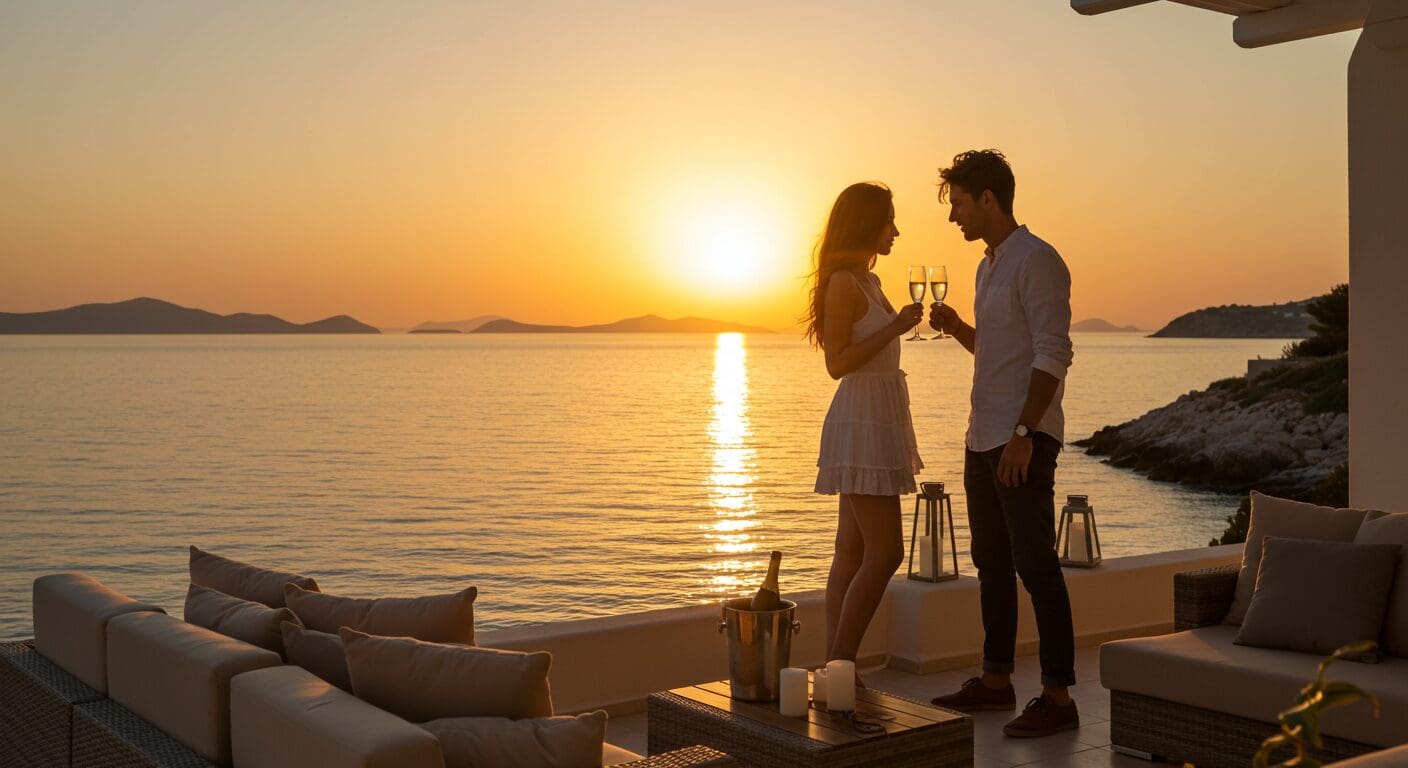
Romantic Montenegro: The Ultimate Couples & Honeymoon Guide
Romantic Montenegro: The Ultimate Couples & Honeymoon Guide
In late September, when the Adriatic light turns the colour of warm honey and the summer crowds have mostly retreated to wherever summer crowds go, Montenegro does something quietly extraordinary. The Bay of Kotor turns glassy and still. The mountains above Lovćen take on a blue-grey depth that photographers spend lifetimes chasing. The stone villages along the coast exhale, the restaurants thin out to a manageable number of actual locals, and the whole country – compact enough to drive end to end in a few hours – seems to become a place designed specifically for two people who want to pay attention to each other. Whether you are here on a honeymoon, a significant anniversary, or simply a holiday that deserves to feel like more than a holiday, Montenegro has an unsettling ability to exceed expectations that were already fairly high. This is romantic Montenegro: the ultimate couples and honeymoon guide.
Why Montenegro Is Exceptional for Couples
Most romantic destinations offer one thing very well. The Maldives gives you isolation and ocean. Paris gives you grandeur and gastronomy. Tuscany gives you landscape and wine. Montenegro, somewhat unfairly, gives you all of it at once – and then adds a layer of wildness and historical drama that most of those places simply cannot match.
The geography alone is extraordinary. Within an hour’s drive from a private villa on the Kotor riviera, you can be standing at the edge of Skadar Lake watching pelicans drift between reeds, hiking the glacially carved peaks of Durmitor, or sitting on the deck of a chartered sailing boat with nothing ahead of you but open Adriatic. The country is small – roughly the size of Connecticut – but it contains multitudes. Mountains, fjord-like bays, medieval walled towns, Ottoman-era monasteries, and beaches that range from wild and pebbly to smooth and carefully managed. For couples who want variety without the exhausting logistics of island-hopping or multi-country itineraries, this is a significant advantage.
There is also something about Montenegro’s pace and character that suits romance well. It has not yet fully surrendered to mass tourism – infrastructure in places is delightfully imperfect, menus sometimes arrive with a confidence that outpaces their translation – and that rough edge keeps things interesting. You are not moving through a theme park. You are somewhere that feels genuinely, defiantly itself.
For more context on planning your trip, the Montenegro Travel Guide covers everything from entry requirements to seasonal advice in useful detail.
The Most Romantic Settings in Montenegro
Kotor’s Old Town is the obvious starting point, and it earns its reputation. The walled medieval city, enclosed on three sides by stone fortifications that climb improbably up the mountain behind it, is one of the most dramatically preserved Venetian-era towns in Europe. Walking its narrow interior streets after dark, when the day-trippers have returned to their cruise ships and the cats – there are many cats, famously and unapologetically – have claimed the warm flagstones, it is genuinely difficult not to feel that you are in a film scene written by someone more romantic than you.
The Kotor fortification walls, which rise to the Castle of San Giovanni above the town, reward the climb with views across the bay that justify every overheated step. Time it for late afternoon when the light falls at an angle across the water, and you will understand why couples keep choosing this particular spot for proposals.
Perast, a short drive along the bay’s northern shore, is arguably more beautiful and considerably quieter. A handful of Baroque palaces line a single waterfront promenade, and just offshore sit two small islands – Our Lady of the Rocks, built by fishermen on a deliberately sunken foundation of stones and ships over several centuries, and St George, ancient and monastically silent. Taking a small boat between them at sunset, with the mountains reflected in the still water, is the kind of experience that ends up being the thing you talk about for years.
Further up the coast, the Lustica Peninsula has developed significantly in recent years – thoughtfully, on the whole – into one of Montenegro’s most desirable areas, with sheltered coves, extraordinary views, and a sense of seclusion that the busier parts of the riviera cannot always offer.
Best Restaurants for a Special Dinner
Montenegro’s dining scene has matured considerably, particularly around Kotor, Tivat, and the Lustica Peninsula. For a landmark dinner, the fine dining restaurants within the Porto Montenegro marina complex in Tivat set a standard of sophistication that sits comfortably alongside anything in the broader Mediterranean region. The superyacht backdrop is, it has to be said, either wonderfully glamorous or mildly absurd depending on your perspective – possibly both simultaneously.
Across the bay in Kotor and along the Old Town’s squares, a number of restaurants have moved beyond the reliable regional staples – grilled fish, lamb under a peka slow-cooked under an iron bell, excellent local cheese – to offer menus that take the Adriatic larder seriously and treat it with real technique. Seek out restaurants that foreground fresh shellfish from the Bay of Kotor, where oysters and mussels have been farmed in clean, cold water for generations. A plate of local oysters, a bottle of chilled Krstač – the indigenous white wine of Montenegro – and a table on a waterfront terrace at dusk is a combination that requires very little enhancement.
For something more intimate, ask your villa manager or concierge to arrange a private dinner experience. Several local chefs operate private dining services, and eating on the terrace of a villa above the bay, with the lights of Perast reflected below you, beats any restaurant for atmosphere. Unconditionally.
Couples Activities: Sailing, Spa, Wine and More
The Bay of Kotor is one of the most sheltered and navigationally interesting bodies of water in the Adriatic, which makes it ideal for chartered sailing regardless of your experience level. A full-day private charter – skipper included, which is wise – allows you to move between the bay’s various coves and islands at your own pace, anchor in places that road traffic cannot reach, and swim from the hull in water of an almost implausible clarity. For something more ambitious, multi-day Adriatic charters heading south along the coast toward Albania or north toward Croatia are an increasingly popular option for couples who want their honeymoon to feel like a genuine adventure.
Wine tasting in Montenegro’s Crmnica wine region, set around the shores of Skadar Lake, is a half-day excursion that deserves more attention than it typically receives from visitors focused on the coast. The local Vranac grape produces deep, structured reds that have little in common with the lighter Adriatic rosés you might expect – they are serious wines, produced by small family wineries that are usually delighted to receive visitors who are genuinely curious. Pair a winery visit with a lake boat excursion and a lunch of local carp, and you have a full day that is thoroughly off the standard tourist track.
Cooking classes focused on traditional Montenegrin and coastal cuisine are available through various operators around Kotor, offering couples the combination of a shared activity, useful skills, and the deeply satisfying end result of eating what you have made. The peka technique – slow cooking meat or seafood beneath an iron dome buried in embers – is particularly worth learning, if only because it produces extraordinary results and because the patience it requires is genuinely meditative.
Spa facilities of genuine quality are available within the larger luxury hotels and resort properties, and several villa rental agencies can arrange in-villa massage and wellness treatments – an option that, for honeymooners in particular, has an obvious appeal over sharing a spa corridor with strangers.
Proposal-Worthy Spots
Montenegro, almost inconsiderately, offers an abundance of proposal locations of the highest possible quality. The challenge is not finding one – it is choosing between them without becoming paralysed by optionality.
The terrace of the Church of Our Lady of the Rocks on the island off Perast is frequently cited by people who have proposed there, and it has an otherworldly quality – surrounded by water, with the palaces of Perast visible across the channel and the mountains beyond – that makes it genuinely hard to beat. Arrange the boat privately rather than joining a group tour. The silence matters.
The walls of Kotor’s Old Town at sunset, specifically the upper reaches near the castle, offer elevation and drama and the whole of the bay laid out below. It requires a forty-minute climb in respectable shoes, but the setting at the top will have done most of the work before you say a single word.
For something more private, the Lustica Peninsula’s quieter coves – accessible by boat, often entirely empty in the shoulder season – allow for a level of seclusion that the more famous viewpoints cannot match. A chartered boat, a secluded cove, champagne that has been kept cold in the hull: this is a formula with an extremely high success rate.
Honeymoon Considerations
Montenegro works exceptionally well as a honeymoon destination for couples who want more than a beach. The combination of cultural depth, natural variety, excellent food and wine, reliable sunshine from May through October, and relative value for money compared to the French Riviera or the Amalfi Coast makes it a persuasive choice.
Late May through June and September through early October represent the sweet spots – warm enough for swimming and outdoor dining, quiet enough that you will not spend your honeymoon queuing. July and August are hotter and considerably busier, particularly around Kotor and Budva, though private villa life insulates you from the worst of the summer crowds in a way that hotel stays simply do not.
Budva’s old town, Sveti Stefan island (now an exclusively private resort – the island itself, not just a room on it), and the Lustica Peninsula are the areas most naturally suited to honeymoon accommodation, though Kotor’s immediate surroundings offer the most concentrated combination of beauty, history, and restaurant quality. Budget for at least seven nights. Montenegro rewards slowness.
Anniversary Ideas in Montenegro
For couples returning to Montenegro to mark an anniversary, or choosing it specifically because an occasion demands somewhere exceptional, the destination scales beautifully to the size of the celebration. A milestone anniversary – ten years, twenty-five, the kind that warrants proper acknowledgement – might be marked with a multi-day sailing itinerary along the coast, combining time in Kotor with anchorages at less-visited coves and an evening in a coastal village restaurant where the catch was brought in that morning.
A private dinner on a villa terrace, arranged by a good concierge to include a local musician, flowers, and a menu built around the couple’s favourite ingredients, is the kind of personalised gesture that no hotel can quite replicate. The intimacy of villa life – having your own space, your own pool, your own view – gives anniversaries a quality of privacy that feels appropriate to the occasion.
Day trips from a coastal base can be structured entirely around shared interests: wine lovers head to Skadar Lake, hikers head to Durmitor or the Prokletije mountains on the Albanian border, history enthusiasts spend a day moving between Kotor, Perast, and Herceg Novi along the bay. The flexibility of a private villa makes this kind of personalisation genuinely easy rather than theoretically possible.
The Most Romantic Areas to Stay
The Kotor Bay area – encompassing Kotor itself, Dobrota, Muo, Prčanj, and the stretch running up to Perast – is the most consistently romantic part of Montenegro’s coast. The combination of medieval architecture, mountain backdrop, and the glassy enclosed water of the bay creates a visual setting that the open Adriatic coast, however attractive, simply cannot match. Villas on the Dobrota waterfront, with their private jetties and direct bay access, are particularly sought after.
The Lustica Peninsula has developed a strong reputation for seclusion and natural beauty, with several high-end villa developments sitting above coves of exceptional clarity. It lacks the cultural density of Kotor but compensates with a quietness and wildness that some couples actively prefer.
Budva’s Riviera – stretching south from the town toward Sveti Stefan and Petrovac – offers a more overtly glamorous version of the Montenegrin coast, with longer beaches, higher energy, and a nightlife scene that is entirely irrelevant if you are there for the landscape and the sea. The old towns along this stretch are genuinely lovely, and the beaches are among the best on the Adriatic. For couples who want beauty and some buzz alongside the romance, this is the right base.
Your Romantic Montenegro Base: A Private Villa
There is a version of a romantic holiday in Montenegro that involves a very good hotel room with a sea view, excellent service, and a breakfast buffet that includes twelve types of cheese. It is perfectly fine. There is another version that involves a luxury private villa in Montenegro – your own terrace above the bay, your own pool, your own kitchen when you want it and your own space entirely when you need it, a concierge who knows the right boat captain and the right restaurant and the right time of day to visit Perast without the group tours. For a honeymoon, an anniversary, or any occasion that deserves to be genuinely private and genuinely special, the choice between these two versions is not particularly difficult to make.
A private villa is not a luxury addition to a romantic holiday in Montenegro. It is the natural foundation of one.
When is the best time of year to visit Montenegro for a romantic holiday?
Late May through June and September through early October are the ideal windows for couples. The weather is reliably warm, the Adriatic is swimmable, and the crowds that descend during July and August have either not yet arrived or have already departed. September in particular has an exceptional quality of light and atmosphere – cooler evenings, calmer water, and a general sense that the destination has been returned to people who are actually paying attention to it. Honeymoons and anniversaries timed to the shoulder season consistently outperform midsummer visits in terms of both atmosphere and value.
Is Montenegro good for a honeymoon compared to other Mediterranean destinations?
Montenegro offers a combination that is genuinely difficult to replicate elsewhere in the Mediterranean at a comparable price point. The Bay of Kotor delivers a level of visual drama – medieval walled towns, enclosed fjord-like water, mountain backdrops – that the French Riviera and Amalfi Coast charge a significant premium for. The food and wine quality has improved markedly in recent years, sailing and outdoor activities are easily arranged, and the relative understatement of the destination means you are not fighting for restaurant reservations or sharing every viewpoint with a tour group. For couples who want beauty, culture, outdoor adventure, and genuine privacy, it compares very favourably.
What are the most romantic areas in Montenegro for couples staying in a private villa?
The Kotor Bay area – particularly the villages of Dobrota, Prčanj, and the stretch toward Perast – is widely considered the most romantic part of the Montenegrin coast, combining medieval architecture, mountain scenery, and the extraordinary calm of the enclosed bay. The Lustica Peninsula offers more seclusion and natural wildness for couples who prioritise privacy over cultural proximity. Budva’s Riviera, extending south toward Sveti Stefan, suits those who want the best beaches alongside their romance. Villa choice across all three areas is strong, and the right concierge can make any of them exceptional – the area you choose depends largely on whether you want history and atmosphere, seclusion, or beach and energy.


