
Best Restaurants in Nerja: Fine Dining, Local Gems & Where to Eat
Best Restaurants in Nerja: Fine Dining, Local Gems & Where to Eat
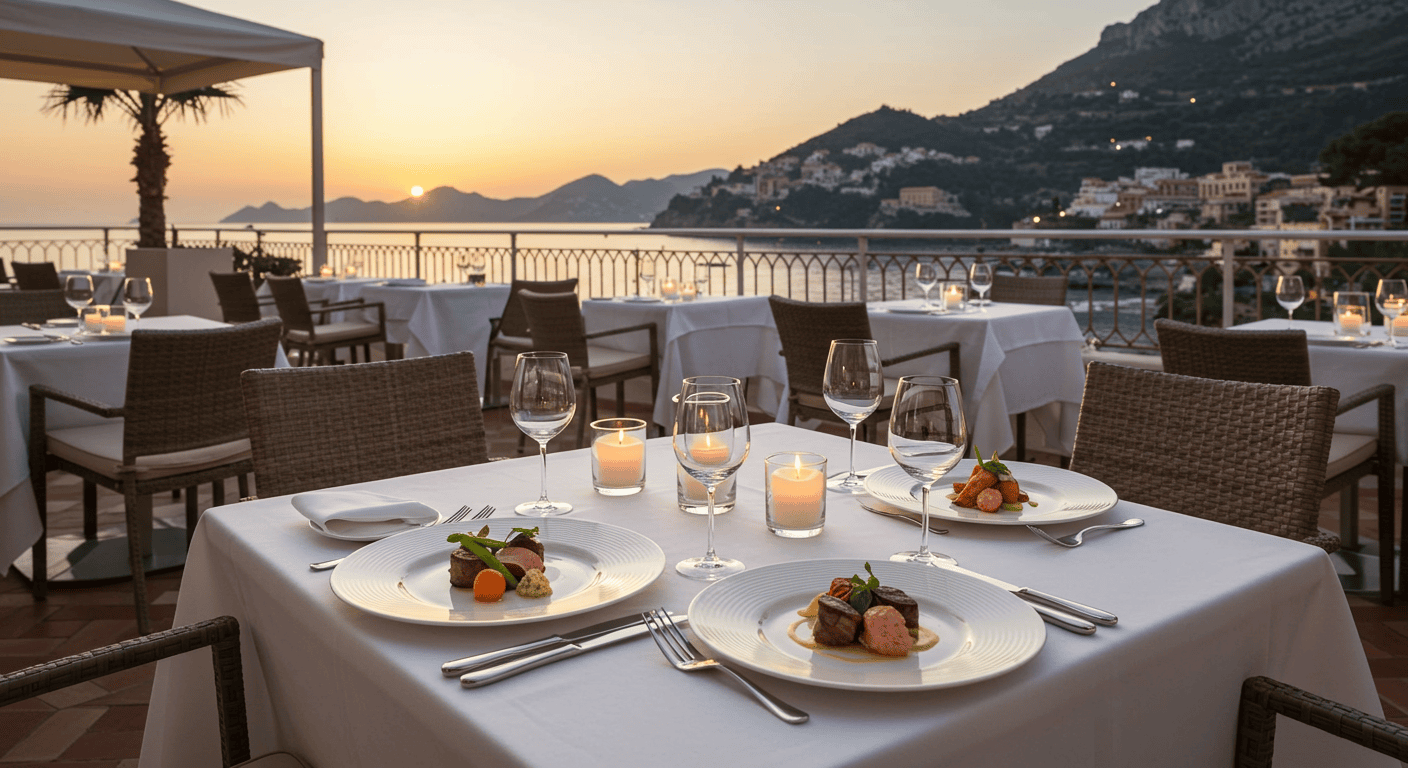
It’s around eight in the evening and the light over the Balcón de Europa has turned that particular shade of amber that photographers travel thousands of miles and then miss because they were looking at their phones. The fishing boats are back. Somewhere behind you, a kitchen is producing something involving espetos – sardines on bamboo skewers over a charcoal fire – and the smell is one of those involuntary memory-makers. You make a mental note. You’ll go back tomorrow. You go back every night for the rest of the week. This is how Nerja works on people.
Nerja sits on the eastern edge of the Costa del Sol, closer to Almería than to Marbella in both geography and spirit – which is to say it has managed to hold onto something authentic while the rest of the coast occasionally lost the plot in a haze of all-inclusive buffets and paella for twelve euros a portion. The food scene here rewards the curious. It punishes the impatient. And it absolutely refuses to operate on northern European mealtimes, which is something you should make peace with early.
This guide covers the best restaurants in Nerja across every register: fine dining, neighbourhood gems, beach clubs, hidden-away terraces, and the kind of market stalls that make you question every life decision that led you to eat lunch at your desk. Whether you’re planning a week in a luxury villa or a long weekend, knowing where to eat in Nerja is, frankly, half the holiday.
Fine Dining in Nerja: Elevated Cuisine on the Costa
Nerja doesn’t carry a Michelin star – yet – but this should not be mistaken for a lack of ambition or skill. The fine dining scene here operates with a quiet confidence that doesn’t need external validation, which is both admirable and slightly inconvenient for anyone who uses stars as a shortcut to booking decisions.
The elevated end of the restaurant market in Nerja tends to gravitate toward a particular style: contemporary Andalusian cuisine that takes the region’s extraordinary larder seriously. Think locally caught dorado cooked with precision, Iberian pork treated with the reverence it deserves, and vegetable dishes built around what was harvested that morning from the Axarquía hinterland – a fertile inland area that produces tropical fruits, avocados, and some of the best tomatoes on the peninsula. This is not food that shouts. It’s food that makes you put your fork down and pay attention.
Several restaurants along the Calle Pintada and in the old town’s tangle of lanes operate with serious culinary intent. Menus lean on locally sourced ingredients, and the tasting menus – where offered – tend to be shorter and more considered than the sprawling twelve-course productions elsewhere on the coast. Wine lists at the better establishments include bottles from the Axarquía DO, a local wine region producing Moscatel-based whites that pair with the coastal cuisine in ways that feel almost designed. Wine sommeliers, where present, are worth engaging. Ask them what they’re drinking. The answer is usually more interesting than the obvious choices.
Reservations at fine dining establishments in Nerja are advised from June through September and are essentially non-negotiable in August, when the town fills to a degree that makes simple things complicated.
Local Tavernas and Traditional Restaurants: The Real Nerja
The taverna scene is where Nerja earns its reputation. These are places with paper tablecloths, handwritten menus in Spanish only (bring a dictionary or a willingness to point and hope), and a proprietor who has been serving the same dishes for twenty years because, quite simply, why change what works.
Pescaíto frito is the dish to understand here. It’s the Andalusian art of deep-frying small fish – boquerones, chanquetes, pequeñas calamares – in a light seasoned flour until they’re crisp and impossible to stop eating. Properly done, it bears no resemblance to the soggy version that gives fried fish a bad name. In a good Nerja taverna, a plate of pescaíto arrives with a wedge of lemon and a confidence that says: we’ve been doing this since before you were born.
The barrio away from the waterfront holds some of the town’s most rewarding tables. Locals eat late – nine o’clock is not unusual, ten is perfectly normal, eleven happens – and they eat in the company of several generations of family, which means the background noise in any good neighbourhood restaurant is considerable and entirely convivial. Don’t expect hushed reverence. Expect garlic, conversation, and a second bottle arriving before you’ve asked for it.
Ajoblanco – a cold white almond and garlic soup – appears on menus here with the frequency its quality demands. Order it. The gazpacho is excellent too, but the ajoblanco is what sets this stretch of coast apart from the tomato-soup monotony elsewhere.
Beach Clubs and Casual Dining: Eating With Sand Between Your Toes
The beaches around Nerja – Burriana, Calahonda, El Salon – each have their own dining culture, and the standard is higher than the setting might initially suggest. Chiringuitos, the casual beach bars of the Spanish coast, range in quality from utilitarian to genuinely excellent, and the better ones at Burriana have been drawing both locals and visitors for years on the basis of their espetos alone.
The espeto is a dish that requires patience and fire – specifically, a half-barrel of olive wood embers and sardines fresh from the morning catch, threaded onto bamboo poles and angled over the heat. It’s a cooking method that looks theatrical and tastes elemental. The best place to eat them is at a table with direct sight of the fire, a cold Mahou in hand, while the Mediterranean does its thing approximately thirty metres away. No further commentary required.
Burriana beach, Nerja’s largest and most social, has a row of chiringuitos that graduate from basic snacking territory through to full-service restaurants with proper wine lists. Lunchtime is the main event here – two o’clock, three o’clock, the Spanish way – and the grilled fish platters, paella, and cold seafood plates that emerge from these kitchens are executed with a consistency that comfortably outclasses their casual appearances.
For something a step up, a handful of beachside restaurants near the town proper offer covered terraces, slightly more composed menus, and the kind of service that remembers your preferences from the day before. This is the sweet spot between chiringuito informality and proper restaurant investment.
Hidden Gems: Where the Locals Actually Eat
Every town has a version of this category, but Nerja’s is particularly worth pursuing. The streets behind the Balcón de Europa, away from the main drag and uphill from the tourist footfall, contain a cluster of small restaurants that exist almost entirely on local reputation. There are no English-language menus. There are occasionally no printed menus at all – just a conversation with the owner about what’s available. This sounds intimidating and turns out to be wonderful.
These are places where the house wine is a local Moscatel blend that costs four euros a glass and pairs improbably well with everything on the menu. Where the bread arrives warm, unrequested, and doesn’t go on the bill. Where the pudding – probably a crema catalana or a dense slice of tarta de queso – is made on the premises that morning and tastes like someone actually cares about pudding.
The village of Frigiliana, a twenty-minute drive up into the hills from Nerja, deserves particular mention. It’s technically a separate destination – one of the most beautiful white villages in Andalusia – but it’s close enough to Nerja to count as a lunch expedition. Several small restaurants here serve dishes rooted in Moorish culinary tradition: slow-cooked lamb with almonds and honey, cold soups with a North African lean, preserves made from the village’s famous molasses. It’s a different register entirely from the coast, and the combination of an afternoon in Frigiliana with dinner back in Nerja is one of the quietly perfect ways to spend a day on this stretch of the Costa.
Food Markets and Gourmet Shopping: Eating Like a Local
The mercado in Nerja is the right place to start any food-oriented morning. The covered market sells the produce that ends up on the best tables in town: Axarquía avocados with a richness that makes the imported variety seem aspirational, the cherimoya fruit (custard apple) that is practically a local religion in this corner of Málaga province, fresh fish from the daily catch, and cured meats of local provenance that are worth smuggling home in your luggage – legally, obviously.
The market operates on proper Spanish hours, which means it’s busiest between nine and noon and considerably less busy thereafter, because by noon you should be sitting somewhere with a coffee. Saturday mornings have a slightly expanded artisan presence – local cheesemakers, honey producers, the occasional olive oil producer who will offer you a tasting with the gravity of a fine wine sommelier. This is not hyperbole. Good olive oil in Andalusia is treated with appropriate seriousness.
For gourmet provisions – the kind you want back at a villa kitchen – the delicatessens along the central streets carry an excellent range of tinned seafood (gourmet tinned fish is having a moment in Spain and has been quietly having it for decades), regional wines, local spirits, and the ceramic-jarred products that make for presents people actually want to receive. Nerja’s proximity to the Axarquía means the produce available in its shops and market is genuinely exceptional. Buy the tomatoes. You won’t regret it.
What to Drink: Wine, Spirits and the Art of the Aperitivo
The Axarquía wine region produces something worth understanding before you arrive. The dominant grape is Moscatel de Alejandría, typically used elsewhere for dessert wine or raisins, but in this microclimate it yields dry and semi-dry whites with an aromatic intensity that works beautifully with seafood. The slopes here are extremely steep, the harvest is done by hand at some personal risk to the harvesters, and the resulting wines are produced in small quantities that rarely reach major export markets. Drinking them here, ideally with a view of the sea, is one of those quietly appropriate moments that a good trip serves up occasionally.
Fino and Manzanilla sherries – cold, bone dry, poured from the fridge – are the correct aperitivo choice in this part of Andalusia and are served in many of the better tapas bars with precisely the kind of unselfconsciousness that makes them great. A cold fino with a dish of jamón and a few aceitunas at six in the evening is one of Spain’s more civilised inventions.
Local craft beer has arrived in Nerja as it has everywhere, and several bars now carry Andalusian microbrews that are worth exploring. The standard lager is Mahou or Cruzcampo depending on where you’re sitting, both of which are perfectly designed for the heat and the circumstances.
And then there is the matter of the post-dinner copa. The Axarquía produces a brandy and a local anís that appear on the counters of every bar in town, typically offered as complimentary digestivos with the bill. Accept. It’s not about the drink – it’s about the fifteen minutes of unhurried conversation that follow.
Practical Tips: Reservations, Timing and Table Etiquette
Lunch in Nerja happens between two and four. Dinner starts at nine at the absolute earliest, with ten being the comfortable local hour. Arriving at a restaurant at seven expecting dinner is the kind of thing that marks you immediately as someone who has not read widely on the subject. Many restaurants won’t even be open. Those that are will seat you with the polite patience of someone waiting for you to understand something obvious.
Reservations are essential at the better restaurants during July and August, advisable in June and September, and somewhat optional in shoulder season – though always worth making because the best tables have a habit of disappearing. Most restaurants in Nerja have WhatsApp or email booking options, with phone calls still perfectly normal. Very few have online booking systems, which is either charmingly analogue or mildly inconvenient depending on your relationship with phone calls.
Tipping is not compulsory in Spain but is appreciated and becoming more common in tourist areas. Rounding up the bill or leaving five to ten percent at a restaurant where service was genuinely good is the appropriate register. Tipping at a bar for a beer is not expected. Your mileage will vary based on context.
Spanish restaurant culture does not rush you. The bill will not arrive until you ask for it – specifically until you make the international mime of writing on your palm, or say “la cuenta, por favor” with conviction. This is not neglect. It is the considered philosophical position that you might want another glass of wine, and they are giving you the opportunity to come to that conclusion yourself. They are usually right.
The Villa Kitchen Option: Bringing Nerja’s Food Culture Home
There is a particular kind of evening that Nerja makes possible: one where you do not go to a restaurant at all. Where a private chef arrives at your villa with a market bag full of that morning’s catch, a bottle of cold Axarquía Moscatel, and a plan involving espetos over a charcoal fire on a terrace overlooking the Mediterranean. It’s informal and considered at the same time, which is the precise combination that luxury at its best aims for.
Staying in a luxury villa in Nerja gives you the option to bring the food culture of this stretch of coast directly into your accommodation. A private chef can source locally, cook to your preferences, and produce the kind of meal that references everything described in this guide – the ajoblanco, the espetos, the local wine – in the setting of a private terrace with no reservation required, no waiting for the bill, and no one at the next table discussing their renovation project. The restaurants of Nerja are genuinely worth visiting. The option to stay home and eat well is equally worth having.
For everything else you need to plan your time in this corner of Andalusia – from beaches and caves to hiking and day trips – the full Nerja Travel Guide covers the ground comprehensively.
What are the best restaurants in Nerja for a special occasion dinner?
For a special occasion, focus on the elevated contemporary Andalusian restaurants in the old town – particularly along Calle Pintada and the streets near the Balcón de Europa. Look for places offering tasting menus built around local produce from the Axarquía region. Reservations are essential in high season. Alternatively, booking a private chef at your villa is increasingly the choice of those who want a genuinely personal experience without the pressure of a formal restaurant setting.
What local dishes should I make sure to try in Nerja?
Espetos (sardines grilled over charcoal on bamboo skewers) are the signature dish of this stretch of the Costa del Sol and are not to be missed at a good chiringuito on Burriana beach. Beyond that: pescaíto frito (Andalusian fried fish), ajoblanco (cold almond and garlic soup), fresh grilled dorado or lubina, and any dish featuring the Axarquía’s tropical produce – avocados, cherimoyas, and tomatoes of exceptional quality. For drinks, seek out the dry Moscatel whites from the local Axarquía DO wine region.
When should I book restaurants in Nerja, and how far in advance?
August is the peak of the peak – book fine dining and popular restaurants several weeks in advance for this month. In July and September, a week ahead is usually sufficient for most places, though the best tables at top restaurants can fill quickly. During spring and autumn, two to three days notice is generally fine, and many neighbourhood restaurants will take walk-ins happily outside summer. Always call or message ahead for groups of six or more at any time of year. Most restaurants communicate easily via WhatsApp.


