
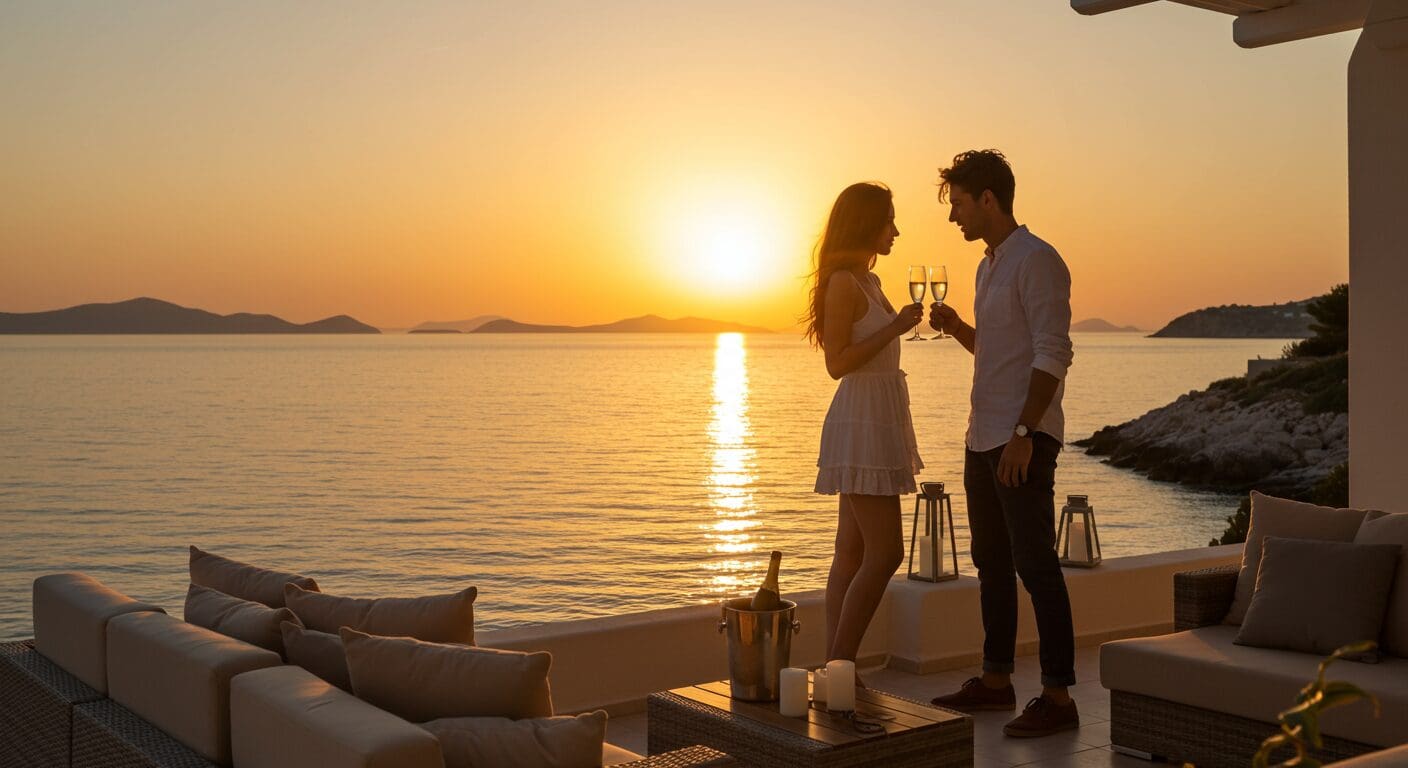
Romantic Northern Spain: The Ultimate Couples & Honeymoon Guide
Romantic Northern Spain: The Ultimate Couples & Honeymoon Guide
Most couples arrive in Northern Spain expecting something very like Southern Spain, just slightly damper and with better cheese. They have packed light dresses and sandals. They have mentally scheduled long afternoons on a sun-bleached terrace with a sangria. Within about forty-eight hours, something shifts. The coastline turns out to be genuinely wild and dramatic rather than decoratively so. The food turns out to be the best they have eaten in Europe. The villages, the mountain light, the private coves accessible only to those who know to ask – none of it was what they planned, and all of it is better. This is the foundational truth of romantic Northern Spain: it consistently outperforms its own reputation, which is already considerable. It rewards couples who come without a rigid agenda, who are willing to get slightly lost on a coast road above the Bay of Biscay, who understand that a two-hour lunch is not indulgence but obligation. If you are looking for a destination that makes romance feel effortless rather than engineered – and there is a meaningful difference – you have found it.
Why Northern Spain Is Exceptional for Couples
There is a particular quality of place that makes certain destinations work for couples and others merely tolerable in each other’s company. Northern Spain has this quality in abundance, and it comes down to texture. The region – broadly understood as the arc of coast and hinterland stretching from the Basque Country through Cantabria and Asturias to Galicia, with the Pyrenees anchoring the eastern edge – offers a richness of landscape, culture, food and pace that gives couples something real to share rather than a checklist to complete together.
The scale helps. Unlike the Costa del Sol, which can feel like a single very long resort with a road through it, Northern Spain is made of distinct, strongly characterised places. San Sebastián has the cool elegance of a city that takes its pleasures seriously. The Cantabrian coast has that particular drama – green cliffs dropping into impossible blue water – that makes even a drive feel cinematic. The wine country of La Rioja offers the particular pleasure of spending an afternoon in a bodega and then having nothing more pressing to do than eat well. Galicia, half the world away in mood from the Basque Country despite being barely five hundred kilometres by road, has its own ancient, mist-edged atmosphere. Couples who spend a week or ten days in the north will experience what feels like three or four different countries, which is its own kind of adventure.
None of this is accidental. The region has historically been less dependent on mass tourism than the south, which means it has developed a hospitality culture oriented toward quality rather than volume. The locals eat well because they always have, not because someone told them it would be good for visitor numbers. The pintxos bars of San Sebastián, the seafood restaurants of Galicia, the rural ciderhouses of Asturias – these exist because the people here genuinely care about eating and drinking well. For couples, this creates a backdrop that is both romantic and authentic, which is a combination more rare than it should be.
The Most Romantic Settings and Experiences
The coastline is where Northern Spain does something quietly extraordinary. The Basque and Cantabrian coastlines in particular offer a sequence of small bays, clifftop walks and fishing villages that are romantic not because someone has decided they should be, but because they are genuinely beautiful and genuinely unspoiled. The drive along the coastal road between San Sebastián and Santander – best done over two or three days, stopping when something catches the eye, which will be often – is one of those journeys that couples tend to refer to for years afterwards. The kind that comes up unprompted at dinner parties.
The Picos de Europa, rising sharply from the coastal plain in Asturias and Cantabria, offer mountain scenery of a scale and severity that feels disproportionate to the region’s modest reputation. A walk through the Cares Gorge, descending into an impossibly deep limestone ravine with a narrow path cut into the rock face, is one of those experiences that is significantly more impressive in person than any photograph suggests – and significantly more romantic than it sounds when described as a gorge walk. The return to a private villa with a view of the mountains afterwards is not entirely irrelevant to this calculation.
In Galicia, the Rías Baixas – wide estuaries cutting deep into the green coastline south of Santiago de Compostela – have a particular quality of light in the early evening that is worth timing your visit around. The combination of water, granite, vine-covered hillsides and the peculiar luminous quality of Galician light at dusk produces something that is genuinely hard to describe without reaching for hyperbole. We will resist. It is simply one of the more beautiful corners of Europe, and far fewer people know it than should.
San Sebastián deserves its own mention here. The city’s La Concha bay – a near-perfect horseshoe of pale sand backed by elegant Belle Époque architecture – is one of those urban settings that makes you understand why people who live here cannot quite imagine living anywhere else. For couples, the combination of beach, city, world-class food and a walkable scale that makes every evening feel like an event is close to ideal.
The Best Restaurants for a Special Dinner
Northern Spain contains the highest concentration of Michelin-starred restaurants per capita of any region in Europe. This is either extremely impressive or extremely convenient, depending on how you feel about organised superlatives. Either way, it means that the infrastructure for a genuinely exceptional dinner – the kind that becomes a reference point for all future dinners – is better here than almost anywhere else on earth.
San Sebastián is the natural starting point. The city’s old town alone contains more culinary talent per square metre than most capital cities, and the ritual of moving between pintxos bars – small plates of sometimes extraordinary technical accomplishment, eaten standing up, with txakoli wine poured from a height to add effervescence – is itself a form of romance, the shared pleasure of discovery. For a formal special dinner, the city’s high-end restaurant scene rewards research. Tables at the most celebrated establishments require advance planning of the kind usually associated with infrastructure projects, but the payoff is proportionate.
Along the Cantabrian coast and in Galicia, the emphasis shifts toward seafood of a quality that makes the landlocked world feel like a bad decision. Galician percebes – barnacles harvested from the most violent sections of the Atlantic coastline, briefly cooked and eaten with the fingers – are one of those foods that is deeply romantic in context and completely inexplicable in description. The seafood restaurants of towns like Cambados in the Rías Baixas or the old port areas of A Coruña offer the particular pleasure of eating the thing that was caught here, today, prepared simply and intelligently, in a place that understands exactly what it is doing. These are not restaurants competing for international attention. They are restaurants cooking for people who know what good food is. The distinction matters.
For an evening that combines setting and cuisine, consider restaurants with views across the Cantabrian Sea or overlooking one of the Galician rías – the marriage of landscape and plate is one of the region’s particular gifts to the romantic traveller.
Couples Activities: From Sailing to Spa
The Bay of Biscay, for all its reputation for dramatic weather, offers excellent sailing conditions for much of the year, and private sailing charters from ports like San Sebastián, Hondarribia or the harbours of the Rías Baixas allow couples to experience the coastline from the water – which is, it turns out, quite a different coastline from the one you see from land. The scale of the cliffs, the hidden sea caves, the quality of light on the water in the early evening: these are things that reward being on a boat. Several operators offer skippered half-day and full-day charters with the option of stopping in small coves that are inaccessible by road.
Wine tasting in La Rioja is an activity that requires almost no justification. The region produces some of Spain’s most celebrated reds, and the bodegas range from centuries-old cellars carved into hillsides to dramatic contemporary buildings designed by architects whose other work hangs in museums. Many offer private tours and tastings that go considerably beyond the standard tour-group experience – barrel room access, vertical tastings of older vintages, food pairings that turn an afternoon into an event. The drive through the Rioja Alta landscape, with its vine-covered plains and medieval villages, is worth doing slowly.
Cooking classes have become something of a cliché in food-focused destinations, but in the Basque Country they earn their reputation. Learning to make pintxos from someone who actually knows – the technique for the bread, the balance of flavours, the confident informality of service – is a genuinely useful skill and a genuinely enjoyable afternoon. Several operators in San Sebastián and the wider Basque region offer private or small-group classes for couples, often followed by eating what you have made, which is the correct ending.
The spa culture in Northern Spain is sophisticated and understated. Thermal spa facilities in the Basque Country and along the Cantabrian coast offer everything from seawater thalassotherapy to mountain mineral baths. For couples, a private spa session or a full day at a well-regarded thermal facility – followed by an excellent dinner – represents a kind of perfection that is hard to argue with. Many luxury villas in the region also offer private pool and outdoor space that function as their own form of spa experience, with the considerable advantage of not involving other people.
The Most Romantic Areas to Stay
Where you stay in Northern Spain shapes the romantic experience considerably, because the region is large and varied enough that the choice of base determines which version of Northern Spain you inhabit. For couples, there are five areas that consistently deliver.
San Sebastián and its hinterland offers urban romance at its most polished – the city itself for evenings and gastronomy, the green hills and villages of the Basque interior for daytime escapes. Staying in a villa or upmarket property within reach of the city but removed from its centre gives couples the best of both registers.
The Cantabrian coast between Santillana del Mar and San Vicente de la Barquera offers perhaps the most cinematically romantic coastal scenery in the north – medieval villages above cliffs, the Picos in the background, small beaches that are genuinely uncrowded even in summer. Properties here tend toward the rural and private, which suits couples well.
The Rías Baixas in Galicia – the wine country of Albariño, the wide estuaries, the granite architecture softened by extraordinary greenery – has a quality that feels ancient and calm in a way that is deeply restoring. Couples who want beauty without bustle, good wine without pretension and a coastline that has been doing its own thing for several thousand years tend to find it profoundly affecting.
The Rioja wine country, inland and warmer, offers vine-covered valleys, excellent hotels converted from historic properties and the particular pleasure of spending several days eating and drinking very well. Less dramatic than the coast, but the case for dramatic is sometimes overstated.
The Pyrenean foothills and valleys of Navarre and Aragon provide mountain romance of a more intimate scale than the Alps – old stone villages, valley walks, trout rivers, the kind of silence that is actually quiet rather than merely marketed as such. For couples who want to disappear, this is where you go.
Proposal-Worthy Spots in Northern Spain
Anyone considering a proposal in Northern Spain is working with an embarrassment of riches, which creates its own mild problem. The key is specificity – not just a beautiful view, but the right beautiful view, at the right time of day, in the right light. Northern Spain offers several candidates that are genuinely exceptional rather than merely adequate.
The Monte Urgull headland above San Sebastián, at dusk, with the city and bay laid out below, is one of those views that manages to be romantic without being a tourist poster. The walk up is quiet enough that you will likely have a section of it to yourselves. The light on La Concha bay as the sun drops behind the hills is the kind of thing that does not need explaining to anyone present.
In Galicia, the cliffs of the Costa da Morte – the Death Coast, which is either a deeply romantic or deeply alarming name depending on your disposition – offer a raw, oceanic drama that is unlike anything else in Spain. The views from the headlands near Cabo Finisterre, the westernmost point of mainland Spain, carry an emotional weight that comes from geography as much as beauty. This is where the medieval world believed the land ended. It still feels like it might.
The vineyard landscapes of Rioja at harvest time – late September into October, when the vines turn amber and the air carries the smell of fermenting grapes – have a particular warmth and abundance that makes them excellent proposal territory. Private vineyard dinners, arranged through a bodega, can provide settings of considerable intimacy.
In the Picos de Europa, the Naranjo de Bulnes – a vast limestone spire rising from the high mountain meadows – provides the kind of backdrop that renders words temporarily unnecessary. The approach on foot through alpine scenery is itself the experience. The proposal spot here selects itself.
Anniversary Ideas for Northern Spain
Northern Spain rewards returning couples as generously as it rewards new ones, which is a mark of genuine depth. For an anniversary, the structure that works best is one that combines something active with something indulgent – the contrast sharpens both.
A week-long coastal drive from San Sebastián to Santiago de Compostela, travelling slowly and staying in exceptional properties along the way, functions as both journey and destination. The accumulation of different coastlines, different towns, different food cultures gives couples something to navigate together, which is its own form of intimacy. Arriving in Santiago – whether or not you have walked the Camino – has an emotional charge that many couples find unexpectedly affecting. The cathedral square on a quiet evening, the incense still in the air from the earlier ceremony, the sense of having reached somewhere rather than merely stopped, makes for an anniversary ending of unusual power.
A private gastronomic tour of the Basque Country, combining market visits, cooking experiences, guided pintxos routes and a reservation at one of the celebrated fine dining restaurants, compresses a remarkable amount of pleasure into two or three days. For food-focused couples, it is close to ideal.
The Rioja harvest period – those warm October weeks when the work is happening in the vineyards and every village smells faintly of wine – is arguably the best time to be in the region, and the combination of harvest activities, cellar visits and the excellent hotel properties in the wine country makes for an anniversary with both beauty and substance.
Honeymoon Considerations for Northern Spain
The honest case for honeymooning in Northern Spain rather than the obvious alternatives comes down to a single word: experience. A honeymoon in the Maldives is beautiful and relaxing and deeply pleasant, and at the end of it you have had a beautiful, relaxing, pleasant experience. A honeymoon in Northern Spain gives you the same luxury and privacy available anywhere in the world, and adds to it the texture, depth and genuine surprise of one of Europe’s most complex and rewarding regions. You come back with stories rather than just photographs.
The practical case is also strong. Northern Spain is accessible – a short flight from most European cities, direct routes from the US to Bilbao and Santiago – without feeling ordinary. The luxury accommodation infrastructure has grown considerably in recent years, and private villa options in particular offer the seclusion and quality that honeymoons require without the formality that can make certain high-end hotels feel slightly stiff. A private villa with a pool overlooking the Bay of Biscay, or set in the Galician hills above a ría, provides intimacy of a kind that no five-star hotel corridor quite replicates.
Timing matters. The shoulder seasons – May, June and September – combine excellent weather with reduced crowds and the general relaxation of a region that is not operating at full tourist capacity. July and August are beautiful but busier, particularly along the coast. October, for the right couple, is perhaps the finest month of all: the harvest is happening, the light is extraordinary, the crowds have gone and the region settles into itself with an ease that is deeply welcoming.
For our broader introduction to what the region offers, the Northern Spain Travel Guide covers the essentials across landscape, culture, food and logistics – a useful companion to what is described here.
The honeymoon itinerary that works best is one built around a single private base – ideally a villa – with day trips and excursions radiating outward. This gives couples the stability of a home without the feeling of being anchored. You know where you are sleeping, where your things are, where dinner will be when you choose to stay in. Everything else is discovery.
Your Romantic Base in Northern Spain
All of which brings us to the question of where to actually stay, which is not a minor question. A romantic trip of this kind needs a base that matches the quality of its surroundings – private, well-appointed, flexible enough to work as a retreat on the evenings you do not want to go out, beautiful enough to earn its place in the landscape. A luxury private villa in Northern Spain is the ultimate romantic base: your own kitchen for the mornings when you want breakfast at ten without anyone hovering, your own terrace for the evenings when the view is enough, your own space entirely for the nights when the best plan is no plan at all. The region is at its most romantic when experienced at this pace and this level of privacy. Everything else – the restaurants, the coastline, the vineyards, the mountain light – is out there waiting, on your terms and your schedule.
When is the best time of year to visit Northern Spain for a romantic trip?
The shoulder seasons – late May through June and September through October – offer the best combination of weather, atmosphere and reduced visitor numbers. The summer months are beautiful but the coast gets busy, particularly in August when Spanish holidaymakers join international visitors. October is particularly special in the wine regions during harvest, and the quality of autumn light across the coast and mountains is exceptional. If you are planning a honeymoon or anniversary trip that prioritises both beauty and intimacy, late September or early October is hard to beat.
Is Northern Spain significantly different from Southern Spain as a romantic destination?
Yes – meaningfully so. The north is cooler, greener and considerably wetter than the south, with a landscape and food culture that owes more to Celtic and Atlantic influences than to the Moorish south. The coastline is dramatic and relatively wild, the cuisine is widely considered the finest in Spain, and the region sees far fewer international tourists than destinations like Andalucía or the Balearic Islands. For couples who want genuine cultural depth, exceptional food, varied landscape and a degree of discovery, the north consistently delivers something that the more visited south does not.
Which area of Northern Spain is best for a honeymoon – the Basque Country, Cantabria, Asturias or Galicia?
Each region has a distinct character and the right answer depends on what kind of honeymoon you want. The Basque Country, centred on San Sebastián, is ideal for couples who want world-class gastronomy, urban elegance and easy access to both coast and countryside. Cantabria and Asturias offer the most dramatic coastal and mountain scenery, with strong rural privacy options and the Picos de Europa on the doorstep. Galicia – particularly the Rías Baixas – suits couples drawn to ancient landscapes, excellent seafood and wine, and a quieter, more contemplative atmosphere. Many honeymooners choose to move between two regions during their stay, using a private villa as a base in each. A trip that combines the Basque Country with Galicia, travelling slowly along the coast between them, covers much of what the north does best.


