
Best Restaurants in Plaka: Fine Dining, Local Gems & Where to Eat
There are very few places on earth where you can sit down to grilled octopus and a carafe of chilled Assyrtiko while a 2,500-year-old monument looms above you in the evening light, and feel entirely unsurprised by the whole arrangement. That is Plaka’s particular magic. Athens’ oldest neighbourhood – the warren of neoclassical streets and bougainvillea-draped alleys that spills down the northern and eastern slopes of the Acropolis – has been feeding travellers for centuries. The difference today is that it’s doing so rather well. The best restaurants in Plaka cover serious culinary ground: fine dining rooms with pedigree chefs, tavernas old enough to have hosted literary legends, seafood mezedes that make ordering a full main feel almost greedy. This is where to eat in Plaka – not as a tourist ticking boxes, but as someone who has genuinely arrived.
The Fine Dining Scene: Pedigree and Atmosphere in Equal Measure
Plaka is not, by reputation, Athens’ most avant-garde dining district. That title belongs to Monastiraki and Kolonaki, where the city’s modernist chefs do extraordinary things with foam. But Plaka offers something arguably more compelling for the luxury traveller: fine dining with genuine soul. The cooking here is rooted in tradition without being enslaved to it, and the settings – ancient stones, candlelit courtyards, frescoed walls – tend to do a great deal of the atmospheric heavy lifting.
The undisputed grande dame of Plaka’s fine dining scene is Daphne’s. This is a restaurant that understands theatre without resorting to performance. The interior is dressed in Pompeian frescoes, the garden sits beside fragments of an actual ancient Greek building, and the neoclassical restoration in terracotta and ochre sets a tone that manages to feel both scholarly and deeply comfortable. Politicians, artists, and the kind of celebrities who prefer their anonymity to be respected have been coming here for years. The menu leans into Greek tradition with confidence: the moussaka is a serious version of the dish, the rabbit in sweet wine is a reminder of why Greek braising deserves more international attention, and the lamb fricassee is the sort of thing you order once and then find yourself thinking about on the plane home. It is not inexpensive. It is worth it.
For those seeking the bridge between acclaimed chef cuisine and accessible neighbourhood eating, Barbounaki deserves considerable attention. This is the more relaxed sibling of chef George Papaioannou’s flagship Papaioannou restaurant in Piraeus, one of the most respected seafood establishments in greater Athens. At Barbounaki, Papaioannou trades the grand gesture for something sharper: a focused menu of seafood mezedes designed for sharing, positioned right outside the Metropolitan Cathedral with tables spreading into the square itself. The fried red mullet – barbounaki being the Greek word for the fish – is the essential order, crisp and sweet and gone far too quickly. The steamed mussels, grilled octopus, calamari, and haloumi are all excellent supporting cast. Come hungry. Come with people you don’t mind arguing with over the last piece of octopus.
Classic Tavernas: The Restaurants That Define Plaka
To understand Plaka’s food culture is to understand the taverna – not as a lesser alternative to a restaurant, but as an entirely different and often superior proposition. The best Plaka tavernas are institutions in the most literal sense: places that have outlasted governments, fashions, and the entire category of restaurants that described themselves as “concepts.”
Platanos Taverna has been operating since 1932, which in restaurant years puts it somewhere between remarkable and slightly implausible. Named for the plane trees whose branches shade the outdoor tables on its quiet square, Platanos is the kind of place that makes you feel you’ve discovered something secret, even though it appears in practically every serious guide to Athens. Henry Miller ate here. Patrick Leigh Fermor ate here. The walls inside are lined with karagiozi shadow puppet figures and old photographs, the tablecloths are checkered, and the aromas emerging from the kitchen are the sort that make pausing to examine the menu feel like an unnecessary formality. Go traditional without hesitation: bread dunked into tzatziki, a Greek salad dressed aggressively in olive oil with the feta properly crumbled in, then beef or lamb combinations from the main menu. For vegetarians, the gigantes – giant beans slow-cooked in tomato sauce – and the gemista, stuffed tomatoes and peppers with rice and herbs, are both worth ordering in their own right rather than as consolation dishes. Lunch service here, particularly on a weekday, is one of the most civilised hours you can spend in Athens.
I Palia Taverna tou Psarra – known more economically as Taverna tou Psarra – sits at the corner of Erotokritou and Erechtheos streets and occupies a place in Plaka’s culinary hierarchy that locals tend to defend with some fervour. Consistently named among the very best traditional tavernas in the neighbourhood by visitors and Greek food writers alike, it has the kind of long history that seeps into the architecture itself. The menu is an education in the range of Greek cooking beyond the well-worn tourist trail: grilled meats prepared with care, mezedes that arrive in the correct sequence without being hurried, and a wine list that treats Greek producers with the seriousness they increasingly deserve. This is the restaurant you bring people to when they claim they’ve already done Greek food.
Rooftop Views and the Acropolis Effect
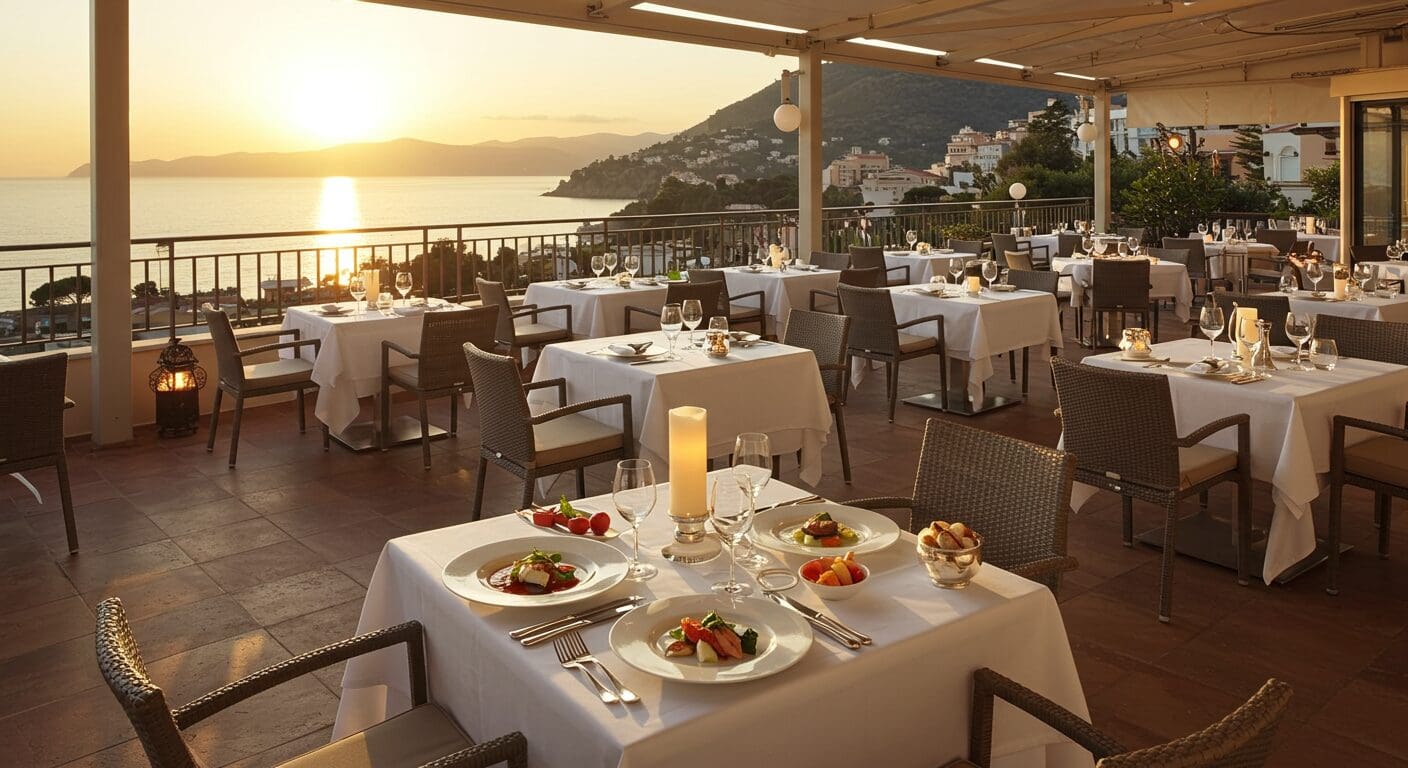
There is a particular category of Plaka dining experience that has nothing to do with Michelin stars and everything to do with geography. When the Acropolis is your backdrop, the act of eating becomes something else entirely – a compound pleasure, archaeology and appetite combined. Strofi has been exploiting this advantage with considerable skill since 1975, and it has earned its reputation honestly. Situated directly opposite the sacred rock, the restaurant’s view of the Acropolis is arguably the most directly confrontational of any dining room in Athens. But Strofi is not coasting on scenery. The fried feta in filo pastry with honey is a dish that threatens to unbalance the rest of the meal by being too good too early. The pork fillet stuffed with dried tomatoes and gruyère is the kind of thing that rewards ordering by people who think they don’t really like pork. The grilled meats and fish are properly handled, and the Mediterranean menu gives the kitchen enough range to keep regulars interested across multiple visits. Book the rooftop terrace. Book it well in advance. The view at dusk, as the Parthenon catches the last of the light, is the kind of thing that makes even the most composed traveller reach instinctively for their phone. (You have been warned.)
What to Order: Dishes You Should Not Miss
Plaka’s restaurant menus share a certain vocabulary, and knowing which words to pay attention to saves considerable time. Mezedes – small shared plates – are the structural foundation of a good Greek meal, and the neighbourhoods’ seafood-focused tavernas execute them at a high level. Fried red mullet, where available, is non-negotiable. Grilled octopus, when done correctly – tenderised, charred at the edges, dressed simply with olive oil and lemon – is one of the great dishes of the Mediterranean. Order it wherever it appears.
Moussaka deserves more credit than it receives outside Greece. At Daphne’s, the version is layered, properly seasoned, and entirely unlike the canteen dish that has given it an undeserved reputation in other countries. Lamb fricassee – slow-braised with lemon and egg sauce – is the kind of dish that Greek home cooks do brilliantly and that restaurants rarely match; find it on a menu and order it without deliberation. Fried feta in filo with honey sounds like a concession to tourist taste and turns out to be genuinely excellent. The Greek salad is a test: if the tomatoes are good and the olive oil is generous and the feta is applied as a block rather than crumbled into submission, the kitchen knows what it is doing.
For the vegetable-inclined: gigantes plaki (baked giant beans) and gemista (stuffed vegetables) are both dishes with real depth, and tzatziki made with proper strained yogurt and good garlic should be ordered at every table as a matter of policy.
Wine, Local Drinks, and What to Sip in Plaka
Greek wine has undergone something of a quiet revolution over the past two decades, and Plaka’s better restaurants are reflecting this honestly. Assyrtiko from Santorini – mineral, crisp, with a salinity that makes it almost criminally good alongside seafood – is the white wine to order if you are uncertain where to start. Xinomavro, from northern Greece, is the red that tends to convert people who arrived expecting something rustic and leave having discovered something closer to Barolo in character: structured, tannic, and capable of considerable complexity.
Retsina, the pine-resin-infused wine that once stood as a rite of passage for first-time visitors to Greece, has been quietly improved by a new generation of producers. The version served in a good Plaka taverna bears very little resemblance to the liquid ordeal that gave it its reputation. It is worth trying once with food, which is how it was always meant to be drunk.
Ouzo, if you are ordering it, belongs at the beginning of a meal with mezedes rather than at the end as a digestif – a distinction the Greeks are politely firm about. Tsipouro, the Greek pomace spirit, is the alternative that serious drinkers tend to prefer: less anise-forward, more direct, and the drink of choice in the older tavernas if you know to ask for it. Finish, if you wish, with a small glass of mastiha liqueur from Chios – strange, resinous, and quite unlike anything else. Acquired taste is perhaps too mild a description, but once acquired, it sticks.
Hidden Gems and Where the Locals Actually Eat
The honest truth about Plaka is that its “hidden gems” are not particularly hidden – the neighbourhood is small enough that word travels quickly, and any restaurant good enough to be worth seeking out tends to have been sought out already. What varies is the quality of the seeking. The quieter squares away from the main Adrianou Street thoroughfare reward slow walking: small family-run operations with handwritten menus, seasonal specials described by whoever brings the bread, and the particular warmth of places not yet optimised for tourist efficiency.
The areas around Lysikratous Square and the streets climbing toward the Anafiotika quarter – the tiny Cycladic village somehow embedded in the fabric of central Athens – tend to yield the most interesting discoveries. Lunch, rather than dinner, is often when these smaller places show their best form: quieter, fresher, and staffed by people who haven’t yet spent four hours managing the evening rush.
Food markets are not Plaka’s strong suit – the neighbourhood’s commercial DNA runs toward tavernas rather than provisions – but the Athens Central Market on Athinas Street is a short walk away and operates at a volume and intensity that makes a strong case for breakfast beforehand. The fish hall in particular is worth the sensory experience, even if you are staying somewhere without a kitchen.
Reservation Tips and Practical Notes
Daphne’s and Strofi both require advance reservations, particularly for outdoor tables and particularly in high season, which in Athens runs from May through October with August representing peak density. Book Daphne’s at least a week ahead if you have a specific date in mind; rooftop tables at Strofi should be requested explicitly when reserving. Barbounaki, being more casual in format, is more forgiving of walk-ins, though the square outside the Cathedral fills quickly on warm evenings.
Platanos Taverna closes on Sunday evenings, which is worth knowing before you build an itinerary around it. Lunch at Platanos is the recommended entry point for first-time visitors – the quality is consistent, the pace is unhurried, and the midday light on that particular square is extremely pleasant company.
Greeks eat late. Dinner before 9pm marks you immediately as a foreigner, which is not a crime, but dining at 9:30pm or later means eating alongside Athenians rather than between shifts of tourists, and the atmosphere shifts accordingly. It also means the kitchen is at full speed rather than warming up. The patience required is rewarded.
Dress codes in Plaka are sensibly absent from all but the most formal establishments, though Daphne’s rewards smart casual out of respect for its surroundings. The rest of the neighbourhood operates on the reasonable assumption that anyone well-dressed enough to be in Plaka has already thought about this.
Planning Your Stay: Eat Well, Sleep Better
The best restaurants in Plaka are at their most rewarding when you are staying close enough to walk home afterwards – slowly, through the lit lanes, with no particular agenda. If you are considering a luxury villa in Plaka, many properties come with a private chef option that allows the neighbourhood’s finest market produce to come directly to your table. This is not an extravagance so much as a logical conclusion: you are, after all, in one of the world’s great ingredient-driven food cultures, with olive oil, fresh seafood, and seasonal vegetables of a quality that makes cooking with them a genuine pleasure rather than a chore. A private chef who knows the local suppliers is the difference between a good holiday and a transcendent one.
For everything else the neighbourhood offers – its archaeology, its architecture, its quieter pleasures and louder taverna evenings – the Plaka Travel Guide covers the full picture in the detail it deserves. The eating, as you now know, is rather good. The rest of it is no less rewarding.

