
Protaras Travel Guide: Where to Stay, Eat & Explore in Luxury
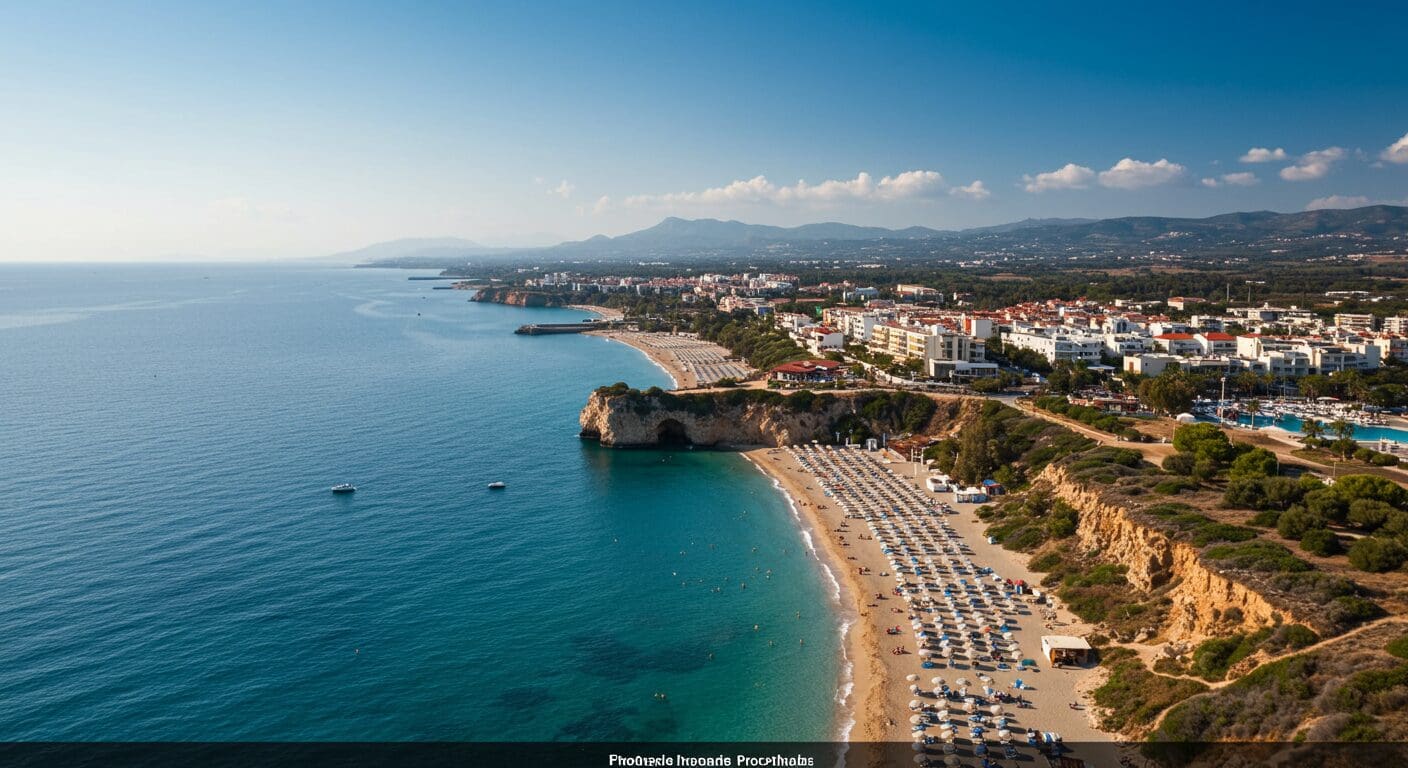
There is a particular quality of light in Protaras that you won’t find replicated elsewhere in Europe – not exactly. The eastern tip of Cyprus catches the sun at an angle that turns the sea a shade of blue-green so improbably vivid that first-time visitors tend to photograph it compulsively, as if documenting evidence of something they’re not sure they’ll be believed about back home. Greece has its islands. The Caribbean has its beaches. But Protaras has Fig Tree Bay, and Fig Tree Bay is quietly, unhurriedly, one of the finest stretches of sand on earth. The water is calm – genuinely calm, not “calm by local standards” calm – the kind of shallow, sheltered, warm-as-a-bath sea that makes you understand why the ancient Cypriots credited this island with the birth of Aphrodite. It’s that sort of place. Beautiful without trying, relaxed without effort, and possessed of an uncanny ability to make whatever you were worried about on the flight here seem, within approximately forty-five minutes of arrival, completely irrelevant.
Who does Protaras suit? Almost everyone, as it turns out – though in specific and distinct ways. Families seeking genuine privacy rather than the choreographed version offered by resort hotels find it transformative; the sheltered bays and villa culture here mean children can swim safely while adults are spared the background percussion of a hotel pool at capacity. Couples marking milestone anniversaries or honeymoons discover that the slower eastern coastline has none of the package-holiday energy of Ayia Napa just down the road – same island, different universe. Groups of friends who’ve outgrown the idea of sharing a hotel corridor find that a private villa with six bedrooms and a pool creates the kind of holiday that people talk about for years. Remote workers who’ve tried and failed to maintain civilised working hours from a cramped hotel room find that a villa desk, fast Wi-Fi, and a Mediterranean view is a combination that makes the concept of the office seem genuinely abstract. And for the wellness-focused traveller, Protaras offers something increasingly rare: a beautiful destination that hasn’t yet decided to monetise its tranquillity aggressively. The yoga can happen on your terrace. The silence is free.
Getting to the Edge of the Island (It’s Easier Than You’d Think)
Protaras sits on the far eastern finger of Cyprus, which sounds geographically inconvenient until you discover that Larnaca International Airport is only around 45 minutes away – a transfer that, by the standards of European sun destinations, qualifies as almost suspiciously easy. Paphos Airport, on the western side of the island, serves as an alternative for those arriving on certain routes, but at roughly two hours’ drive it’s a less elegant option if Protaras is your sole destination. Larnaca is the sensible choice, and it’s well-served by direct routes from across the United Kingdom, including multiple weekly flights from London, Manchester, and other major hubs. The flight time from London is around four and a half hours – long enough to have a glass of wine and finish a chapter, short enough that you arrive intact.
Pre-arranged private transfers are the recommended approach for luxury villa holidays, and most reputable villa concierge services will have this in hand before you land. Taxis are plentiful and metered; rental cars are another strong option, particularly if you plan to explore Cape Greco or venture to Nicosia or the Troodos Mountains for a day. Cyprus drives on the left – a quirk of its British colonial past that provides a small psychological comfort to England-based travellers who’ve had their nerves tested by European roundabouts. Roads in the Protaras area are good and well-signposted. The town itself is compact and largely walkable once you’ve settled in. For beach-hopping, however – and beach-hopping is something of a local art form – having your own transport is useful.
Where to Eat in Protaras: The Table Always Has a Sea View
Fine Dining
The Hippocampus Lounge Restaurant is the sort of place that justifies an entire evening’s planning. Claiming the region’s finest high-end dining experience – and doing so with the credentials to back it up – Hippocampus has built its reputation on a genuinely serious commitment to culinary craft rather than the coastal-location complacency that afflicts so many “upscale” restaurants by the sea. The menu shows range and rigour; the setting provides the kind of atmosphere that makes conversation feel effortless. Book ahead. This is not a turn-up-and-hope situation.
For those whose appetite runs toward the theatrical end of luxury dining, Protaras’s broader fine dining scene has grown meaningfully in recent years. The eastern Cyprus coast, once somewhat overlooked in favour of Limassol’s increasingly cosmopolitan restaurant culture, has found its culinary footing. Expect creative interpretations of Cypriot produce – halloumi treated with the seriousness it deserves, fresh fish sourced that morning, wines from the island’s own Commandaria and Xynisteri grape varieties. A luxury holiday in Protaras rewards those who treat the food as seriously as the swimming.
Where the Locals Eat
Andama Tavern has been doing things the right way since the early 1990s, which in restaurant years is close to eternity. Consistently ranked as Protaras’s top restaurant across multiple review platforms – a distinction that reflects genuine quality rather than algorithmic quirk – Andama combines outdoor seating with sea views, generous portions, and a menu that moves comfortably between salads, carpaccios, fresh seafood, pasta, and the kind of savoury lamb dishes that make you wish you’d arrived hungrier. It is unshowy in the best possible sense: a place that has spent three decades being reliably excellent rather than intermittently impressive.
Kafkaros Tavern is the establishment that locals recommend when you ask them where they actually go. Traditional Cypriot meze in an atmosphere warm enough to make you feel like someone’s guest rather than a customer. Meze, done properly, is one of the most pleasurable ways to eat – a procession of small dishes that arrives in waves and generally continues until everyone at the table accepts defeat. Kafkaros does it properly.
Hidden Gems Worth Seeking Out
Kalamies, set in the Pernera area of Protaras, has been serving seafood for 46 years. Forty-six years. That longevity is telling. The view of the sea is unobstructed, the approach to cooking is described by its regulars as “honest and passionate” – two words that, in the context of a seafood restaurant, should be taken as the highest possible praise. Fresh mussels, scallops sautéed in butter and lemon, tuna tartare, salmon carpaccio: the menu reads like someone simply listed the best things the sea had to offer that week. The halloumi donuts with honey are an unexpected turn that pays off considerably.
For something away from the coast entirely, Kamasias Tavern in nearby Paralimni has fifty years of history and a charming courtyard lush with greenery that transforms summer evenings into something close to enchantment. Authentic Cypriot cuisine in a setting that feels genuinely unhurried – the kind of place where the meal is never rushed and the evening arrives before you’ve noticed the afternoon leaving. Worth the short drive.
The Lay of the Land: Protaras and Its Surrounds
Protaras occupies the far southeastern corner of Cyprus, a position that gives it a distinct character quite separate from the island’s more developed western and southern coasts. The landscape here is lower, more intimate, more given to small coves and rocky headlands than grand dramatic cliffs – though Cape Greco, the protected national park that forms the area’s natural southern boundary, provides all the drama anyone could reasonably ask for. The cape’s limestone formations, sea caves, and crystalline waters have the sort of geological self-confidence that makes you feel appropriately small.
Fig Tree Bay is the jewel and everyone knows it. The beach curves gently, the water deepens gradually, and a small island offshore gives the bay its sheltered quality. It’s the kind of beach that would be insufferable if it were in, say, the south of France – too perfect, too photographed, too consequential. In Protaras it manages to remain surprisingly approachable, though July and August will test anyone’s commitment to the word “uncrowded.”
Further north, Konnos Bay is smaller, rockier, and beloved by those who’ve found it – a secluded inlet within Cape Greco’s protected borders where the water turns a shade of emerald-green that genuinely defies easy description. Green Bay, similarly tucked away, offers some of the area’s best snorkelling without requiring a boat. Pernera, a smaller resort north of Protaras proper, has its own quieter beach culture and the welcome Kalamies restaurant. The nearby town of Paralimni – not a resort town but a working Cypriot market town – provides an entirely different register: real butchers, real bakeries, real locals going about their Tuesday in a way that has nothing to do with tourism.
The whole area can be driven end to end in under thirty minutes, which sounds limiting until you realise that the entire point of this corner of Cyprus is depth rather than breadth. There is more here than a week can exhaust.
Things to Do in Protaras: From Sea Caves to Sunset Cruises
The sea organises most of daily life in Protaras, and rightly so. Boat trips along the Cape Greco coastline are among the area’s great pleasures – small vessels that nose their way into sea caves lit from below by refracted light, stopping at the Blue Lagoon for swimming in water that seems almost artificially clear. Most trips combine snorkelling with a leisurely circumnavigation of the cape, and the better operators keep group sizes sensible. This is not the mass-boat-trip experience of certain other Mediterranean destinations. The geography here simply doesn’t accommodate it.
Cycling around Cape Greco on well-maintained trails has become increasingly popular, and for good reason – the protected parkland is beautiful, the coastal paths offer sea views at every turn, and the terrain is manageable for most fitness levels. Walking trails through the same area wind past sea anemone caves, Byzantine chapels, and lookout points that, on clear days, offer views toward Lebanon. Cyprus’s position in the eastern Mediterranean means those views carry a mild and pleasant geographical improbability.
Day trips from Protaras open up the entire island. Nicosia – the world’s last divided capital, still split between the Republic of Cyprus and Turkish-occupied north – is two hours away and worth the trip for anyone with an interest in recent history, Byzantine architecture, or exceptional Cypriot coffee. The Troodos Mountains provide a complete contrast to the coastal experience: cool air, pine forests, painted churches, and mountain villages where the wine is local and the pace is geological.
Underwater Protaras: One of the Mediterranean’s Finest Diving Coastlines
It would be negligent to write about Protaras without addressing the water seriously. The area around Cape Greco is among the best diving in the entire Mediterranean – structured, accessible, and possessing sites of genuine world-class status. The MS Zenobia, a Swedish ferry that sank off Larnaca in 1980 on its maiden voyage, ranks among the top ten wreck dives on earth. It rests on its side at depths between 17 and 42 metres, lorries still loaded in its cargo holds, marine life colonising every surface. Experienced divers travel from considerable distances specifically for this wreck. That should tell you something.
Closer to Protaras itself, Green Bay and Konnos Bay offer excellent diving for all certification levels – good visibility, interesting reef topography, and an abundance of marine life including octopus, moray eels, and schools of sea bream that treat divers with the tolerant indifference of creatures who know they’re the more interesting party. Several reputable diving schools around Protaras offer PADI-certified courses for beginners, structured well enough that someone who’s never put on a mask on Monday can be exploring the reef by Thursday. Snorkelling directly off many of the area’s smaller beaches is rewarding without requiring any certification at all – the water clarity does most of the work.
Windsurfing and kitesurfing are available at several beach concessions, with conditions best in spring and early summer before the Meltemi winds settle into their summer patterns. Kayaking the coastline independently – renting from beach operators and paddling at your own pace between coves – is one of those simple pleasures that costs almost nothing and stays in the memory considerably longer than activities that cost considerably more.
Protaras for Families: Where Privacy Actually Means Privacy
Cyprus’s family credentials are real and earned. Cypriots have a cultural warmth toward children that is neither performed for tourists nor contingent on the children behaving impeccably. Children are welcomed in restaurants, accommodated without fuss, and treated as participants in the meal rather than interruptions to it. This cultural baseline makes a meaningful difference to how family holidays feel from the inside.
The beaches around Protaras are, for families with young children, close to ideal. Fig Tree Bay’s shallow, calm, warm water is as forgiving as a paddling pool but considerably more interesting. The absence of significant waves – the eastern coast is sheltered from the prevailing winds – means that anxiety about small children and large surf is simply not a feature of the experience here. Water sports operators on most beaches offer age-appropriate equipment and instruction. Pedalos, paddleboards, snorkel sets: the catalogue of things children can be occupied with for an entire afternoon is long and reassuringly varied.
The private villa with pool advantage becomes most apparent for families once you’ve experienced it. Children eat when they’re hungry rather than when the restaurant opens. Nap times don’t require negotiating hotel corridors. The pool is always available without the queuing that hotel pools encourage during peak season. The villa kitchen allows for the particular needs of small people who have decided, temporarily, that they will only eat pasta. And crucially, the adults get to have their evening on the terrace after the children are in bed, which is a luxury that no hotel lobby can replicate. Luxury villas in Protaras suited to families range from three-bedroom properties ideal for a single family to larger compounds that comfortably accommodate multiple families travelling together.
History on the Edge of the Island: Older Than You’d Expect
Protaras is a young resort town – the tourist infrastructure dates largely to the 1980s – but the island it sits on is ancient in ways that deserve more attention than most beach-focused visitors give them. Cyprus has been occupied, traded, conquered, and colonised by virtually every major power in the eastern Mediterranean: Egyptians, Assyrians, Persians, Greeks, Romans, Byzantines, Crusaders, Venetians, Ottomans, and finally the British, who left behind driving on the left and an unfortunate tendency to serve tea with the bag still in the cup. This accumulation of civilisations has left extraordinary things behind.
Within day-trip distance of Protaras, the archaeological site of Salamis – an ancient Greek city-state on the island’s east coast – offers extensive remains including a gymnasium, Roman theatre, and ancient harbour. The walled city of Famagusta, across the Green Line in the Turkish-occupied north, contains one of the most complete medieval city walls in Europe, a Gothic cathedral converted into a mosque, and the house where Shakespeare set Othello (the play, not the man – though Cyprus clearly made an impression either way). Crossing from south to north is possible for visitors and requires only a passport at the checkpoint – a strange and thought-provoking experience, particularly for those unfamiliar with the island’s post-1974 division.
The church of Ayios Elias on the hill above Protaras is a small but genuine piece of local religious architecture with views across the coastline that make the short walk very much worthwhile. The Agia Napa Monastery, fifteen minutes away, is a sixteenth-century Venetian structure built around a natural cave and still functioning – an unexpectedly serene counterpoint to the nightlife district that has grown up around it. The Thalassa Museum in Agia Napa covers the island’s relationship with the sea across several thousand years, with a full-scale replica of a late Bronze Age ship among its more arresting exhibits.
Shopping in Protaras: What to Bring Home (and What to Leave Behind)
Protaras’s main tourist strip offers the predictable range of souvenir shops – ceramic donkeys, evil eye jewellery, t-shirts bearing the island’s outline – and these are best treated as atmosphere rather than opportunity. The things worth bringing home from Cyprus require a little more deliberate seeking. Commandaria wine, one of the world’s oldest named wines with a documented history stretching back eight centuries, travels well and makes an intelligent gift. Proper Cypriot halloumi – the real article, with a Protected Designation of Origin – is available in local supermarkets and delicatessens, though import restrictions may limit how much can travel with United Kingdom and non-EU visitors.
Paralimni’s market and local shops offer a more authentic shopping experience than anything on the tourist strip. Local honey, Cypriot olive oil, traditional lace from the mountain villages, and handmade ceramics in regional styles are the things worth bringing home. Lefkara village, roughly an hour’s drive west, is specifically famous for its traditional lacework – Lefkaritika – which has been on UNESCO’s Intangible Cultural Heritage list since 2009 and makes a genuinely beautiful souvenir. Nicosia’s old city has proper boutiques, antique dealers, and the kind of independent shops that reward browsing without agenda.
Practical Information for the Well-Prepared Visitor
Cyprus uses the euro, which simplifies matters considerably for visitors from the eurozone and is straightforward enough for everyone else. ATMs are plentiful in Protaras and Paralimni. Credit cards are accepted at most restaurants and all larger shops, though smaller tavernas may retain a preference for cash – worth checking. Tipping culture is relaxed: around 10% in restaurants is appreciated and appropriate; nothing is demanded or expected, though anything left on the table will be noticed and remembered warmly.
The official languages are Greek and, in the north, Turkish – but English is widely and competently spoken throughout the Republic of Cyprus, a legacy of the British administrative period that makes the island unusually accessible for English-speaking visitors. A few words of Greek are received with genuine warmth: “efharisto” (thank you) and “yamas” (cheers) will take you further than you’d think.
The best time to visit Protaras for a luxury holiday depends on what you’re optimising for. May, June, and September offer the ideal balance: warm sea temperatures, reliable sunshine, and crowds that have not yet reached the levels of July and August. July and August are the peak months – school holidays drive visitor numbers up across Europe, and Protaras feels it. The beaches fill, the roads slow, the restaurants require reservations. October remains warm enough for swimming and sees visitor numbers fall sharply – a lovely time to have the place to something approaching yourself. Spring is green and mild, with wildflowers across Cape Greco and sea temperatures still warming from winter. Winter is quiet, occasionally rainy, and best suited to those seeking long walks, good food, and solitude rather than swimming.
Cyprus is one of Europe’s safer destinations for independent travellers, with low crime rates and a culture of hospitality that extends to genuine helpfulness when visitors need directions, recommendations, or assistance. The healthcare system is adequate for most eventualities; comprehensive travel insurance is nonetheless recommended, particularly for those planning water sports or diving. Sun protection is non-negotiable: the Cypriot summer sun is more intense than the latitude suggests, and it will make its point without being asked twice.
Staying in a Luxury Villa in Protaras: The Superior Argument
The case for a private luxury villa over a hotel in Protaras doesn’t require much prosecutorial effort. Hotels offer proximity and service; villas offer something more fundamental – the feeling that the place is actually yours for the duration. This is not a subtle distinction. When a family of six or a group of eight friends occupies a villa with a private pool, a full kitchen, a dining terrace for outdoor dinners, and enough space that everyone can find a corner of their own, the holiday operates on a different register entirely. The question “shall we go to the pool?” becomes redundant in the best possible way.
For families, the calculation is straightforward: villa living removes the logistical friction that hotels impose. Mealtimes become flexible rather than dictated. The pool requires no towel-reservation tactics. Children who wake early don’t disturb other guests. Babies can nap without the hotel corridor problem. For couples on milestone trips, a well-appointed villa with a private infinity pool and a sea view provides a level of romantic privacy that no hotel room – regardless of category – can replicate. For groups of friends, the shared villa creates a social dynamic that a hotel simply cannot; the evenings happen naturally around the same terrace, the dinners are communal, the mornings are at whatever pace the group agrees on.
For remote workers, the villa proposition is increasingly compelling. A reliable fibre or Starlink internet connection, a proper desk, a view worth looking up from the screen, and the pool waiting forty steps away when the working day ends: this is the working-from-anywhere arrangement at its most civilised. Wellness-focused travellers find that villa amenities – private pools, outdoor yoga space, the ability to arrange in-villa massage and spa treatments through the concierge – create a more authentic retreat experience than any branded wellness hotel, precisely because nothing is scheduled unless you want it to be.
The villa stock in Protaras ranges from intimate two-bedroom properties ideal for couples seeking absolute privacy to substantial six, seven, and eight-bedroom compounds designed for multi-generational families or groups who want the full experience. Many come with private chefs available on request, concierge services that can manage everything from boat hire to restaurant reservations, and the kind of thoughtful detail – outdoor shower, shaded pergola, fully equipped kitchen – that elevates a stay from comfortable to genuinely memorable. If the whole point of a luxury holiday in Protaras is to experience one of the Mediterranean’s most beautiful coastlines on your own terms, then the villa is not merely the best option. It’s the only argument that makes complete sense.
Explore our collection of luxury villas in Protaras with private pool and find the property that fits your group, your pace, and your particular version of the perfect week on the eastern tip of Cyprus.
More Protaras Travel Guides
- Best Restaurants in Protaras: Fine Dining, Local Gems & Where to Eat
- Protaras Food & Wine Guide: Local Cuisine, Markets & Wine Estates
- Protaras with Kids: The Ultimate Family Holiday Guide
- Best Time to Visit Protaras: Month by Month Weather, Crowds & Tips
- Protaras Luxury Itinerary: The Perfect 7-Day Guide
- Romantic Protaras: The Ultimate Couples & Honeymoon Guide
What is the best time to visit Protaras?
May, June, and September represent the sweet spot for most visitors – sea temperatures are warm, the sun is reliable, and the crowds of peak summer (July and August) have either not yet arrived or have recently departed. October is an underrated choice: the water is still swimmable from accumulated summer warmth, visitor numbers drop considerably, and the pace slows to something genuinely restorative. Spring is lovely for walking and exploring Cape Greco, when the landscape is green and wildflowers are out. Winter is mild by northern European standards but cool enough that swimming is less central; the island takes on a quieter, more local character that has its own appeal for the right traveller.
How do I get to Protaras?
The nearest and most convenient airport is Larnaca International Airport, approximately 45 minutes from Protaras by road. It receives direct flights from across the United Kingdom, continental Europe, and further afield, making it one of the more accessible eastern Mediterranean destinations. Paphos Airport on the western side of the island is an alternative if your routing requires it, but the two-hour transfer makes it a less practical choice for Protaras-focused holidays. Pre-arranged private transfers are recommended for villa arrivals and are easily arranged through your villa concierge. Car hire at Larnaca is straightforward and gives you the flexibility to explore the wider island at your own pace. Cyprus drives on the left.
Is Protaras good for families?
Genuinely, yes – and for specific reasons rather than generic ones. The beaches in and around Protaras, particularly Fig Tree Bay and Konnos Bay, are calm, shallow, and warm, making them excellent for young children. Cypriot culture is warmly welcoming to families in a way that feels natural rather than commercial. The villa model suits family travel especially well: flexible mealtimes, private pools, outdoor space, and enough room that the adults’ evening doesn’t have to end when the children’s day does. The area is safe, the roads are manageable, and the range of activities – from snorkelling to boat trips to cycling – scales well across different ages. Day trips to Nicosia or the Troodos Mountains add variety for older children and teenagers.
Why rent a luxury villa in Protaras?
The honest answer is that a private villa offers a fundamentally different kind of holiday from a hotel – more space, more privacy, more flexibility, and a higher staff-to-guest ratio than any hotel can credibly maintain at scale. A luxury villa in Protaras typically includes a private pool, outdoor dining and living space, a fully equipped kitchen, and access to concierge services that can arrange private chefs, boat hire, restaurant reservations, and transfers. For families, the logistical freedom is transformative. For couples, the privacy and intimacy of a private property with a sea-view pool is something no hotel room replicates. For groups, the shared villa experience creates a social dynamic and a quality of evening that a hotel corridor simply cannot. The villa is not a more expensive hotel room. It’s a different category of experience.
Are there private villas in Protaras suitable for large groups or multi-generational families?
Yes – the villa inventory in Protaras includes properties ranging from intimate two-bedroom retreats to substantial six, seven, and eight-bedroom compounds with multiple living spaces, private pools large enough to be genuinely useful rather than merely decorative, and the kind of layout that allows different generations or friend groups to share a property without living in each other’s pockets. Many larger villas feature separate wings or guest annexes, outdoor dining terraces with room for a proper group dinner, and staff arrangements that can include dedicated housekeeping and optional private chef services. For multi-generational trips – grandparents, parents, and children sharing a single property – the villa model is considerably better suited than any hotel configuration.
Can I find a luxury villa in Protaras with good internet for remote working?
Increasingly, yes. Cyprus’s broadband infrastructure has improved significantly, and many luxury villas in Protaras now offer high-speed fibre connections capable of supporting video calls, large file transfers, and the general demands of a professional working day. Some premium properties have additionally adopted Starlink satellite connectivity, which provides reliable high-bandwidth internet regardless of local infrastructure – particularly useful in more secluded villa locations. When booking, it’s worth confirming connection speeds with your villa specialist if reliable connectivity is a priority. The combination of a fast connection, a proper workspace, a Mediterranean climate, and a private pool fifty steps from the desk makes the remote working proposition here difficult to argue against.
What makes Protaras a good destination for a wellness retreat?
Protaras offers the foundations of a genuine wellness experience without the engineered quality of a branded retreat: clean sea air, warm water, consistent sunshine from April through October, and a pace of life that slows naturally once you’ve been here for a day or two. The Cape Greco national park provides excellent walking and cycling trails for active wellness. The sea itself – calm, clear, and warm – is as therapeutic as anything you’ll find in a spa menu. Private villas can be arranged with in-villa massage and beauty treatments through concierge services, and many properties include outdoor yoga spaces, private pools for morning lap swimming, and gym facilities. The absence of the scheduled, programmatic quality of formal wellness resorts is, for many guests, precisely the point: the wellness here happens at your pace, on your terms.

