Puerto del Carmen Travel Guide: Where to Stay, Eat & Explore in Luxury
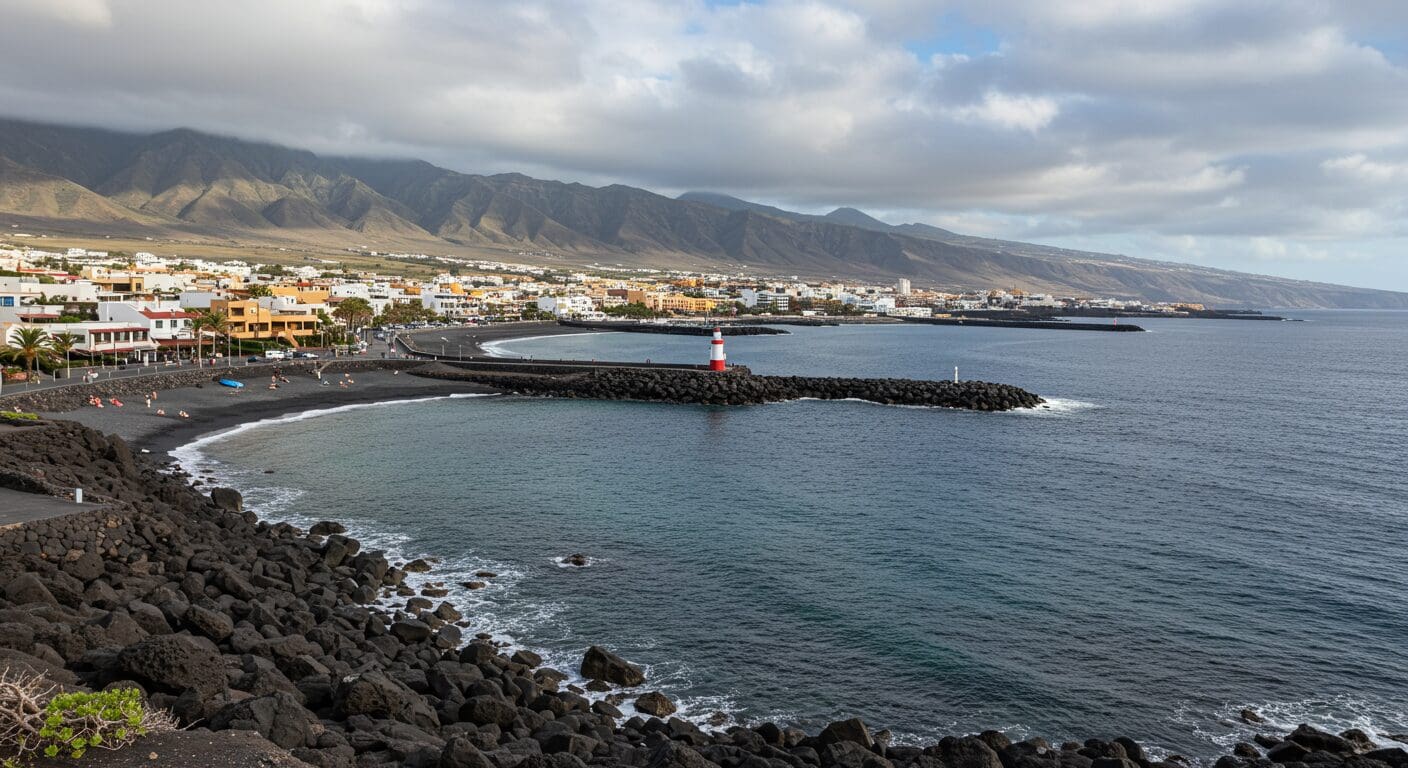
The coffee arrives before you’ve quite decided you wanted it, dark and strong in a small white cup, and the woman who brings it gestures vaguely towards the Atlantic as if to say: there it is, do with it what you will. The sea this morning is the colour of hammered pewter turning slowly to silver, and the volcanic rock along the shore has that particular shade of black that only Lanzarote does – a colour that shouldn’t be beautiful and somehow absolutely is. You drink the coffee. You order another. You are already, without having tried very hard, having a very good day. Later there will be a catamaran to Playa Papagayo, where the sand is so pale it looks embarrassed about it. There will be fresh fish somewhere near the old port, eaten slowly. There will be a pool at the villa, cold and blue and entirely yours, and you will get into it at a time that polite society would consider unreasonably early. This is Puerto del Carmen. It is not trying to impress you. It doesn’t have to.
This is a place that rewards a particular kind of traveller – and, usefully, several different kinds simultaneously. Couples marking a milestone trip find in Puerto del Carmen exactly what they were hoping for: warmth, privacy, excellent food and a pace of life that seems constitutionally opposed to urgency. Families with children discover that the calm waters of Playa Grande and a villa with a private pool solve most problems that holidays tend to create. Groups of friends who want sun, wine, long dinners and the occasional adventure on the water are extremely well served. Remote workers who’ve discovered that a deadline feels entirely different when faced from a terrace overlooking the Spain-belonging Canary Islands come for a week and renegotiate their leases. And the wellness-focused guest – the one who wants yoga at dawn, clean food, long walks along volcanic coastline and serious sleep – finds that Lanzarote’s particular quality of light and silence does more for the nervous system than any retreat in Europe has any right to.
Four Hours from Home and a World Away: Getting to Puerto del Carmen
Lanzarote Airport – officially Arrecife Airport, though almost no one calls it that – sits a comfortable seven kilometres from Puerto del Carmen, which means you are, in practical terms, on your first glass of something cold within about thirty minutes of landing. Flights from the United Kingdom take roughly four hours, which is the ideal duration: long enough to finish a magazine, short enough to spare you the existential crisis of a long-haul journey. British Airways, easyJet, Jet2 and Ryanair all operate routes, with particularly good frequency from London, Manchester and Birmingham. European connections run through Madrid, with the flight from the mainland clocking in at around two and a half hours.
Transfers to Puerto del Carmen are straightforward and fast. Private car hire is available at the airport and takes roughly ten to fifteen minutes – if you’re staying in a villa and arriving with luggage, a pre-arranged private transfer is the civilised option and costs very little more than a taxi. Car hire is genuinely worth considering for your stay, particularly if you plan to explore beyond the resort; Lanzarote’s roads are quiet, well-maintained and pass through some of the most extraordinary volcanic landscapes on the planet. Public buses – called guaguas locally – run regularly along the main coastal strip, and within Puerto del Carmen itself, most things are walkable. The resort stretches along a main promenade, Avenida de las Playas, and the old harbour quarter is a pleasant fifteen-minute stroll from one end to the other.
Where to Eat in Puerto del Carmen: Better Than Anyone Tells You It Will Be
Fine Dining
El Cangrejo Rojo – The Red Crab, to those who prefer their menu titles translated – is the kind of restaurant that earns its reputation quietly and keeps it without much effort. The wine list is serious: carefully selected, impressively varied, and chosen by people who actually know what they’re doing rather than people who simply filled a list. The food is the kind that marks an occasion, which makes it an obvious choice for a celebratory dinner, a proposal (people do, apparently), or simply a night when you want to eat exceptionally well and remember it afterwards. Expect to pay accordingly, and expect it to be worth it.
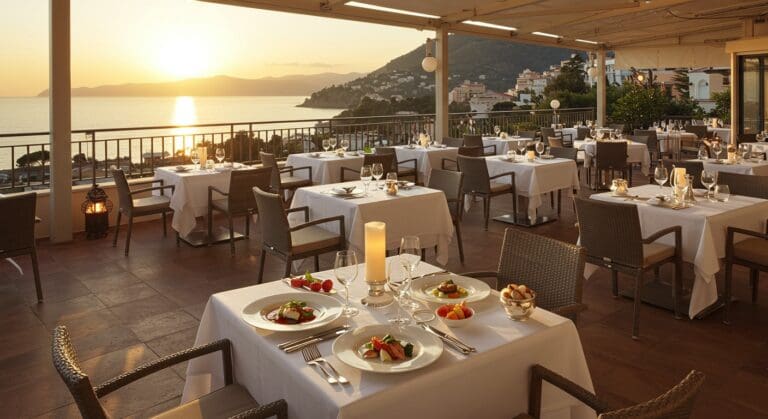
Café La Ola on Avenida de las Playas deserves mention in any conversation about the better end of Puerto del Carmen’s dining scene. Its beachfront setting is used wisely rather than lazily – the terrace is properly designed, with sun loungers and gazebos during the day, and when the light fails, something genuinely atmospheric happens: candles come out, lanterns are lit, and the whole place shifts register. Live music runs through the week. The menu sits slightly above the resort average in both price and ambition, and the ocean views are the kind that make whatever you’re eating taste slightly better than it perhaps technically is. Not a complaint.
Where the Locals Eat
La Carmencita del Puerto in the old town is the answer to the question: where would you go if you only had one evening? It opens at seven and closes at half ten, Monday to Saturday, and during those hours it produces a tapas-style menu of limited options that is, dish for dish, outstanding. The pollo a la pepitoria – chicken braised in a sauce of almonds, saffron and egg yolk that is older than most countries – is not to be skipped. The choricitos are dangerously easy to order again. The homemade sangría is the sort of thing that makes you reassess sangría as a category. The service is warm and attentive in the way that feels earned rather than trained. It is also, refreshingly, budget-friendly. Book ahead.
Mardeleva Restaurant, positioned near the port where the fishing boats come in, does what a port-side fish restaurant should do and does it without theatrical flourishes. Fresh seafood, Mediterranean and Spanish in character, served at outdoor terrace tables with proper views of the water. The setting earns its own part of the experience; a table outside on a clear evening, a plate of whatever came off the boats that morning, a glass of something cold – this is not complicated happiness, but it is genuine happiness, and those are not always the same thing.
Hidden Gems Worth Seeking Out
La Cascada Restaurante, tucked into the old town in a setting that manages rustic and elegant simultaneously – a combination that sounds contradictory and in lesser restaurants usually is – has built a loyal following on the strength of its grilled meats. The kitchen’s approach to meat is visible in every plate: proper sourcing, proper treatment, proper fire. For those who find themselves less carnivorous, the fish changes with the season and the availability, which is exactly as it should be. It is mid-range in price and high-range in satisfaction, which is the combination every traveller is quietly hoping for and rarely quite believes they’ll find.
The Landscape That Makes Everything Else Make Sense
To understand Puerto del Carmen properly, you need to understand the island it sits on. Lanzarote is unlike anywhere else in the Canaries, which are already unlike anywhere else in Europe. It was shaped by catastrophic volcanic eruptions in the eighteenth century that lasted six years and covered a third of the island in lava, and the landscape has never entirely recovered – nor, one suspects, wanted to. The Timanfaya National Park in the northwest is where this is most dramatic: a vast field of volcanic rock and frozen lava flows that looks, without exaggeration, like somewhere a space probe might be sent to establish whether life is possible.
Puerto del Carmen itself sits on the southeastern coast, where the drama is quieter but no less present. The beaches – Playa Grande being the main one, long and sheltered and calmer than you’d expect – sit against a backdrop of low volcanic hills. The old harbour quarter, La Tiñosa, is the part of Puerto del Carmen that predates the tourism industry: white painted walls, fishing boats, a handful of restaurants and bars that have been there long enough to know they don’t need to try very hard. Inland, the landscape opens into something more austere – fields of volcanic ash where, inexplicably, vines grow, producing the distinctive Malvasía wines that are one of Lanzarote’s more quietly magnificent achievements. A drive through the wine country of La Geria, where each individual vine sits in a small volcanic crater hand-dug to trap the morning dew, is one of those experiences that stays with you considerably longer than you expect it to.
Things to Do in Puerto del Carmen That Actually Merit Your Time
The catamaran trip to Playa Papagayo is the non-negotiable item on any itinerary, and it remains non-negotiable regardless of how many times you’ve been. Papagayo and its neighbouring coves – sheltered, golden-sanded, reached most elegantly by boat – represent Lanzarote’s best beaches, and they are good enough to justify the description without embarrassment. A catamaran departure from Puerto del Carmen typically includes snorkelling stops in waters clear enough to make the exercise feel worthwhile, time on the beach itself and the kind of lunch that only tastes right eaten on water. The whole day has the quality of something you’ll reference for years in conversation, possibly starting with the sentence: “have I told you about the time we sailed to Papagayo?”
Timanfaya National Park is worth a morning and your genuine attention. The geothermal demonstrations – guides pour water into pipes in the rock and stand back while steam shoots upward, a trick the volcano performs on request with no apparent resentment – are genuinely extraordinary. The coach tour around the park is, for once, the right way to see it; the terrain is not meant for casual walking and the views from the route are expansive. César Manrique’s influence is visible throughout the island – the volcanic-landscape-integrated architecture at Jameos del Agua, the cactus garden at Guatiza, the buried cave experience at Jameos – and each site rewards a dedicated visit rather than a passing glance.
Arrecife, the island’s capital twenty minutes north, is a proper working town with a good waterfront, the Castillo de San Gabriel sitting on a small island connected by a causeway, and a local market that operates with pleasingly little interest in tourists. Puerto del Carmen’s own weekly market is worth attending for local produce, Canarian crafts and the particular atmosphere of a market that knows it’s good without shouting about it.
Adventure on Lanzarote: Wind, Water and Volcanic Trails
Lanzarote is, if you want it to be, a serious adventure destination – which surprises visitors who assumed it was purely a sun-and-pool island. The wind that sweeps the eastern coast from the Sahara is consistent enough to have made Famara Beach, on the island’s northwest coast, one of the most respected surfing and kitesurfing locations in the Canaries. The conditions are legitimate: not manufactured for beginners but navigable by them, and properly exciting for experienced riders. Several schools in the area offer lessons, and the beach itself – wide, wild and flanked by dramatic cliffs – provides the kind of backdrop that makes action photography easy and gratuitous.
Diving around Lanzarote rewards those who commit to it. The marine reserve near the Chinijo Archipelago is among the most biodiverse in the eastern Atlantic, with visibility conditions that regularly exceed twenty metres. Angel sharks, rays, moray eels and the occasional sea turtle appear with enough regularity to be hoped for rather than merely wished for. Several dive operators in Puerto del Carmen run both introductory sessions and guided dives for certified divers, and the PADI course scene is well-established. Snorkelling at Papagayo is accessible to everyone and genuinely excellent.
Cycling across the island’s volcanic roads is increasingly popular, partly because the scenery is unlike anything else and partly because the roads are quiet enough that you can actually look at the scenery rather than merely trying not to be hit by a van. Mountain biking trails exist in the hilly interior. Hiking around the volcanic formations of Timanfaya and the Famara cliffs is rewarding provided you go early, before the heat asserts itself, and take water with the seriousness the situation deserves.
Puerto del Carmen with Children: The Holiday That Actually Works
The honest answer to “is Puerto del Carmen good for families?” is: unusually so. The beach at Playa Grande is long, wide, gently shelving and calmer than the Atlantic has any obligation to be – conditions that allow a parent to actually sit down for a moment, which is, when you’re travelling with children, the main aspiration. The water temperature year-round stays well above the threshold where children can be persuaded to get in without negotiation.
The resort itself is walkable and manageable without the kind of geography that requires daily logistics planning. Restaurants along the main strip are child-tolerant in the way that Spanish culture generally is – children are expected to be present at meals rather than segregated into beige-food-specific dining rooms, which is civilising for everyone involved. Pedal boats, banana boats and the gentler water sports activities are available along the beach and require approximately no persuasion to be popular.
The advantage of a private villa with its own pool becomes, for families, not a luxury but a basic practical asset. Children swim when they want. Nap schedules are respected. There is no negotiating with hotel lifeguard hours. Meals can be eaten at the rhythm of actual small humans rather than restaurant service windows. The pool-to-child ratio is, in a private villa, approximately correct. Parents who have tried the luxury villa approach after years of hotel rooms report that the return journey to hotel life is genuinely difficult to make.
The Island That César Manrique Built: Culture, Art and Volcanic History
Lanzarote’s cultural identity is, to a remarkable degree, the product of one man. César Manrique, born on the island in 1919 and killed in a car accident near Arrecife in 1992, shaped not just the art and architecture of Lanzarote but its entire aesthetic philosophy: the idea that development should work with the volcanic landscape rather than over it, that tourism should be a reason to preserve beauty rather than to consume it. His influence is visible in the absence of high-rise hotels, in the whitewashed buildings with their green and blue window frames, in the artist’s house at Tahíche that he built directly into a lava cave system. The Fundación César Manrique, now open as a museum at that house, is one of those rare arts institutions where the building is as important as what’s inside it.
Jameos del Agua – a volcanic tube that runs into the sea, partly flooded by the Atlantic to create a brackish lake inhabited by a species of blind albino crab found nowhere else on earth – was transformed by Manrique into an arts and entertainment space of extraordinary originality. The auditorium carved into the rock seats five hundred people. It sounds improbable. It is magnificent. Cueva de los Verdes, part of the same lava tube system, offers guided tours through a geological formation that has the quality of a dream sequence – vast chambers, impossible colours in the rock, complete silence underground. The guide saves a visual trick for the end that visitors consistently describe as the best surprise of their holiday. It is.
The island’s pre-Spanish history – the Guanche people who inhabited the Canaries before European colonisation – is documented at the Museo Arqueológico in Arrecife, small but genuinely interesting. The Spanish colonial character of the island comes through most clearly in the old town quarters: thick whitewashed walls, simple wooden balconies, churches that look as though they have been exactly where they are for as long as anyone can remember, which they largely have.
Shopping in Lanzarote: What to Actually Buy and Where to Find It
The honest shopping advice for Puerto del Carmen is to resist the main strip’s souvenir shops with their ceramic volcanoes and settle instead on things that the island actually produces with distinction. Malvasía wine, made from grapes grown in the extraordinary La Geria volcanic crater fields, travels well and tastes like nowhere else. A bottle or two from a serious producer – Bodegas El Grifo is the one with the longest history on the island – is the kind of gift that requires no explanation and no customs form anxiety within the EU.
Local honey is produced from bees working on Lanzarote’s wild herbs and flowers, with a character that reflects the volcanic soil in ways that are difficult to articulate but easy to taste. Mojo – the Canarian condiment of blended herbs, peppers, olive oil and garlic that appears on every table with bread, and with wrinkled potatoes (papas arrugadas), and frankly with everything – is available in good quality jarred versions that survive the journey home. The island’s sea salt, harvested from the Salinas de Janubio on the southwest coast, is legitimately among the best in Europe and costs very little.
The old harbour area of Puerto del Carmen has a handful of small independent shops and craft stalls that operate without the aggressive charm of the main tourist strip. The Saturday market is the best single opportunity for browsing local produce, handmade crafts and the particular pleasure of buying something from the person who made it. Arrecife has proper local shops, a covered market and considerably fewer ceramic volcanoes.
Before You Go: The Practical Details That Actually Matter
The best time to visit Puerto del Carmen is, depending on what you’re after, almost any time – which is one of Lanzarote’s most significant advantages over most European sun destinations. The island sits close enough to the African coast that temperatures stay mild year-round: spring and autumn hover around 22-24°C, winters rarely drop below 18°C even at night, and summer peaks around 28-30°C without the suffocating humidity that afflicts some Mediterranean alternatives. The trade wind keeps things bearable. January and February bring the most rain – though “most rain” on Lanzarote is relative; the island is technically semi-arid – and are also the least crowded months, which has its own appeal. Easter, July, August and the Christmas period are busiest. The shoulder seasons of May to June and September to October offer the best combination of warmth, manageable crowds and competitive rates.
The currency is the Euro. Tipping is appreciated but not at the scale expected in the United States – rounding up the bill or leaving five to ten percent in restaurants is the standard. The language is Spanish, though English is widely spoken in resort areas; a few words of Spanish are received with visible warmth and cost nothing. The island is Canarian rather than straightforwardly mainland Spanish in character, and locals tend to identify themselves as Canarian first. This is worth knowing. The island has its own distinct dialect, its own food culture and a specific pride in its volcanic identity that is not mere tourist branding.
Lanzarote is genuinely safe, with low crime rates in the resort areas. The main practical note is sun exposure: the light here is more intense than it appears, and the wind can mask how much heat you’re taking on. Factor 30 on day one is not excessive. Medical facilities are good; the main hospital is in Arrecife, with clinics serving Puerto del Carmen for non-emergency needs. EU citizens should carry a European Health Insurance Card; travellers from elsewhere should carry appropriate travel insurance, which is good advice for anywhere.
Why a Private Villa Changes the Entire Experience
There is a version of a Puerto del Carmen holiday that involves a hotel room, two sun loungers reserved with towels at 7am, a poolside bar queue and meals eaten to the rhythm of other people’s booking times. That version is fine. There is also a version that involves waking up when you like, swimming in water that belongs entirely to your party, eating breakfast on a terrace with an unobstructed view and spending the afternoon in the kind of quiet that hotels, whatever their star rating, structurally cannot offer. These are meaningfully different experiences, and the gap between them is the private luxury villa.
The specific advantages in Puerto del Carmen are significant. The island’s villa stock ranges from sophisticated two-bedroom retreats for couples to large-scale properties sleeping twelve or more – full of space for multi-generational families who love each other but require separate wings at the end of each day. For groups of friends, the communal living that a villa enables – shared meals, a private pool, evenings that don’t require anyone to call a taxi or negotiate with a hotel bar’s closing time – is qualitatively different from a collection of hotel rooms that happen to be near each other.
For remote workers, the equation is simple: Lanzarote’s connectivity has improved dramatically in recent years, and many villa properties are now equipped with high-speed broadband sufficient for video calls, large file transfers and the general demands of a modern remote working day. The idea of answering emails from a terrace overlooking the Atlantic sounds like a fantasy and is increasingly an unremarkable Tuesday. For wellness-focused guests, the combination of a private pool, the option of an in-villa yoga instructor or massage therapist, clean Canarian air and the island’s particular quality of silence does work that more formally marketed retreats often don’t.
Excellence Luxury Villas carries a carefully curated selection of properties across the island, matched to the specific character of the destination. Browse our luxury villas in Puerto del Carmen with private pool and find the version of this island that is entirely, unhurriedly yours.
More Puerto del Carmen Travel Guides
What is the best time to visit Puerto del Carmen?
Puerto del Carmen is a genuinely year-round destination. The shoulder seasons of May to June and September to October offer the best combination: warm temperatures in the mid-twenties, quieter beaches and better villa rates. July and August are hottest and busiest. Winter months – December through February – are mild enough for beach days (17-20°C) and very quiet, which some travellers actively prefer. Easter and Christmas are popular peaks. The island’s proximity to Africa and its trade wind climate means it rarely disappoints regardless of when you arrive.
How do I get to Puerto del Carmen?
Fly into Lanzarote Airport (Arrecife), located approximately seven kilometres from Puerto del Carmen – a ten to fifteen minute transfer by taxi or private car. Direct flights operate from throughout the UK (London Gatwick, London Stansted, Manchester, Birmingham and more) with easyJet, Jet2, Ryanair and British Airways, taking around four hours. European connections typically route through Madrid. Pre-arranging a private transfer from the airport is the simplest option if you’re arriving with luggage and heading directly to a villa. Car hire at the airport is straightforward and recommended if you plan to explore the island.
Is Puerto del Carmen good for families?
Genuinely, yes. Playa Grande – the main beach – is long, sheltered and gently shelving into calm water, which is the combination that makes beach days with children actually pleasant rather than merely stressful. The resort is walkable and manageable. Spanish culture is broadly welcoming of children in restaurants and public spaces, which reduces the social anxiety that some family holidays produce in abundance. A private villa with its own pool removes the most common family holiday friction points entirely: children swim when they want, meals are eaten at your own pace, nap schedules are respected, and nobody is negotiating towel territory at dawn.
Why rent a luxury villa in Puerto del Carmen?
The short answer: privacy, space and a pool that belongs entirely to you. A private villa means waking up to your own schedule, eating breakfast on your own terrace, and ending the day without navigating hotel corridors. For families, the space and private pool solve most of the logistical problems that hotel rooms create. For couples, the seclusion is simply better. For groups, the communal living – shared meals, a single property with its own character – is qualitatively different from a cluster of hotel rooms. Staff and concierge services can be arranged through Excellence Luxury Villas, from pre-stocked kitchens to in-villa chefs and private drivers.
Are there private villas in Puerto del Carmen suitable for large groups or multi-generational families?
Yes – and Lanzarote’s villa stock is particularly well-suited to larger parties. Properties sleeping eight, ten or twelve guests are available, ranging from those with multiple pool-facing terraces and separate guest wings to larger estate-style villas with multiple bedroom clusters that give different family generations their own effective space. Private pools on larger properties are often substantial – proper swimming pools rather than decorative gestures. Concierge services including in-villa chefs, grocery delivery and private transport can be arranged in advance, making large group logistics considerably smoother than the hotel alternative.
Can I find a luxury villa in Puerto del Carmen with good internet for remote working?
Increasingly, yes. Lanzarote’s broadband infrastructure has improved significantly, and premium villa properties typically offer high-speed fibre connections sufficient for video conferencing, large file transfers and the general requirements of a working day conducted remotely. Some properties now offer Starlink satellite connectivity, providing fast and reliable service regardless of local infrastructure. When booking through Excellence Luxury Villas, connectivity requirements can be specified and confirmed before you arrive – the combination of reliable fast internet and a terrace overlooking the Atlantic is, it turns out, a very effective working environment.
What makes Puerto del Carmen a good destination for a wellness retreat?
Several things converge usefully. The air quality is exceptional – clean Atlantic air with minimal pollution – and the island’s light has a quality that people describe as restorative with enough consistency that it’s worth taking seriously. Year-round warmth enables outdoor activity in every month. Hiking, cycling, swimming, yoga and water sports are all easily accessible. The pace of life in Puerto del Carmen is genuinely unhurried. A private villa adds the infrastructure: a private pool for morning swims, outdoor space for yoga or meditation, the option to arrange in-villa massage therapy or a personal trainer. The island’s clean, seafood-forward food culture completes the picture without requiring any particular effort on your part.