
Best Beaches in Sardinia: Hidden Coves, Beach Clubs & Coastal Secrets
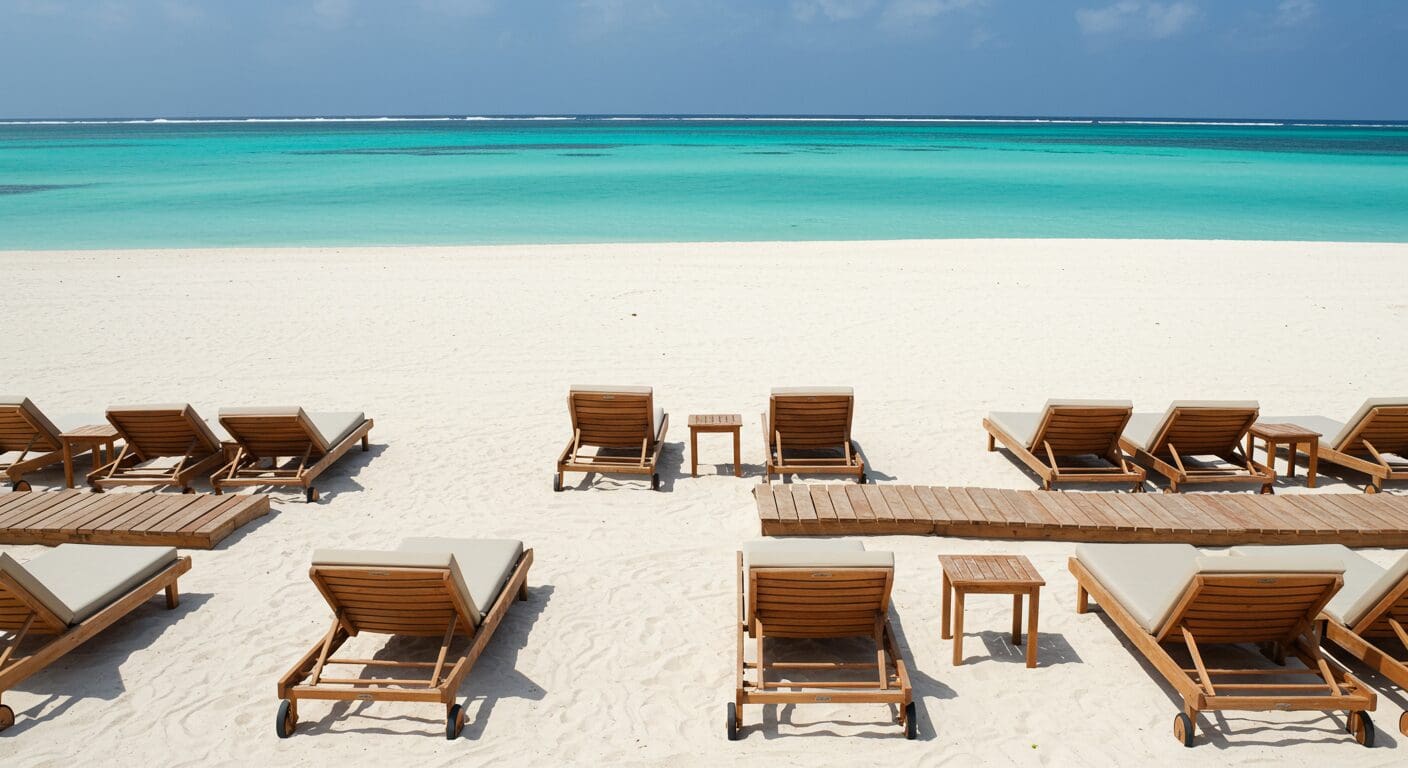
Come in late June, before the August crowds arrive with their matching luggage and competitive sunbathing strategies, and Sardinia does something quite extraordinary. The light turns the sea a shade of blue that seems almost algorithmically perfect – too vivid for a photograph, too calm for belief. The maquis scrubland on the hillsides smells of rosemary and wild herbs baking slowly in the heat. The water is cold enough to be genuinely refreshing and warm enough that you’ll stay in far longer than planned. This is the Sardinia that rewards those who know where to go – and when.
The island’s coastline stretches for over 1,800 kilometres. Much of it is genuinely extraordinary. Some of it is genuinely heaving with tourists in high summer. The art is knowing the difference – and knowing which stretches of sand suit you best. This guide cuts through the noise to bring you the beaches that matter most for luxury travellers: the ones where the water quality borders on absurd, where the beach clubs serve cocktails with the same care they’d give a full dinner menu, and where the word “secluded” still means something.
For the full picture before you travel, start with our Sardinia Travel Guide – it covers everything from when to arrive to how to navigate the island without losing your mind.
La Pelosa, Stintino – Sardinia’s Most Photographed Beach (And What to Do About That)
La Pelosa sits at the very northwestern tip of Sardinia, near the small fishing village of Stintino, and it is – there is no other word for it – ridiculous. The water is the colour of shallow Caribbean reef, the sand is pale as powdered sugar, and the Torre della Pelosa, a small sixteenth-century watchtower, rises from the shallows to complete the postcard. The whole scene looks slightly unreal, as though someone has applied an Instagram filter to an already beautiful landscape and then had the audacity to call it nature.
The beach is best for families with younger children – the water is extraordinarily shallow for a long way out, the sea bed is sandy rather than rocky, and the currents are minimal. Water quality is consistently excellent, regularly rated among the cleanest in Italy. Facilities include sunlounger rentals, a handful of kiosks, and public conveniences. Parking, however, is where things get complicated. Access is via a single road from Stintino, and in July and August, daily entry numbers are capped to protect the fragile ecosystem – you’ll need to book your timed entry slot in advance. Arrive without a reservation in peak season and you will simply be turned away. Plan accordingly.
The smart approach: stay somewhere close enough to arrive early in shoulder season (late June or September), when the light is softer, the crowds are manageable, and you won’t need to set an alarm to secure a parking space at an hour more appropriate to a transatlantic flight.
Cala Goloritzé, Baunei – The Most Spectacular Cove in the Mediterranean
There are beaches you drive to, beaches you take a boat to, and beaches you earn. Cala Goloritzé falls firmly into the third category. Located on the Gulf of Orosei on Sardinia’s wild eastern coast, it is accessible either by boat from Arbatax or Santa Maria Navarrese, or by a two-hour hike down a steep mountain trail through cork oak forest and limestone karst. The descent is not dangerous, but it is steep, and you will feel it in your legs the following morning. It is, without question, worth it.
What awaits is a protected natural monument: a white pebble beach framed by sheer limestone cliffs, a soaring pinnacle of rock that serious climbers come specifically to scale, and water of such clarity that you can count the pebbles at six metres’ depth. There are no sunloungers. There are no kiosks. There is no WiFi. This is the most secluded major beach on the island – one of the most spectacular in the entire Mediterranean – and it remains so because reaching it requires genuine intention.
Water sports here lean toward the technical: the rock face attracts experienced free climbers, the sea kayaking around the gulf is world-class, and snorkelling in the crystal water is revelatory. Facilities are essentially non-existent beyond a small toilet at the trailhead. Bring everything you need, including water. For access, most visitors sensibly choose the boat option – it takes around 40 minutes from Arbatax and spares you the return climb in the afternoon heat, which is a kindness to yourself that you will not regret.
Spiaggia del Principe, Costa Smeralda – Aristocratic Heritage, Exceptional Sand
The Costa Smeralda was designed in the 1960s by the Aga Khan as a playground for people who consider a superyacht a practical form of transport. Spiaggia del Principe – Prince’s Beach – takes its name from the man himself, who reportedly considered this his favourite stretch of coastline. Given that he had rather a lot of options, it says something.
The beach is set in a granite bay between Porto Cervo and Romazzino, sheltered by low headlands covered in fragrant Mediterranean scrubland. The water graduates from pale turquoise in the shallows to deep sapphire further out. The sand is fine and pale. The crowd – particularly in high season – is well-heeled and well-dressed, which is either appealing or mildly exhausting depending on your temperament. The beach itself is free and public, though the nearby beach clubs provide everything from private cabanas to cold Vermentino served on silver trays.
For evening dining after a day on the sand, Porto Cervo is barely minutes away. ConFusion, holding its Michelin star for the sixth consecutive year under Chef Italo Bassi, is the obvious choice for those who want to follow an afternoon in exceptional water with an exceptional meal. The restaurant led the Costa Smeralda into Michelin territory when it opened in 2016 and remains the area’s defining fine dining address – Sardinian seafood and raw fish interpreted through a lens that is technically Italian but confidently global.
Parking at Spiaggia del Principe is limited and competitive in August. Early arrival (before 9am) is the only reliable strategy, or arrange transfers through your villa.
Cala Luna, Gulf of Orosei – Wild East Coast Beauty
The eastern coast of Sardinia operates on different terms to the glamorous northwest. The Gulf of Orosei is largely roadless, largely unspoiled, and largely indifferent to trends. Cala Luna is its centrepiece – a wide crescent of pale sand backed by a series of sea caves, accessible only by boat or by a long coastal hike from Cala Fuili. The caves are large enough to walk into at low tide and the effect, standing inside looking out at the turquoise sea framing the entrance, is genuinely theatrical.
This is a beach for those who want atmosphere rather than amenities. There is a small seasonal bar serving basics, but the experience is defined by the landscape rather than the facilities. The sea is extraordinarily clear – visibility underwater reaches fifteen metres on a calm day – making it excellent for snorkelling and free diving. It also sits within the protected marine area of the Gulf of Orosei, which means fishing is restricted and the underwater ecosystem is correspondingly vibrant.
The boat trip from Cala Gonone takes around thirty minutes and passes a series of other spectacular coves, many of which you can ask the boatman to stop at along the way. The combination of Cala Luna, Cala Mariolu, and Cala Biriola in a single day constitutes one of the finest coastal excursions in the Mediterranean. Best for: adventurous travellers, snorkellers, and anyone who sincerely enjoys being somewhere that is difficult to reach. Not suitable for: those who require sunloungers, fast WiFi, or a smoothie menu.
Cala Brandinchi, San Teodoro – The Technicolour Lagoon
Nicknamed “the little Tahiti” by those who have apparently never been to Tahiti but mean it as a compliment, Cala Brandinchi near San Teodoro on the northeastern coast is one of those beaches that stops conversation. The combination of white sand, shallow water, and the particular way the light falls across the bay creates water colours that cycle through mint green, aquamarine, and cobalt depending on depth and time of day. It is an excellent beach for families – shallow, sheltered, and sandy throughout – and the surrounding pine forest provides shade that many Sardinian beaches conspicuously lack.
Facilities are solid without being excessive: sunlounger and parasol rental, a beach bar, and toilets. Access is via a small road through San Teodoro, with a paid car park a short walk from the sand. Arrive before 10am in August or accept that the car park will be full.
San Teodoro also happens to be home to the Baglioni Resort Sardinia, where Gusto by Sadler – Michelin-starred for the third consecutive year – offers one of the most considered tasting menus on the island. Chef Claudio Sadler’s influence, supported on the ground by resident chef Andrea Besena, means the kitchen navigates local Sardinian produce with genuine sophistication. The raw seafood dishes are specifically flagged by Michelin inspectors, and after a day in the kind of water Cala Brandinchi provides, the prospect of sitting down to a seven-course celebration of what the sea gives up is not difficult to contemplate.
Tuerredda, Teulada – The South’s Best-Kept Secret
Most international visitors to Sardinia head directly for the Costa Smeralda and spend the entirety of their holiday within a fifteen-kilometre radius of Porto Cervo. This is understandable. It is also a significant oversight. The southern coast, particularly the stretch around Teulada, offers some of the island’s most extraordinary beaches in near-complete peace.
Tuerredda is the pick of the south – a curved bay of white sand and shallow water so pellucid it looks filtered, flanked by low granite headlands with a small offshore island that you can wade or swim to without particular effort. The water quality here is exceptional, consistently rated among the cleanest in the Mediterranean. The beach has basic facilities including a seasonal bar, sunlounger rental, and parking a short walk away via a rough track. It rewards those willing to arrive early and leave late, which is more or less the correct approach to any beach in Sardinia.
The Pula area, further east along the southern coast, adds a remarkable dining option: Fradis Minoris, Sardinia’s southernmost Michelin-starred restaurant, set with views across the sea toward the ancient Punic-Roman city of Nora and the Aragonese tower beyond. The combination of this kind of historical backdrop and genuinely ambitious cooking makes for an evening that is difficult to replicate anywhere else on the island.
Beach Clubs: Where to Go When You Want Service to Match the Setting
Sardinia’s beach club culture, particularly along the Costa Smeralda, has matured considerably. These are no longer simply places to rent a sunlounger at extortionate prices. The better ones operate with the same attention to detail as a good hotel – managing everything from cold towels on arrival to reservation-only dinner service on candlelit terraces overlooking the sea.
The Costa Smeralda’s beach clubs cluster around Cala di Volpe, Porto Cervo, and Baia Sardinia. Expect to pay a premium, but expect value in return: attentive service, well-maintained facilities, quality food and drink, and the particular luxury of having your towel smoothed and your glass refilled without having to ask. For those staying in villas along the northeastern coast, many properties have established relationships with specific beach clubs, allowing guests to arrive as known faces rather than strangers – a distinction that, in August, matters more than you might think.
The hills just inland from Porto Cervo offer a different kind of excellence. San Pantaleo, a small village famous for its Thursday artisan market, is home to Petra Segreta Resort & Spa and its remarkable Il Fuoco Sacro restaurant. Under the direction of chef Luigi Bergeretto – working alongside resident chef Alessandro Menditto and with the mentorship of Enrico Bartolini, Italy’s most Michelin-starred chef – the kitchen produces food that reviewers have described, without apparent exaggeration, as the single best meal they have ever eaten. The restaurant looks out over the Mediterranean maquis toward the coast. It is as good a place as any to end a day that began on one of the world’s finest beaches.
Water Quality, Access & Practical Wisdom
Sardinia’s water quality is, frankly, one of its most powerful selling points. The island’s relative lack of heavy industry, combined with stringent environmental protection across many of its coastal areas, produces sea conditions that embarrass most European beach destinations. The Gulf of Orosei, La Pelosa, Tuerredda, and Cala Brandinchi all hold Blue Flag status in most seasons, and the underwater visibility in the eastern gulf beaches regularly exceeds ten to fifteen metres.
A few practical notes that will make your time more enjoyable. Sardinia’s most spectacular beaches tend to be reached via roads that were not designed with volume in mind – narrow, winding, and occasionally surfaced with a confidence that exceeds their ambition. Hire a car with decent ground clearance if you plan to explore beyond the main coastal towns. Parking is paid and limited at most major beaches; the island’s popularity in July and August means that arriving after 10am at any well-known beach involves a certain amount of optimism. Boat trips from coastal towns are almost always the better approach for the most remote coves – more comfortable, more scenic, and considerably less frustrating than hunting for a parking space on a road the width of a kitchen worktop.
Water shoes are sensible for many of Sardinia’s more spectacular beaches, which trade smooth sand for equally beautiful white pebble or granite approaches. It is a small concession to make for water that looks like this.
Plan Your Sardinian Coastal Holiday
The beaches described here represent the full spectrum of what Sardinia’s coastline offers: the glamorous and the genuinely wild, the family-friendly and the seriously secluded, the well-serviced and the deliberately, bracingly unserviced. No two are alike. What they share is water quality and natural beauty that place them among the finest beaches in Europe without argument or caveat.
Staying in a luxury villa in Sardinia puts the best beaches within easy reach – and gives you the freedom to pick your moment, arrive early, leave late, and come back with sand in your bag and dinner reservations already made. It is, on reflection, the only sensible way to do it.
When is the best time to visit Sardinia’s beaches?
Late June and September are the sweet spots for most luxury travellers. The water is warm, the light is exceptional, and the beaches are significantly less crowded than in July and August. If you must travel in peak season, focus on the more remote beaches accessed by boat along the Gulf of Orosei, where visitor numbers are naturally limited by access rather than by reservation systems.
Which Sardinian beaches are best for families with young children?
La Pelosa near Stintino and Cala Brandinchi near San Teodoro are both outstanding for families. Both offer very shallow, sheltered water with sandy sea beds, minimal currents, and reasonable facilities. La Pelosa requires advance booking of timed entry slots in peak season, so plan ahead. Cala Brandinchi’s surrounding pine forest also provides natural shade, which on a hot Sardinian afternoon is worth more than any beach club umbrella.
Do Sardinia’s top beaches have beach clubs with proper service?
Yes, particularly along the Costa Smeralda in the northeast. The beach clubs around Porto Cervo, Cala di Volpe, and Baia Sardinia operate at a high level – think reserved sunloungers, attentive table service, quality food and cocktails, and in many cases dinner service well into the evening. Booking ahead is essential in July and August. For the more remote and naturally spectacular beaches in the Gulf of Orosei or the southern coast, facilities are considerably more basic – which is, for many travellers, precisely the point.


