
Best Restaurants in Silver Coast: Fine Dining, Local Gems & Where to Eat
Best Restaurants in Silver Coast: Fine Dining, Local Gems & Where to Eat
The Silver Coast does something quietly subversive to the idea of a Portuguese holiday. While the Algarve performs for crowds and Lisbon charges for the privilege of existing, this 150-kilometre stretch of Atlantic coastline between Torres Vedras and the Mondego estuary simply gets on with being extraordinary – unhurried, deeply local, and in possession of a food scene that operates entirely on its own terms. The seafood comes off boats you can see from the table. The wine comes from vineyards that haven’t yet been discovered by the sort of people who discover vineyards. And the restaurants, from converted fish warehouses to whitewashed village tasca counters, cook with a confidence that comes from feeding their own communities first and visitors second. That ordering of priorities, it turns out, is precisely why the food is so good.
The Fine Dining Scene on the Silver Coast
Portugal’s relationship with Michelin has always been a slow romance, and the Silver Coast remains refreshingly outside the stargazing frenzy that has consumed parts of Lisbon and Porto. What you find here instead is something arguably more interesting: chefs who trained in starred kitchens elsewhere and then came home to cook the food they actually want to eat. The results tend to be technically accomplished in ways that don’t announce themselves.
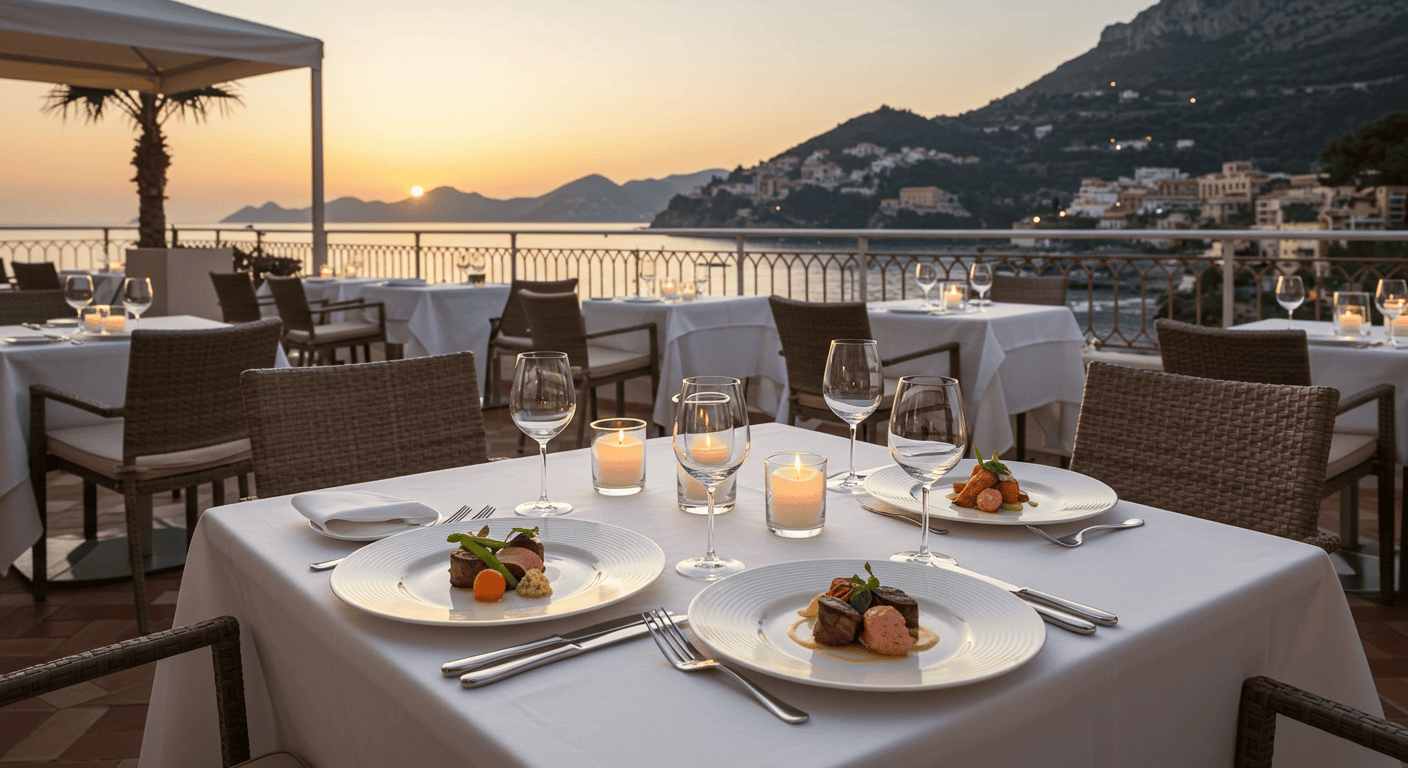
The region around Óbidos and Caldas da Rainha has seen a quiet elevation in recent years, with a handful of restaurant-hotels offering tasting menus that treat the Atlantic larder – percebes, amêijoas, robalo, linguado – with the seriousness it deserves. These aren’t long menus designed to impress; they’re focused, seasonal, and built around what arrived that morning. Expect eight to ten courses, thoughtful wine pairings featuring Bairrada and Lisboa DOC wines, and service that’s warm without being performative. Reservations for these experiences should be made weeks in advance, particularly during summer. This is not optional advice.
Several quintas and wine estates in the Óbidos Lagoon area have also developed serious restaurant operations, where the menu is designed around their own production – olive oil pressed on the estate, vegetables from kitchen gardens, and lamb from inland farms that have supplied the same kitchens for generations. Dining at one of these feels less like a restaurant visit and more like being a very well-fed house guest.
Local Tascos and the Art of Eating Like You Live Here
If fine dining on the Silver Coast is quietly impressive, the local tasco is where the region’s character actually lives. These are small, often family-run, occasionally unlisted-on-anything restaurants that serve a rotating daily menu scrawled on a chalk board or, in the more traditional cases, recited at speed in Portuguese that no tourist has ever quite caught. The correct response is to nod and trust completely. You will not regret it.
In the fishing towns – Peniche, Nazaré, São Martinho do Porto – look for restaurants operating from the ground floors of residential buildings, with plastic tablecloths, mismatched chairs, and an inexplicable number of ceramic roosters. The caldeirada here is definitive: a slowly layered fish stew built with different varieties of the catch, potatoes, tomatoes, onion and olive oil, cooked in sequence rather than stirred together. It requires patience to make and patience to eat and the result is worth both. Order half a portion less than you think you need. It will still be too much. This is not a complaint.
Grilled fish – peixe grelhado – is the other constant. The Silver Coast’s proximity to the Atlantic means you’re eating fish that reached the kitchen very recently indeed, chargrilled over hot coals with little more than coarse salt, olive oil and a squeeze of lemon. The restraint in the seasoning is deliberate. The fish doesn’t need rescuing.
Alongside the seafood, don’t overlook the inland villages around Torres Vedras and Alcobaça where the kitchens pivot firmly to meat – slow-braised kid (cabrito), roast suckling pig (leitão), and lamb preparations that speak more of the Alentejo than the coast. The Silver Coast is a broader region than its name implies.
Beach Clubs and Casual Dining with Atlantic Views
The Silver Coast’s beaches – and it has some of the finest on the entire Iberian peninsula – have spawned a generation of beach restaurants that range from simple wooden shacks serving cold Sagres and paper bags of choco frito to properly designed beach clubs with good cocktail lists, shade structures, and kitchens capable of feeding you rather well between swims.
The beaches around Foz do Arelho, Santa Cruz and Praia da Gamboa each have their own established dining culture. At the more casual end, the formula is reliably excellent: a grilled fish of the day, a ceramic pot of ameijoas à Bulhão Pato (clams cooked in white wine, garlic, coriander and butter), bread to mop everything up, and a cold Vinho Verde from the Minho that costs approximately nothing and tastes like a summer afternoon in a glass.
The more developed beach clubs – particularly those attached to the upscale surf and lifestyle hotels that have opened along the coast in recent years – offer serious kitchen work alongside the requisite sundowners. Ceviche preparations using local catches, grilled octopus with sweet potato puree, and desserts built around Óbidos ginja (the cherry liqueur that arrives in a chocolate cup and should be treated as a course in itself) are increasingly common. Dress is relaxed. The food quality is not.
Hidden Gems and Worth-the-Drive Discoveries
The Silver Coast rewards the kind of traveller who is willing to follow a tip rather than a review, to drive down a road that gets unexpectedly narrow, and to arrive at a restaurant with no reservation because someone at the market mentioned it that morning. These places exist in number here – small operations in villages like Atouguia da Baleia, Carvalhal, or the backstreets of Alcobaça – that cook food of genuine quality for a clientele that has been coming for thirty years.
The Alcobaça region is particularly worth exploring for this reason. The monastery town itself is visited and departed by most tourists in an afternoon, but the surrounding villages contain excellent adega restaurants – literally winery taverns – where you eat under vaulted ceilings with wine drawn from barrels and a fixed menu that changes entirely with the season. These are places where the bill surprises you pleasantly rather than otherwise.
Inland toward the Serra d’Aire e Candeeiros Natural Park, the cooking shifts again – heartier, earthier, built around wood-fired ovens and wild herbs foraged from the limestone uplands. If you drive this way and find a place that smells of smoke and garlic at lunchtime, stop. The chance of regret is very low.
Food Markets and Buying Well
The Silver Coast’s market culture is one of its most genuine pleasures, and the right way to experience it is to arrive early with no particular agenda and a string bag. The Saturday market in Caldas da Rainha is the most substantial in the region – a proper working market that has operated in some form since the 15th century, selling everything from the famous Caldas ceramics (the less family-friendly ones make excellent presents) to vegetables, cured meats, honey, local cheeses and more varieties of smoked sausage than you knew existed.
The Óbidos Lagoon area has also developed a strong artisan food economy, with producers selling directly to visitors. Local olive oils from the Óbidos appellation are worth buying in quantity. The queijadas de Óbidos – small cheese pastries – are an ancient local sweet that deserves more international attention than it currently receives. The ginja, sold in Óbidos Old Town from countless small shops and dispensed into chocolate cups that you eat afterwards, is the correct introduction to the local drinks culture.
For serious food shopping, the fish market in Peniche operates in the early morning with a directness and efficiency that’s worth experiencing even if you have no intention of cooking. Watching the catch sorted, priced, and distributed at speed – the fishing boats still visible through the market windows – is a useful reminder of how recently everything on the Silver Coast’s menus was still in the water.
Wine, Ginja and What to Drink
The Silver Coast sits within the Lisboa DOC wine region, and local wine here is taken seriously without being taken too seriously, which is exactly the right attitude. The region produces excellent whites from Arinto, Fernão Pires and Vital grapes – crisp, mineral, with an Atlantic salinity that makes them natural companions to the seafood. If you’re drinking white wine with fish and chips in Albufeira, this is the upgrade you didn’t know you needed.
Reds from the area tend toward Castelão and Touriga Nacional, producing wines with good fruit and enough structure to stand up to the heavier meat dishes of the interior. The Óbidos DOC – a smaller appellation within the larger Lisboa region – is particularly worth seeking out, producing wines from clay-limestone soils that have a character quite distinct from the coastal whites.
Bairrada, the neighbouring region to the north, contributes its famous espumantes – Portuguese sparkling wines made from the Baga grape that pair extraordinarily well with the local leitão and are criminally underknown internationally. Order one and feel briefly superior to everyone who hasn’t discovered them yet.
For spirits, the ginja do Óbidos is the local liqueur of record – a cherry brandy of considerable history and immediate appeal, available everywhere and priced accessibly enough that you will buy more than you planned to take home. The craft gin movement has also arrived in the Silver Coast, with several small producers making interesting use of local botanicals including cistus, rosemary and sea herbs. Adequate justification, should you need one, for exploring the cocktail menus at the better beach clubs.
Practical Tips: Reservations, Timing and Eating Like a Local
A few things the Silver Coast will teach you quickly if you let it. Lunch is the serious meal of the day, and the midday menu – known as the menu de almoço or simply prato do dia – offers the best value and often the best cooking, because that’s when the local workforce eats. A three-course set lunch with wine in a good village restaurant can cost fifteen to twenty euros per person. Do not adjust your expectations downward to match the price.
Dinner service starts later than northern Europeans expect – most locals don’t sit down before 8pm, and the kitchen isn’t really in its rhythm before 8:30. Arriving at 7pm and eating in an empty restaurant is technically possible but atmospherically sad.
For fine dining and any restaurant with a serious reputation, reservations are essential from June through September. Many of the smaller tascas don’t take bookings at all; the solution is to arrive slightly before the main lunch or dinner wave, which requires knowing when that is. Roughly: 12:30 and 20:00 respectively. Walk in with reasonable confidence and you’ll generally be accommodated.
Learn a small amount of Portuguese. Seriously. Even an attempted “tem mesa para dois?” (do you have a table for two?) is met with a warmth that no amount of pointing will achieve. The Silver Coast is not a performance for tourists. It’s a living, eating, fishing community that happens to be extraordinarily welcoming to visitors who approach it with some humility. The food rewards the same quality.
For those who prefer not to navigate reservations, menus in languages they don’t speak, or the minor uncertainty of turning up unannounced to a restaurant where nobody is quite sure who you are, there is an alternative that the Silver Coast’s villa rental market has perfected. Staying in a luxury villa in Silver Coast with a private chef option brings the region’s remarkable produce directly to your table – your chef will source from the morning markets, cook to your preferences, and produce meals that incorporate exactly the dishes and ingredients you’ve been reading about here. It is, by a comfortable margin, the most civilised way to eat on the Silver Coast, and a perfectly reasonable excuse to stay an extra week. For more on everything the region has to offer beyond its restaurants, the full Silver Coast Travel Guide is the place to start.
What are the best dishes to try when eating on the Silver Coast?
The Silver Coast is first and foremost a seafood destination, so the essentials are caldeirada (a layered fish stew using multiple varieties of the local catch), ameijoas à Bulhão Pato (clams in white wine, garlic and coriander), and simply grilled fresh fish – robalo (sea bass) and linguado (sole) are particularly good here. Inland, the slow-braised kid (cabrito) and the Bairrada-style leitão (suckling pig) are worth seeking out. Don’t leave without trying the queijadas de Óbidos and the ginja liqueur served in a chocolate cup – they’re a small local tradition that tends to stick in the memory.
Do I need to book restaurants in advance on the Silver Coast?
It depends significantly on the type of restaurant and the time of year. For fine dining experiences and well-regarded restaurant-hotels, advance booking of two to four weeks is advisable during summer (June to September). Smaller local tascas and village restaurants often don’t take reservations at all, operating on a first-come basis – arriving shortly before 12:30 for lunch or 20:00 for dinner generally ensures you’ll be seated. Beach restaurants and clubs with good reputations fill quickly on weekends, so calling ahead even a day in advance is worthwhile if you have a specific place in mind.
What local wines should I look for on the Silver Coast?
The Silver Coast falls within the Lisboa DOC wine region, which produces excellent whites from Arinto and Fernão Pires grapes – crisp, mineral wines that pair beautifully with the local seafood. The Óbidos DOC is a smaller appellation worth seeking specifically; its wines benefit from clay-limestone soils that give them a distinctive character. For something beyond the region itself, ask for espumantes from Bairrada – Portuguese sparkling wines made from the Baga grape that are exceptional with the richer meat dishes and remain largely undiscovered by international wine markets, which currently works very much in your favour on price.


