Best Restaurants in Zakynthos: Fine Dining, Local Gems & Where to Eat
Here is a mild confession to start: Zakynthos has a reputation problem. Not a bad one, exactly, but a misleading one. Say “Zante” to a certain type of person and they’ll picture neon cocktail bars and sunburnt queues outside somewhere called Aphrodite’s Beach Bar. That reputation is not entirely undeserved. But it is spectacularly incomplete. Because the same island that invented package-holiday excess also happens to have one of the most quietly serious food scenes in the Ionian – one built on exceptional local olive oil, some of the best seafood in Greece, a distinct regional cuisine shaped by centuries of Venetian occupation, and at least one restaurant that food critics compare, without embarrassment, to Michelin-starred venues. The gap between perception and reality here is wide enough to lose a tabloid columnist in. Which, in this context, is rather the point.
This guide covers the best restaurants in Zakynthos for travellers who care about what they’re eating – from fine dining in Zakynthos Town to farm tables in the olive groves, beach clubs with genuine kitchens and tavernas that have been perfecting the same dishes since before your villa had a infinity pool. Consider it your eating map. Use it wisely.
The Fine Dining Scene in Zakynthos
Zakynthos has no Michelin stars. This is worth stating plainly, not as a criticism but as context. The Michelin Guide has historically under-represented the Greek islands, and the absence of a star says rather more about geography and inspector logistics than it does about the quality of cooking. The island’s top restaurants are drawing comparisons to starred venues from guests who have eaten at both. That is, in its way, a more reliable endorsement.
The undisputed leader of fine dining on the island is Prosilio, located in Zakynthos Town near Solomos Square. To call it a restaurant feels slightly reductive. The setting alone – a secret garden courtyard with ambient music that manages to be sophisticated rather than oppressive – creates a mood that most restaurants spend a decade trying to manufacture. Chef Kristy’s menu is where things get genuinely interesting: modern Greek and Ionian cooking pushed through a lens that draws on Middle Eastern and North African influences without ever losing its roots. The sous vide catch of the day is consistently praised. The Moroccan-inspired chicken is the kind of dish that makes you slightly suspicious of everything you’ve eaten previously. Prosilio holds awards from the FNL Guide and the prestigious Xrysoi Skoufoi – the “Golden Toques” – which are among the most rigorous culinary distinctions in Greece. Book well ahead. This is not a walk-in situation.
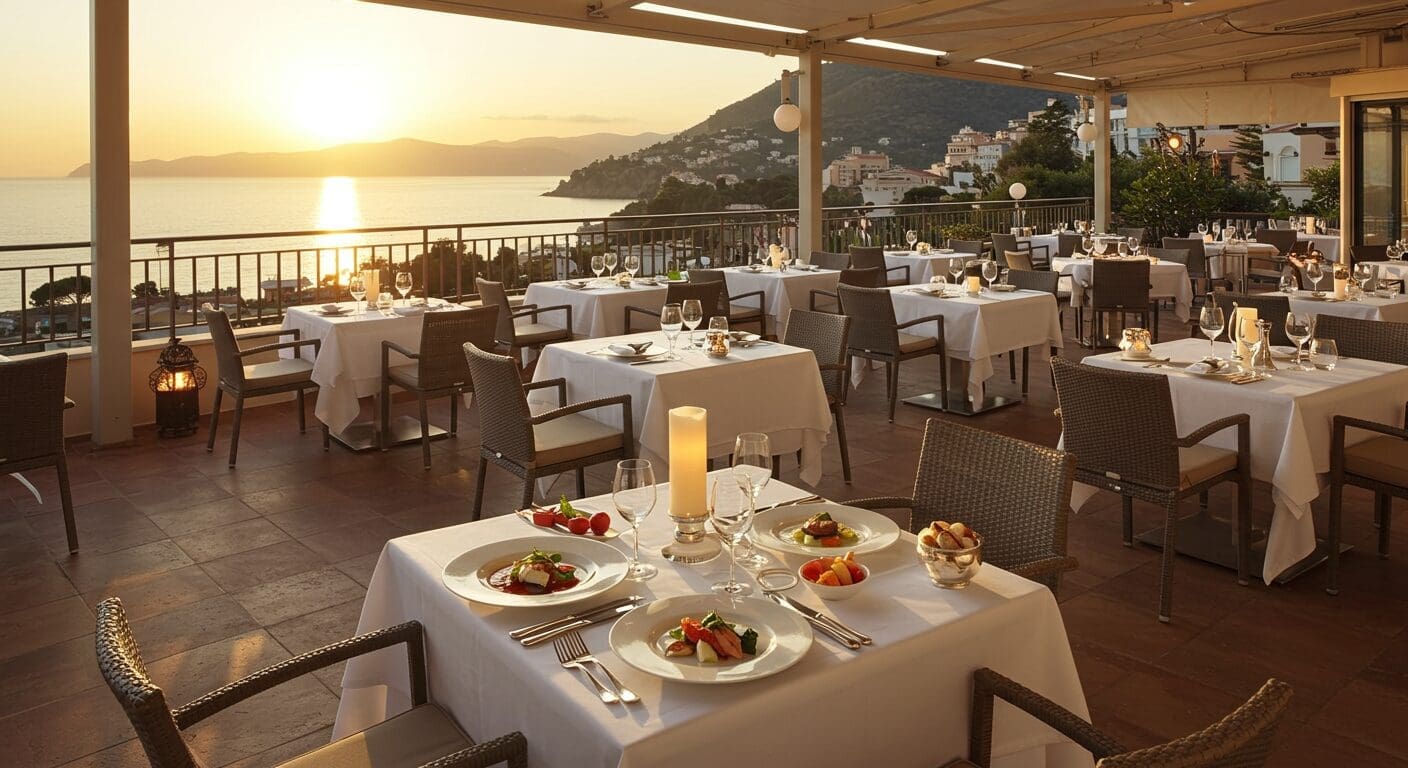
A strong second in the upscale category is Bassia, out in the quiet village of Akrotiri on the north coast. Where Prosilio operates on atmosphere and culinary ambition, Bassia plays the view card with considerable confidence. Perched above the water with elevated sea vistas that are genuinely hard to fault, it offers what is probably the most elegant seafood experience on the island – a refined “Marine” menu featuring sea bass, lobster pasta and beautifully executed steamed mussels, alongside more traditional Zakynthian dishes like braised rabbit. It’s the kind of place where you arrive for sunset and look up two hours later to find it’s fully dark and nobody has moved. The food, to its credit, earns that kind of inertia.
Further into the upscale register, Botanic Garden near the Tsilivi area deserves particular attention from food-forward travellers. The kitchen takes genuine pleasure in surprise – a salad built around fresh burrata; crispy cod on garlic pea purée; grilled octopus with fava; arancini stuffed with bacon and spicy yogurt sauce. These are not the safe crowd-pleasers of an island restaurant playing to the lowest common denominator. The presentation is careful and the flavour combinations are genuinely considered. Prices reflect the ambition. They should.
Local Tavernas and Hidden Gems
The other side of eating well in Zakynthos – the side that doesn’t require a reservation taken three weeks in advance – is found in the island’s traditional tavernas and smaller family-run restaurants. These are the places locals actually eat, and they are, as a category, considerably harder to find than the fine dining options precisely because nobody is optimising them for Google.
In the Lagopodo area, away from the coast and the tourist infrastructure, Ktima Grampsa offers what may be the most honest meal on the island. Set on a working rural estate surrounded by olive groves – old ones, the kind that have been producing oil longer than most European nations have existed – this is a farm-to-table experience that predates the phrase by several decades. The menu is built from what the estate and its neighbours produce: local vegetables, slow-cooked meats, olive oil pressed metres from where you’re sitting. The approach is traditional Greek with a refined, modern intelligence. It’s rustic in setting but not in execution. There is a distinction, and Ktima Grampsa understands it instinctively. This is the kind of place you tell people about quietly, so it doesn’t get too popular. Consider this your briefing – use discretion.
Beyond these specific venues, the island’s inland villages reward explorers willing to drive twenty minutes from the coast. Small family tavernas in Macherado, Agios Nikolaos and Kiliomeno serve Zakynthian standards – braised goat, local sausages, slow-cooked pulses – at prices that seem almost implausible alongside their coastal equivalents. No reservations required. Occasionally no menu in English. Bring your appetite and a willingness to point.
What to Order: Dishes and Local Specialities
Zakynthian cuisine is Ionian, which means it’s been shaped by Venice as much as Athens. The result is a regional cooking tradition that sits slightly apart from the rest of Greece – richer, more layered, with a fondness for sweet-savoury combinations and slow cooking that the mainland doesn’t always share.
Order ladotyri wherever you find it – the island’s own olive oil cheese, firm and intensely flavoured, made from sheep’s milk and aged in – yes – olive oil. It is not subtle. It is excellent. Skordalia (garlic potato purée) turns up everywhere and should not be resisted, particularly alongside fried salt cod. Zakynthian rabbit – typically slow-braised with wine, herbs and tomato – appears at better tavernas and is the kind of dish that explains why the island’s cuisine deserves more attention than it receives.
At the seafood end, prioritise locally caught fish over imported farmed varieties. Grilled tsipoura (sea bream) and lavraki (sea bass) are the standards; octopus dried in the sun and then grilled over charcoal is an Ionian institution. Lobster – particularly in pasta – appears on the menus of the better coastal restaurants and is worth ordering when the provenance is clear. Ask. The answer tells you something.
For something specifically Zakynthian: mandolato, the island’s nougat made with honey and almonds, is the traditional sweet. It travels well. Buy some from a proper local producer rather than a harbour gift shop and the difference is considerable.
Wine, Local Drinks and What to Sip
Zakynthos produces wine. Not widely exported, not particularly famous, but genuinely worth drinking in context. The local grape to know is Verdea – a dry white wine made from a blend of indigenous varieties, distinctly Ionian and the kind of thing that pairs beautifully with the island’s seafood while also being essentially impossible to find outside Greece. Order it when you see it. It’s one of those things that will taste different when you try to remember it at home.
Beyond wine, ouzo and tsipouro (the rougher, more agricultural Ionian spirit) are the aperitifs of choice at traditional tavernas – always with a small plate of something to eat, because drinking without eating is considered somewhat eccentric, and correctly so. The better restaurants carry thoughtful Greek wine lists that extend well beyond Zakynthos: look for bottles from Santorini’s Assyrtiko, Naoussa’s Xinomavro and the Peloponnese’s Nemea. Greek wine is undergoing something of a renaissance. The best sommeliers on the island know this and are quietly pleased about it.
Beach Clubs and Casual Dining
The beach club category in Zakynthos covers a wide spectrum – from the genuine article (well-run, good food, decent sun loungers) to the rather more common version (questionable food, loud music, sun loungers regardless). Navigating it requires a certain alertness.
The north of the island – the Tsilivi and Planos area – has the highest concentration of beach clubs with genuine food ambitions. For casual dining with feet in the sand, look for smaller operations at less-developed beaches: the Ionian coast facing the mainland tends to offer a calmer, more genuinely local beach eating experience than the more touristic southern stretches. Porto Limnionas, a rocky cove on the west coast, has a small taverna of the sort that seems to exist purely to make you reconsider all your other lunch plans. Arrive early. Tables go.
The key rule with casual beach dining in Zakynthos – as everywhere in Greece – is to check whether the fish is priced by the kilogram before you commit. It always is. It is not always made clear. The moment of revelation at the bill is a time-honoured Ionian tradition that you would prefer to observe in others rather than experience personally.
Food Markets and Producers
Zakynthos Town has a central market area worth exploring in the morning hours – before the heat and the coaches arrive – where local producers sell seasonal vegetables, cheese, honey, olive oil and the island’s characteristic preserved fish. The Saturday morning market is the most active and the most atmospheric.
Olive oil from Zakynthos carries PDO (Protected Designation of Origin) status and is among the best in Greece – cold-pressed, intensely green-gold, with a peppery finish that is entirely addictive. Buying directly from a producer like those working within the Ktima Grampsa estate model, or from any of the small-batch producers in the island’s interior, gives you a product substantially better than what you’ll find in the tourist shops near the harbour. This is not a complicated upgrade. It just requires a short drive.
Local honey – particularly thyme honey from the island’s hillsides – is another thing worth taking home in your luggage, alongside ladotyri cheese if you can manage the weight and the heat. Nobody has ever regretted that decision at the other end.
Reservation Tips and When to Book
Prosilio requires advance booking, often significantly in advance during July and August. The same applies to Bassia at sunset hours – the tables with the best views go first, and they go early. For both, emailing directly (or having your villa concierge handle it) is more reliable than third-party platforms, which don’t always reflect real-time availability.
For Ktima Grampsa and Botanic Garden, reservations are recommended but the lead time required is somewhat shorter outside peak weeks. A day or two ahead is generally sufficient in shoulder season. In August, assume nothing is available without planning.
The tactical tip that most guides omit: the best time to eat in Greece is late – 9pm to 10pm is when the restaurants feel alive rather than perfunctory. Turning up at 7pm is, technically, your right. It is also the culinary equivalent of arriving at a party before the hosts have changed. Wait a little. The food will taste better for it.
A Final Word on Eating in Zakynthos
The best restaurants in Zakynthos – whether you’re after fine dining, local gems or the kind of accidental lunch that becomes the story of the whole trip – share a common quality: they are made from the island itself. The olive oil, the seafood, the slow-braised meats, the wines from grapes grown in limestone soil above the sea. This is a place with a genuine culinary identity, which is rarer than it should be in the Mediterranean high season, when so many islands default to feeding what tourists expect rather than what the island actually produces.
Eat here with curiosity rather than caution and the rewards are considerable. The island will surprise you. It usually does.
If you’re planning to explore Zakynthos in genuine comfort, staying in a luxury villa in Zakynthos opens up a further dimension: many of Excellence Luxury Villas’ properties offer private chef options, allowing you to bring the island’s ingredients – the olive oil, the fresh catch, the local cheeses – directly to your own table. It is, for certain evenings, the best restaurant on the island. For everything else, you now have a list.
For broader planning, the full Zakynthos Travel Guide covers beaches, activities, transfers and everything else the island offers.
Does Zakynthos have any Michelin-starred restaurants?
Zakynthos does not currently hold any Michelin stars, largely due to the guide’s limited coverage of the Greek islands rather than any absence of quality cooking. The island’s top restaurant, Prosilio in Zakynthos Town, has earned prestigious recognition from the FNL Guide and the Xrysoi Skoufoi (Greek Golden Toques) awards, and is frequently compared to Michelin-level venues by guests with direct experience of both. For luxury travellers, the standard of fine dining on the island is considerably higher than its star count suggests.
What local dishes should I try in Zakynthos?
Zakynthian cuisine reflects its Venetian heritage and should not be skipped in favour of generic Greek standards. Key dishes to seek out include slow-braised Zakynthian rabbit, ladotyri (the island’s own olive oil-aged cheese), grilled or braised octopus, fresh local seafood priced by the kilogram (do ask before ordering), and skordalia alongside fried salt cod. For something sweet, mandolato – the island’s traditional honey and almond nougat – is a genuine regional speciality worth buying from a local producer. The local Verdea white wine, made from indigenous grape varieties, is also strongly worth ordering.
When should I make restaurant reservations in Zakynthos?
For the island’s top fine dining destinations – particularly Prosilio and Bassia – reservations in July and August should ideally be made at least one to two weeks in advance, especially for prime evening slots and the best-positioned tables. In shoulder season (May, June, September, October), a few days’ notice is usually sufficient. If you are staying in a luxury villa, your villa concierge can often handle reservations directly and may have access to preferred booking arrangements. As a general rule, dining later – from 9pm onwards – gives you the best atmosphere and, quite often, a more attentive kitchen.