Antalya Travel Guide: Where to Stay, Eat & Explore in Luxury
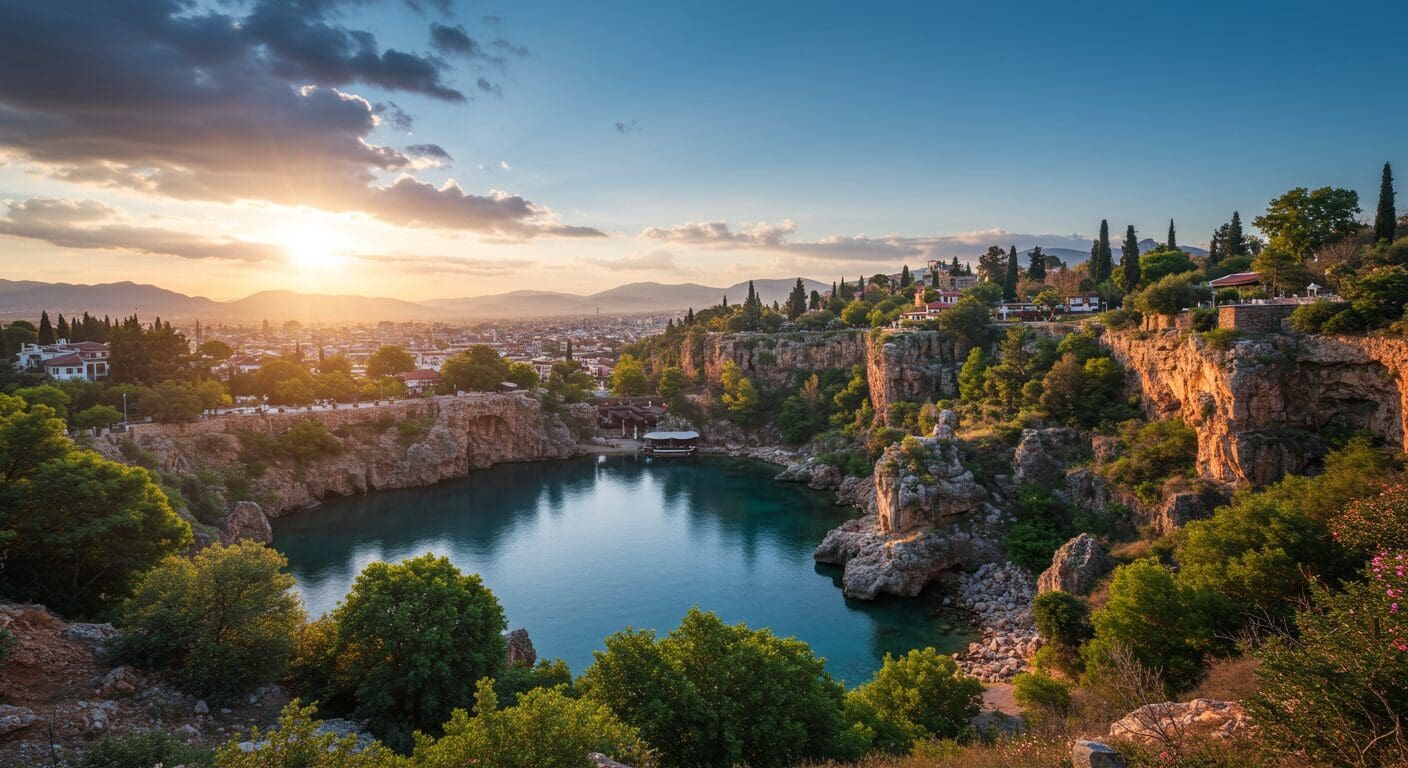
In May, something shifts along the Turkish Riviera. The crowds that will eventually come – the determined sunbathers, the selfie-stick wielders, the all-inclusive devotees – haven’t quite arrived yet. The light is extraordinary: warm enough to bronze you by noon, gentle enough at six in the evening to turn the limestone cliffs above Antalya’s old harbour the colour of old honey. The Mediterranean sits at a civilised 22 degrees. The jasmine is doing its thing. Locals reclaim their city’s terraces with the quiet satisfaction of people who have been waiting patiently since October, and the restaurants – the good ones, not the laminated-menu ones on the tourist drag – are at their unhurried, attentive best. This is Antalya before the heat becomes a character in its own right. It is, if you time it right, close to perfect.
What makes Antalya remarkable is not just that it’s beautiful, or historically dense, or gastronomically underrated (all of which are true), but that it manages to be genuinely different things to different people without feeling like it’s trying. Families seeking real privacy – not the performative privacy of a hotel’s so-called “quiet pool” – find it in the hills above Kalkan and Belek, where luxury villas with private pools sit within acres of pine forest, their children discovering that a holiday without organised entertainment is actually more fun. Couples on milestone trips find candlelight and Roman ruins and restaurants carved into Ottoman courtyards. Groups of friends find boat days, local wine, and kebabs at midnight. Remote workers, increasingly drawn here by fast connectivity, reliable sunshine, and the fact that a working day ends with a swim rather than a commute, find it practical as well as beautiful. Wellness-focused travellers find hammams that have been operating since the sixteenth century, yoga retreats in the Taurus Mountains, and a pace of life that makes their nervous systems visibly unclench within forty-eight hours. Antalya, it turns out, is rather good at this.
Getting to Antalya: Better Connected Than You Might Think
Antalya International Airport is one of the busiest in Europe during summer – a fact that tends to surprise people who assume it’s a secondary destination. Direct flights operate from London, Manchester, Dublin, Amsterdam, Frankfurt, Paris, and dozens of other major European cities, with journey times from the UK typically sitting at four to four and a half hours. Turkish Airlines flies direct from a range of hubs with reliable onward connections if you’re travelling from further afield. Low-cost carriers are plentiful too, which means getting here need not require a second mortgage, leaving more budget for what actually matters once you arrive.
The airport sits approximately 13 kilometres east of the city centre. Private transfers – which, if you’re staying in a luxury villa, you should absolutely pre-arrange – take around 20 minutes to central Antalya and anywhere from 30 minutes to an hour and a half depending on which stretch of the Riviera your villa occupies. Kalkan is roughly two hours west; Belek is 45 minutes east. If you’re planning to explore the region properly, hiring a car is genuinely useful – the coastal roads are well-maintained and the scenery makes the drive its own small pleasure. For in-city movement, Antalya has a tram system, a reasonable taxi network, and the kind of geography that rewards walking in the old quarter. The rental car companies are well represented at the airport. Book in advance in July and August. That particular lesson tends to be learned the hard way.
Where to Eat in Antalya: From Ottoman Courtyards to the Best Piyaz of Your Life
Fine Dining
Seraser Fine Dining, in the labyrinthine heart of Kaleiçi, Antalya’s old town, is what happens when a 300-year-old Ottoman house decides it has been modest long enough. The courtyard is draped in palm trees, orange trees, and flowering climbers that grow against ancient stone walls with the confidence of plants that know they’ve earned their place. Tables seem to half-disappear into the greenery. Inside, chandeliers throw warm light across hand-carved furniture and the kind of decorative objects that feel curated over decades rather than sourced from a hotel supplier. The food matches the setting: refined, seasonal, rooted in the Turkish repertoire but with a broader Mediterranean sensibility. It consistently tops every credible ranking for fine dining in Antalya – and for once, the rankings have it right.
For something more panoramic, 7 Mehmet is the restaurant Antalya locals will recommend before you’ve finished asking the question. Its origins are wonderfully grounded – a soup shop founded by the current chef’s grandfather in 1937 – and its evolution into a dining institution beloved by celebrities and regular visitors alike feels entirely deserved. The terrace overlooks the Mediterranean with the confidence of a place that knows it has the best view in the city. The leather-bound menu spans seafood, tandoori meats, rich vegetable stews, and desserts that require no apology. A meal here is, in the best possible sense, an event.
Down at the yacht marina in Kaleiçi, Arma Restaurant occupies a position that other restaurants in the city must privately envy. Stone arches frame the harbour views; the ambience manages to be simultaneously elegant and relaxed, which is harder to pull off than it sounds. The kitchen specialises in seafood done with precision – the seafood carpaccio is quietly exceptional, the salt-crusted fish earns its reputation, and the lobster is treated with the respect it deserves. Arma is the kind of place you book for your first evening, to calibrate your appetite for the week ahead.
Where the Locals Eat
Lara Balık has been feeding Antalya properly for over two decades, with branches in both Işıklar and Konyaaltı. Nearly 100 different appetisers – meze that range from the achingly simple to the quietly complex – arrive before you’ve had time to properly study the menu. The seasonal fish is outstanding; the kitchen’s long experience shows in the consistency of every plate. It has won awards, but the more meaningful endorsement is that you’ll share your table’s proximity with local families who have been coming here since the place opened. There is no more reliable indicator of quality.
Street food in the Kaleiçi district rewards the unhurried wanderer. Fresh-squeezed pomegranate juice, börek pulled from the oven in long golden sheets, corn grilled over charcoal at the harbour’s edge. The city’s beach clubs, particularly along Konyaaltı Beach, offer a more casual daytime version of the dining scene: sun lounger, cold Efes, grilled fish arriving at a civilised pace. Beach club culture in Antalya is considerably less performative than its equivalents in, say, Spain or the Balearics. People are here to eat and swim, not to be photographed doing so.
Hidden Gems Worth Seeking Out
In the central Elmalı neighbourhood, a small, unshowy lunch spot called Özgül Kebap has been quietly perfecting piyaz for years. Piyaz is Antalya’s signature dish: white beans in a sharp tahini dressing, topped with chopped boiled egg, tomatoes, and parsley. It sounds humble because it is humble. It also happens to be one of the most satisfying things you’ll eat on the trip. At Özgül Kebap, each portion is made to order – the tahini whisked by hand with vinegar until it turns silky, then folded through the beans with the kind of unhurried attention that no algorithm can replicate. Beloved by locals. Largely missed by tourists. These are not unrelated facts.
The Lay of the Land: Antalya’s Riviera and What Each Part Offers
Antalya is not a single place so much as a geographic argument between mountains and sea. The Taurus Mountains rise abruptly behind the city, snow-capped in winter and dramatically green in spring, creating the kind of backdrop that makes architects of luxury villas very happy. Below them, the coastline stretches for hundreds of kilometres in both directions: to the east, the broad sandy beaches and resort infrastructure of Belek and Side; to the west, the wilder, more vertical coastline of Kalkan and Kaş, where the water turns a shade of blue that makes people emotional.
The city of Antalya itself sits around its Roman harbour like a well-preserved secret. Kaleiçi – the old town – is a maze of narrow streets, Ottoman-era mansions, Byzantine walls, and a Roman-built harbour gate that has been welcoming visitors since the second century BC. It wears its history lightly, which is the best way to wear it. Boutique hotels and restaurants occupy buildings that would be roped off behind barriers anywhere else.
East of the city, the Belek corridor is the golf capital of Turkey – well-maintained courses, generous sunshine for most of the year, and a level of resort infrastructure that caters to those who plan their holidays around their handicap. This is also where some of the region’s most significant luxury villa compounds sit, on private estates with Mediterranean frontage and enough space to genuinely forget that other people exist.
West of Antalya, the road to Kalkan winds along cliff edges with the casual bravado of coastal roads the world over. Kalkan itself is a whitewashed hillside town tumbling toward a small harbour – rooftop terraces, boutique restaurants, an atmosphere that somehow manages to be fashionable without being insufferable. Beyond it, Kaş is the diving capital of the Turkish coast, quieter, more bohemian, beloved by people who have been coming for thirty years and become irritated when asked for recommendations. (They will give them anyway.)
What to Do in Antalya: Beyond the Pool (Though the Pool Is Also Excellent)
White-water rafting at Köprülü Canyon is one of those experiences that sounds like it belongs on an adventure holiday brochure but is actually extraordinary in person. The canyon cuts through the western Taurus Mountains over 14 miles of river, its limestone walls rising sheer on either side while the Köprüçay River does its level best to keep your attention focused. The canyon itself is layered with Roman bridges, ancient ruins, and pine forest that would be quite beautiful if you weren’t also being thrown sideways by the current. Suitable for a reasonable range of fitness levels, and a very good solution for the problem of travelling with people who can’t agree on what to do with a Tuesday.
Boat trips along the coast are an Antalya essential rather than an Antalya cliché – a meaningful distinction. The Blue Cave near Kalkan, the sunken city of Kekova, the deserted coves accessible only by water: these are genuinely worth seeing. Private gulet hire – a traditional Turkish wooden sailing vessel – gives groups the freedom to anchor where they please, swim in uninhabited bays, and eat lunch on deck without negotiating with a tour group. This is, it should be said, one of the better uses of a day.
The ruins of Perge, 15 kilometres from Antalya, are among the best-preserved Hellenistic cities in the region: colonnaded streets, a Roman theatre, thermal baths, and a stadium that once held 12,000 spectators. The archaeological museum in Antalya city centre houses the finds from Perge and the wider region – the quality of the collection is consistently underestimated by first-time visitors, who typically come expecting a provincial museum and leave having spent three hours there.
For day trips, the ancient city of Termessos sits at 1,000 metres in the Taurus Mountains within its own national park – reached via a pine-forested road and a short, steep hike. The ruins are dramatic, the views encompass the entire Antalya plain, and the crowds are, refreshingly, elsewhere.
Adventure in All Directions: The Outdoors Potential is Significant
The Taurus Mountains are not decorative. They offer serious hiking across the Lycian Way, one of Turkey’s great long-distance trails, which winds for 540 kilometres along the coast between Fethiye and Antalya. You don’t need to walk all of it. Even a two-day section through the ruined Lycian cities of the western coast – Patara, Xanthos, Letoon – gives you the combination of ancient archaeology and raw landscape that is the Lycian Way’s peculiar gift.
Diving and snorkelling along the coast around Kaş are genuinely world-class, with visibility regularly exceeding 30 metres and a seabed that includes amphora fields from ancient shipwrecks and the submerged ruins of Kekova’s sunken city. The diving infrastructure is professional and well-organised; certified divers will find conditions that justify the trip specifically for this purpose.
Paragliding from the cliffs above the coast is available at several points along the Riviera, offering the kind of perspective on the landscape – turquoise water, limestone cliffs, the city spread below – that photographs subsequently fail to reproduce. Sailing, windsurfing, and kitesurfing are all available along the longer stretches of beach; the wind conditions along the western coast are particularly suited to kitesurfers who know what they’re doing. Jeep safaris into the Taurus Mountains, quad biking, and canyoning fill in the gaps for those who feel a holiday should always contain an element of mild risk to the knees.
Antalya with Children: The Case for a Private Villa Over Everything Else
Antalya is, genuinely and without qualification, excellent for families – and not merely in the “they have a kids’ club” sense. The Turkish coast offers calm, warm, shallow water along many of its beaches, ruined cities that make ancient history tangible in ways that no classroom achieves, boat trips that convert even the most screen-dependent twelve-year-old, and food that is varied enough to navigate the inevitable dietary standoffs.
The private villa advantage is particularly pronounced with children. A pool that belongs entirely to your family is a different proposition from a shared hotel pool: no early-morning towel-placing rituals, no negotiating for space, no explaining to your five-year-old why they can’t jump in from the edge. Villas in the Antalya region – particularly in Belek and in the hills above Kalkan – offer the space that families actually need: multiple bedrooms with genuine privacy for adults after eight pm, gardens where children can exist loudly without apologising for it, outdoor dining areas that accommodate the particular chaos of family mealtimes.
For older children and teenagers, the activities available along the Riviera – rafting, sailing, diving, sea kayaking, jeep safaris – provide the kind of genuine engagement that hotel pools simply cannot. The combination of warm sea, structured adventure, and private space to decompress makes this a destination that families return to not once but repeatedly, with the quiet intention of someday keeping it to themselves. That plan rarely works, but it’s a nice ambition.
History You Can Actually Touch: Antalya’s Ancient Layers
Antalya was founded by the Attalid king Attalus II around 150 BC, named after himself with the restraint you’d expect from a Hellenistic monarch, and has been continuously inhabited ever since. The Romans improved it. The Byzantines held it. The Seljuks built the Yivli Minare – the distinctive fluted minaret that still defines the old harbour’s skyline – in the thirteenth century. The Ottomans added their own civic architecture and left the old town with the layered, slightly improbable character it carries today.
The Hadrian’s Gate in Kaleiçi, a triple-arched marble triumphal arch built to commemorate the emperor’s visit in 130 AD, stands intact amid the daily activity of the old town with the composure of something that has stopped being surprised by the passage of time. The Roman harbour below – now a yacht marina – has been receiving boats for two thousand years, which gives it a continuity that newer marinas conspicuously lack.
Beyond the city, the region’s ancient sites form one of the most concentrated archaeological landscapes anywhere in the Mediterranean world. Aspendos, 47 kilometres east of Antalya, contains a Roman theatre so well preserved that it still hosts opera and ballet performances. Sitting in its upper tiers on a warm evening as the sky turns from blue to violet is one of those experiences that makes you briefly reconcile yourself to human history in general. The acoustics alone justify the drive.
Local traditions remain vivid: the weekly markets in towns along the coast, the hammam culture that predates most European wellness trends by several centuries, the tea gardens where time operates by different rules. Antalya’s festivals include the Antalya Film Festival in October, one of Turkey’s oldest and most respected, which lends the city a pleasingly cinematic air for a few weeks each autumn.
Shopping in Antalya: Leather, Ceramics, Spices, and the Art of Knowing When to Stop
The covered bazaar in Antalya’s old town is not Istanbul’s Grand Bazaar – it is smaller, less pressured, and considerably more navigable. Turkish leather goods, hand-painted ceramics, kilim rugs, and copper work are all well represented. The leather in particular is worth attention: Turkey’s leather industry produces quality that competes credibly with Italian alternatives at substantially different prices. Bring empty luggage space. This is advice freely given and frequently ignored.
Spice shops along the old town streets sell saffron, sumac, Aleppo pepper, and the kind of dried herb blends that make you briefly convinced you will cook Turkish food at home every week. (You will, for approximately a fortnight, before real life reasserts itself.) Turkish delight, made properly with pistachios and rosewater rather than the pink rubber exported for tourist consumption elsewhere, makes the ideal edible souvenir.
The weekly markets outside the old town – the Salı Pazarı in particular – are where Antalya’s residents actually shop: piles of seasonal produce, olives by the bucket, cheap textiles, household goods, and the particular ambient noise of a functioning neighbourhood market. Less curated than the bazaar; considerably more interesting as a cultural experience. The tourist-facing shops in Kaleiçi sell good quality handicrafts alongside the inevitable novelty items, and the gap between these two categories is usually obvious if you spend five minutes looking rather than five seconds.
What You Actually Need to Know Before You Go
The Turkish Lira is the local currency. At present, the exchange rate works significantly in favour of visitors from the UK, the US, and the Eurozone, making Antalya considerably better value than comparable Mediterranean destinations – even at the luxury end of the market. Credit cards are widely accepted in restaurants, hotels, and larger shops; cash is useful for markets, smaller establishments, and tipping. ATMs are plentiful in the city and in tourist areas along the coast.
Tipping is customary and appreciated. Ten percent is considered appropriate in restaurants; slightly more for genuinely exceptional service. Hammam staff, hotel housekeeping, and drivers are tipped separately. Turkish people are warm and hospitable to an extent that occasionally catches Northern European visitors off guard. Responding in kind costs nothing.
The best time to visit depends on what you’re here for. May and June offer ideal temperatures (24-28°C), smaller crowds, and the coastal landscape at its most vivid green. July and August are hotter (35°C is not unusual), busier, and correspondingly more expensive – though the sea is at its warmest and the long evenings are hard to argue with. September and October are increasingly popular for their combination of warm water, quieter beaches, and more agreeable temperatures. November through March sees the region quieter and considerably cooler; some coastal facilities close, but the mountains offer skiing, and the old town is genuinely enjoyable for cultural visits without the summer traffic.
A basic phrasebook’s worth of Turkish – teşekkürler (thank you), lütfen (please), merhaba (hello) – is received with evident pleasure by locals and is, in any case, the minimum courtesy owed to a country whose hospitality is this consistent. The dress code is relaxed in coastal tourist areas; more modest clothing is appropriate when visiting mosques or markets in residential neighbourhoods. Common sense, predictably, covers most situations.
Staying in a Luxury Villa in Antalya: The Argument Is Fairly Straightforward
Hotels in Antalya range from the perfectly adequate to the genuinely impressive. But the case for a private luxury villa is not really about the hotels – it’s about what changes when a property is entirely yours. Privacy, first and foremost: a pool that you decide the rules for, a terrace where you have breakfast without an audience, a garden where the children can be children without managing anyone else’s expectations. Space that scales properly to a group of six, eight, or twelve people, rather than the careful choreography of adjoining hotel rooms and shared facilities.
The luxury villa market around Antalya is broad and genuinely excellent. In Belek, large estate villas sit within private gardens with sea views and direct beach access. In the hills above Kalkan, clifftop properties offer infinity pools that appear to merge with the Mediterranean below. Around Kas and along the coast toward Fethiye, the properties are typically more intimate: smaller, architecturally distinctive, with the character that comes from individual ownership rather than corporate procurement.
Staff and concierge services transform the villa experience in ways that are hard to overstate. A private chef preparing a long, unhurried dinner on the terrace using that morning’s market produce is a different category of experience from a restaurant meal – however good the restaurant. A concierge who knows the region, has a relationship with the gulet captain and the vineyard owner and the hammam, and can arrange things that don’t appear on any booking platform is an asset of considerable practical value.
For remote workers – a category that now includes people who would not previously have described themselves as such – the connectivity situation in quality Antalya villas is solid. Fibre broadband is standard in most premium properties; some villa estates have adopted Starlink for redundancy and speed. The time zone (UTC+3) works comfortably for those based in the UK or across Europe, allowing a full working morning before the heat of the day makes a post-lunch swim feel not merely acceptable but medically advisable.
Wellness amenities in the better villas – private gyms, outdoor yoga platforms, hammam facilities, plunge pools – make it possible to arrive needing a rest and leave having actually had one, rather than simply exchanged one set of demands for another with a better view. That, ultimately, is the promise of a luxury holiday in Antalya. It is one of the few destinations that can deliver it without qualification.
Browse our full collection of luxury villas in Antalya with private pool – from clifftop retreats above Kalkan to private estate properties in Belek – and find the one that fits your version of the perfect Turkish Riviera week.
More Antalya Travel Guides
- Best Restaurants in Antalya: Fine Dining, Local Gems & Where to Eat
- Antalya Food & Wine Guide: Local Cuisine, Markets & Wine Estates
- Antalya with Kids: The Ultimate Family Holiday Guide
- Best Time to Visit Antalya: Month by Month Weather, Crowds & Tips
- Antalya Luxury Itinerary: The Perfect 7-Day Guide
- Romantic Antalya: The Ultimate Couples & Honeymoon Guide
What is the best time to visit Antalya?
May, June, September, and October offer the most balanced experience: warm temperatures (24-30°C), a sea warm enough for comfortable swimming, and crowds that haven’t reached the full-summer intensity of July and August. For those who want the hottest weather and the liveliest atmosphere – and don’t mind either – July and August deliver exactly that, with the sea at its warmest (28°C) and long evenings made for outdoor dining. If you’re here primarily for culture, archaeology, or a quieter pace, October through November and March through April offer mild temperatures and an Antalya that belongs more noticeably to its residents. Winter is mild rather than warm; some coastal facilities close, but the city and mountain areas remain accessible and interesting.
How do I get to Antalya?
Antalya International Airport (AYT) is the main gateway and one of the busiest airports in Europe during summer. Direct flights operate from London Heathrow, London Gatwick, Manchester, Birmingham, Bristol, and Edinburgh, with flight times of around four to four and a half hours from the UK. Major European carriers and low-cost airlines both serve the route. Turkish Airlines operates a comprehensive network with connections through Istanbul for travellers coming from further afield. From the airport, private transfers are the most comfortable option – journey times range from 20 minutes to central Antalya up to two hours for the western reaches of the Riviera around Kalkan and Kaş. Car hire is useful if you plan to explore independently; book in advance during peak summer months.
Is Antalya good for families?
Genuinely excellent, and for reasons that go beyond beach and pool. The coastline offers calm, warm, shallow water at many points; the food is varied enough to navigate most childhood dietary preferences; and the region’s ancient ruins – Perge, Aspendos, Termessos – make history tangible in a way that engages children who have shown no previous interest in it. For families specifically, a private villa is transformative: a pool that operates on your schedule, outdoor space where children can be loud without apology, and sleeping arrangements that give adults genuine privacy in the evenings. The activities available – boat trips, white-water rafting (for older children), sea kayaking, jeep safaris – keep teenagers and older children genuinely engaged throughout the week.
Why rent a luxury villa in Antalya?
The short answer is privacy, space, and a ratio of staff to guests that no hotel can replicate. A private luxury villa in Antalya means a pool you don’t share, a terrace where breakfast happens on your schedule, a kitchen for the private chef who arrived with market produce at nine in the morning, and bedrooms arranged around the needs of your actual group rather than a hotel’s corridor logic. For families, couples, and groups alike, the villa experience in Antalya is qualitatively different from a hotel stay – quieter, more flexible, and in many cases considerably better value per person once you account for the full scope of what’s included. Many villa guests return annually; many could not coherently explain why they ever stayed in hotels.
Are there private villas in Antalya suitable for large groups or multi-generational families?
Yes, across a wide range of sizes and configurations. The Antalya region – including Belek, Kalkan, Kaş, and the broader Turkish Riviera – has an extensive inventory of larger properties specifically suited to groups of eight to sixteen or more. These range from private estate villas with multiple guest wings, separate staff quarters, and large outdoor entertaining areas to multi-bedroom clifftop properties with panoramic sea views and private pool complexes. Multi-generational families – grandparents, parents, children travelling together – find the villa format particularly well suited: separate sleeping wings allow privacy for different generations, shared outdoor spaces and dining areas provide the togetherness, and the option of a private chef removes the logistical weight from whoever usually ends up organising dinner for twelve.
Can I find a luxury villa in Antalya with good internet for remote working?
Connectivity in quality luxury villas in Antalya has improved significantly in recent years. Fibre broadband is standard in most premium properties in Belek, Kalkan, and the wider Antalya region; many villa estates have additionally adopted Starlink for higher speeds and failover reliability. The time zone (UTC+3) works well for those working with UK or European teams – a full productive morning can typically be completed before the afternoon heat makes the pool a professional obligation rather than a leisure choice. If reliable connectivity is a specific requirement, it’s worth confirming speeds with your villa manager at the booking stage; Excel Excellence Luxury Villas can advise on properties with documented high-speed connectivity for guests working remotely.
What makes Antalya a good destination for a wellness retreat?
Several things, operating in combination. The climate – warm, dry, and reliably sunny across most of the year – supports outdoor activity in ways that northern European destinations structurally cannot. The Taurus Mountains offer hiking across the Lycian Way and into alpine terrain; the coastline offers sea swimming, kayaking, and sailing. Hammam culture in Antalya is centuries-deep and genuinely restorative rather than purely touristic; the better establishments in the old town and along the coast offer traditional treatments that compare credibly with any European spa. Within private villas, wellness amenities – outdoor gyms, yoga platforms, plunge pools, steam rooms, and private infinity pools – allow guests to design a retreat entirely on their own terms. The pace of life along the Turkish Riviera does the rest. Most guests notice the difference within forty-eight hours.