
Best Restaurants in Kos: Fine Dining, Local Gems & Where to Eat
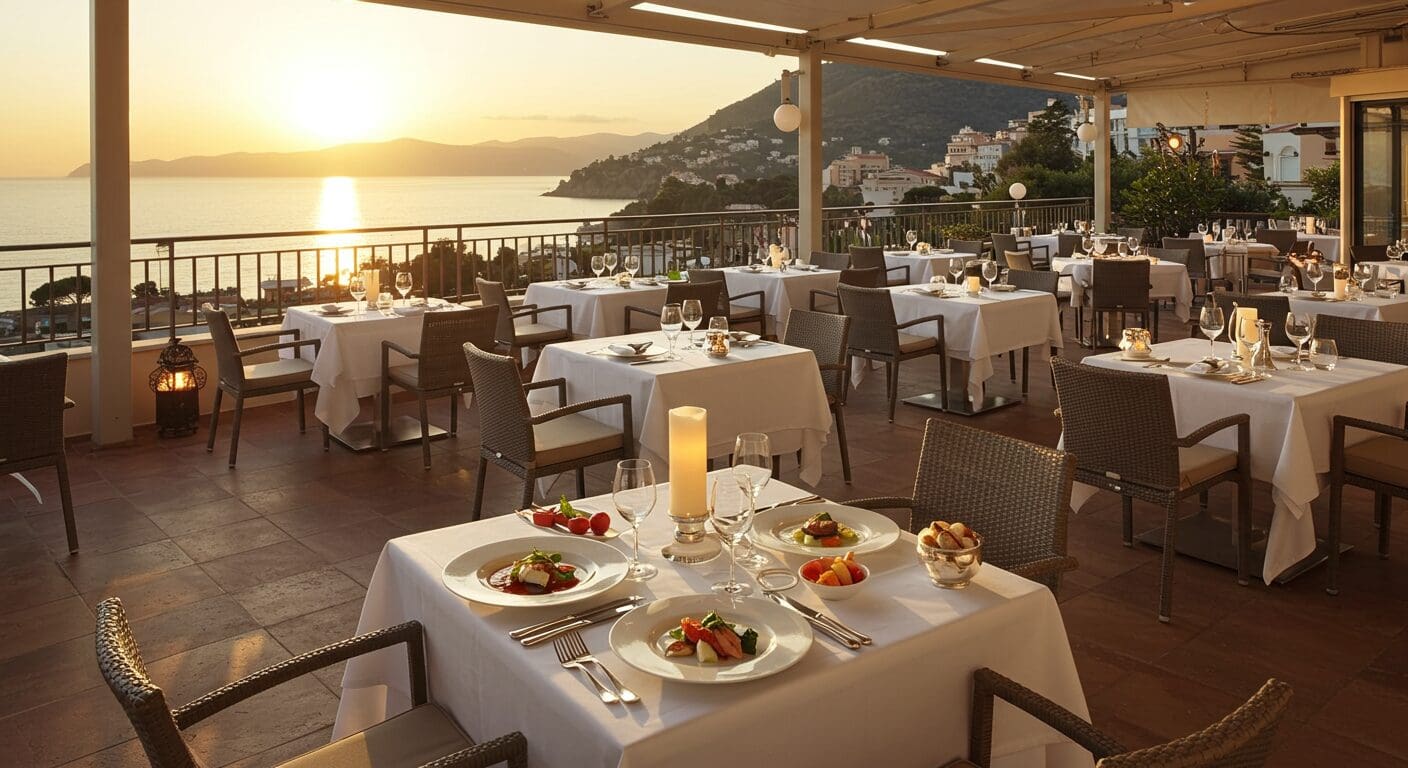
There is a particular quality to the light in Kos in late summer – the kind that arrives around seven in the evening and turns everything faintly gold, including the tourists, the ruins, and the ouzo in your glass. The island is at its most generous then: the crowds have thinned, the produce is at peak ripeness, the sea is still warm enough to swim in at dusk, and the restaurants are full of people who have nowhere else they need to be. This is when Kos reveals itself as something more than a package holiday backdrop. Sit down at the right table, order the right things, and you will start to understand why people keep coming back.
The food scene here is richer, more varied, and considerably more interesting than the island’s reputation might suggest. Yes, there are tourist traps – they cluster around the harbour with laminated menus and photographs of their dishes, which should tell you everything you need to know. But push past those, walk down a side street, climb up to a mountain village, and you will find something worth remembering. This guide covers the best restaurants in Kos, from fine dining and family tavernas to beach clubs, hidden gems, and where to find the ingredients that make it all possible.
The Fine Dining Scene in Kos
Kos does not currently hold any Michelin stars – a fact that will surprise visitors who eat well here and confuse those who expected less. The island operates at a level of culinary ambition that outpaces its formal recognition, and several restaurants are doing genuinely sophisticated work with Greek and Mediterranean ingredients.
Petrino Restaurant in Kos Town is the benchmark. Set in an elegant stone courtyard – the kind of space that looks as though it was designed specifically for long evenings – it offers modern Greek and Mediterranean fusion cuisine with the kind of quiet confidence that doesn’t need to announce itself. The wine list runs to over 120 labels, which is either impressive or slightly overwhelming depending on how decisive you are feeling. Order the sea bass if it’s on the menu; it arrives with the precision you’d expect at twice the price. But the detail worth noting is the cheese course. Krasotiri – a local goat’s cheese aged in red wine – is the sort of thing you quietly Google on the way home to find out if you can have it shipped. You probably can’t. The service at Petrino is excellent: attentive without being theatrical, informed without being performative. Book ahead, particularly in July and August.
For the fine dining visitor, the broader Kos Town restaurant scene rewards exploration. The island’s proximity to Turkey has left traces in the cuisine – spicing that feels slightly bolder, a willingness to use preserved ingredients and slow-cooked methods that give certain dishes an almost Levantine depth. This isn’t a fusion gimmick. It’s just geography expressing itself through food, as it tends to do when you pay attention.
Classic Tavernas & Local Gems
There is a reason the word taverna has never needed translating. Everyone understands instinctively what it means: checked tablecloths or bare wood, wine from a carafe rather than a bottle, bread that arrives without being asked for, and food that tastes as though someone’s mother made it. Because sometimes someone’s mother did.
Taverna Evdokia, on Bouboulinas Street roughly 150 metres from Dolphins Square in Kos Town, is locally known as “Mummy’s Cooking” – which is either the best or the most alarming piece of restaurant marketing imaginable, depending on your relationship with your own mother’s cooking. In this case, it is emphatically the former. The eggplant spread is silky and properly smoky. The feta-stuffed peppers have the right balance of salt and sweetness. The fresh fish is exactly what it should be: simply treated, extraordinarily good. The atmosphere is warm and genuinely relaxed, in the way that only happens when a restaurant has nothing to prove. Come hungry. Come without a reservation if you’re feeling lucky, but perhaps don’t.
Patriko – full name Παραδοσιακό Μεζεδοπωλείο Πατρικό – occupies a side street off Alikarnassou Street, about 250 metres from Dolphin Square in Kos Town. It is the kind of place that exists in every Greek town but takes a little finding: cosy, family-run, genuinely reasonable in price, and producing food of a quality that makes those prices slightly baffling. Both the indoor and outdoor seating have their advocates – the outdoor terrace wins in summer, the interior on cooler evenings when the village quiets down and the candlelight does its work. Order a spread of mezedes and work through them slowly. This is not a restaurant for people in a hurry, and that is entirely the point.
Broadway in Kos Town has been operating under the same family for over 30 years, which in the restaurant business is either a sign of stubborn tradition or earned trust. In this case, it’s the latter. Sensibly positioned away from the busiest tourist corridors, it draws a strong local following – always a reliable indicator that a kitchen is doing something right. The braised beef with Greek orzo is the dish to order: slow-cooked, deeply flavoured, comforting in the way only properly made orzo can be. There are vegan options and gourmet burgers for those in different moods, and the atmosphere is lively enough for groups without being so loud that conversation becomes optional.
The Mountain Village Experience: Zia
Anyone who tells you Kos is just beaches hasn’t taken the road up to Zia. The village sits in the hills of the Dikeos mountain range with views that make you feel you’ve earned something, even if you drove there. At sunset, which is when most visitors make the pilgrimage, the sky turns extraordinary colours over the Aegean – the kind of thing you’d consider excessive in a painting but accept completely in real life.
Oromedon Taverna is where to eat when you’re up there, and it earns its reputation honestly. The kitchen works strictly with traditional recipes and local ingredients, and the results are the kind of food that reminds you why Greek cooking became so influential. Fried cheese with jam – more sophisticated than it sounds, less fussy than many dishes that describe themselves as sophisticated – is the right way to start. The homemade moussaka, made in a wood-fired oven, arrives with a properly set béchamel top and a depth of flavour that modern shortcut cooking can’t replicate. Sit on the terrace. Watch the sun go down. Order another carafe. The evening will take care of itself.
Beach Clubs & Casual Dining
Kos has a strong beach club culture, particularly along the southern and eastern coasts where the beaches are longest and the water clearest. These range from full-service operations with DJs, cocktail menus, and sunbeds that cost more than a taverna lunch, to genuinely relaxed spots where the only soundtrack is the sea. The food at the better ones is perfectly respectable – fresh grilled fish, good salads, cold Mythos beer in a frosted glass – and the setting, obviously, is unimpeachable.
The distinction worth making is between beach clubs that treat food as an afterthought and those that take it seriously. Look for places where the catch is visible – where you can see what was brought in that morning and point at it. Kardamena and Kefalos Bay both have seafront options worth investigating, and the areas around Tigaki offer a slightly quieter beach dining experience for those who find the more developed resorts a little earnest about having a good time.
For truly casual eating, the souvlaki and gyros shops in Kos Town deserve mention – not as a luxury recommendation exactly, but because ignoring them would be dishonest. A well-made gyros from a good shop is one of the most satisfying things you can eat after a long day in the sun, and pretending otherwise serves nobody.
Food Markets & Where to Find the Best Ingredients
The central market area in Kos Town is where the island reveals its larder. Local honey, which benefits from the island’s wild herbs and warm climate, is worth buying in quantity. Olives come in varieties you won’t find in a supermarket back home. Local olive oil – pressed from centuries-old trees in the island’s interior – has a grassiness and weight that the bottles on your kitchen shelf back home only approximate.
Herbs are everywhere: dried oregano, wild thyme, mountain tea from the Dikeos slopes. The local capers, harvested from the plants that grow wild along old stone walls and coastal paths, are excellent. Buy them packed in salt rather than brine if you can find them – they last longer and taste considerably better. The Thursday street market in Kos Town is the most accessible option for visitors, and while it caters to tourists as much as locals these days, the produce remains genuinely good if you know what you’re looking for.
What to Order & What to Drink
The dishes worth seeking out across the island: fresh sea bream or sea bass, grilled simply with lemon and olive oil; slow-cooked lamb in all its forms – braised, roasted, tucked into a pie; moussaka made the proper way with proper time given to it; spanakopita with a flaky, buttery pastry that supermarket versions have spent decades failing to replicate; and anything involving the local legumes, which are treated with a respect that elevates them well beyond side dish status.
Krasotiri – the goat’s cheese aged in red wine encountered at Petrino – is worth tracking down wherever you find it. It has a sharpness and complexity that feels more like a cheese from a cooler climate, and it pairs exceptionally well with local honey.
For wine, Greek varieties have had something of a global moment recently, and justifiably so. Assyrtiko is the white to know – mineral, dry, with a citrus edge that makes it the perfect companion for fish and seafood. Xinomavro is the red that rewards attention: structured, slightly tannic, with a depth that develops in the glass. Many good Kos restaurants carry wines from the broader Aegean islands and mainland appellations. Ask what’s open and local first – you will rarely be steered wrong.
Ouzo is non-negotiable as an aperitif if you’re doing things properly. Order it with ice and water and a small plate of something – olives, cheese, whatever arrives – and let the evening begin at its own pace. Tsipouro, the grappa-adjacent pomace spirit, appears later in the evening and should be approached with appropriate respect. Raki is less prevalent here than in Crete but appears on menus often enough to be worth trying.
Reservation Tips & When to Go
The practical reality of eating well in Kos during peak season – roughly late June through August – is that the best places fill up fast. Petrino and Oromedon Taverna in particular book out several days in advance during July and August. Email ahead where possible; many restaurants now accept online reservations through their websites or third-party platforms. WhatsApp messages to restaurant numbers are also surprisingly effective and have a certain Mediterranean informality that feels appropriate.
Eat late if you want to eat with locals. Greek dining culture runs later than northern European visitors expect: 9pm is considered a perfectly normal dinner time, and kitchens are often at their most engaged between 9 and 11pm. This is worth adjusting to, not only because the atmosphere is better at that hour, but because the food consistently is too. Lunch, conversely, is an excellent time to try the more popular spots – prices are often lower, the light is wonderful, and you have the rest of the afternoon to sleep it off. Which is not a bad plan at all.
Shoulder season – May, early June, September, and October – is genuinely the best time to eat in Kos. The summer produce is at its peak in September, the restaurants are less crowded, chefs have more time, and the whole experience is considerably more relaxed. The island is also, frankly, more itself when not overrun with visitors in matching luggage sets.
The Luxury Villa Approach to Eating in Kos
There is, of course, another option entirely – one that sidesteps reservation anxiety, crowded terraces, and the ambient noise of a busy restaurant on a Friday night in August. Staying in a luxury villa in Kos with access to a private chef means the best ingredients the island produces come to you: market-fresh fish, local cheeses, herbs from the hills, wine chosen for the evening rather than the list. A private chef with knowledge of the island’s food culture can build a menu around what was caught that morning and what’s growing nearby, which is essentially what the best restaurants are trying to do anyway – just with fewer steps between the kitchen and your table, and considerably better views.
It doesn’t replace the experience of sitting in Oromedon’s terrace as the sun disappears behind the mountains, or the pleasure of a slow carafe at Evdokia. But it supplements it beautifully on the evenings when you’d rather stay exactly where you are.
For everything else you need to know about the island, the full Kos Travel Guide covers beaches, culture, activities, and how to make the most of every day you’re there.

