
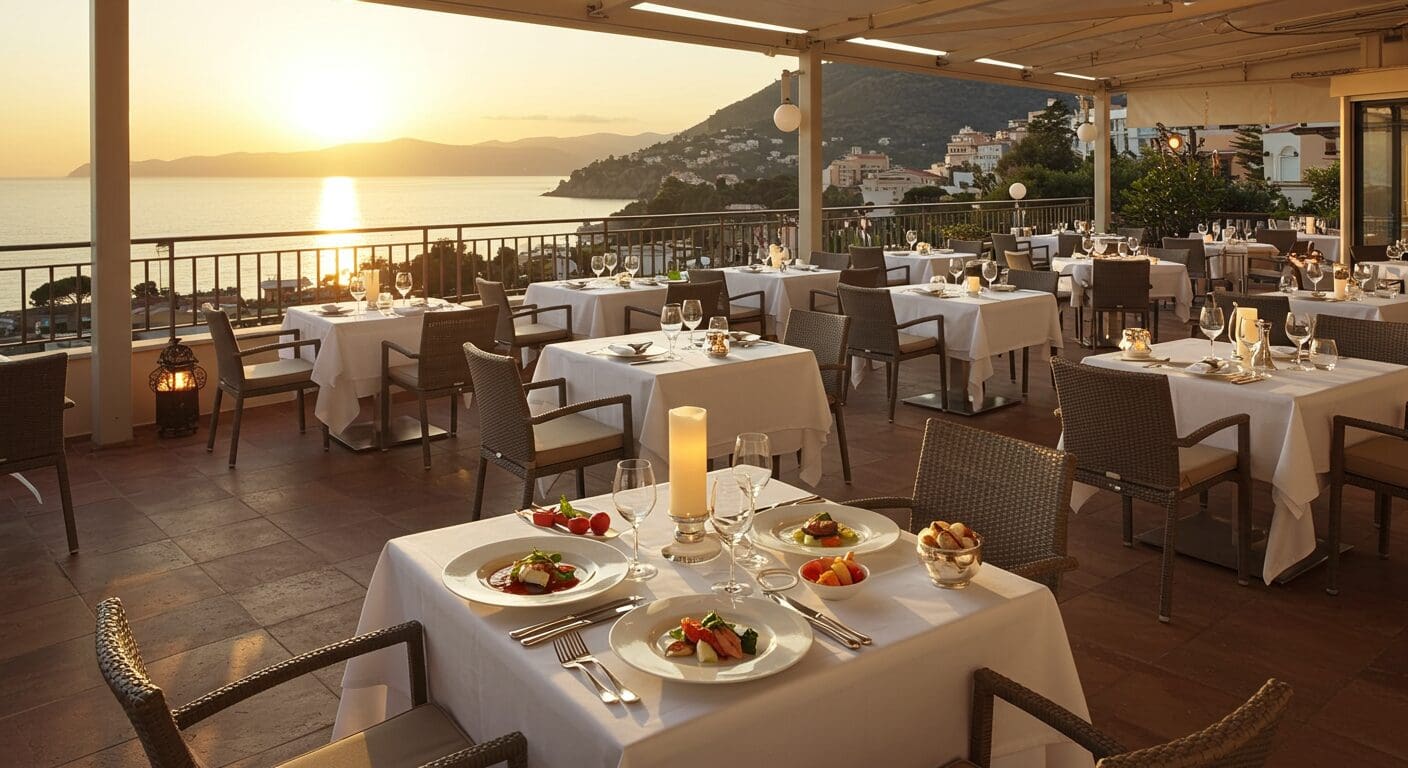
Best Restaurants in Dorset: Fine Dining, Local Gems & Where to Eat
The mistake most first-time visitors make in Dorset is treating it like a seaside county with a food scene attached. They arrive with their fossil hammers and their walking boots, they photograph the Durdle Door, and then they wander into the nearest pub for a ploughman’s that will be perfectly adequate and entirely forgettable. What they miss – and what the people who keep coming back already know – is that Dorset has quietly become one of the most interesting places to eat in England. Not in a loud, PR-driven way. Not with a cluster of rooftop cocktail bars and celebrity-chef residencies. Just good food, sourced with genuine rigour, cooked by people who actually care, in rooms that feel like they’ve been here for centuries. Which, in several cases, they have.
The county’s food identity is rooted in something real: extraordinary dairy, exceptional seafood landed fresh along a working coastline, chalk-grazed lamb, wild venison, heritage-breed pork, and produce grown in a climate mild enough to coax things out of the ground that have no right being this far west. What’s changed in the last decade is that a new generation of chefs has arrived – some returning to the county they grew up in, some drawn by the ingredients themselves – and they’ve done something quietly radical. They’ve left well enough alone. The best restaurants in Dorset: fine dining, local gems and where to eat are what this guide is for. Consider the ploughman’s optional.
The Fine Dining Scene: Where Dorset Gets Serious
Dorset doesn’t have a Michelin-starred restaurant in the conventional, white-tablecloth, amuse-bouche-trolley sense – and it seems largely unbothered by this. What it does have is a fine dining scene that prioritises flavour over theatre, seasonal menus over fixed concepts, and genuine hospitality over the kind of reverent silence that makes you afraid to ask where the bathroom is.
The most compelling case for Dorset’s culinary ambitions is Catch at The Old Fish Market in Weymouth. Opened in 2021 in a former fish market on the harbour quay, it has the kind of provenance story that restaurants usually have to invent – the fish and shellfish here travel, as the kitchen itself puts it, a matter of steps from landing to plate. The original vaulted timber roof survives overhead, the harbour sits outside the window, and the food is the kind that makes restaurant critics lose their composure. The Times’s Giles Coren, a man not given to hyperbole without good reason, described himself as “reeling from the quality” and wondered aloud whether it might be “the best restaurant in the world.” That is, admittedly, a strong claim for Weymouth. But the point stands. Book ahead. Book well ahead.
Further inland, The Clockspire Restaurant in Milborne Port occupies a beautifully restored 19th-century schoolhouse – high ceilings, natural oak beams, the quiet authority of a room that has been given proper thought. Chef Luke Sutton runs an ingredient-led British menu with a light, modern touch: Carver duck breast with pickled blackberries, Dorset white crab crumpets, dishes that feel considered without being laboured. This is the kind of restaurant that reminds you that fine dining need not involve a tasting menu the length of a short novel.
Local Gems: The Places Worth Going Out of Your Way For
Some of Dorset’s best eating happens at a remove from the coast, in market towns and villages that tourists routinely drive through on their way to somewhere more photographable. This is their loss.
Brassica Restaurant in Beaminster is the kind of place that makes you want to move to a small Dorset town immediately and become a regular. Founded by chef Cass Titcombe and designer Louise Chidgey, it’s a family-run establishment in every meaningful sense – warm, carefully run, personal without being suffocating. The food moves between modern European influences, with strands of Spain and Italy woven through a menu that changes three times a day according to what’s freshest. Not as a gimmick. Because that’s simply how they do things. The wine list is excellent, the service is charming, and Beaminster itself – a town of golden hamstone and moderate footfall – is a very good reason to be in this part of Dorset at all.
In Evershot, a village so quietly beautiful that Hardy used it as the setting for a pivotal scene in Tess of the d’Urbervilles, The Acorn Inn remains a landmark. Hardy fictionalised it as ‘The Sow and Acorn,’ which is either a great compliment to the inn’s atmosphere or a gentle slight, depending on your reading of the novel. Today it serves exceptional food built around local Dorset produce – Exmoor venison, line-caught cod, desserts of the kind that require a moment of silence. The dining room has the feel of a place that has been getting this right for a very long time. It has.
And then there is Dorshi in Bridport, tucked down an alleyway in a way that makes finding it feel like a small personal triumph. The concept – Dorset ingredients applied to Japanese cooking techniques, sushi made exclusively with local produce – sounds like the sort of thing that might appear on a food-trend listicle and then quietly disappear. It has not. Founders Jolly Carter and Radhika Mohendas began with supper clubs, graduated to a proper restaurant, and have produced something genuinely original. The chicken dumplings, which conceal Dorset Red cheese alongside lime, four types of pepper and mushroom, are as good as they sound unlikely. Which is to say, very good indeed.
Beach Clubs & Casual Dining: Eating Well Without the Effort
Dorset’s coastline lends itself to eating outside with a glass of something cold and watching the sea do what it does. The county doesn’t go in much for the Riviera-style beach club model – there are no rope-access loungers or DJs at noon – but there are places along the coast where casual dining is done with real care.
In Weymouth, the quayside setting of Catch works equally well for a more relaxed lunch than for a full evening affair. The harbour itself provides the backdrop, and the menu, rooted in whatever has come off the boats that morning, shifts naturally toward the kind of eating that suits an afternoon by the water. Further west, the coastal villages around Lyme Regis and West Bay have their share of decent seafood shacks and harbourside spots – some better than others, as is the way of things. The rule of thumb: the further from the tourist information centre, the more likely the food is to be worth eating.
Bridport, which has become something of a cultural hub for west Dorset, has a strong café culture alongside its more serious restaurant offering. Weekend mornings in particular see a creditable brunch scene – good coffee, proper sourdough, the kind of atmosphere that suggests everyone around you has just come back from a long coastal walk. Most of them have.
Food Markets & Artisan Producers: The Dorset Larder
Understanding what makes Dorset’s restaurant scene tick requires spending at least one morning in one of its food markets. The county has a robust network of farmers’ markets, the best of which rotate through towns like Bridport, Dorchester, Sherborne and Shaftesbury on different days of the week. These are proper working markets – attended by producers who have driven in from farms and smallholdings at an hour most visitors are still asleep – not lifestyle events with halloumi fries and artisanal gin spritzers. Although Dorset does artisanal gin. Quite a lot of it.
Bridport’s Saturday market is particularly worth seeking out. Local cheese – including the Dorset Red that makes its way into Dorshi’s dumplings – sits alongside Jurassic Coast smoked fish, honey, charcuterie, and seasonal vegetables that arrive in configurations the supermarkets haven’t caught up with yet. This is also where you’ll meet the producers whose ingredients appear on the menus of the restaurants above, which gives the whole thing a gratifying circularity.
The county’s dairy heritage deserves special mention. Blue Vinny – Dorset’s ancient blue cheese, once so scarce that pubs allegedly kept wheels behind the bar purely for show – is back in proper production and is extraordinary. It appears on good cheese boards across the county. Order it.
What to Order: Dishes & Drinks Worth Knowing About
There are certain things that make sense to eat in Dorset simply because the county does them better than most. Crab is the obvious starting point – Portland crab in particular is landed in quantity and quality, and appears across menus in everything from bisques to crumpet toppings. Lobster is available along the coast through the summer months and is worth ordering wherever it appears. Venison – often from the Purbeck hills or the estates further north – is consistently excellent, particularly in autumn and winter when the season is at its height.
On the drinks side, Dorset has a small but serious wine scene, with Langham Wine Estate in the Blackmore Vale producing English sparkling wines that have attracted genuine critical attention. Several of the county’s better restaurants now carry Langham on their lists, and it pairs notably well with the local seafood. Dorset also has a growing number of craft breweries and cider producers – the apple orchards of the county border producing fruit that makes cidery of real character. Conker Spirit in Bournemouth produces a Dorset Dry Gin that has found its way behind bars across the county and beyond.
The broad instruction: eat local. Not as an ethical position, though it happens to be one, but because the ingredients in Dorset are good enough that chasing them down is its own reward.
Reservation Tips: Getting a Table Without the Drama
Dorset is not London. The good restaurants are not so oversubscribed that you need to set a diary alert six months in advance. But the county’s better tables – Catch, Brassica, The Acorn Inn – do fill up, particularly across the summer months from June through August and over bank holiday weekends. The sensible approach is to book two to three weeks ahead for peak summer visits, and a week ahead at most other times. Many of the county’s smaller restaurants operate with limited covers, which means a full dining room can turn away walk-ins on a Thursday evening in July that would have seemed perfectly manageable in April.
Dorshi in Bridport, given its size and the fact that it occupies a tucked-away alleyway rather than a high street location, is particularly advisable to book. The Clockspire in Milborne Port is worth calling directly rather than relying on online systems – they are friendly about it and the conversation often yields useful information about what’s on the menu that week.
One general note: Dorset’s restaurant culture tends toward the civilised and unhurried. Tables are not turned at pace. This is a feature, not a flaw. Plan accordingly and do not be in a hurry.
Staying in Dorset: Eating Well from Your Own Kitchen
For those who want to bring Dorset’s larder home – or rather, into their holiday kitchen – staying in a luxury villa in Dorset opens up a different relationship with the county’s food scene entirely. Several of the finest properties available through Excellence Luxury Villas include the option of a private chef: someone who knows the local producers, who will visit the farmers’ market on your behalf, and who will put a whole Portland crab or a haunch of Purbeck venison in front of you without you having to wait for a table. It is, frankly, a very good way to eat in Dorset. The county’s produce is extraordinary enough that the cooking, more often than not, is almost beside the point.
For everything else you need to plan your time here – the walks, the coast, the fossils, the villages that Hardy described and that have changed less than you might expect – the Dorset Travel Guide covers the full picture.
Does Dorset have any Michelin-starred restaurants?
Dorset does not currently hold any Michelin stars, but this tells you less about the quality of its food scene than you might expect. Several restaurants in the county – including Catch at The Old Fish Market in Weymouth and Brassica in Beaminster – operate at a level that draws serious critical attention and repeat visitors. The county’s strength lies in the quality of its ingredients and the care of its producers rather than formal accolades, and the eating is excellent for it.
What is Dorset’s most famous local food or drink?
Dorset Blue Vinny cheese is the county’s most historically distinctive food product – an ancient blue cheese that fell into near-extinction and has been revived by a small number of dedicated producers. Dorset crab and lobster are among the finest in England, landed fresh along the Jurassic Coast. On the drinks side, Langham Wine Estate produces award-winning English sparkling wine, and Conker Spirit makes a well-regarded Dorset Dry Gin. Any one of these is worth seeking out on a menu or at a local food market.
When is the best time to visit Dorset for food and dining?
Dorset’s food scene is strong year-round, but the shoulder seasons – late spring (May to June) and early autumn (September to October) – offer the best combination of ingredient quality and restaurant availability. Summer brings the freshest seafood and the most active food markets, but also the most competition for tables at the county’s better restaurants. Autumn is particularly good for game, with venison and partridge appearing on menus across the county. Winter, when the crowds have gone, is an excellent time to eat your way through Dorset’s village pubs and inns without booking three weeks in advance.


