
Romantic Protaras: The Ultimate Couples & Honeymoon Guide
Romantic Protaras: The Ultimate Couples & Honeymoon Guide
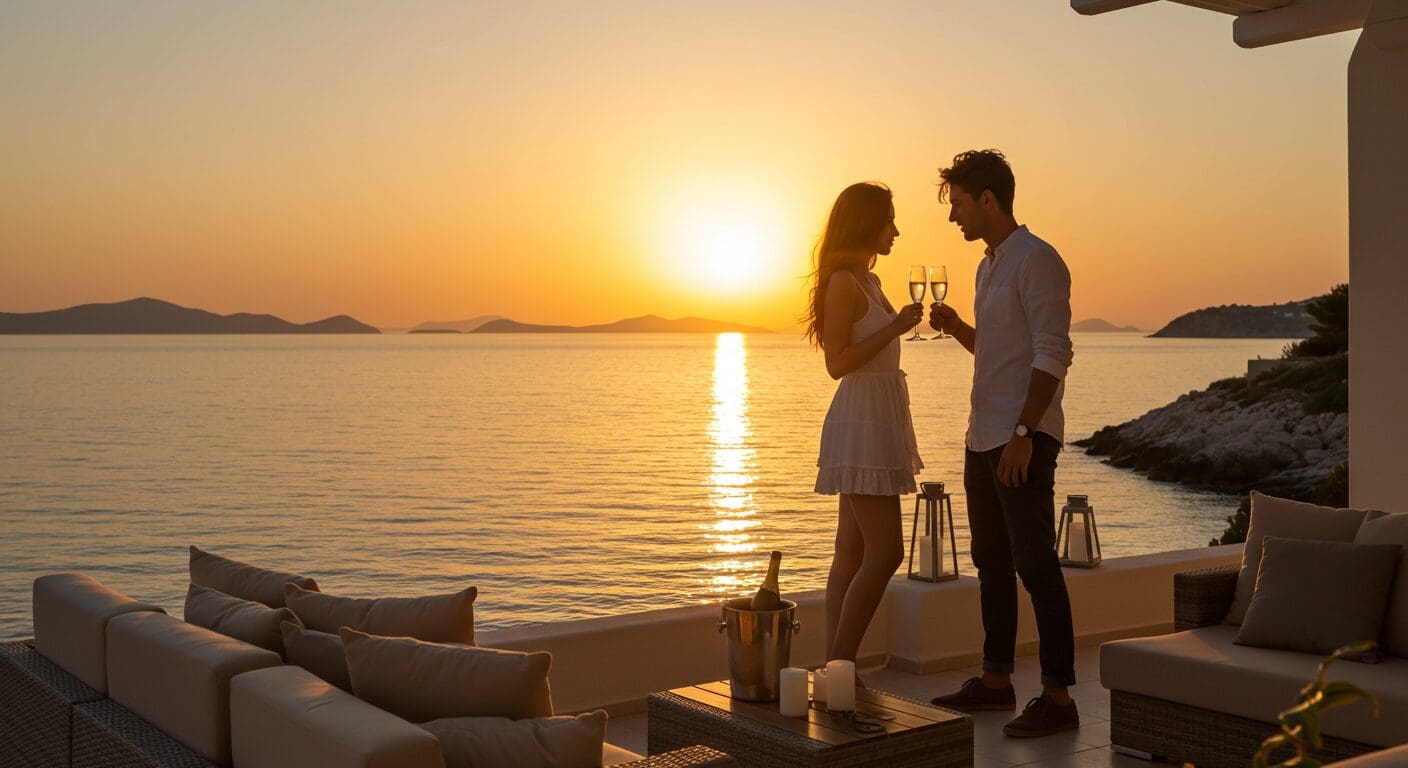
Here is what the guidebooks consistently miss about Protaras: the best hour of the day is not golden hour at Fig Tree Bay, which is perfectly fine and extremely photogenic and exactly as good as everyone says it is. The best hour is around 7am, when the light comes in low and honey-warm across the water, the beach is almost entirely empty, and you can walk the shoreline barefoot with coffee from a bakery that opened at six because the Cypriots take their morning pastries seriously. Two people. No one else. The whole Mediterranean apparently arranged just for you. That is when Protaras earns its reputation as one of the eastern Mediterranean’s most quietly romantic destinations – before the sunbeds arrive and spoil the illusion entirely.
Why Protaras Works So Well for Couples
Protaras occupies a particular sweet spot that very few Mediterranean resorts manage to find. It is beautiful enough to feel genuinely special without being so overrun that romance requires an effort of will to maintain. It sits on Cyprus’s eastern tip, where the island tapers into a series of small bays and rocky inlets framed by a coastline so clear and blue it looks lightly edited even when you are standing in it.
Unlike Ayia Napa, which lies just a few kilometres south and has committed entirely to a different demographic, Protaras has retained a sense of ease and civilisation. The pace here is genuinely slower. There are no mega-clubs. There are no stag parties at 11am. The village square at Cape Greko glows warm on a Tuesday evening and the restaurants fill up with couples eating well and staying late, which is essentially the Cypriot definition of a good time.
The infrastructure for romance is also quietly excellent. The coastline offers a succession of small beaches, each with its own character, which means a couple can spend a week here and choose a different setting every single day without once repeating themselves. Add consistently excellent weather from April through to November, warm shallow water that makes evening swims a genuine pleasure rather than an act of courage, and you begin to understand why honeymooners return here on anniversaries. Some destinations you visit once. Protaras you revisit.
For a broader overview of the region before planning your trip in detail, the Protaras Travel Guide covers the essential geography, getting around, and what to expect across the seasons.
The Most Romantic Settings in Protaras
Fig Tree Bay is the headline act and it deserves its reputation. The sweep of pale sand, the small island you can wade to, the way the bay curves and holds the light in the afternoon – it is genuinely beautiful in that uncomplicated, unambiguous way that some places simply are. But there are quieter chapters to the story.
Konnos Bay, tucked below the Cape Greko National Forest Park, is smaller, more sheltered, and surrounded by low cliffs that give it the feeling of a private theatre. Arrive early on a weekday in shoulder season and you may have it almost entirely to yourselves. The water here is extraordinary – a deep, transparent blue-green that makes snorkelling feel like drifting through glass.
Cape Greko itself, the wild rocky headland at the island’s southeastern tip, offers something rarer: genuine solitude and proper landscape. Walking the coastal paths here at dusk, with the sea dropping away on both sides and the silhouette of the Troodos mountains visible on a clear day inland, is one of those experiences that stays with you long after the suntan fades. There is a sea cave accessible by kayak from the cape – a vaulted natural chamber where the water glows an improbable electric blue in full light. Paddling into it together is the kind of experience that becomes the anecdote you tell at dinner parties for years.
For the evenings, the harbour area around Paralimni and the old windmills of Protaras village offer a gentler, more local atmosphere than the resort strip – the kind of place where you find yourself lingering over a second carafe without quite intending to.
Dining for Two: Restaurants Worth the Occasion
Cyprus takes food seriously in a way that rewards those who pay attention. The local cuisine is not simply Greek food with different branding. It is its own thing – meze culture means meals arrive in a rhythm of small plates that encourages exactly the kind of unhurried, conversational dining that a romantic evening requires. You are never waiting for the main course to arrive. Something interesting is always already on the table.
In Protaras, the best restaurants for a special dinner tend to sit either on or directly above the waterfront, where the combination of fresh seafood, Cypriot wine, and the sound of the sea below creates an atmosphere that even a mediocre meal would struggle to completely undermine. Octopus grilled over charcoal. Halloumi that tastes nothing like the vacuum-packed version available in supermarkets back home – fresher, softer, slightly squeaky in a way that is somehow endearing. Fresh fish, typically priced by the kilo and chosen at the display counter, which gives the whole thing a satisfying sense of theatre.
For a genuinely romantic dinner, look for the tavernas with terraces that overhang the rocks rather than the road – there are several along the coastal strip between Protaras and Konnos Bay. The criterion for choosing one is simple: if the table has a view of open water and the menu lists the day’s catch on a handwritten board, you are probably in the right place. Book a table for 8pm, which is early by Cypriot standards but gives you the full golden hour as an aperitif. Order the meze. Order more wine than you intend to drink. Stay until they start stacking chairs around you, which, to be fair, will not happen until very late because Cypriots are extremely hospitable and in no particular hurry.
Couples Activities: How to Fill the Days
Protaras is genuinely excellent at the kind of activities that work best when there are two of you and no particular agenda. The sea here is warm, clear, and calm for most of the season, which makes sailing an obvious choice. Private yacht charters depart from Paralimni’s coast and range from half-day trips along the cape to full-day cruises east toward the sea caves and the uninhabited inlets accessible only by water. Taking a sunset sail with a private crew, a cooler of Cypriot rosé, and nothing on the schedule is one of those experiences that tips from pleasant into properly memorable.
For couples who prefer terra firma, cooking classes offer a way into Cypriot culture that no amount of restaurant meals quite replicates. Learning to make loukoumades, kleftiko, and tahini-based sweets in a local kitchen – and then eating everything you have made together, which is the entire point – is both absorbing and delicious. It also means you arrive home with something useful, which is a reasonable return on investment for a holiday activity.
Wine tasting in the Cypriot tradition deserves more attention than it typically receives from visitors. The island has a quietly serious wine culture, and while the major wineries are further west in the Troodos foothills, several wine bars and tasting experiences in the Protaras area offer the opportunity to work through the local varietals – Commandaria, the world’s oldest named wine, still produced here, along with Xynisteri and Maratheftiko – in a properly guided setting. It is the kind of afternoon that feels educational while being entirely enjoyable, which is a combination worth seeking out.
Spa treatments are available through several of the larger resort hotels, but the most romantic option for couples staying in a villa is often a private in-villa treatment: a massage therapist who comes to you, a setting you have already made your own, no changing room queue, no interruption. There is something quietly luxurious about that particular arrangement that a day spa, however well appointed, cannot quite replicate.
Where to Stay: The Most Romantic Areas of Protaras
The geography of Protaras divides naturally into a few distinct zones, and where you choose to base yourself shapes the entire character of your stay.
The area immediately around Fig Tree Bay is the most central and the most convenient, with the best concentration of restaurants and water sports within easy walking distance. For couples who want atmosphere on the doorstep without having to think too hard, this is the obvious choice. The beaches here are well-managed and beautiful, though in high season they fill up in ways that do require an early morning commitment to secure a good spot.
Further north, toward the quieter bays beyond the main resort strip, the mood changes considerably. The accommodation here – predominantly private villas rather than hotels – sits above smaller, less visited beaches with significantly more privacy. If the idea of a holiday that involves other people’s children is not especially appealing to you, this is the direction to head. The trade-off is a short drive to the main restaurant and nightlife strip, which is a trade-off most couples find they are entirely willing to make.
The hills slightly inland from Cape Greko offer a third option: villas with panoramic sea views from elevated positions, a cooler breeze on warm evenings, and the national park as an immediate backyard. This is the most private setting of all, and arguably the most special – waking up to a view of the cape and the open sea beyond it, from a terrace that is entirely your own, is a very good way to begin any day.
Proposals and Anniversaries: Specific Moments Worth Planning
If you are planning a proposal in Protaras – and the destination lends itself to this more than almost anywhere in the eastern Mediterranean – the sea caves at Cape Greko are the obvious choice for something genuinely dramatic. A private kayak tour to the vaulted blue cave, a pause in the chamber with the light coming through the water below, a small box in a waterproof bag. It sounds effortful. It is effortful. It is also the kind of thing that no one, not even the most composed person, entirely recovers from saying yes to. Plan it for a weekday morning in May or September when you are unlikely to have an audience. The audience would not be ideal.
For anniversaries, the ritual that works best in Protaras is simpler: a private sunset dinner on a villa terrace, arranged in advance with a local caterer who will arrive, set up, cook, and disappear leaving only the food and the evening. This is not a difficult thing to organise. It is not an expensive thing, relative to the effect it produces. It is one of those arrangements that feels far more considered and personal than a restaurant booking, because it is.
The windmill viewpoint above Protaras village at dusk deserves a mention here. It is small, it is not especially well signposted, and it appears in relatively few travel guides. The view back across the bays from that elevation, with the light going pink and gold over the water, is one of the island’s better kept secrets. Bring wine. Bring a blanket if it’s shoulder season. Bring whoever you love most. That’s the entire instruction set.
Honeymoon Considerations: What Protaras Does Particularly Well
Protaras works for honeymooners for reasons that are partly practical and partly atmospheric. On the practical side: excellent flight connections from most of northern Europe, a genuinely warm welcome culture, food that is reliably excellent without requiring much research, and weather that cooperates for most of the year. The logistics of a Cypriot honeymoon are among the least stressful in the Mediterranean, which matters more than it perhaps should when you have just spent six months planning a wedding.
On the atmospheric side, the island has a quality that is harder to articulate but impossible to miss once you arrive. Cyprus moves at a different rhythm. Meals last longer. Evenings extend themselves naturally. No one is particularly in a hurry, and the local culture gently encourages you to adopt the same approach. For two people who have just survived the industrial-scale logistics of a modern wedding and would very much like to simply stop for a week or two, this is no small thing.
The availability of private villa accommodation – with pools, terraces, outdoor kitchens, and complete privacy – makes Protaras particularly well-suited to couples who want the honeymoon to feel like a world of two. A private villa is not merely a nicer version of a hotel room. It is a genuinely different kind of experience: your own schedule, your own space, your own rhythm. Breakfast at noon if that is what the morning requires. Swimming at midnight. Coffee on your own terrace watching your own slice of the Mediterranean do whatever the Mediterranean does, which is generally look very beautiful and not require anything from you at all.
Honeymoon couples benefit from booking in the shoulder seasons – May, June, or September – when the temperatures are still generous, the beaches are considerably less crowded, and the overall atmosphere of the resort is quieter and more intimate. July and August are wonderful if you love heat and don’t mind company. Most honeymooners, on reflection, prefer the former and have complicated feelings about the latter.
The Romantic Logic of a Private Villa
There is a version of Protaras that exists in hotel corridors and shared pool decks and buffet breakfasts where a surprising number of people are eating eggs at 7:45am. It is perfectly fine. And then there is a different version: a private luxury private villa in Protaras with its own pool, its own outdoor dining terrace, its own kitchen stocked before you arrive, its own complete absence of anyone who is not you. The version where you set the agenda entirely, where evenings end when you decide they end, where the morning is yours before anyone else has claimed it.
For couples travelling to one of the eastern Mediterranean’s most genuinely romantic destinations, the choice of base matters enormously. Excellence Luxury Villas offers a curated selection of private villas across Protaras and the surrounding coast – properties chosen for their privacy, their quality, and their suitability for couples who want the experience to match the occasion. Because there are some trips that deserve more than a room with a view.
When is the best time of year for a romantic trip or honeymoon to Protaras?
May, June, and September are the sweet spot for couples. Temperatures are warm and settled – typically between 24 and 30 degrees – the sea is beautifully swimmable, and the resort is noticeably quieter than the July and August peak. You get the full beauty of the destination with significantly more privacy, which for a honeymoon or romantic break makes a considerable difference. October is also worth considering for couples who prefer warmth without crowds and don’t mind that some beach facilities begin to wind down.
Is Protaras better than Paphos for a honeymoon?
They are genuinely different experiences. Paphos has more history, more UNESCO sites, and a slightly more cosmopolitan atmosphere. Protaras has cleaner, calmer beaches, clearer water, and a more relaxed pace that suits couples who want the holiday to feel like a genuine pause rather than a sightseeing itinerary. If your ideal honeymoon involves very clear water, long unhurried evenings, and a private villa with a pool, Protaras is the stronger choice. If you want to combine beaches with archaeological sites and a wider restaurant scene, Paphos offers more variety.
What is the most romantic area to stay in Protaras for couples?
For couples who want convenience and atmosphere on the doorstep, the area around Fig Tree Bay is hard to argue against – beautiful beach, good restaurant access, and a lively but not chaotic evening atmosphere. For those prioritising privacy and seclusion, the quieter northern bays beyond the main resort strip offer villa accommodation with much less foot traffic and a considerably more intimate setting. The elevated positions above Cape Greko, with panoramic sea views and direct access to the national park, are perhaps the most special of all – particularly for honeymoon couples staying in a private villa.

