
Romantic Maspalomas: The Ultimate Couples & Honeymoon Guide
Romantic Maspalomas: The Ultimate Couples & Honeymoon Guide
Here is what nobody tells you about Maspalomas: the dunes are loudest just before sunrise, and completely silent approximately forty minutes after. The coach parties haven’t arrived yet. The beach vendors are still at home. And if you walk south from the lighthouse with someone you love, past the point where the last sunlounger disappears and the sand shifts from beige to gold, you will find a stretch of coastline so quietly extraordinary that you might feel, for a moment, as though the Atlantic belongs entirely to you. That’s the Maspalomas that couples discover when they stop following the crowds – and it’s the version this guide is going to help you find.
Why Maspalomas Works So Well for Couples
The easy answer is the weather. Gran Canaria sits in a permanent meteorological sweet spot – warm enough for bare shoulders in January, rarely ferocious enough to ruin a sundowner in July. The Canary Islands’ eternal spring reputation is not marketing fiction. It is one of the more reliable facts in the travel industry, which is saying something.
But weather alone doesn’t make a romantic destination. What Maspalomas offers couples is something more interesting: genuine contrast in a small geography. Within a few kilometres you can move from one of Europe’s most dramatic natural landscapes – the UNESCO-protected dunes, a Saharan landscape dropped improbably into the Atlantic – to a sheltered marina, a palm-lined promenade, a spa terrace overlooking the sea, and a candlelit restaurant table. The options don’t feel forced. They feel earned.
The resort has also quietly matured. While certain parts of the wider resort area retain their package-holiday DNA, the southern tip around the lighthouse and the Paseo Marítimo has developed a more considered, adult atmosphere. This is a place where couples in their thirties through to their seventies find exactly the right pitch of luxury, relaxation and light adventure. The infrastructure is excellent. The pace is entirely your own.
For a broader introduction to the destination before you dive into the romance, our full Maspalomas Travel Guide covers everything from practical logistics to the best beaches in the area.
The Most Romantic Settings in Maspalomas
The dunes are the obvious answer, and the obvious answer is correct – though how you experience them makes all the difference. Morning is the time. The light at 7am over the dunes is a particular shade of amber that photographers spend careers chasing. Walking through them with someone in companionable silence, bare feet in still-cool sand, with nothing ahead but the sea, is one of those travel experiences that doesn’t need embellishment.
The Charca de Maspalomas – the freshwater lagoon where the dunes meet the sea – is worth understanding properly. It’s a protected natural reserve, home to migratory birds and flanked by palm groves. It’s also genuinely beautiful, and almost entirely overlooked by visitors who consider the beach to be the main event. Walk the perimeter at dusk and you’ll understand why it shouldn’t be.
Puerto Rico de Gran Canaria, a short drive west, offers something different: a marina with a village atmosphere and excellent seafood restaurants strung along the waterfront. It lacks the grandeur of the dunes, but there’s a particular pleasure in sitting at a harbour table with wine and watching the boats. Sometimes the romantic gesture is the easy one.
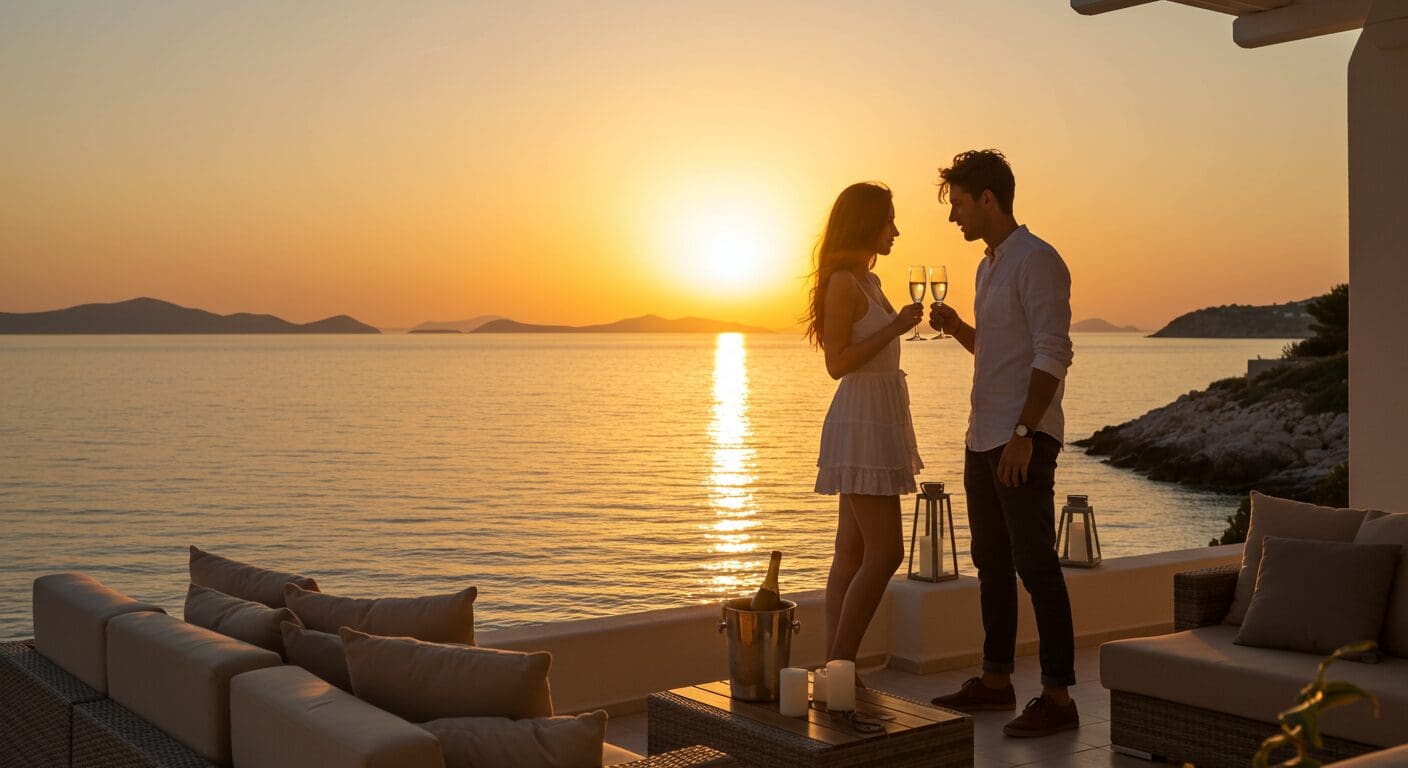
For sunsets, position yourselves along the Paseo Marítimo as the light changes over the Atlantic. The lighthouse at Punta de Maspalomas is the landmark everyone photographs, but the stretch of coast between the lighthouse and the first beach bar is where the real evening light lives. No tripods required. Just show up and look west.
Romantic Dining: Where to Eat for a Special Occasion
Maspalomas doesn’t have the concentrated fine-dining scene of Las Palmas, but it doesn’t need to. What it has is a collection of restaurants that understand the assignment: good food, considered wine lists, decent table spacing, and views that do a significant portion of the atmosphere work for you.
The most romantic dining experiences tend to cluster around the Faro de Maspalomas area and along the quieter sections of the seafront promenade. Look for terrace tables that face the Atlantic rather than the road. The difference between a memorable dinner and a merely good one is often just that: which direction you’re facing.
Canarian cuisine rewards couples who engage with it properly. Papas arrugadas with mojo – the island’s famously wrinkled salt-crust potatoes served with the local red and green sauces – are not a starter to skip in favour of something more recognisable. The fresh fish, often caught locally and served simply with the island’s excellent house wines, is the real argument for eating locally. Atlantic tuna and sea bass appear regularly on menus, treated with a respect that speaks to a genuine fishing culture rather than a supply chain.
For a special occasion dinner, book ahead wherever you can and request a specific table. Many restaurants in the area will accommodate this, and a table on the edge of a terrace with the sea breeze and a shared bottle of local Canarian white wine is worth the five minutes it takes to send the email.
Couples Activities: From Sailing to Spa Days
The marina at Pasito Blanco is one of Gran Canaria’s better-kept secrets for couples wanting a private sailing experience. Several operators offer sunset catamaran charters and private boat hire – the kind of afternoon where the itinerary is loose, the water changes colour three times, and you return to shore slightly sun-kissed and entirely relaxed. Dolphin and whale watching excursions are also popular in these waters, and while wildlife sightings are never guaranteed, the waters between Gran Canaria and Tenerife have a creditable track record.
Spa experiences in the resort area range from the perfunctory to the genuinely excellent. The better hotel spas – several of which accept non-residents – offer couples treatment rooms where you can book massages, thalassotherapy circuits and hydrotherapy side by side. A spa afternoon followed by dinner tends to work particularly well as a honeymoon or anniversary day. Nobody has ever complained that they were too relaxed for dinner.
For those who want to do something together rather than just be somewhere together, cooking classes in the Canarian tradition are available through local food tour operators in the wider Gran Canaria area. Learning to make mojo properly is both more challenging and more entertaining than it sounds. Wine tasting experiences tied to the island’s volcanic viticulture – particularly from the north of the island around Arucas and the Doramas region – offer a half-day format that combines a scenic drive with genuine education about a wine culture that most visitors never discover.
Cycling the dune perimeter, horse riding on the beach at quieter hours, and guided stargazing excursions (Gran Canaria’s low light pollution and clear skies make this genuinely worthwhile) round out the activity options. The stargazing, in particular, translates effortlessly from activity to moment.
The Most Romantic Areas to Stay
Maspalomas divides fairly neatly into zones, and for couples the hierarchy is straightforward. The area immediately around the Faro de Maspalomas and the southern dune edge offers the greatest sense of seclusion and the most direct access to the natural landscape. Properties here – particularly private villas set back from the main tourist strips – capture a quieter version of the resort that feels genuinely removed from the busier northern sections.
The Campo Internacional urbanisation, slightly inland, offers a more residential feel with wide streets, mature palm gardens and good access to both the dunes and the beach. It is popular with couples who want space and privacy rather than a hotel corridor and an 8am breakfast buffet. The difference in atmosphere between a private villa with a terrace and pool and a resort hotel is not subtle.
For couples who want a short walk to restaurants and the harbour atmosphere, properties near the Meloneras area offer a useful middle ground – quieter than Playa del Inglés to the north, with a more considered restaurant and bar scene and good beach access. Meloneras has positioned itself as the area’s more upscale quarter, and largely delivers on that promise.
Proposal-Worthy Spots
This section could simply read: the dunes, at sunrise, facing the lighthouse. And that would not be wrong. The particular quality of the light, the total absence of noise, and the sheer improbability of that landscape – a genuine desert meeting the Atlantic Ocean on a small volcanic island – creates the kind of setting that makes the moment feel larger than itself.
The Charca lagoon at golden hour offers a slightly less athletic alternative, with the palm fringe and the birdlife providing a natural backdrop of considerable beauty. For those who would rather not get sand in unexpected places, a private catamaran charter at sunset is the proposal format that requires the least logistical courage while still delivering a backdrop that will look well in the story you tell for the next several decades.
The lighthouse itself, at the far southern tip of the island, has a quiet authority that photographs beautifully. Arrive thirty minutes before sunset and walk towards it along the beach. The light at that point in the evening is doing most of the work for you. Proposers are advised to double-check their pockets before leaving the villa.
Anniversary Ideas in Maspalomas
The best anniversary experiences in Maspalomas are the ones that build on the place rather than import generic celebration formats. A private chef dinner at your villa, with a menu built around Canarian seasonal produce and a wine selection from the island’s volcanic growing regions, is more memorable than any restaurant table with a pre-written cake inscription. The combination of your own outdoor space, the warm evening air, and food cooked specifically for you tends to feel like exactly the right level of occasion.
A full-day sailing charter with a picnic lunch at anchor in a quiet cove is worth considering for milestone anniversaries. The western coast of Gran Canaria, accessible by boat, has stretches of coastline that are inaccessible by land and largely unknown to visitors. Finding somewhere that belongs to you, even temporarily, is a particular kind of anniversary gift.
For something more grounded, a private guided hike through the dunes into the interior – with a guide who can explain the ecology, the history and the geology of what you’re walking through – transforms the landscape from backdrop into narrative. It’s a useful reminder that the most romantic places have actual depth to them, not just good light. Though the light helps too.
Honeymoon Considerations for Maspalomas
The practical case for Maspalomas as a honeymoon destination is substantial. Direct flights from most major UK and European cities mean a combined travel and arrival time that rarely exceeds five or six hours – relevant when you are arriving post-wedding and functioning on approximately four hours of sleep and the residual adrenaline of a very big day. The year-round warmth removes the anxiety of seasonal timing. The infrastructure is mature and well-organised without being over-developed.
The experiential case is equally strong. A honeymoon should have both activity and rest – mornings with purpose, afternoons of complete inertia. Maspalomas accommodates both without friction. The dunes for a morning walk. A spa afternoon. A sunset sail. A private dinner. Repeat as required.
For honeymooners specifically, a private villa offers something a hotel cannot: genuine privacy, your own pool, your own schedule, and the ability to have breakfast at eleven in the morning without anyone raising an eyebrow. There are no other guests. There is no check-out anxiety. There is, frankly, no one else involved in your honeymoon at all, which is rather the point.
Plan your villa stay carefully – choose a property with outdoor space that faces the right direction for evening light, a private pool, and enough kitchen and living space that you could spend an entire day without needing to go anywhere. Some days on honeymoon, the most romantic plan is no plan at all.
Your Romantic Base: A Private Villa in Maspalomas
Everything described in this guide – the sunrise walks, the private dinners, the long afternoons on a sun terrace, the evenings watching the light change over the Atlantic – is experienced differently when you return to somewhere that is genuinely yours for the duration of your stay. Not a hotel room with a view of the car park. Not a serviced apartment in a complex with a shared pool. A private villa with its own pool, its own outdoor spaces, and its own particular kind of quiet.
For couples, that distinction is significant. A luxury villa provides the physical and psychological space that romantic travel actually requires – room to be together properly, without the ambient noise of other people’s holidays pressing in from all directions.
A luxury private villa in Maspalomas is the ultimate romantic base for everything this destination has to offer – and the right starting point for building the kind of trip that you will find yourselves talking about for years.
When is the best time of year for a romantic trip to Maspalomas?
Maspalomas benefits from one of the most consistent climates in Europe, with temperatures ranging between 18°C and 26°C across the year. For couples seeking quieter beaches and a more intimate atmosphere, late autumn (October to November) and early spring (February to March) offer warm weather with fewer visitors than the peak summer and Christmas periods. That said, there is no genuinely bad month to visit – which is precisely why the island has attracted year-round travellers for decades.
Is Maspalomas suitable for a honeymoon, or is it better suited to longer-established couples?
Maspalomas works exceptionally well for honeymooners, particularly for those who want a combination of natural beauty, genuine relaxation, and easy luxury without the logistical complexity of a long-haul destination. The short flight time from the UK and Europe is a practical advantage after a wedding. Private villa accommodation provides the privacy and space that a honeymoon genuinely requires. The destination has matured significantly in recent years and the southern dune area in particular has a quality of experience that competes comfortably with more celebrated honeymoon destinations – at considerably less cost and without the jet lag.
What is the most romantic area of Maspalomas to stay in for couples?
The area around the Faro de Maspalomas (the lighthouse) and the southern edge of the dunes offers the most secluded and naturally beautiful setting. Properties here have direct access to the dune landscape and the quieter sections of beach. The Meloneras quarter is a good option for couples who want to be within walking distance of upscale restaurants and the seafront promenade without being in the busier heart of the resort. For maximum privacy, a villa in the Campo Internacional or Meloneras residential areas – with a private pool and outdoor living space – represents the ideal romantic base.

