
Best Restaurants in Cyclades Islands: Fine Dining, Local Gems & Where to Eat
Best Restaurants in Cyclades Islands: Fine Dining, Local Gems & Where to Eat
There are places in the world where the food and the setting conspire so effectively against you that you find yourself ordering a third carafe of wine before you’ve noticed the sun has moved. The Cyclades is one of those places. What this archipelago manages that nowhere else quite replicates is the particular alchemy of exceptional raw ingredients, a culinary tradition that predates most of Europe’s celebrated food cultures, and a backdrop – white walls, Aegean blue, the faint smell of thyme on warm stone – that would make a bowl of plain rice feel like an event. The best restaurants in the Cyclades Islands don’t need to try especially hard. The islands do most of the heavy lifting. And yet, increasingly, they’re trying anyway – and the results are genuinely worth travelling for.
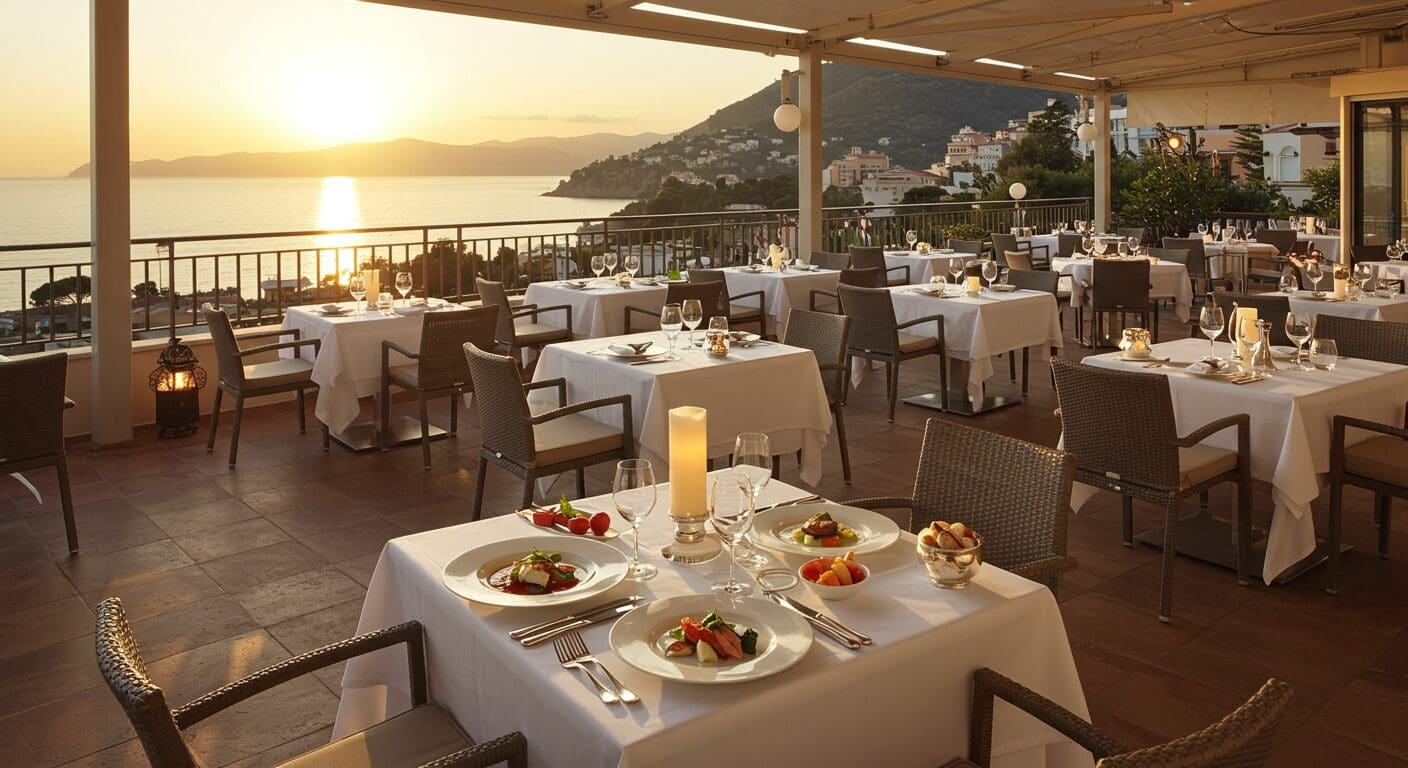
The Fine Dining Scene: Elevated Greek Cuisine and Aegean Gastronomy
For a long time, “fine dining in Greece” was a phrase that made serious food people quietly wince. The taverna was sacred; the tablecloth-and-tasting-menu format felt imported and slightly unconvincing. That has changed with some conviction over the past decade, particularly across the Cyclades. Santorini leads the charge – it has done for years – with a cluster of restaurants that apply serious culinary technique to the extraordinary local larder: Santorini fava (split pea puree with a particular sweetness unique to the volcanic soil), chlorotyri cheese, white aubergine, and fish so fresh it barely requires cooking.
Mykonos, for its part, has developed a fine dining scene calibrated rather precisely to the tastes of its international clientele – Mediterranean-inflected menus, impeccable wine lists, and the kind of service that doesn’t blink when a table orders a second bottle of aged Assyrtiko before the starters have arrived. Several restaurants across both islands have earned serious recognition from international food critics and guides, with a small number holding or approaching Michelin-level recognition as the Guide continues to expand its Greek coverage. Reservations are essential, particularly in July and August. Book early – weeks early, not days.
What distinguishes the best fine dining establishments in the Cyclades from their equivalents in, say, Paris or London, is that the finest ingredients here aren’t imported. The sea bream was probably swimming yesterday. The cherry tomatoes came from a farm where the volcanic soil does something inexplicable and quietly extraordinary to their flavour. The chefs who understand this – who resist the temptation to over-elaborate and instead let the ingredients speak – produce food that is genuinely memorable.
Tavernas: Where the Real Eating Happens
It would be a mistake – a significant one – to treat the local taverna as a fallback option for nights when you can’t get a reservation somewhere smarter. In the Cyclades, the taverna is the point. These are family-run institutions, often operating in the same building for three or four generations, with menus that change according to what came in that morning and what the grandmother felt like making. The food is direct, confident, and seasoned with the particular authority of people who have been cooking these dishes their entire lives.
Look for places where the menu is short – ideally handwritten, ideally translated with endearing creative licence – and where the bread arrives without being asked. Order the grilled octopus if it’s on the menu; in the Cyclades it’s almost always dried in the sun before cooking, which concentrates the flavour in a way that bears no resemblance to anything you’ve eaten elsewhere. Slow-cooked lamb with lemon and oregano, moussaka made to a recipe that belongs to no cookbook, fresh fava with olive oil and capers – these are dishes that reward eating without comment.
Naxos, often underrated relative to its flashier neighbours, has some of the finest taverna dining in the archipelago. The island produces its own exceptional cheeses – graviera and arseniko among them – along with potatoes that have a devoted following among Greek chefs, and a local beef tradition that surprises most visitors. Paros too has a quiet, serious food culture that doesn’t need a sunset terrace to justify itself. These are the places you come back from and find yourself unable to explain properly to people who weren’t there. Which is, of course, the point.
Beach Clubs and Casual Dining: Eating Well by the Water
The Cyclades has elevated the concept of the beach club to a form of mild theatre. Mykonos in particular has made something of an art of it – beautifully designed spaces where the loungers are occupied by people who’ve given serious thought to their sunglasses and the cocktail menu is longer than the food menu. This is not a criticism. On the right afternoon, with the right company and the right light on the water, a beach club lunch of grilled fish, Greek salad, and something cold in a tall glass is precisely perfect.
The better beach clubs serve food that goes well beyond the perfunctory. Fresh ceviche, grilled calamari, mezze platters with genuinely good ingredients – the standard has risen considerably. The key is timing: arrive at lunchtime rather than for the later crowd, when the kitchen is at its best and the atmosphere is convivial rather than performative. Santorini’s caldera-facing terraces offer a different proposition – the setting is, frankly, unfair to anywhere else on earth, and the casual lunch menus lean into the local ingredients with confidence.
On the smaller islands – Folegandros, Sifnos, Ios outside August – casual dining takes a quieter form: a plastic table on a harbour wall, a handwritten menu, the sound of rigging. Sifnos deserves special mention. The island has a disproportionate claim on Greek culinary history – it produced some of Greece’s most celebrated cooks – and its simple restaurants reflect a food culture that is both ancient and genuinely distinctive. Order the chickpea soup cooked overnight in a clay pot. Order it without overthinking it.
Hidden Gems: The Places the Guidebooks Haven’t Quite Caught Up With
Every island in the Cyclades has a version of this restaurant: somewhere up a lane that doesn’t appear on any map, run by someone who cooks because they can’t imagine doing anything else, serving food that you eat in slightly stunned silence. These places are, by definition, difficult to point to directly – partly because they change, partly because naming them would immediately make them something else.
What you’re looking for is this: a place with no photographs on the menu (a reliable quality indicator in both directions), tables that don’t match, and an owner who describes the day’s specials with the air of someone doing you a quiet favour. In the interior villages of Naxos, the hillside settlements of Folegandros, and the back streets of Parikia in Paros, these restaurants exist in modest abundance. The best strategy is to ask where locals eat – not hotel staff, whose recommendations can trend towards the polished and the familiar, but the woman running the bread shop or the fisherman mending nets at the harbour. They will tell you, and they will be right.
Food Markets and Local Ingredients: What to Buy and Where
The food markets of the Cyclades are a form of education that doesn’t feel like one. Morning markets in Naxos Town, the harbourside sellers in Paros, the small producers selling direct from Santorini’s volcanic farms – these are places where the ingredients make sense in context. You understand, when you see a just-caught fish laid on ice at a harbour stall, why the grilled fish at lunch tasted the way it did.
Key things to seek out: Santorini’s extraordinary cherry tomatoes and sun-dried tomato paste; Naxian graviera cheese aged in local cellars; thyme honey from the hillsides of multiple islands (it is, without exaggeration, among the finest honey produced anywhere); local capers in salt; and the small, intensely flavoured olives that appear on almost every table and deserve considerably more attention than they typically receive.
Loukoumades – honey-drenched doughnut balls – appear at markets and street stalls across the islands and should be eaten immediately, standing up, without dignity. Some experiences don’t require a proper table.
Wine, Assyrtiko and What to Drink: The Cyclades in a Glass
The wine story of the Cyclades begins and ends, for most serious wine drinkers, with Santorini’s Assyrtiko grape – a white variety of startling character that produces wines of volcanic minerality, bright acidity, and genuine complexity. The best examples age beautifully, developing layers of texture while retaining that distinctive saline, stony edge. Drinking a well-aged Assyrtiko on the island that produced it is one of those experiences that collapses the distance between wine and place entirely. You taste the soil, quite literally.
Paros produces reds and rosés from the Monemvasia and Mandilaria grapes that are worth seeking out – less internationally known, which is rather their appeal. The local wine in a taverna, ordered simply as “a carafe of the house red,” will occasionally surprise you in the best possible way, and will occasionally remind you why specific ordering exists. This is the risk you accept.
Beyond wine: ouzo, served properly with ice and water and a small plate of mezze, is the correct aperitif for a warm evening on a harbour terrace. Tsipouro – a grape pomace spirit similar to Italian grappa but rougher and more characterful – appears in the smaller, more local establishments. Rakomelo, a warm honey-and-raki combination, is a winter tradition that turns up occasionally even in summer on the smaller islands. Try it once. It tastes exactly like the kind of thing someone invented during a cold night with limited options, and it is considerably better than it sounds.
Reservation Tips: How to Actually Get a Table
High season in the Cyclades – broadly late June through August – requires a level of advance planning that some travellers find mildly offensive given that they’re supposed to be on holiday. The most sought-after restaurants on Santorini and Mykonos can require reservations four to six weeks in advance, particularly for caldera-view tables and weekend evenings. This is not hyperbole. Book early, confirm the reservation closer to the date, and note that many restaurants will release reserved tables if you don’t confirm.
Several practical notes: many restaurants in the Cyclades operate a split-service model, with a clear early seating (often 7-8pm) and a later local seating from 9pm onwards. If you want the table for the evening rather than a time slot, ask when booking. Dress codes at the finer establishments are smart-casual at minimum – the Cyclades has warmth, but the better restaurants have standards. And tipping: a 10-15% tip is customary and genuinely appreciated; the service industry here works hard for a season that, for the smaller islands, may only last four months.
For the more casual and hidden-gem restaurants, reservations are often impossible – you simply arrive, express interest with a reasonable amount of charm, and hope. This works more often than it should, particularly outside the peak weeks of July and August. The shoulder seasons – May, June, September, early October – offer a noticeably better experience for serious food travel: shorter queues, more relaxed kitchens, and the particular pleasure of eating well without feeling like you’re managing a logistical operation.
Staying Well, Eating Well: The Villa Advantage
There is an argument – a rather compelling one – that the finest meal in the Cyclades is the one eaten on your own terrace, with the Aegean below you and nobody requiring your table back. Staying in a luxury villa in the Cyclades Islands brings a dimension to the food experience that no restaurant, however excellent, can fully replicate: the private chef option, available through Excellence Luxury Villas, allows you to commission menus built around local market produce, dietary preferences, and the particular pleasure of eating exceptional food without shoes on.
A private chef in this context isn’t a luxury affectation – it’s a different kind of dining experience entirely. The same local ingredients that supply the island’s finest restaurants arrive at your villa kitchen, and the evening unfolds at your own pace, at your own table, without the ambient stress of a reservation time. For families, groups, or anyone who finds the best meals happen when they’re not watching the clock, it’s a serious consideration. For more context on planning a trip to this part of the Aegean, the Cyclades Islands Travel Guide covers everything from the best time to visit to island-hopping logistics in the kind of detail that makes the planning process feel considerably less like work.
What is the best island in the Cyclades for food and dining?
Santorini and Mykonos have the most developed fine dining scenes, with internationally recognised restaurants and exceptional wine from Santorini’s volcanic vineyards. However, Sifnos has the deepest culinary roots – the island has produced some of Greece’s most celebrated cooks and its food culture is quietly extraordinary. Naxos is the best choice for exceptional local produce, with its own cheese tradition, fresh seafood, and taverna dining that punches well above its profile. For serious food travellers, visiting more than one island and comparing what each grows, catches, and cooks is the most rewarding approach.
Do I need to book restaurants in advance in the Cyclades?
For the finer restaurants on Santorini and Mykonos during high season (late June to August), reservations four to six weeks in advance are strongly recommended – particularly for caldera-view tables or weekend evenings. Many of the most sought-after spots release unreserved tables at short notice, so it’s worth checking back if you couldn’t book ahead. More casual tavernas and local restaurants generally don’t take reservations; simply arriving early in the evening (before 8pm) gives you the best chance of a table without a wait. In shoulder season – May, June, September and October – advance booking is less critical and the overall dining experience tends to be more relaxed.
What dishes should I make sure to eat in the Cyclades?
Several dishes are specific enough to the region that they’re worth seeking out deliberately. Santorini fava – a yellow split pea puree from the island’s volcanic soil – is unlike any version you’ll find elsewhere, and should be ordered as a starter wherever you see it. Sun-dried octopus, grilled over charcoal, is a Cycladic staple done best at traditional harbourside tavernas. Sifnian chickpea soup cooked overnight in a clay pot is a local institution. Naxian graviera cheese, served simply with honey and bread, is excellent. And Santorini Assyrtiko wine – dry, mineral, and deeply tied to its volcanic terroir – is worth drinking throughout your stay rather than saving as a special occasion. It suits the food and the climate with unusual precision.