
Best Restaurants in Almada: Fine Dining, Local Gems & Where to Eat
Here is a mild confession: most people who eat in Almada think they are eating in Lisbon. They take the ferry across the Tagus, order grilled fish with a cold Sagres, watch the 25 de Abril Bridge turn amber in the evening light, and return to their Lisbon hotel feeling quietly smug about having “discovered somewhere local.” They have, technically, crossed an international boundary. Almada is not Lisbon. It is its own municipality, its own character, and – crucially for anyone who cares about food – its own deeply rewarding dining scene that has been quietly doing excellent things for years while the city across the water hoovered up all the travel column inches.
The irony is a good one. Almada sits just fifteen minutes by ferry from one of Europe’s most food-obsessed capitals, yet it rarely appears on the restaurant shortlists. Which is, for those who know, precisely the point. The best restaurants in Almada serve food that is honest, market-fresh, and rooted in Portuguese tradition – without the tourist markup or the two-month reservation waitlist that now dogs the Lisbon fine dining circuit. Some of them do have waitlists, it is worth saying. But that is a different matter entirely, and one worth navigating.
What follows is a guide to where to eat in Almada – from the riverside addresses that inspired television food documentaries to the hidden petiscos bars tucked into old Cacilhas side streets. Consider it essential reading before you even think about booking a table.
The Almada Dining Scene: What to Expect
Almada does not have a Michelin-starred restaurant at the time of writing – a fact that says considerably more about Michelin’s geographic priorities than it does about the quality of food on offer here. The cooking across the better establishments is accomplished, ingredient-led, and deeply seasonal. What the dining scene here excels at is the kind of food that Michelin stars occasionally cause people to forget exists: proper bacalhau, just-caught seafood, slow-cooked octopus, and the quiet confidence of a kitchen that has been doing the same thing beautifully for decades.
The riverside strip along Rua do Ginjal is the epicentre of serious eating. This is a long, partly decaying waterfront promenade – old warehouses slowly returning to nature, cats conducting their own business with professional detachment, and between them some of the finest views of Lisbon available from any restaurant table in the greater metropolitan area. The contrast between the slightly crumbling architecture and the quality of what arrives on your plate is, depending on your disposition, either wonderfully atmospheric or deeply confusing. Most people land on atmospheric.
Away from the river, the old neighbourhood of Cacilhas has its own restaurant culture – more workmanlike, less scenic, and arguably more interesting for it. This is where locals actually eat. The menus lean traditional, the wine lists are short but purposeful, and nobody is arranging microherbs on your plate for Instagram. This is Portuguese food at its most straightforward and satisfying.
Ponto Final: The One Everyone Has Heard Of (For Good Reason)
Let us address the elephant in the room – or rather, the television presenter on the ferry. Ponto Final, located at Rua do Ginjal 72, became internationally known after featuring in Somebody Feed Phil, the Netflix food travel series in which Phil Rosenthal crossed the Tagus specifically to eat here. The restaurant has not been shy about this. The reputation, however, is entirely deserved, which is not something you can always say about television-famous restaurants.
Ponto Final occupies a converted riverside warehouse with a terrace that hangs directly over the water. The view takes in the full sweep of Lisbon’s historic skyline – the castle, the cathedral quarter, the Pombaline grid catching the afternoon sun. It is, frankly, one of the great restaurant views in Portugal. The food matches it. Nearly everyone orders the fresh seafood, and they are right to do so – grilled fish here has the simplicity of something cooked by someone who has been doing it all their life, which is essentially the case. The tempura green beans are a genuine revelation for anyone who assumed tempura had no business appearing on a Portuguese menu. The tomato rice is the kind of side dish that ends up being the thing you remember most.
Reservations are essential and must be made weeks in advance. This is not a suggestion. The ferry from Lisbon’s Cais do Sodré takes fifteen minutes; the wait for a table without a booking takes considerably longer. Plan accordingly.
Atira-te ao Rio: Romance on the South Bank
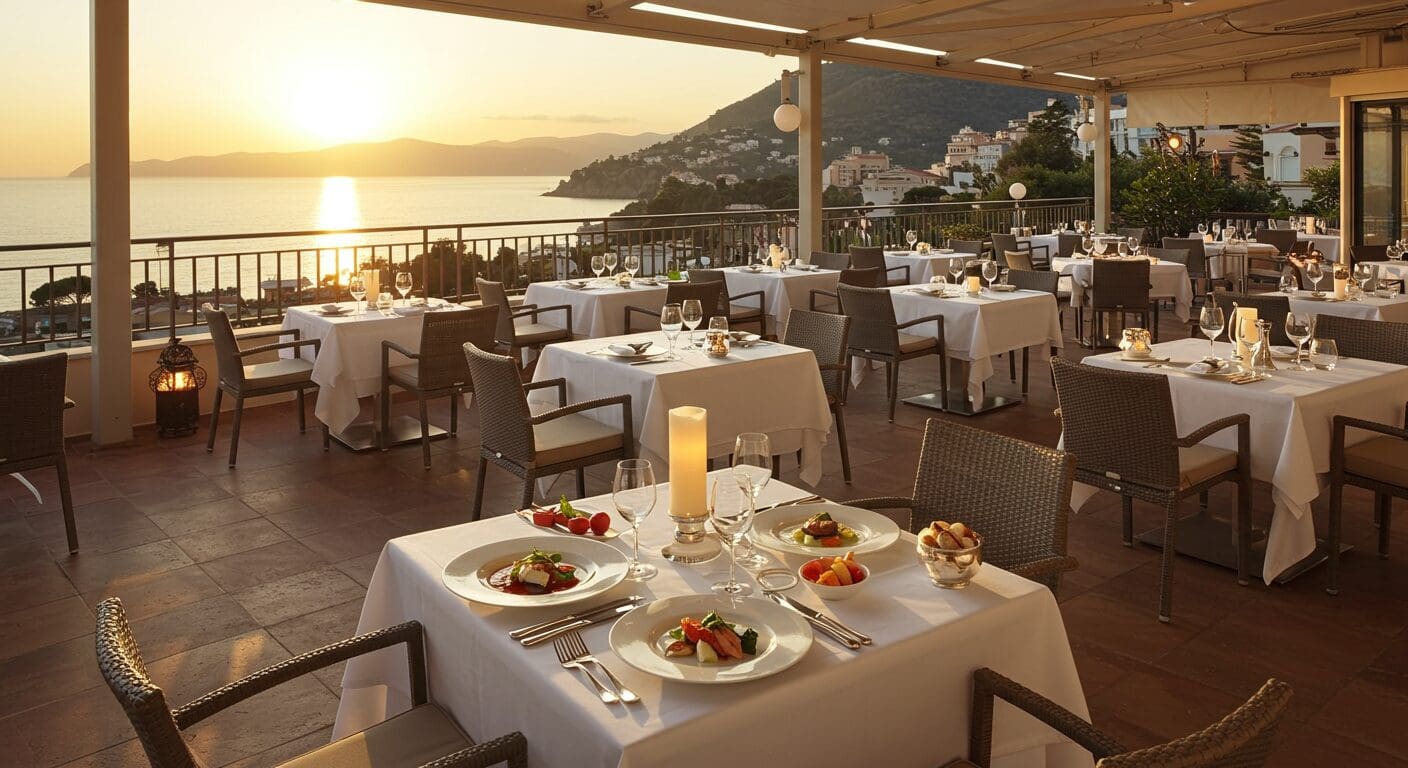
Fifty metres along the same riverside promenade, at Rua do Ginjal 69, sits Atira-te ao Rio – a restaurant whose name translates roughly as “throw yourself into the river,” which is either a poetic invitation or a piece of very dark humour depending on the day you have been having. The atmosphere here skews romantic: outdoor seating, low lighting as the evening comes in, and views across the Tagus that have caused more than one diner to forget they were mid-sentence.
Where Ponto Final operates at full tilt, Atira-te ao Rio is quieter, more intimate, and slightly more refined in its presentation. The menu is classic Portuguese with careful seafood at its heart – fresh catches treated with respect, traditional recipes executed with evident skill. The sunset view, with the 25 de Abril Bridge silhouetted against the western sky and Lisbon’s lights beginning to come on across the water, is the kind of thing travel writers reach for hyperbole to describe. We will resist. It is very good. Book it for a special evening and you will not be disappointed.
As with Ponto Final, reservations are strongly recommended. The two restaurants are practically neighbours on the Ginjal, which raises the obvious question of which to choose. The honest answer is that your mood should decide: Ponto Final for energy and occasion, Atira-te ao Rio for something quieter and more considered.
Restaurante Galeria: Where Traditional Portugal Lives
If there is a single restaurant in Almada that luxury travellers with genuine culinary curiosity should seek out, Restaurante Galeria in Cacilhas may be it. This is not the flashiest address on this list. It does not have a terrace over the river or a Netflix cameo. What it has is a kitchen that takes traditional Portuguese cooking seriously in ways that can be genuinely difficult to find even in Lisbon proper.
The menu features dishes that have largely disappeared from the tourist-facing restaurant circuit: sames de bacalhau – salted codfish bladders paired with chickpeas – is the kind of preparation that requires both confidence and a diner willing to engage with it. It rewards both. The octopus stew, slow-simmered in red wine with sweet potatoes, is the sort of dish that arrives looking unremarkable and tastes like someone spent most of the day on it. They probably did.
This is where you come to understand what Portuguese food actually is, beneath the grilled fish and the pastel de nata that dominate the simplified version of it available elsewhere. Come hungry, come curious, and come without any fixed ideas about what you are willing to try. The kitchen will reward the open-minded.
Amarra Ó Tejo: The Hilltop Perspective
Most of the restaurants on this list look at Lisbon from river level. Amarra Ó Tejo, located near Almada Castle on the hill above the riverfront, offers something different: an elevated view across the whole estuary, taking in the bridge, the city, the broad silver expanse of the Tagus, and on a clear day the Serra de Sintra ridgeline in the far distance.
The cooking here occupies interesting territory – traditional Portuguese cuisine given a contemporary and occasionally international inflection. The result is food that feels more considered than the straightforwardly traditional addresses: dishes are well-composed and attractively presented without tipping over into the kind of architectural plating that prioritises photography over eating. The wine list is thoughtful and leans toward Portuguese producers, which is the correct instinct in a country that has been making excellent wine for considerably longer than it has been receiving travel supplement coverage for doing so.
For guests staying in a villa in the Almada area, this is a particularly good evening option – the hilltop location means it sits naturally between the old town and the Atlantic-facing neighbourhoods, and the combination of food and view makes it a strong choice for a standalone evening rather than a quick lunch.
Solar Beirão: Petiscos Done Properly
The concept of petiscos – small Portuguese dishes analogous to Spanish tapas but emphatically their own thing – is one of the better arguments for eating in company. Solar Beirão, at Rua António Sérgio 3, is the kind of place that makes the case comprehensively. The menu is built around seafood petiscos of real quality: octopus salad with clean acidity and olive oil that tastes like it came from a specific grove; garlic prawns cooked fast and served immediately; cockles with Bulhão Pato sauce, which is the butter-lemon-garlic preparation that the Portuguese have been doing since long before it became fashionable anywhere else; and mixed fried fish that arrives in the sort of generous quantity that makes portion control irrelevant.
Service here is attentive without being oppressive – a balance that is harder to strike than restaurants make it look. The food is consistently fresh, and the informal format means that an evening can extend naturally as dishes keep arriving and the wine keeps circulating. Come with people you actually like. This is not efficient solo dining; it is convivial eating at its best.
What to Order: A Brief Field Guide to Almada’s Table
Certain dishes appear across Almada’s restaurants with enough consistency to constitute a local food identity. Bacalhau – salt cod in its many preparations – is the foundation of Portuguese cooking and appears here in forms that range from the accessible to the adventurous. Grilled fish, sourced daily and cooked simply, is almost always the safest and most rewarding order at any waterfront restaurant. Octopus, whether grilled, stewed, or marinated in salad form, is handled with particular skill in this part of Portugal.
Tomato rice – arroz de tomate – deserves special mention as a side dish that is easily underestimated and regularly transcendent. Order it wherever it appears. Amêijoas à Bulhão Pato (clams with garlic, olive oil, coriander, and white wine) is one of those preparations so simple that it should not be as good as it is. It always is.
For wine, look to the Alentejo and Setúbal Peninsula for reds – the latter is practically local and produces wines of real character. Vinho verde works well at lunch, particularly the slightly sparkling white styles. A glass of ginjinha as a digestif is optional but encouraged.
Food Markets and Casual Eating
The Mercado de Cacilhas and the surrounding streets offer good opportunities for grazing – fresh produce, local cheeses, cured meats, and the kind of unhurried browsing that makes market mornings one of travel’s more reliable pleasures. For casual eating outside the main restaurant circuit, the pedestrian-friendly Rua Cândido dos Reis in Cacilhas has a concentration of restaurant terraces that are well-suited to a long lunch between ferry crossings.
The ferry itself, it should be noted, costs just over one euro for a single ticket from Lisbon – making it both the cheapest and arguably the most enjoyable sightseeing experience in the Lisbon metropolitan area. The crossing gives you fifteen minutes of the Tagus, the bridge, and Cristo Rei standing on his bluff with the composed expression of someone who has seen considerably worse weather than this. It is worth doing multiple times.
Reservation Tips and Practical Advice
Ponto Final and Atira-te ao Rio both require advance reservations – ideally several weeks ahead during summer and around public holidays. The riverside restaurants fill early and hold their tables, which means walk-ins are rarely rewarded with anything better than a long wait. Email reservations are generally more reliable than phone ones for non-Portuguese speakers.
Lunch in Portugal runs from roughly 12:30 to 15:00; dinner rarely starts before 19:30 and peaks around 21:00. Arriving at 20:00 on a weekday at a non-booked restaurant is your best chance of securing a table without advance planning. Sunday lunch is a serious institution here and many of the better restaurants are fully booked by families doing exactly what they should be doing: eating well, taking their time, and not checking their phones with any particular frequency.
For guests staying in a luxury villa in Almada, a private chef option transforms the equation entirely – market-sourced ingredients, traditional preparations, and the particular pleasure of eating the food of this region on a private terrace with nobody waiting for your table. It is worth considering for at least one evening, particularly if you want the full Almada table experience without the logistics. For broader context on the destination before you plan your meals, the Almada Travel Guide covers everything from getting here to what to do between meals.
Almada has been feeding people well for a very long time. It has simply been doing so without making a fuss about it. That, in the end, is rather the point.

