Best Restaurants in Avignon: Fine Dining, Local Gems & Where to Eat
It is half past noon on a Tuesday in July, and the plane trees along the Rue de la République are doing their level best to make shade out of nothing. You have already walked further than you intended – the Palais des Papes has that effect on people – and now you are standing at a restaurant terrace, studying a handwritten menu, while a waiter sets down a carafe of something cold and rosé without being asked. This, you think, is not an accident. This is Avignon understanding exactly what you need. The food here is not the point of a visit, exactly, but it has a way of becoming the memory that lasts longest after the Gothic stonework fades.
Avignon sits at the top of Provence, where the Rhône bends and the mistral occasionally reminds you who is really in charge. It is a city that takes its pleasures seriously – theatre, art, history – but nowhere more so than at the table. What follows is a guide to eating well here: the Michelin-starred dining rooms and the courtyard bistros, the market stalls and the local wine, the reservations worth planning a trip around and the places you might stumble into and be glad you did.
The Fine Dining Scene: Michelin Stars and Serious Kitchens
Avignon’s fine dining scene punches with quiet confidence. It does not shout about itself the way some cities do. The restaurants are often housed in buildings that predate the concept of the tasting menu by several centuries, which lends proceedings a pleasing sense of proportion.
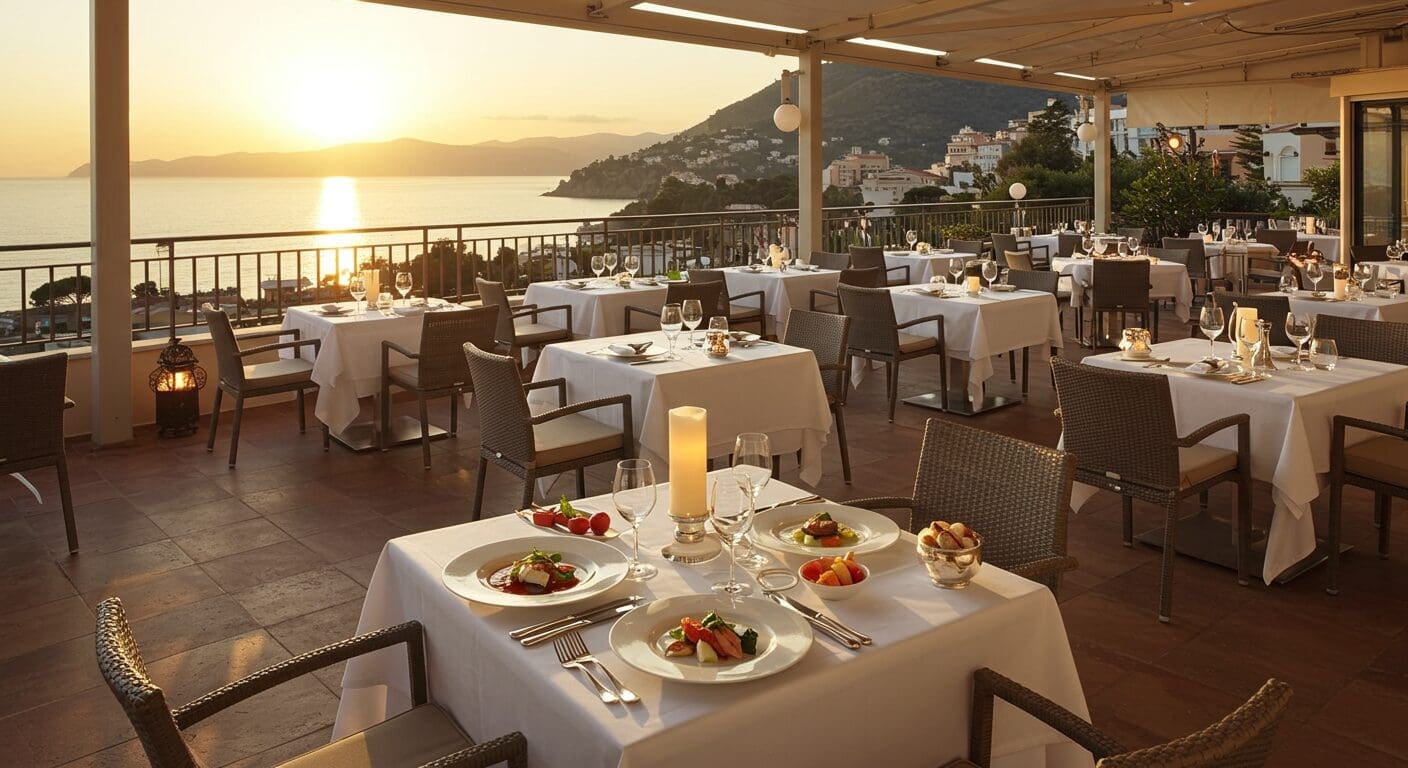
The unquestioned headline act is La Mirande, installed in a magnificent 18th-century hôtel particulier in the shadow of the Palais des Papes. Chef Florent Pietravalle holds a Michelin star and, perhaps more tellingly, Michelin’s green sustainability award – the kind of distinction that means something when it is earned and nothing when it is manufactured. His cooking celebrates Southern France with a delicacy that refuses to be showy about it. Local produce arrives in forms that feel both inevitable and surprising. The six- or nine-course tasting menus are worth every euro, and the garden – where dining extends on warm evenings – is the kind of place that makes you reconsider your decision to fly home tomorrow. Book well ahead and dress with some intention.
Then there is Pollen, newly relocated among the chic boutiques of the old town and currently one of the most talked-about addresses in the city. Chef Mathieu Desmarest has a CV that includes cooking at the Élysée Palace, which is either impressive or alarming depending on your views on institutional catering – but the food at Pollen is neither institutional nor cautious. Menus change weekly, tracking the natural rhythms of the season and the produce of the region, and the results are creative without being self-congratulatory. Two important practical notes: Pollen is closed at weekends, and reservations are essential. File this under restaurants that reward the organised traveller.
Local Gems: The Restaurants That Avignon Actually Loves
Every city worth visiting has a layer of restaurants that sit beneath the radar of the international press but above the tourist traps. In Avignon, this layer is particularly rewarding, and it starts with L’Agapé.
The setting is unlikely – industrial décor with a hint of a converted garage, terrace shaded by plane trees – but within minutes of arriving you understand why every table fills within moments of the doors opening. Chef Julien Gleize launched L’Agapé with his wife Anne in 2014, after years in Michelin-starred kitchens across Provence. The cooking is creative and confident, the service relaxed without being inattentive. A lunch crowd of all ages arrives with the quiet assurance of people who know they have made a good decision. You will feel the same.
L’Essentiel earns its name with quiet determination. Found in a courtyard not far from the Palais des Papes – beneath a seventh-century church, if you want to feel appropriately dwarfed by history – it is the kind of restaurant that rewards travellers who seek freshness and serenity in equal measure. Chef Laurent Chouviat brings a Parisian pedigree south, and the result is food that is technically accomplished but never cold. A long, unhurried lunch here, with afternoon sun slanting across the courtyard, is one of Avignon’s more civilised ways to spend several hours.
Restaurant Sevin completes this triumvirate of local excellence with a setting that is difficult to argue with – directly beside the Palais des Papes, in a building that dates from the 12th century. It regularly tops the rankings on TripAdvisor and TheFork, which in this case reflects genuine quality rather than aggressive marketing. The cooking is rooted in the flavours of the region, and the room manages the trick of feeling both grand and comfortable. If you are going to eat somewhere remarkable opposite a UNESCO World Heritage Site, it may as well be here.
What to Order: The Dishes That Define Avignon’s Table
Avignon sits at the crossroads of Provençal tradition and Rhône Valley abundance, and the menu reflects both. There are dishes you should simply not leave without having tried.
Start with tapenade – the olive paste of the south – spread across bread that has been properly made rather than merely sliced. Follow it with brandade de morue if it appears, a creamy salt-cod preparation that sounds humble and tastes like the region distilled. The Rhône Valley is serious lamb country, and agneau de Sisteron – lamb from the hills above Provence – appears on menus across the city with good reason. Order it pink, with confidence.
Vegetable cookery in Avignon is taken with a seriousness that reflects the quality of what grows nearby. Ratatouille here is not the thing from the tin. Truffles appear in season – Provence is one of France’s great truffle regions – and any menu that features them in winter should be treated accordingly.
For dessert, the local calisson biscuit, traditionally from Aix but well-travelled, appears on cheese boards and dessert plates. But the real move is to order whatever the kitchen is proudest of. In a city where chefs change menus weekly in response to what is growing, the daily special is usually the answer.
Wine and Local Drinks: The Rhône in a Glass
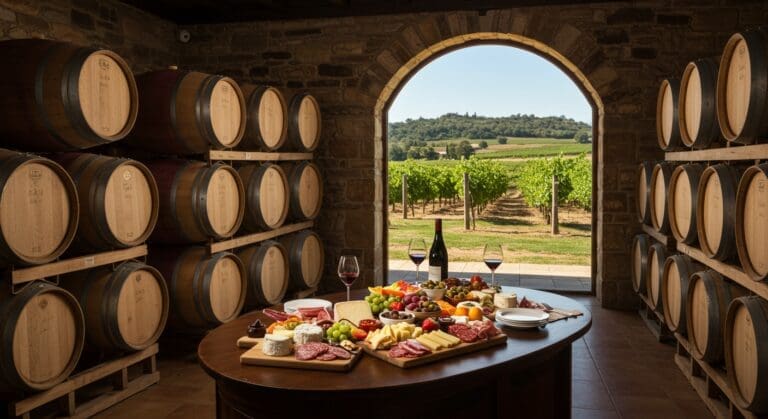
Avignon is surrounded by some of the most important wine appellations in France, and to eat here without engaging with the wine list would be to miss most of the point. Châteauneuf-du-Pape sits eleven kilometres to the north – close enough to see from certain vantage points – and its deep, structured reds, built mainly on Grenache, are among the most serious wines in the country. They are not inexpensive. They are worth it.
For something more immediate, the Côtes du Rhône appellation produces wines of extraordinary value at every price point. A village-level Côtes du Rhône from a good producer, served at a reasonable cellar temperature, alongside the kind of lunch L’Agapé or L’Essentiel produces, is one of those pleasures that requires no justification whatsoever.
Rosé deserves its own mention. Provence is rosé country – proper rosé, dry and pale and made with actual conviction, not the faintly pink apology that sometimes arrives elsewhere. Ask your waiter for a local recommendation and trust them. They will not steer you wrong.
Pastis remains the aperitif of the south. A glass of Ricard or Henri Bardouin, diluted with cold water until it clouds to the colour of old ivory, consumed in the shade at around six in the evening – this is less a drink than a ritual, and one you should participate in at least once.
Food Markets: Eating Avignon at Its Source
The market at Les Halles d’Avignon, housed in a remarkable building on the Place Pie whose exterior is covered in a living vertical garden, operates Tuesday through Sunday and is the best possible argument for rearranging your morning around food. Stalls offer the full abundance of the region: olives cured in seventeen different ways, lavender honey, chèvre at every stage of its life from fresh to aged, seasonal vegetables that would make a London supermarket weep with inadequacy.
The ritual – because everything in Avignon eventually becomes a ritual – is to arrive early, buy provisions with no particular plan, eat something from a stall while still holding your shopping, and then sit in the nearby square with a coffee until the city rearranges itself around you. It costs almost nothing and takes a whole morning, both of which are features rather than problems.
Saturday morning also brings a market to the Place des Carmes, smaller and slightly less theatrical than Les Halles but with its own loyal following and a good selection of local producers selling direct. Serious cheese. Unpasteurised things. Excellent bread. Proceed accordingly.
Casual Dining and Bistro Culture: The Art of the Long Lunch
Not every meal in Avignon needs to be an occasion. Some of the best eating in the city happens in rooms with paper tablecloths and blackboard menus, where the plat du jour changes daily and the wine arrives in a carafe without ceremony. The streets of the Intra-muros – the walled old city – reward wandering with intent. Look for restaurants where the majority of diners are not consulting guidebooks. Look for handwritten menus. Look for the table where someone is eating with the focused expression of a person who has made excellent choices.
The area around the Place de l’Horloge buzzes at lunch and dinner, though here tourist traffic is heavier and selectivity pays dividends. Walk a few streets away from the main square and the quality-to-price ratio improves noticeably. The Rue des Teinturiers – a canal-side street in the eastern quarter of the old city – has a cluster of informal restaurants and cafés that attract a younger, local crowd and offer a more relaxed version of Avignon’s good food instincts.
Lunch, it should be noted, is the meal Avignon does particularly well at the less formal end. Many of the best bistros offer a formule at midday – starter, main, glass of wine, coffee – at a price that makes the whole thing feel like a minor act of kindness from the universe.
Reservation Tips: Planning Your Table in Avignon
Avignon is a city of festivals – most notably the famous Festival d’Avignon in July – and during these periods the best restaurants fill weeks in advance. This is not an exaggeration offered to create urgency. It is simply true. If you are visiting in July, reservations at La Mirande, Pollen, L’Agapé and L’Essentiel should be made before you book your flights, or very shortly afterwards.
Outside festival season, the calculus is friendlier but still worth attending to. Pollen requires advance booking year-round and closes entirely at weekends – Monday to Friday only, which is an unusual constraint but one that the food fully justifies. La Mirande’s tasting menu experience benefits from booking several weeks ahead regardless of season. Restaurant Sevin and L’Essentiel are somewhat easier to secure, though a phone call or online reservation a few days in advance is always the wiser approach.
Most Avignon restaurants operate a lunch service from around noon to 2pm and an evening service from 7.30pm. The French instinct for punctuality in these matters is genuine. Arriving at 1.45pm and expecting a full menu is an optimism best left at home.
For those staying in a luxury villa in Avignon, many properties can be arranged with a private chef – either for special occasions or as a regular feature of your stay. This is, it must be said, an extraordinarily civilised way to experience the produce of the region. Your chef sources from the same markets the city’s best restaurants use, the table is your own, and no one is going to need that table back by nine o’clock. For the full picture of what to do and see beyond the dining room, the Avignon Travel Guide covers the city in generous detail.
Avignon rewards those who eat with curiosity. Come with appetite, come with time, and come with a willingness to be surprised by how much pleasure a city of this size, this history, and this latitude can put on a plate.