
Best Restaurants in Cassis: Fine Dining, Local Gems & Where to Eat
It is half past noon on a Tuesday. The fishing boats have been back since dawn. A carafe of something pale gold and slightly mineral sits on the table in front of you, and the waiter has just set down a plate of sea urchin so fresh it looks slightly alarmed. Behind you, the limestone cliffs of Cap Canaille rise in shades of ochre and rust. In front of you, the harbour shimmers. You have not looked at your phone in forty minutes. This, in its simplest form, is what eating in Cassis actually is – not a meal, but a whole particular arrangement of the world that happens to involve food.
Cassis punches considerably above its weight in the restaurant stakes. For a town that most people could walk across in twenty minutes, it contains more genuinely excellent places to eat per square kilometre than almost anywhere else on the Provençal coast. The best restaurants in Cassis range from three-Michelin-star dining with cliff-top views to sun-bleached bistros in narrow alleys where the menu changes depending on what came off the boat. The whole spectrum, in other words, and all of it worth your time.
What follows is a guide to eating and drinking in Cassis for travellers who care – about provenance, about flavour, about not being seated next to the service station on a terrace that faces a car park. Consider it the edit a well-travelled friend would give you, if that friend had eaten their way around this corner of Provence with serious intent.
For the broader picture on this exceptional corner of the Mediterranean, see our full Cassis Travel Guide.
—
The Fine Dining Scene: Where Cassis Gets Serious
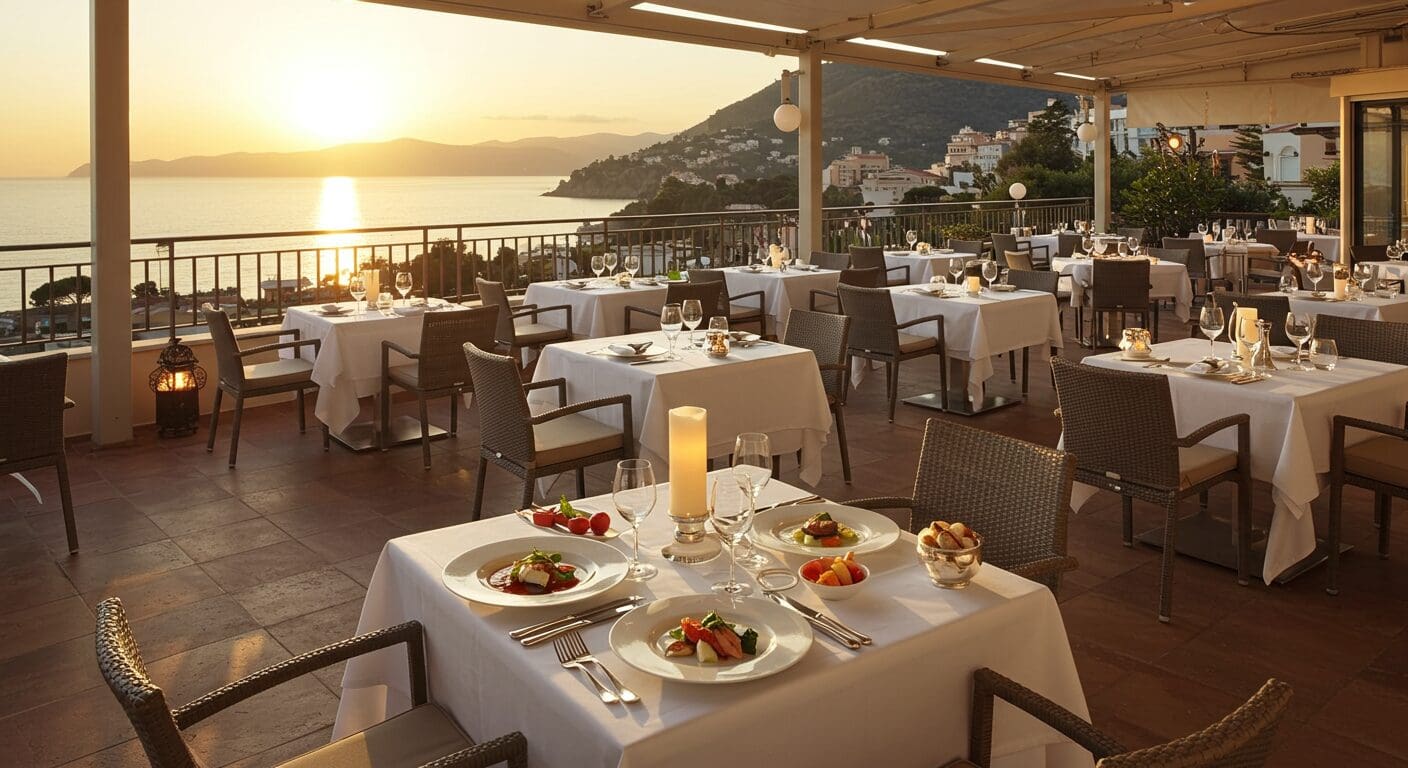
Let us be direct: La Villa Madie is the reason serious food travellers put Cassis on their radar. Perched above the Corton cove with Cap Canaille as its backdrop, this is a three-Michelin-star restaurant operating at a level that would feel remarkable in Paris, let alone in a small fishing village on the Bouches-du-Rhône coast. The chef’s approach is one of disciplined elegance – seasonal, local, technically precise but never cold. The menu shifts with what the land and sea are offering, which means you are unlikely to eat here twice and have the same experience. The flavours are layered and quiet rather than theatrical: a cured fish dish might carry notes of wild herbs from the garrigue behind the cliffs; a shellfish preparation might taste, improbably, of the actual sea.
The setting deserves its own mention. Dining at La Villa Madie, you are looking out at one of the more dramatic coastal panoramas in the south of France – those great red and ochre cliffs dropping into deep water, the light changing minute by minute as the afternoon moves toward evening. It is one of those rare places where the room and the food are in genuine conversation with each other, rather than competing. Prices are in the €180-€350 per person range, which is, by three-star standards, entirely reasonable. Book well in advance. Weeks, not days.
For those who want to eat within the Villa Madie orbit at a slightly more relaxed register, La Brasserie du Corton sits directly above it – a sister restaurant sharing the same kitchen philosophy and the same extraordinary views, but with a more informal atmosphere and a menu that doesn’t require quite the same level of financial commitment. Do not let the word “brasserie” mislead you. The cooking is refined and modern French, built on the same local seasonal produce, and the experience still feels decidedly special. It is the sort of place where you tell yourself you’ll just have a quick lunch and find yourself still there, third glass in hand, watching the light change on the water at six o’clock.
Local Institutions: The Harbour Classics
Cassis has been associated with bouillabaisse for long enough that it has become almost a point of civic identity. The traditional Provençal fish stew – rich with saffron, dense with whole fish, served in the proper manner with rouille and croûtons and the kind of ritual that the French apply to serious food – reaches a particularly good version at Chez Gilbert, a genuine local institution right on the harbour. This is not a place designed for tourists who want to Instagram their soup. It is a working harbour restaurant that has been feeding people the real thing for decades, and it takes its bouillabaisse with appropriate seriousness.
The experience at Chez Gilbert is inseparable from its location. You eat yards from where the boats come in, with the whole theatre of the Cassis harbour in front of you – the coloured hulls, the old men with opinions about everything, the cats who position themselves near the fish stalls with the air of senior executives. Order the bouillabaisse, follow the ritual, and do not rush it. This is a meal, not a dish.
It is worth noting that the harbour frontage in Cassis attracts its share of restaurants that know they have a captive audience and adjust their standards accordingly. Chez Gilbert is emphatically not one of these. Choose wisely along the waterfront, and when in doubt, follow the locals.
Hidden Gems: The Side Streets Deliver
The streets that lead away from the harbour in Cassis are narrow, shaded, and considerably less crowded than the quayside. They are also where some of the most rewarding eating happens.
Le Patio is found on one of these quieter side streets, and it has earned its reputation through consistent delivery rather than flashy positioning. A bistro in the proper French sense – relaxed, unfussy, focused on the food – it offers a three-course menu that represents genuine value in a town where prices can climb steeply once you’re near the water. There is a good children’s menu, which makes it useful for families who don’t want to sacrifice quality for practicality. Le Patio also offers private dining options, making it worth bearing in mind for a group dinner or a celebration that doesn’t require the full ceremonial weight of a starred restaurant.
Then there is Chez Alfred, tucked into the narrow streets with the kind of low-key presence that either means the food is very average or very good. In this case, it is the latter. The menu is simple and short – a few dishes, made well, built around local produce and whatever is freshest that day. The alley setting provides genuine calm, a particular luxury in high summer when the main harbour area can feel like a very charming, very loud theme park. Prices run from €20-€35 per person, which in context feels like an act of generosity. This is the sort of place you discover, feel proprietary about, and tell precisely three friends.
Beach Clubs and Casual Waterside Dining
Cassis lacks the industrial-scale beach club scene of Saint-Tropez or the Cannes stretch, which is one of its considerable charms. The calanques are protected as part of a national park, which keeps the shoreline remarkably free of the kind of infrastructure that turns coastlines into open-air restaurants with sun lounger rentals attached. What you get instead is more informal – smaller operations, simpler food, a cold drink and something grilled in settings of improbable natural beauty.
The beach at Cassis itself has options for casual eating: light lunches, salads, grilled fish, ice cream of varying ambition. Standards vary. The view, however, does not. Eating with your feet practically in the water, with the limestone walls of the Calanques visible to the east, requires no culinary excellence to be enjoyable. Though it helps. The smart approach is to save serious hunger for the restaurants in town and treat waterside eating as the atmospheric interlude it is designed to be.
If you are exploring the calanques by boat – and you absolutely should be – a packed lunch from a good Cassis charcuterie eaten in the shade of the cliffs at Calanque d’En Vau is one of those meals you will remember with disproportionate fondness for years. The setting does most of the work.
The Market: Where Cassis Shops for Dinner
The Wednesday and Friday markets in Cassis are the kind of markets that remind you what markets are actually for. Provençal produce at this end of France has a particular quality – herbs that have grown in thin, rocky soil under fierce sun, tomatoes of extraordinary depth, olives in every permutation, cheese from the hills behind the coast, and fish brought in from the surrounding waters. The Wednesday market is the larger of the two, and if you are staying in a villa with access to a kitchen or a private chef, this is where you should begin your morning.
The market also offers an instructive view of how the French approach food shopping – with seriousness, strong opinions, and a willingness to handle every piece of fruit individually before deciding. There is a lesson in there somewhere. The stalls selling local Cassis wine are a reliable first stop, partly for research purposes and partly because tasting wine at ten in the morning feels entirely appropriate in this context.
What to Order: The Cassis Canon
Bouillabaisse is the obvious starting point – the great Provençal fish stew that has been the subject of almost as many passionate arguments as it has inspired meals. In Cassis, it is made with the freshest possible fish from the local waters and served in the traditional manner: broth first, then fish, with rouille (a saffron and garlic mayonnaise of considerable force) and toasted bread. Do it once properly and you will understand what all the argument is about.
Sea urchins – oursins in French – are harvested locally and available from late autumn through spring. Eaten raw with a squeeze of lemon and a piece of bread, they taste of cold deep water. They are either revelatory or deeply challenging, depending on your relationship with the sea in its more concentrated forms. Octopus, prepared in the Provençal manner with herbs and olive oil, is another local speciality worth seeking out. As is the socca and tapenade that appears as an aperitif accompaniment at many of the better restaurants.
For cheese, look for local chèvre from the hills behind Cassis, served at various stages of ripeness. For dessert, a navette – the orange-blossom biscuit from nearby Marseille – with a small coffee is the correct way to end things.
Wine and Local Drinks: The Cassis Appellation
Here is something that surprises many first-time visitors: Cassis has its own AOC wine appellation. The vineyards are small, the production is modest, and most of what is made here never leaves the immediate area – which is partly why you may not have encountered it before, and partly why drinking it here feels like genuine discovery. The Cassis AOC produces primarily whites and rosés, which makes sense given the local food. The whites – made predominantly from Marsanne, Clairette, and Ugni Blanc – are dry, mineral, and carry a faint salinity that makes them remarkable with seafood. They taste, in the best possible way, like the landscape they come from.
The rosé is lighter and more aromatic, correct for summer lunches and extended harbour-side afternoons. The red wine exists, and loyal locals will tell you it is excellent. Order the white.
For a pre-dinner drink, pastis is the regional choice – the anise-flavoured spirit that turns milky when water is added, consumed slowly at pavement tables with the kind of unhurried appreciation that the French apply to rituals they have been refining for a century. It is worth adopting the habit for the duration of your stay.
Reservation Tips and Practical Notes
La Villa Madie requires advance planning that most people underestimate. During summer months, a table can be booked weeks ahead – sometimes more. Contact them directly and be persistent. It is worth it.
The broader fine dining and popular restaurant scene in Cassis gets busy from mid-June through early September with a speed that regularly catches visitors off guard. Le Patio and Chez Gilbert both fill up quickly on summer evenings, and showing up and hoping for the best is a strategy with a poor track record. Book ahead wherever possible. Several restaurants in Cassis use TheFork for reservations, which allows you to book in English and receive confirmation directly.
Lunch is frequently the smarter meal to book at the better restaurants – more relaxed, often better value (many offer lunch menus at considerably lower prices than dinner), and with the added advantage of being able to walk the harbour or the calanques paths afterwards. The French logic of making lunch the main event of the day turns out to be correct. It usually does.
August in Cassis is magnificent and extremely busy simultaneously. If your dates are flexible, late June or September offer much of the warmth and light with considerably less competition for tables. A raised eyebrow at anyone who tells you August is the only time to visit.
Staying Well in Cassis: The Villa Advantage
There is a particular pleasure specific to staying in a luxury villa in Cassis rather than a hotel: the ability to choose when you want to engage with restaurants and when you want to retreat into something entirely private. Many villas in the area come with the option of a private chef – someone who will go to the Wednesday market on your behalf (or with you), select what is best that day, and produce a dinner on the terrace that combines the local produce and flavours you have been encountering in the town’s restaurants with the luxury of not having to share the view with anyone. It is, for certain evenings, the correct choice. The calanques at dusk, a glass of Cassis blanc, a plate of local fish prepared simply and well – and no one at the next table asking the waiter for ketchup. Perfection, in its quieter form.


