Best Restaurants in Lanzarote: Fine Dining, Local Gems & Where to Eat
Where exactly do you eat on an island that looks like the moon? It’s a fair question. Lanzarote is volcanic, otherworldly, and rather spectacular in a way that makes you wonder if anything edible could possibly thrive here – and then you try the local wine, the papas arrugadas with mojo, and the fresh fish pulled from waters so cold and Atlantic-dark they practically guarantee flavour, and the question answers itself rather convincingly. The island punches well above its weight in the kitchen. Whether you’re seeking a tasting menu that rivals anything you’d find in Madrid or London, a terrace table with a view that makes you forget what you ordered, or a local place where the fish arrived in the harbour that morning, Lanzarote delivers. This is where to find the best restaurants in Lanzarote – fine dining, local gems, and where to eat when you mean business.
The Fine Dining Scene: Michelin Recognition & the Restaurants Setting the Standard
Lanzarote is not, it must be said, overrun with Michelin stars. But what it does have is a small, serious, and quietly excellent fine dining scene – one that rewards those who look past the coastal resort strips and seek out the island’s genuine culinary talent.
The standard-bearer is Restaurante Lilium in Arrecife, a husband-and-wife operation that has earned a Michelin Bib Gourmand – the Guide’s acknowledgement of exceptional cooking at reasonable prices. Chef Orlando runs the kitchen with real passion and precision, while Sandra manages front of house with the kind of warm authority that comes from actually knowing what you’re talking about. The tasting menu here showcases locally sourced ingredients to thoughtful effect: scallops, fresh tuna loin, suckling pig presented with the care you’d expect at considerably higher prices. Diners have compared it favourably to Michelin-starred restaurants across Europe, which is high praise and, on the evidence, justified. Book early. People have worked this one out.
In the handsome old capital of Teguise, Restaurante Palacio Ico occupies a beautifully restored historic property that manages to feel simultaneously grand and intimate. Listed in the Michelin Guide 2025 and awarded 1 Sol Repsol 2025, it has also received the award for Best Wine List in the Canary Islands 2025 from DOP Canary Wine – which, given the island’s quietly serious wine culture, is not a trophy handed out lightly. The menu is rooted in contemporary Canarian cooking: smoked salmon from Uga, Carabinero prawns from La Santa, octopus and cherne fish from Lanzarote waters. This is food that knows where it comes from, which is increasingly rare and always welcome.
Down in the south of the island at Marina Rubicón, La Cocina de Colacho in Playa Blanca operates as a genuinely exclusive experience – and uses that word correctly. The restaurant opens just four evenings a week, Monday to Thursday, with Chef Colacho working alone in an open kitchen while his wife and son handle the room. The tasting menu is creative, beautifully constructed, and full of the kind of flavour that makes you eat more slowly because you don’t want it to be over. The intimacy of the setup – one chef, a small room, a family running the show – creates an atmosphere that larger restaurants simply cannot manufacture. Reserve well in advance. Four nights a week doesn’t leave a great deal of wiggle room.
Local Gems: Where Lanzarote Eats When It’s Not Performing for Tourists
The best local restaurants on any island are usually the ones that don’t need a sign visible from the main road. In Lanzarote, the further you get from the resort zones, the more interesting things become.
La Bodega de Santiago in Yaiza is the kind of place that locals consider a matter of civic pride. Sitting in the quietly charming village that also happens to be the closest settlement to Timanfaya National Park, it is considered a must-visit for anyone serious about understanding what Lanzarote actually tastes like. The wine list, as you might expect from the bodega in the name, is taken seriously. Traditional Canarian cooking, local produce, and the sort of unhurried service that reminds you why you left home in the first place.
The Canarian menu, wherever you find it done well, is worth understanding before you sit down. Look for papas arrugadas – small, wrinkled potatoes boiled in heavily salted water and served with mojo rojo or mojo verde, which are respectively a red pepper sauce and a coriander and garlic sauce of considerable personality. Order gofio in some form – a toasted grain flour that underpins Canarian cooking the way bread underpins almost everything else. Try the puchero canario if you see it, a hearty chickpea and meat stew that has no interest in being fashionable and tastes all the better for it.
The island’s position in the Atlantic, with cold, nutrient-rich waters nearby, means the fish is exceptional. Order whatever arrived that day. If you’re not sure what that is, ask. Any restaurant worth its salt will tell you.
Beach Clubs & Casual Dining: Sun, Salt Air & Something Cold to Drink
Not every meal on a luxury holiday needs to be a considered gastronomic statement. Sometimes the view is the point, and the food just needs to be honest and good.
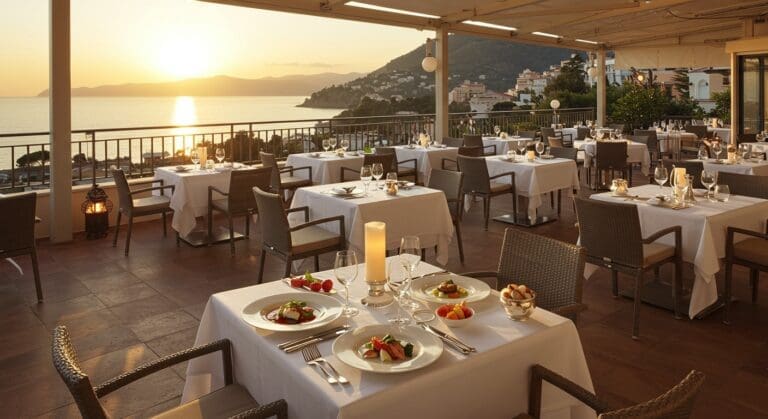
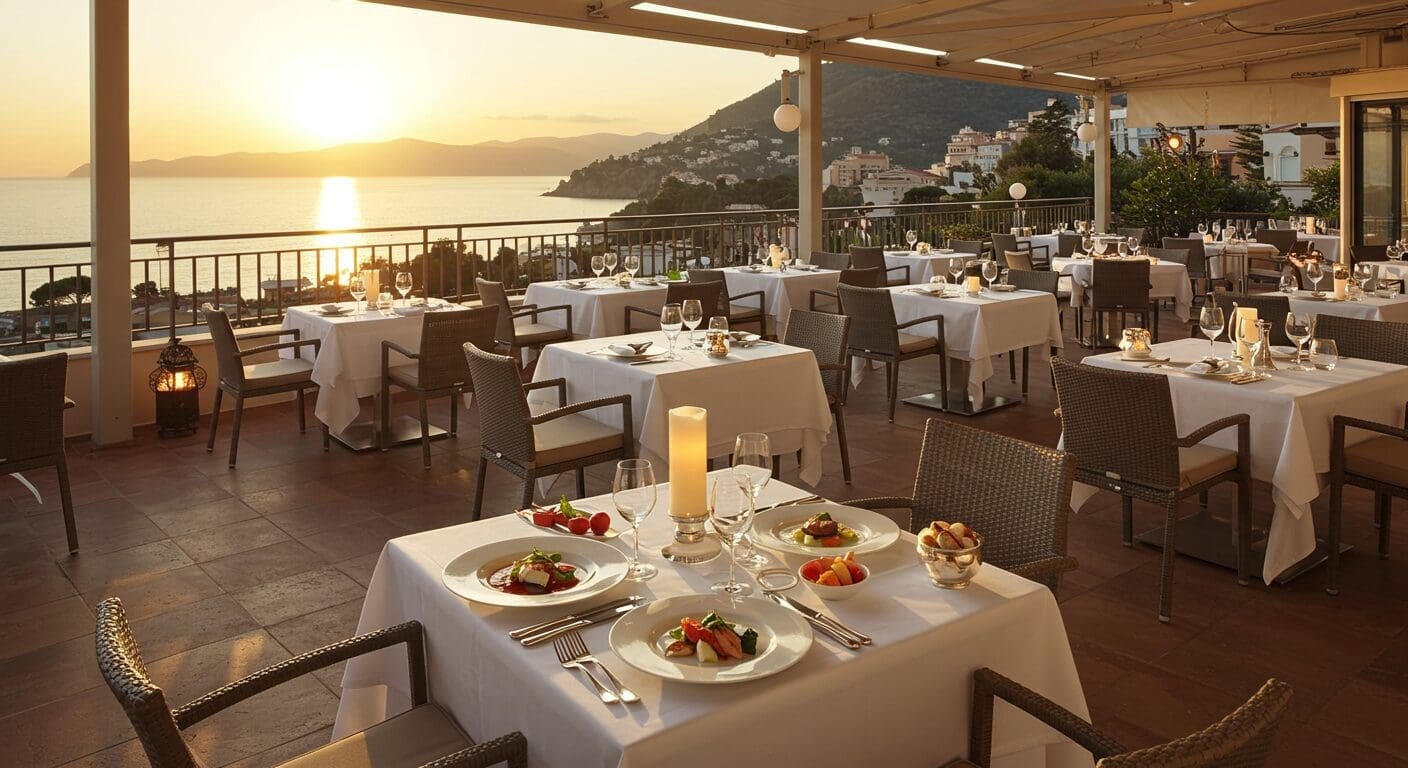
Lanzarote’s north coast offers some of the island’s most dramatically positioned casual dining. El Risco in Caleta de Famara is one of those restaurants that earns its reputation on multiple fronts simultaneously. The terrace sits above a long, wild beach with views across the water to La Graciosa island – a view that tends to arrest conversation mid-sentence. The menu is built around fresh fish and local recipes, with standout dishes including seafood pâté, fried goat cheese, and crêpes filled with seafood and spinach. The cooking is careful without being fussy, which is exactly what the setting requires. This is widely regarded as one of the finest restaurants on the island, not in spite of its relative informality but partly because of it.
Famara itself is a surf village of some character – the sort of place where the café by the beach has salt in the air and sand on the floor and nobody minds. It makes an excellent lunch stop when exploring the north.
The marinas at Puerto Calero and Marina Rubicón both offer pleasant terrace dining with the kind of white-linen-and-decent-fish-soup combination that works well at lunch. The atmosphere is relaxed, the setting is attractive, and the worst thing that can happen is that you drink one glass of local white wine too many and spend the afternoon reading. There are worse outcomes.
Food Markets & Artisan Producers: Lanzarote’s Edible Landscape
Understanding what grows in volcanic soil is one of Lanzarote’s more pleasurable educational experiences. The island’s unique enarenado farming technique – growing crops in a thin layer of volcanic lapilli, known locally as picón, which retains moisture and protects against wind – produces grapes, onions, and potatoes of unusual intensity. You’ll taste the difference in every good restaurant on the island. It also explains why Lanzarote wine, despite existing on what appears to be the surface of Mars, is worth serious attention.
The Sunday market in Teguise is the island’s most atmospheric, set against the backdrop of the old capital’s white-washed colonial architecture. It runs in the mornings and draws a mix of local producers, artisan stalls, and visitors who have correctly identified that this is one of the more rewarding ways to spend a Sunday morning. Arrive early for the food stalls. Arrive later if you want the full theatrical experience of the crowds, but then you’ll miss the better produce.
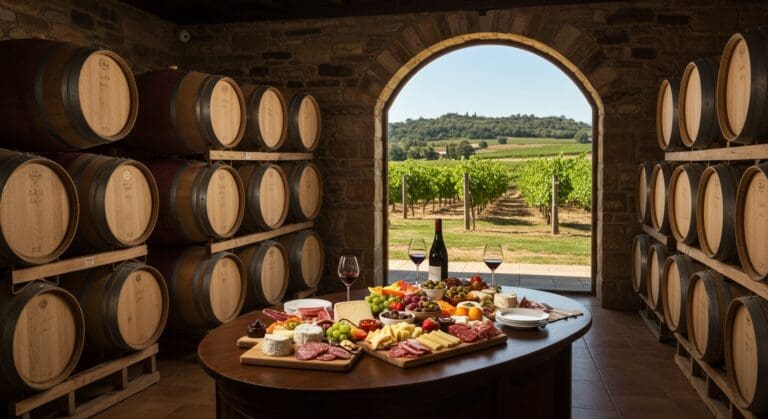
Look for local cheeses – Lanzarote produces a semi-cured goat’s cheese that pairs well with the island’s mojo sauces – and the distinctive Malvasia wines from the La Geria wine valley, which should be tried at source if you’re driving through that part of the island. Which you should be, because it’s extraordinary. Rows of individual vines sitting in craters scooped from black volcanic rock, each one protected by a low curved wall. It looks surreal and produces wine of genuine quality.
Wine, Local Drinks & What to Order
Lanzarote’s wine deserves more international attention than it currently receives, and those who discover it on the island tend to become slightly evangelical about it – a condition that is understandable if mildly tedious for those who weren’t there.
The local white Malvasia Volcánica is the one to know. Made from grapes grown in that extraordinary La Geria landscape, it is dry, mineral, and slightly saline in a way that makes it a natural partner for fresh fish and seafood. The volcanic terroir is not a marketing concept here – it is a physical reality, and you can taste it. Some producers also make a sweet Malvasia that is worth trying as a dessert wine, closer in spirit to the historical wines that once made the Canaries famous across Europe.
For something non-alcoholic, the local mojo sauces are available as condiments almost everywhere and worth taking home in jar form. Ron miel – honey rum – is a Canarian staple that appears at the end of meals with the kind of inevitability that suggests resistance is futile. It is sweeter than you expect and smoother than it has any right to be.
When it comes to ordering fish, follow the waiter’s recommendation rather than the menu description. Lanzarote waters produce exceptional vieja (parrotfish), cherne (stone bass), and sama (red snapper), and the freshest catch varies daily. If someone tells you with genuine enthusiasm what came in this morning, order that.
Practical Notes: Reservations, Timing & Getting It Right
A few practical considerations that will improve the experience significantly.
Reservations at the top restaurants – Lilium, Palacio Ico, La Cocina de Colacho – are essential and should be made as far in advance as possible, particularly during high season (December to March and July to August). La Cocina de Colacho’s four-evening-a-week schedule means that demand consistently outpaces availability. Email or telephone ahead rather than relying on online booking systems, which are not universally implemented at smaller restaurants.
Canarian dining times lean slightly earlier than mainland Spanish ones, but restaurants in tourist areas have largely adapted to accommodate visitors who find a 10pm dinner reservation genuinely alarming. Lunch remains the more leisurely meal for locals – a long, unhurried affair that would be worth adopting as a holiday habit.
Away from the resort zones, some restaurants close on certain days and reduce hours outside peak season. A quick telephone call before making a special journey is always advisable. This is not a uniquely Lanzarote problem, but it is worth mentioning because several of the island’s most interesting restaurants are in villages that require some effort to reach.
Tipping is not mandatory but is appreciated. Ten percent at restaurants where service has been genuinely attentive is the common benchmark. At places like La Cocina de Colacho, where the experience has clearly been constructed with considerable care, generosity feels natural.
For a complete picture of the island – where to stay, what to see, and how to make the most of your time here – the Lanzarote Travel Guide covers everything you need to plan a trip that goes beyond the surface of this extraordinary island.
And if you want to bring the best of the island’s food culture entirely on your own terms – the local produce, the Malvasia wine, the freshly caught fish – there is something to be said for staying in a luxury villa in Lanzarote with a private chef option. The best villas on the island come with the kind of kitchen infrastructure that makes this genuinely worthwhile, and the experience of sitting on a private terrace with a chef who understands the island’s produce is, frankly, difficult to improve upon.
Does Lanzarote have any Michelin-starred restaurants?
Lanzarote has Michelin Guide recognition rather than a full star at the time of writing. Restaurante Lilium in Arrecife holds a Michelin Bib Gourmand, awarded for exceptional quality at reasonable prices, while Restaurante Palacio Ico in Teguise is listed in the Michelin Guide 2025 and holds 1 Sol Repsol 2025. Both represent the island’s serious fine dining credentials and are worth booking well in advance.
What local dishes should I try in Lanzarote?
Start with papas arrugadas – small wrinkled potatoes served with mojo rojo or mojo verde sauce – which appear on almost every menu and are one of the defining tastes of the island. Fresh fish is exceptional here, particularly vieja, cherne, and sama; always ask what came in that morning. Lanzarote’s semi-cured goat’s cheese is worth seeking out, and the local Malvasia Volcánica white wine from the La Geria valley is a genuine discovery that pairs beautifully with seafood.
How far in advance should I book restaurants in Lanzarote?
For the island’s top dining experiences, booking as early as possible is strongly advised. La Cocina de Colacho in Playa Blanca operates only four evenings per week, which makes availability genuinely limited – booking weeks ahead during high season is not excessive. Restaurante Lilium and Palacio Ico are also in high demand. For beach clubs and more casual dining, same-day reservations are generally manageable outside of peak season, though a call ahead is always sensible for terrace tables at popular spots like El Risco in Famara.