Lanzarote Food & Wine Guide: Local Cuisine, Markets & Wine Estates
First-time visitors to Lanzarote arrive expecting sunshine, beaches and the kind of tourist food that makes you wonder why you bothered leaving the airport. They are wrong on the third count, and spectacularly so. Lanzarote is, quietly and without much fanfare, one of the most distinctive food and wine destinations in all of Spain – a volcanic island that has somehow turned an agricultural disaster zone into a larder of genuine character. The soil is black. The rainfall is almost nonexistent. The vines look like they have been planted in a lunar crater as some kind of dare. And yet what emerges from this improbable landscape – fish so fresh it barely needs cooking, wines of volcanic intensity, cheeses with real personality – is food and drink that earns its place on the plate rather than simply arriving there. This is not Canarian cuisine as afterthought. Pay attention.
Understanding Canarian Cuisine: The Lanzarote Edit
The cooking of Lanzarote is built on simplicity, honesty and the kind of restraint that only confident cuisines can afford. There are no elaborate sauces doing the heavy lifting. The philosophy is closer to the best of the Basque Country – exceptional raw ingredients, handled with respect and not much else. What you find here is a cuisine shaped by geography: an island with limited fresh water, volcanic soil, and the Atlantic on all sides. The result is cooking that leans hard on the sea and the land in equal measure, and does both well.
The foundations are papas arrugadas – small, wrinkled potatoes boiled in heavily salted water until the salt crystallises on the skin. They look unprepossessing. They are, frankly, one of the great eating experiences of the Spanish islands. They come invariably with mojo – either the green herb-and-coriander version (mojo verde) or the smoky red variety (mojo rojo), both made to closely guarded family recipes that vary from village to village. Order both. Dip everything.
Beyond the papas, the island cuisine tilts toward fish and legumes. Vieja – parrotfish – is the signature catch, grilled over charcoal and served with very little ceremony and very great effect. Limpets (lapas) arrive sizzling in butter, lemon and garlic, charred at the edges, eaten standing at a harbour bar in an ideal world. Chickpea stew with salted fish, rabbit slow-cooked in salmorejo (not the cold soup – a Canarian marinade of wine, vinegar and spices) and goat dishes from the interior all speak to a cuisine that wastes nothing and apologises for nothing.
The Wines of Lanzarote: Volcanic Magic in a Glass
If you know nothing else about Lanzarote wine going in, know this: the vineyards of La Geria are unlike anything else on earth. Following the volcanic eruptions of 1730 to 1736, farmers discovered that the porous black lapilli – the volcanic ash and rock fragments that now blanket the island – actually retained the scarce moisture that settled overnight. Their response was extraordinary: they dug individual pits into the rock, planted a vine at the bottom of each one, and built low semicircular stone walls on the windward side to protect the plants from the trade winds. The result, seen from above, looks either like an ancient art installation or a civilisation quietly losing its mind. Probably both.
The grape variety that thrives here is Malvasía Volcánica – a white grape that produces wines of enormous character: mineral-edged, honeyed in parts, with a saline quality that makes them borderline addictive alongside food. The denomination is D.O. Lanzarote, established in 1993, and the island’s producers have earned considerable international respect for these whites. There are also interesting reds and rosados made primarily from Listán Negro, though it is the whites that have secured Lanzarote’s place on the world wine map.
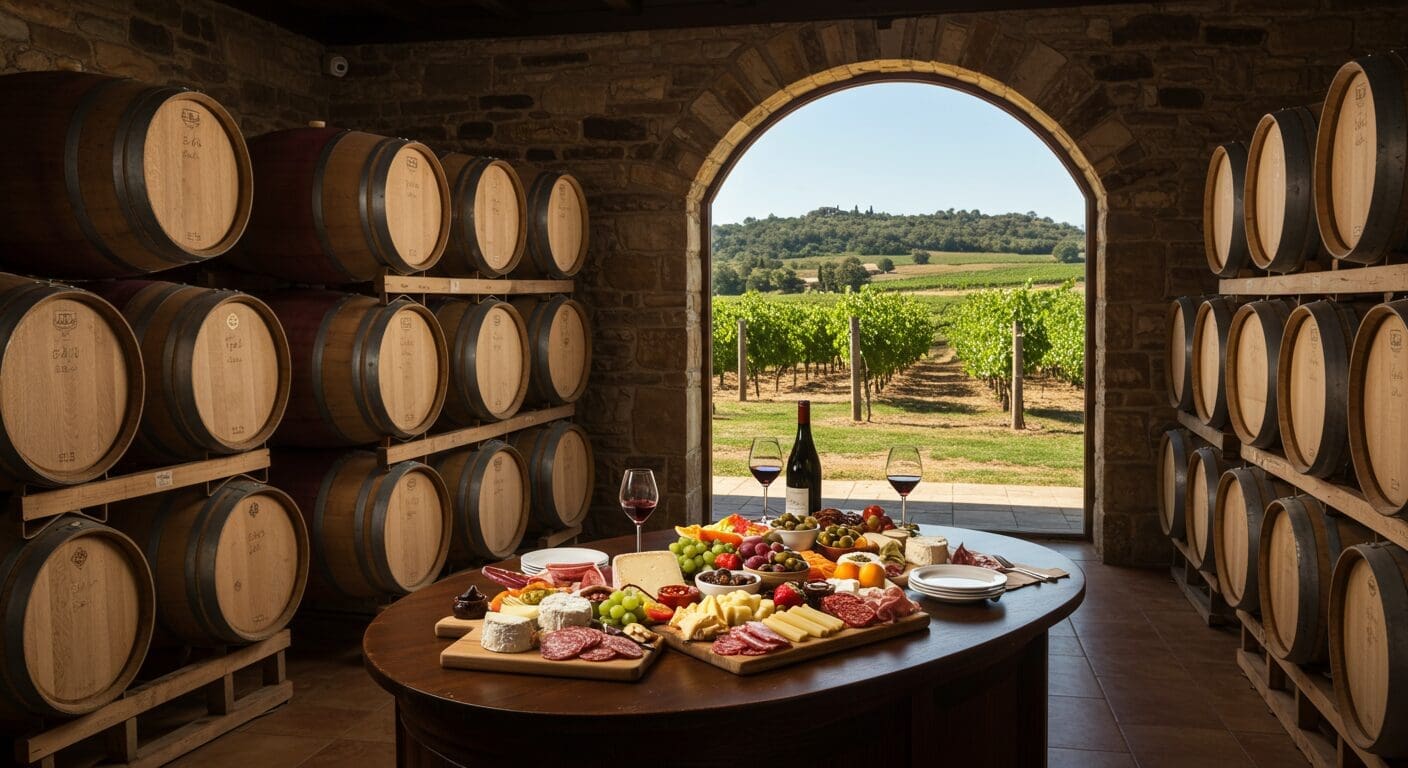
The zone to visit is La Geria – a protected landscape running through the centre of the island between Yaiza and Mozaga. Several bodegas here welcome visitors for tastings and tours, and a wine route through this valley on a quiet morning, stopping at estates along the way, is one of those afternoons that recalibrates your sense of what wine tourism can be. El Grifo, founded in 1775 and claiming the title of oldest winery in the Canary Islands, is the most established name and well worth a visit. Stratvs is the modernist counterpart – architecturally considered, with wines to match. Bodega La Geria itself is one of the most visited, and for good reason: the views from the terrace across the vine pits toward the volcanic cones are the kind that make you put your glass down, just for a moment, to look.
Food Markets Worth Getting Up Early For
Lanzarote’s market culture is modest in scale but rewarding in quality. The Mercado Municipal in Arrecife is the island’s main working market – practical, local and entirely uncurated for tourist eyes, which is precisely what makes it worthwhile. This is where the island’s cooks actually shop: stalls of fresh fish landed that morning, Canarian cheeses, local mojo in plastic tubs, herbs and vegetables grown in the volcanic south. Go before ten.
On weekends, the market at Teguise – the island’s former capital – draws a significant crowd to its main square and surrounding streets. Sunday mornings fill the cobblestones with a mix of craft sellers, local food producers and enough papas arrugadas stands to constitute a small religion. The cheese stalls here are worth slowing down for: Lanzarote produces its own queso majorero style cheeses – goat’s milk, firm, sometimes rubbed with paprika or gofio (a toasted grain flour that runs through Canarian cooking like a thread) – that bear absolutely no resemblance to anything you will find in a supermarket back home.
The Mercadillo de La Vegueta in Las Palmas is technically Gran Canaria, and therefore a step too far, but worth mentioning only to say: the food markets of the Canary Islands in general are systematically underestimated by visitors who assume island cooking means beachfront paella. It does not.
The Best Food Experiences Money Can Buy
There is a category of food experience in Lanzarote that sits above the merely excellent – experiences shaped by setting, produce and access in ways that money can, in fact, buy. Private dining within a bodega in La Geria, with a winemaker walking you through the estate’s full range while the sun sets over the vine pits, is one of them. Several bodegas offer this by arrangement, and a good villa concierge will know who to call.
The island’s top restaurant scene punches above what the visitor numbers might suggest. Lilium, near Puerto del Carmen, is consistently regarded as one of the finest tables on the island – contemporary in approach, rooted in Canarian produce, with a wine list that takes the D.O. Lanzarote seriously. Restaurante Amura in Puerto Calero – set directly over the marina – has built a strong reputation on refined fish cookery and the sort of setting that makes a two-hour lunch feel like a moral obligation.
For something more elemental, hire a local fishing boat for a morning, watch the catch come in, and arrange for the fish to be cooked that afternoon. It sounds straightforward. It is straightforward. That is the point. Vieja grilled over charcoal, caught six hours earlier, eaten outside with mojo verde and cold Malvasía – this is Lanzarote food at its most purely itself. No tasting menu has yet improved on it.
Olive Oil, Gofio and the Larder You Should Know About
Lanzarote is not an olive oil island in the way that Andalusia or Crete might be – the climate and soil push production toward wine rather than olives – but the broader Canarian food culture has a larder that rewards exploration. Gofio is the ingredient most visitors overlook and most locals cannot imagine cooking without. A flour made from toasted cereals – wheat, maize, barley – it has been a staple of the Canarian diet since the Guanche people inhabited these islands before the Spanish conquest. It appears in bread, in soups, in a kind of dense paste eaten at breakfast, mixed into stews as a thickener. It has a nutty, complex flavour that is genuinely unlike anything in mainland Spanish cooking.
Canarian honey is worth seeking out – particularly miel de palma, made from palm sap rather than bees, with a dark, almost molasses quality that works brilliantly drizzled over fresh goat’s cheese. Local cheeses aged with gofio or paprika are available at good markets and delicatessens. And the dried and salted fish traditions of the island – borne of necessity historically and of taste now – are worth exploring if you have any interest in the connection between poverty and culinary ingenuity. Islands, it turns out, are very good at that particular alchemy.
Cooking Classes and Culinary Immersion
The appetite for cooking classes among well-travelled visitors to Lanzarote has grown considerably in recent years, and the offering has moved well beyond the tourist-facing demonstrations of the early days. Private chefs available through quality villa rentals will often offer a hands-on session in the villa kitchen as part of their service – learning to make mojo from scratch, preparing papas arrugadas properly (the salt-to-water ratio is more art than science, apparently), working through the preparation of a traditional Canarian meal from market to table.
More structured culinary experiences are available through cultural tour operators on the island, some of whom combine a morning at the Teguise market with an afternoon cooking session in a traditional Lanzarote farmhouse. The combination of market visit, local producer knowledge and hands-on cooking makes for an immersive half-day that tends to be more memorable than another afternoon by the pool. Though the pool, it must be said, is also a perfectly reasonable choice.
Wine tourism with depth – going beyond the standard tasting room visit to include harvest participation or blending sessions at La Geria bodegas – is available seasonally, primarily in September and October. If your visit coincides with harvest, rearrange whatever else you had planned.
Eating Well on a Private Villa Holiday in Lanzarote
The private villa model suits Lanzarote’s food culture particularly well. The island’s produce is good enough that shopping at a local market or fishmonger, returning to a villa kitchen and cooking well requires almost no culinary ability – the ingredients do most of the work. A villa with a private chef is, in this context, not a luxury in the gilded and unnecessary sense but rather the natural way to access what the island’s larder actually offers: someone who knows where to buy the best vieja, which producer’s mojo verde is worth the detour, and how to turn a Lanzarote morning market haul into a lunch that will still be discussed three years hence.
The best villa experiences on the island combine indoor-outdoor kitchen spaces with al fresco dining terraces, and there is something particularly right about eating Canarian food outside in Lanzarote’s extraordinary landscape – the volcanic silhouette of Timanfaya on the horizon, a glass of cold Malvasía catching the late afternoon light. Food, at its best, is inseparable from place. In Lanzarote, the place makes an unusually strong case for itself.
For more on planning your trip to the island, including where to stay, what to do and how to make sense of the landscape, see our full Lanzarote Travel Guide. And when you are ready to find the right base for a food-led Lanzarote stay, browse our collection of luxury villas in Lanzarote – properties chosen for the quality of their kitchens, their outdoor spaces, and their position relative to the parts of the island that matter.