
Best Restaurants in Maspalomas: Fine Dining, Local Gems & Where to Eat
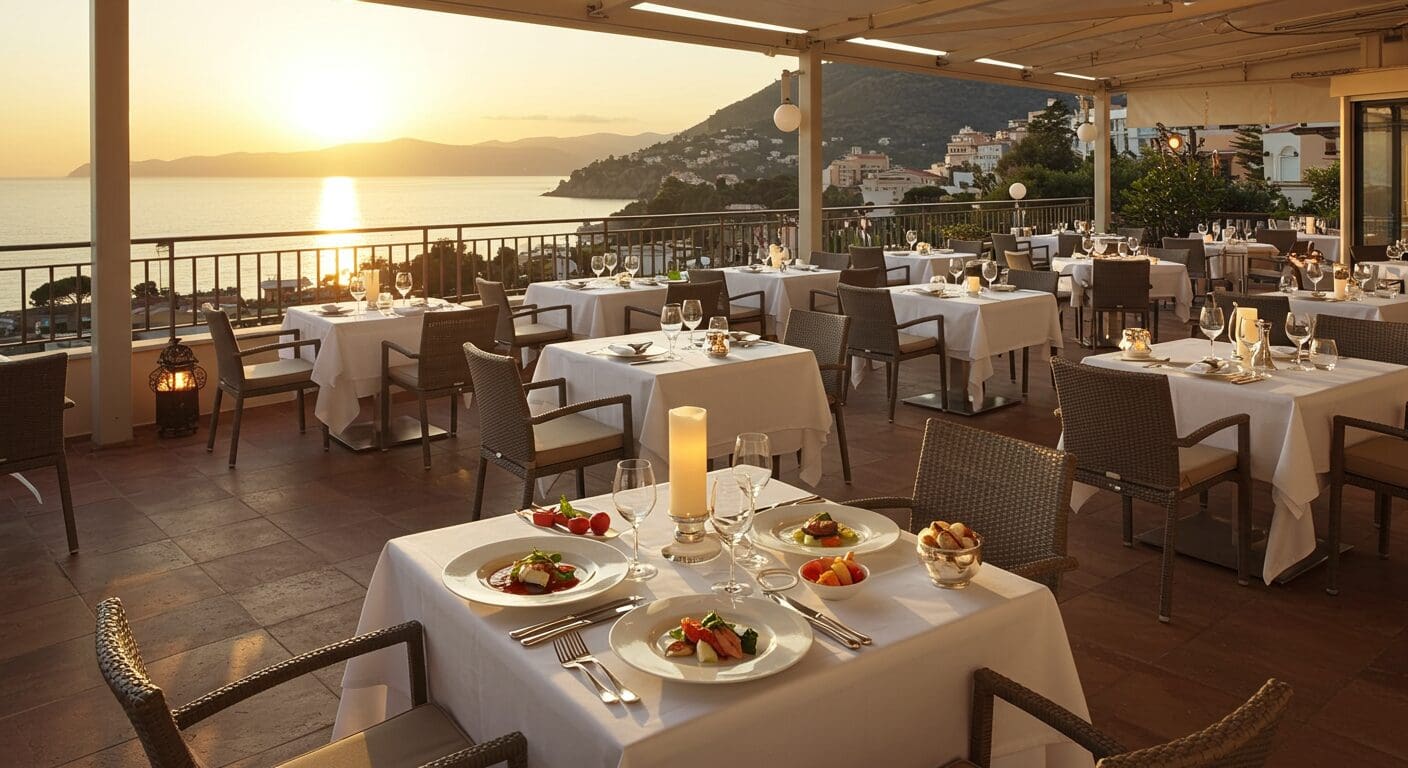
There is a particular moment, somewhere around eight in the evening, when the light over the Maspalomas dunes turns the colour of warm honey and the day-trippers have retreated to their sunburned corners of the resort. The terraces fill quietly. Wine glasses appear. Someone at the next table orders papas arrugadas – those famously wrinkled salt-crusted potatoes that look like they’ve had a harder week than you – and suddenly you understand that this is not just a beach destination bolted onto the bottom of Gran Canaria. This is a place that takes its eating seriously. The restaurants in Maspalomas range from no-nonsense Spanish grills where the steaks arrive on iron platters to genuinely creative fine dining rooms where the tasting menu reads like a passport stamp collection. Knowing where to go – and crucially, where not to bother – makes all the difference.
The Fine Dining Scene in Maspalomas
Maspalomas does not currently hold a Michelin star within its immediate restaurant cluster, though Gran Canaria as a whole is firmly on the gastronomic map – Las Palmas holds several celebrated addresses. What Maspalomas does offer is something arguably more interesting for the unhurried traveller: a fine dining scene that doesn’t announce itself with fanfare but delivers quietly, consistently, and with genuine culinary ambition.
The clearest expression of this ambition is Restaurante LoLa, a relaxed yet sophisticated dining spot positioned in the southern reaches of Maspalomas, surrounded by the hotel corridor and the vast sculptural presence of the dunes. The kitchen draws inspiration from Mexico, Japan, Peru and Italy – a combination that sounds, on paper, like it might end badly, and in lesser hands probably would. Here, it works with real confidence. Expect elevated takes on ceviche, risotto and tapas built around locally sourced seafood and Canarian vegetables, presented with enough care that you find yourself looking at your plate before reaching for the fork. The nine-course tasting menu is the move here. It is genuinely worth the commitment – nine courses that travel enough culinary ground to feel like an education without ever feeling like a lecture. Book ahead. This is not a walk-in situation.
For a different expression of gourmet dining – more Italian, more intimate – Restaurante Kilómetro 00 surprises almost everyone who finds it. It lives inside the Cita shopping mall, which is precisely the last place you’d expect to encounter a pasta bar with a serious wine list and a truffle carbonara that has earned something close to cult status among regular visitors. The pannacotta with red wine reduction is the dessert to order. Portions are generous in a way that requires a degree of advance planning on your part. Come properly hungry. The tasting menu format, which allows you to move through multiple starters and pasta courses, is ideal for groups who cannot agree on a single thing – which, at the end of a long day in the sun, is most groups.
The Best Local and Spanish Restaurants
The best restaurants in Maspalomas for understanding where you actually are tend to be the ones with the most unassuming frontages. Restaurante Allende 22° sits in the busier heart of the resort and represents the kind of Spanish restaurant that the Spanish themselves would actually choose. Three additional outposts operate in Las Palmas de Gran Canaria, which tells you something about its standing – this is not a tourist-facing approximation of Spanish food. This is the real thing.
The menu is classically, proudly Spanish: broken eggs (huevos rotos) done with the kind of casual perfection that only comes from making the same dish ten thousand times, croquettes that are crisp outside and properly molten within, salmorejo from Córdoba – thicker and richer than gazpacho, topped with jamón and hard-boiled egg – and cachopo, the spectacular Asturian dish of beef fillets stuffed with ham and cheese, breaded and fried until golden. Order the croquettes first. Order them again if the mood takes you. The atmosphere is relaxed and genuinely convivial, anchored by cold beer and a wine list that respects your intelligence without requiring a sommelier’s degree to navigate.
Then there is Restaurant Las Brasas, which is exactly what a proper Spanish steakhouse should be: a traditional interior that makes no concessions to resort aesthetics, an entirely serious approach to fire and meat, and a bill at the end that seems, by any reasonable European standard, almost implausibly reasonable. The high loin steak with peppercorn sauce is the dish that keeps people coming back. The sirloin runs it close. A full steak dinner for two, with drinks, lands at around €60 – a figure that will cause quiet disbelief if you have recently eaten in London or Paris. The cooking here is straightforward, confident and excellent. Sometimes that is everything you need.
Hidden Gems and Creative Kitchens
The most interesting discovery for many visitors – particularly those travelling with dietary restrictions who have resigned themselves to the usual sad substitutions – is Wapa Tapa. The chef is personally gluten-free, which means the kitchen’s approach to allergen management goes well beyond the cursory asterisk on the menu. Around ninety percent of the dishes are gluten-free as standard, and the team is genuinely equipped to handle a wide range of requirements without making the experience feel clinical or apologetic.
More importantly, the food itself is genuinely creative and worth eating regardless of your dietary situation. Black potatoes (a Canarian variety, dense and earthy, quite unlike anything you’ll find on the mainland) appear alongside pork belly, chicken liver parfait, baked goat’s cheese, halloumi with kimchi, and a rotating cast of tapas that show real kitchen intelligence. This is not health food in disguise. It is just good food, made carefully. The distinction matters more than it might seem.
Beach Clubs and Casual Dining
Maspalomas and the adjacent resort of Playa del Inglés operate a well-developed beach club culture that rewards those willing to step past the first row of sun loungers and look for places with actual kitchens rather than just fryers. Lunch by the water – fresh grilled fish, a cold Dorada beer (the local Canarian lager, brewed in Las Palmas and consumed in quantities that would concern a cardiologist), and a plate of mojo verde to dip everything into – is one of the resort’s genuine pleasures.
Mojo verde, the bright herb and garlic sauce made with coriander or parsley, and its fierier red counterpart mojo rojo, appear at almost every meal in Gran Canaria. They are the condiments by which all other condiments should be judged. If you find yourself buying jars to take home, you are in good company.
For casual lunches and relaxed afternoon eating, the beachside terraces around the Paseo Marítimo offer reliable fresh fish and seafood. Order whatever arrived that morning – the waiter will usually tell you without prompting – and resist the laminated tourist menus in favour of anywhere with a handwritten specials board.
Food Markets and Local Produce
Gran Canaria has a serious agricultural identity that often surprises first-time visitors who arrive expecting an island of chips and sangria. The interior of the island produces tropical fruits, artisan cheeses (queso de flor, a thistle-cured cheese from Guía, is worth seeking out specifically), wines from the Bodega area, and vegetables of genuine quality. Several local markets operate in and around Maspalomas and the wider south, giving you direct access to this produce in ways that supermarkets cannot replicate.
The Sunday market at Meloneras is a reliable stop for artisan goods, local honey, Canarian cheeses and charcuterie. It’s the kind of market where you arrive planning to spend twenty minutes and leave an hour later carrying things you hadn’t intended to buy. Perfectly normal behaviour.
For those staying in a villa with a kitchen – or better still, a private chef – sourcing produce from local markets transforms the self-catering experience entirely. A private chef working with fresh Canarian produce can construct dinners that rival anything the resort restaurants offer, on your own terrace, at your own pace. The dunes at sunset as a backdrop to a tasting menu prepared in your own kitchen is a particular kind of luxury that no restaurant, however good, can quite replicate.
What to Drink: Wine, Local Beer and Beyond
The Canary Islands produce wine that receives far less international attention than it deserves. The volcanic soils across the archipelago – particularly on Lanzarote and La Palma – yield white wines of real distinction, often made from the Listán Blanco grape, with a mineral freshness that pairs beautifully with the islands’ seafood. Look for wines from the DO Gran Canaria designation, which covers vineyards in the island’s interior and northern municipalities.
Dorada lager is the beer of the islands – light, cold and perfectly calibrated to the climate. Ron miel, the local honey rum, divides opinion sharply: sweet, warming and served as a digestif, it is either the ideal end to an evening or an acquired taste that takes several evenings to acquire. Most visitors eventually come around.
At the better restaurants, ask for wine recommendations rather than defaulting to the house selection. The lists at places like Kilómetro 00 and LoLa are curated with genuine care, and the staff tend to know them well.
Reservation Tips and Practical Advice
The dining rhythm in Maspalomas follows Spanish time with a light resort adjustment. Lunch runs from roughly 1pm to 4pm and is often the best-value meal of the day – many restaurants offer a menú del día, a set lunch menu of two or three courses with a drink included, at prices that feel almost conspiratorially reasonable. Dinner begins properly around 8pm and runs late.
Book ahead for LoLa and Kilómetro 00 in high season, particularly for the tasting menus. Las Brasas and Allende 22° tend to accommodate walk-ins more readily, though an early reservation never hurts. Wapa Tapa is worth calling ahead specifically if you have complex dietary requirements – the kitchen appreciates the preparation time and the experience is better for it.
Dress codes are relaxed by European fine dining standards – smart casual covers most evenings without difficulty. Nobody is being turned away for wearing linen. This is, after all, the Canaries.
Planning Your Stay
The best way to approach eating well in Maspalomas is to treat it as a genuine culinary destination rather than an afterthought to the beach. The restaurants here – from the grill heat of Las Brasas to the nine-course ambitions of LoLa – represent a dining scene that rewards curiosity and punishes the habit of eating wherever happens to be closest to the hotel entrance.
For those who want complete control over the dining experience, a luxury villa in Maspalomas with a private chef option elevates the entire trip. Imagine a chef sourcing from the Sunday market at Meloneras in the morning and presenting a Canarian tasting menu on your private terrace by evening – the dunes lit gold in the distance, a bottle of local white already cold. It is not a bad way to spend an evening. Not bad at all.
For everything else you need to know about the destination – beaches, dunes, day trips and logistics – the full Maspalomas Travel Guide covers it in detail.

