
Best Restaurants in Rethymno: Fine Dining, Local Gems & Where to Eat
There are places in the world where the food is good and the setting is fine, and you eat well and move on. And then there is Rethymno, where the old Venetian harbour wraps around you like a stage set that nobody bothered to dismantle, the light does something unreasonable to everything it touches, and the food arrives with the kind of unhurried confidence that suggests the kitchen has absolutely nothing to prove. What Rethymno has that nowhere else quite manages is this particular combination: the architectural bones of a Renaissance trading port, a culinary tradition that sits between mountain and sea with perfect ease, and a population who genuinely cook for the pleasure of it rather than because tourists showed up and needed feeding. That last part matters more than it sounds.
Understanding Rethymno’s Food Culture Before You Eat
Cretan cuisine is its own thing. This is not a footnote to Greek food generally – it is a distinct culinary tradition with its own produce, its own rhythms, and its own logic. The island sits at a latitude that produces extraordinary olive oil, wild herbs that would make a French chef weep quietly into his mise en place, and a sheep-rearing culture that goes back several thousand years and shows no signs of reconsidering itself. Rethymno specifically draws from both the coast and the White Mountains to its south, which means the repertoire is unusually broad: fresh fish from small day boats, slow-cooked lamb from high pastures, and vegetables grown in soil that has been amended by millennia of agricultural intelligence.
The eating culture here also operates on its own timetable. Lunch is serious and often long. Dinner rarely begins in earnest before nine in the evening and can extend well past midnight with no particular urgency from either side of the table. If you arrive at a taverna at seven and wonder why you’re the only people there, you are simply running on the wrong clock. Adjust accordingly. The locals will catch up eventually, and the atmosphere will be considerably better for their presence.
Fine Dining in Rethymno: Elevated Cretan Cuisine
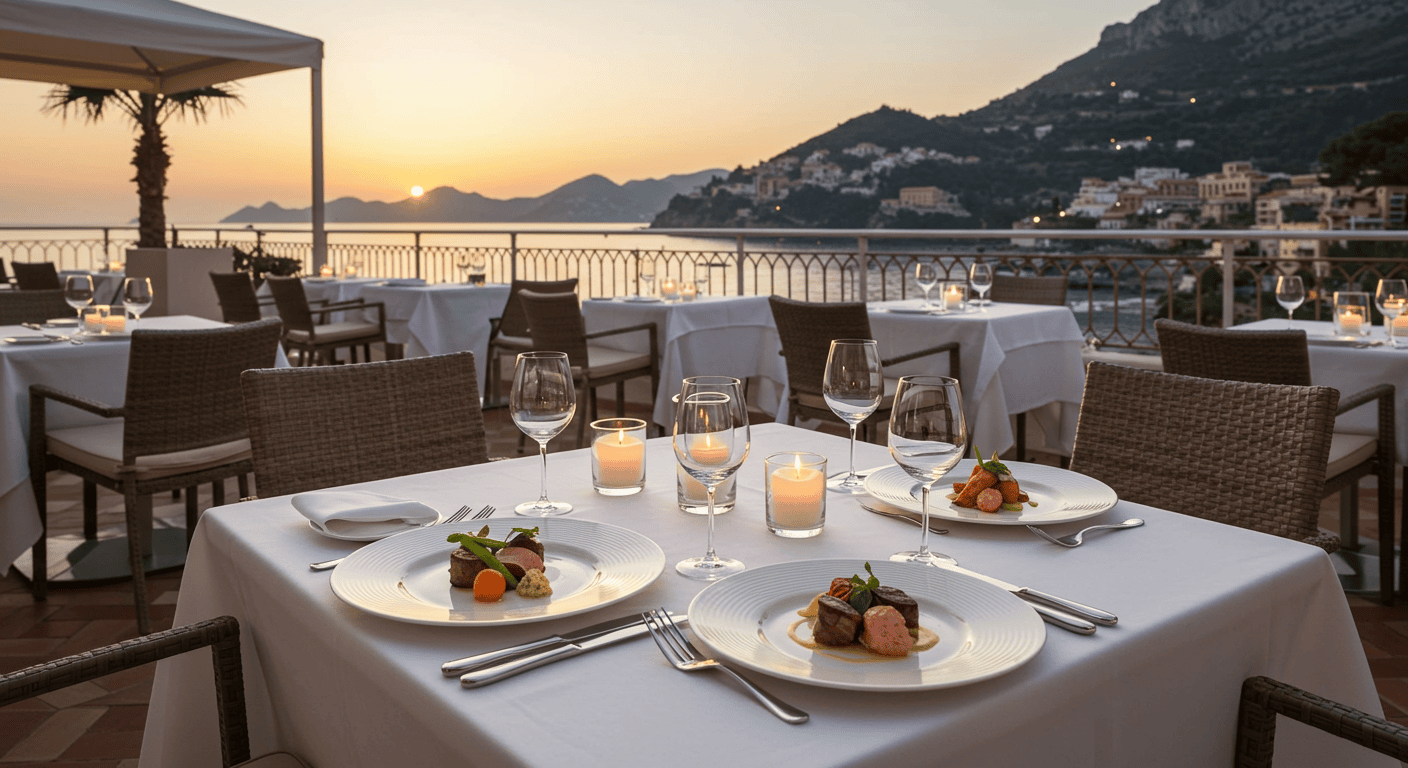
Rethymno does not currently hold a Michelin star, which says rather more about the Guide’s geographic priorities than it does about the quality of food being produced here. What exists instead is a small constellation of restaurants operating at a genuinely high level – places where Cretan ingredients are handled with real technical skill, where the wine list has been assembled by someone who actually knows wine, and where the experience from arrival to the final glass of raki feels considered rather than accidental.
The most ambitious kitchens in town tend to occupy the Venetian quarter, where the architecture lends a natural grandeur to proceedings. Look for menus that reference specific provenance – local goat’s cheese from named producers, snails sourced from nearby villages, octopus from identifiable boats. These are the signals of a kitchen that cares. You will typically find tasting menus available that move through Cretan flavour profiles with some sophistication: a cured fish preparation giving way to slow-braised meat, wild greens dressed in single-estate oil, and desserts built around honey from Mount Ida thyme, which is arguably the finest honey produced anywhere in the Mediterranean. Arguing otherwise is, of course, your prerogative.
Reservations at the better restaurants are essential from June through August. In shoulder season – May, September, early October – you have more flexibility, but calling ahead is still a mark of the organised traveller rather than an admission of defeat.
Tavernas and Local Gems: Where Rethymno Actually Eats
The finest meal you will eat in Rethymno may well cost you twelve euros. This is not a contradiction. The town’s taverna culture is robust, unpretentious, and operated by people who have been feeding families for generations and see no particular reason to change the formula now. These are rooms with paper tablecloths and fluorescent lighting that somehow never seem to matter, where the waiter brings things you didn’t order because he has decided you need them, and where being a regular appears to be a status achieved somewhere around the third visit.
Seek out family-run places in the back streets of the old town, away from the harbour-front promenade where the menus are laminated and the prices reflect the view rather than the cooking. A good Cretan taverna will typically have a daily specials board – or more likely, someone will simply tell you what came in this morning and what’s been cooking since dawn. Order accordingly. The slow-cooked dishes, the stewed legumes, the braised meats – these are the things that have had the most thought applied to them. The grilled fish is excellent, but the stifado, the lamb with stamnagathi, the chickpea soup with lemon – these are the dishes that explain why people come back to Crete year after year and make slightly embarrassing declarations about it on social media.
Beach Clubs and Casual Dining by the Water
Rethymno’s coastline stretches eastward from the town in a long sandy arc, and where there is beach in Crete there are beach clubs – though the Cretan version tends toward the relaxed rather than the performative. You are not in Mykonos. Nobody is arriving by helicopter. The general atmosphere is one of families, well-dressed couples, and the occasional yacht crew who have wandered in from the marina looking for lunch and stayed until sundown, which is entirely reasonable behaviour.
The better beach clubs serve food that goes considerably beyond the obligatory club sandwich: grilled calamari dressed with wild capers, fresh catch prepared simply with lemon and oil, mezze platters assembled with care. Sunbeds are bookable, the service is unhurried in a way that is either deeply relaxing or mildly maddening depending on your disposition, and the sea is the shade of blue that makes people take photographs they will never adequately explain to anyone who wasn’t there. The food, in the best establishments, is genuinely worth ordering rather than merely convenient.
Hidden Gems and Local Neighbourhood Finds
The Venetian old town is compact enough to walk thoroughly in an hour, but dense enough that you will miss things on every visit. The hidden gems of Rethymno’s food scene tend to occupy exactly the streets that don’t appear prominently in guides: a narrow lane off the main market street where a woman has been making cheese pies since before anyone thought to photograph them; a small kafeneion in a square tucked behind the Rimondi Fountain where the local men drink coffee and regard tourists with the polite neutrality of people who have seen many seasons pass; a wine bar that opens at seven and closes when it feels like it, which may be eleven or may be considerably later.
One reliable strategy is to follow the local population at mealtimes. If a restaurant is full of people who live here, it is almost certainly good. If it is full exclusively of people in cargo shorts consulting paper maps, you may wish to adjust your approach. This is not snobbery. It is simply pattern recognition applied to lunch.
Food Markets and Local Produce
The municipal market in Rethymno is one of the more pleasurable ways to understand what you are eating each evening. Stalls are arranged according to an internal logic that makes sense once you have visited a few times, and the produce is as good as anything you will find in a comparable Mediterranean market town. The olive oil selection alone justifies the visit – Crete produces over a third of Greece’s olive oil, and the quality differential between a supermarket bottle and what you buy directly from a producer at the market is not subtle.
Look for: local thyme honey (the real thing, from mountain hives, not the blended version sold in airport gift shops); aged graviera cheese, which has a nutty depth that makes parmesan feel slightly understated; dried herbs gathered from the hills; and fresh legumes that will make you wonder why you ever bought the tinned version. The market is busiest on Saturday mornings. It is also at its most chaotic on Saturday mornings. This is part of its character.
What to Order: Essential Dishes of Rethymno
Consider this a shortlist rather than an exhaustive survey. Dakos: the Cretan rusk dish, topped with tomato, mizithra cheese, oil, and whatever else the kitchen decides is appropriate. Deceptively simple. Frequently excellent. Snails with rosemary and vinegar, a dish that has been on Cretan tables since antiquity and which deserves your attention even if your instinct is to look away. Lamb slow-cooked in a clay pot – antikristo or kleftiko depending on the method – with the kind of depth of flavour that comes only from patience and good animals. Fresh seafood, ideally whatever arrived this morning, dressed in nothing more interventionist than lemon and oil. And at the end of every meal, raki – the Cretan firewater, served in small glasses, often without being asked, and often refilled before you’ve decided how you feel about the first one.
Wine and Local Drinks
Cretan wine has undergone a quiet revolution over the past two decades, and the island now produces bottles of genuine distinction from indigenous varieties that barely register outside Greece. Vidiano, a white grape variety native to Crete, produces wines of real complexity – floral, mineral, with good acidity – that pair exceptionally well with local fish and vegetable dishes. Kotsifali and Mandilari, the primary red varieties, produce wines ranging from earthy and food-friendly to something approaching genuine power when properly managed.
The better restaurants in Rethymno carry lists that showcase these varieties with appropriate pride, and a good sommelier or knowledgeable waiter will guide you through the options with enthusiasm. Ask specifically for Cretan wines rather than allowing yourself to be defaulted toward more familiar Greek labels. The local product is better for the local food, and it supports producers who are doing genuinely interesting work.
Beyond wine: tsikoudia (the local name for raki) is the mandatory aperitif and digestif, a spirit of significant potency and no apology. Local beer is fine if unremarkable. The mountain herb teas – sage, dittany of Crete, chamomile – are worth exploring at breakfast or as an evening wind-down. And the coffee, served Greek-style in small cups with the grounds still present at the bottom, is the correct fuel for a morning spent negotiating the old town.
Reservation Tips and When to Visit for the Best Dining
Peak season in Rethymno runs from late June to early September, and during this period the better restaurants fill quickly. For anywhere with a reputation – and word travels fast in a town this size – a reservation two to three days in advance is sensible. For the most sought-after tables, particularly in July and August, call a week ahead. Most establishments now accept email or social media bookings, but a phone call, even in imperfect Greek, is generally received with warmth and often with more reliable confirmation.
The ideal time to eat well and eat freely in Rethymno is May, June, or September. The kitchens are running at full capacity, the produce is excellent, and the population of people photographing their food for external validation is meaningfully lower. October extends this window further – some restaurants begin closing for the season, but those that remain open tend to be the ones worth visiting, and the atmosphere shifts toward something quieter and considerably more local.
Lunch reservations are rarely necessary except at the most formal establishments. The afternoon meal in Rethymno is generally a more spontaneous affair, and turning up and trusting to the availability of a good taverna requires only modest optimism and a willingness to walk an extra hundred metres from the obvious.
The Villa Option: Eating at Your Best
All of the above assumes you are going out. But Rethymno is also a destination where the alternative – staying in and eating extraordinarily well – is a genuinely competitive option. A luxury villa in Rethymno with a private chef service transforms the equation entirely: a Cretan cook who knows the market, the producers, and the seasonal logic of the island’s larder, preparing food in your own kitchen and serving it at your own table with a view that no restaurant can match. The market run becomes part of the experience. The meal becomes a conversation about the food as much as a consumption of it. It is, in the quietly competitive world of excellent holidays, rather hard to beat.
For everything else you need to plan your time in this part of Crete – where to stay, what to see, how to move between the old town and the coast – the full Rethymno Travel Guide covers the ground thoroughly.


