Best Beaches in French Riviera: Hidden Coves, Beach Clubs & Coastal Secrets
Here is what first-time visitors always get wrong about the French Riviera: they assume the beach is the point. They arrive in Nice or Cannes with a towel and high expectations, head straight for the famous seafront, and spend the first afternoon lying on grey pebbles wondering whether they’ve made a terrible mistake. (They haven’t. But they’ve made a navigational one.) The Côte d’Azur’s best beaches are almost never the ones you can see from the road. They require a little local knowledge, occasional willingness to walk, and – crucially – an understanding that this stretch of Mediterranean coastline is not one thing. It is headlands and hidden coves, private beach clubs and wild creek inlets, family-friendly shallows and serious windsurfing breaks. The best beaches in the French Riviera reward those who bother to look past the postcard.
What follows is a guide written for the traveller who already knows what a sunlounger looks like and is more interested in which one to choose, and why, and what to do with the rest of the day. We’ve covered character, water quality, access, families, seclusion, and where to eat afterwards – because on the Riviera, that final question is never an afterthought.
Pampelonne Beach, Saint-Tropez – Best for Beach Club Culture
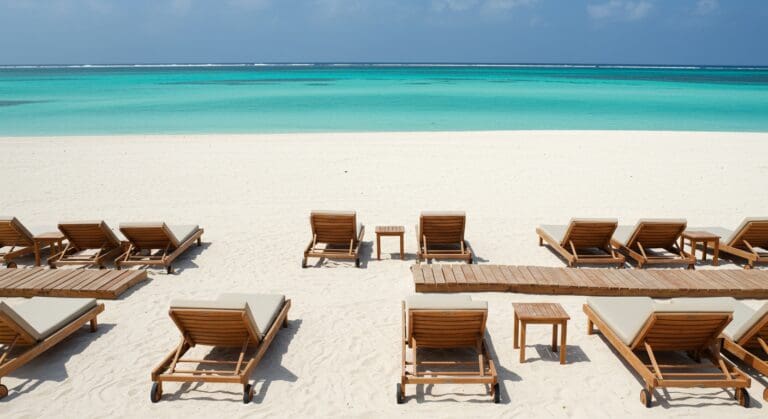
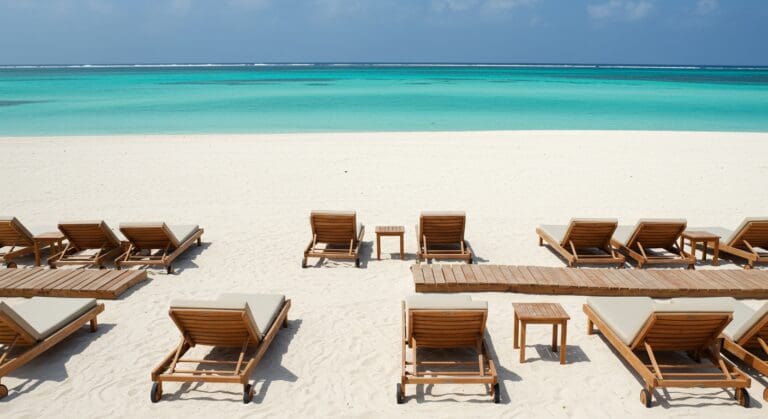
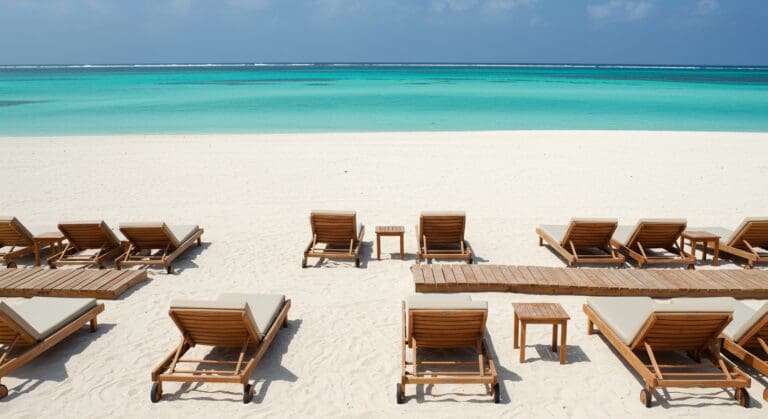
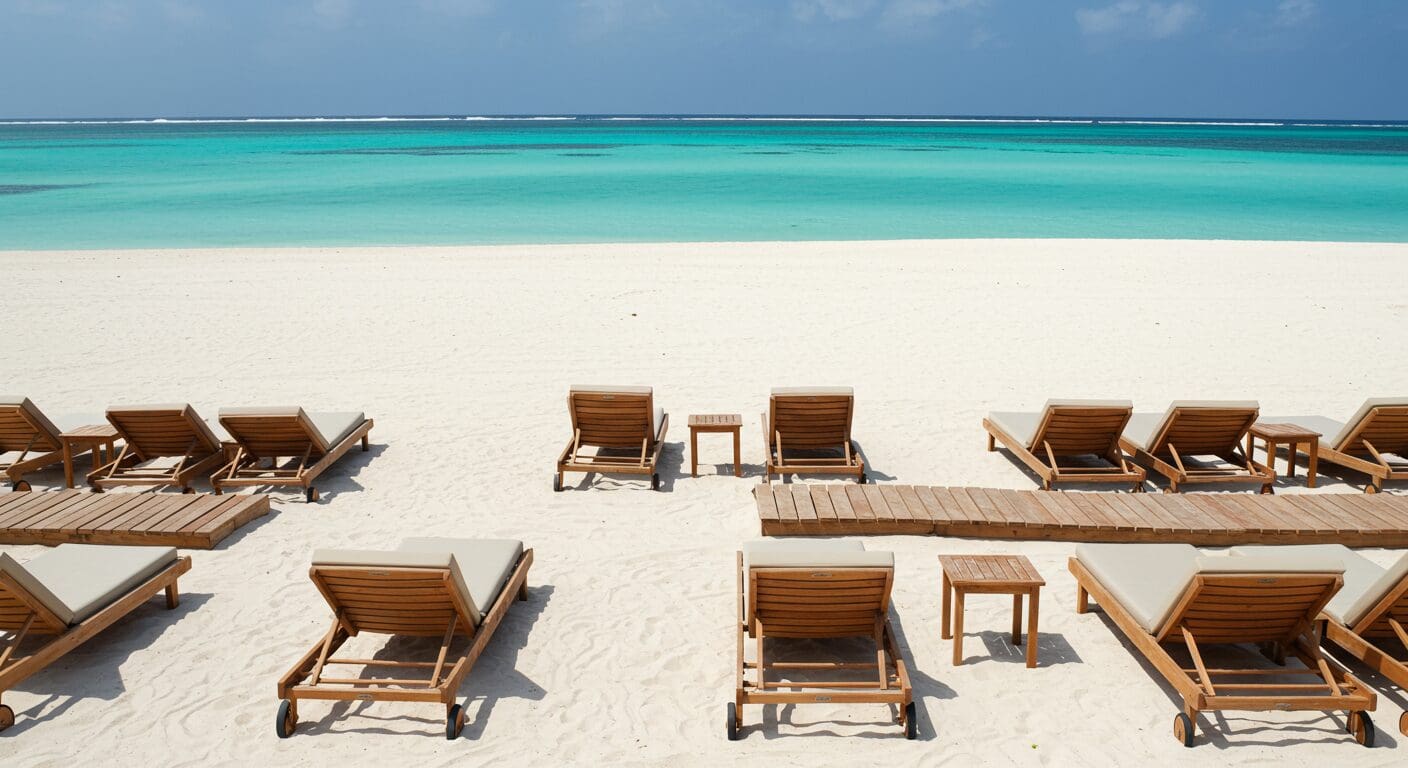
Pampelonne is the beach that made beach clubs what they are. Stretching for nearly five kilometres along the Ramatuelle peninsula south of Saint-Tropez, it is divided into a long, sandy arc occupied by a rotating cast of restaurants, bars, and private concessions, each with its own identity, clientele, and willingness to charge you thirty euros for a cocktail without blinking. The sand here is the real thing – fine, pale, and soft underfoot – which already puts Pampelonne in a different category from much of the Riviera’s pebbly competition.
For families, the southern end is calmer and less scene-driven. For those who have come specifically for the atmosphere – the tanned crowds, the rosé at noon, the feeling that someone within fifty metres is definitely on a yacht – the private beach clubs along the central stretch deliver exactly what the reputation promises. Water quality is excellent throughout: the Mediterranean here is clear and warm from June through September, with minimal current. Facilities at the clubs are comprehensive – sunloungers, waiter service, freshwater showers, lockers – though you will pay for the privilege. Access from Saint-Tropez is best by boat or bicycle; attempting to drive in July and August is an act of extraordinary optimism.
The other thing Pampelonne has, which first-timers rarely expect, is genuinely good food. La Vague d’Or – the three-Michelin-star restaurant inside the Résidence de la Pinède – is not on the beach itself, but it is the beating gastronomic heart of Saint-Tropez and worth every penny of advance planning. Chef Arnaud Donckele’s cooking has been described as “a journey through the sun-drenched soul of Provence elevated to an art form,” which is the sort of thing that sounds like hyperbole until you’re halfway through his sauces and you understand that it isn’t. Book well ahead. Then book again.
Calanque de Sugiton, Near Marseille – Most Secluded
Technically on the western edge of the Riviera’s sphere of influence, Sugiton is included here because it represents something the rest of the coastline increasingly struggles to offer: genuine wildness. Part of the Calanques National Park, this narrow inlet of turquoise water framed by white limestone cliffs requires a forty-five-minute hike from the Luminy campus car park – which means, blessedly, that the crowds thin considerably once you leave the trailhead. In high summer, access is sometimes restricted to protect the ecosystem. This is mildly inconvenient and entirely reasonable.
There are no facilities. There is no waiter service. There is no rosé unless you’ve carried it yourself. What there is, however, is water of extraordinary clarity – deep blue-green over rock, the sort of colour that makes you instinctively reach for your phone and then remember that no photograph will do it justice. Strong swimmers will find the rocky ledges ideal for jumping; families with small children may find the entry points a little technical. This is a beach for those who want to feel they’ve actually discovered something rather than been herded towards it. Parking is limited and fills early – arrive before 9am in summer or take the bus from Marseille.
Plage de Paloma, Saint-Jean-Cap-Ferrat – Best for Families
Cap Ferrat is a peninsula of such concentrated beauty and discreet wealth that it barely needs to advertise itself. Paloma, on the eastern side of the cap, is the kind of beach that restores one’s faith in the Riviera’s ability to be genuinely lovely without making a song and dance about it. The water is sheltered, calm, and clean – ideal for children and nervous swimmers alike. The seabed descends gradually from the shoreline, and the surrounding rocks provide natural shade in the afternoon.
There is a beach restaurant at Paloma which is, by Riviera standards, refreshingly unfussy – good fish, decent wine, tables under a vine-covered terrace. The beach itself is a mix of public and private sections; arrive early to secure a good spot on the free section, or book with the restaurant for sunlounger access. Parking is genuinely limited on Cap Ferrat (the peninsula is essentially one long village road with ideas above its station), so walking from the Saint-Jean-Cap-Ferrat village centre is advisable. The stroll through the gardens of the villa-lined lanes is, if anything, half the pleasure.
Plage de la Garoupe, Antibes – Best Water Quality
La Garoupe sits on the eastern side of the Cap d’Antibes peninsula, facing away from the main harbour, and it has two things going for it above almost anywhere else on the Riviera: exceptionally clean water and a sense of proportion. It is not trying to be Pampelonne. It is not trying to be Monaco’s private pool. It is simply a very good beach with very clear sea, a sandy-and-pebble mix underfoot, and a pleasant, unpretentious beach club that has been feeding people well for decades.
Water quality at La Garoupe is consistently rated among the highest on the coast – it benefits from the cap’s position and the relative absence of boat traffic in the bay. Snorkelling off the rocks at the northern end reveals genuine marine life: sea urchins, small fish, octopus if you’re lucky and patient. For water sports, the conditions are reliable without being extreme – paddleboarding and kayaking are popular, and rental is available through the beach clubs. Families find it excellent; the shallower central section is forgiving for young swimmers. It is, in the best possible way, a beach that doesn’t need an Instagram strategy.
Plage de Mala, Cap d’Ail – Best Hidden Cove
If the French Riviera has a best-kept secret still functioning as such in the age of geotags, Plage de Mala has a reasonable claim to the title. Reached via a steep path cut into the cliff between Monaco and Èze-sur-Mer, Mala sits in a deep cove of brilliant blue water, flanked by sheer rock faces that provide natural shelter and shade the beach completely by late afternoon. The walk down – perhaps fifteen minutes but with steps that require attention – is enough of a deterrent to keep numbers manageable. The walk back up is character-building.
There is a small beach restaurant at Mala that serves, improbably, excellent food – the sort of place where you order simply and eat well, which is a very French achievement. The water is deep and clear very close to shore, making it better suited to confident swimmers than toddlers. Pebbles rather than sand, as is common in this part of the Riviera, but smooth and manageable. No meaningful parking – access is genuinely on foot from the Cap d’Ail train station or the coastal path from Monaco. The effort is entirely worth it.
For the pinnacle of dining in this corner of the coast, Mirazur in nearby Menton – chef Mauro Colagreco’s three-Michelin-star, world-number-one restaurant – is close enough to incorporate into a day or evening. Colagreco’s cooking draws on his Italian-Argentinian heritage and the produce he grows in his own garden, resulting in plates that feel both wildly inventive and deeply rooted in place. Guests describe the service as “welcoming and attentive without hovering” – a precise and deeply civilised balance. Book months ahead. This is not a suggestion.
Larvotto Beach, Monaco – Best for Atmosphere with Urban Edge
Monaco’s only public beach is, like Monaco itself, an exercise in small-country maximalism. Larvotto is not large. It is not especially wild or remote. What it is, however, is impeccably maintained, consistently excellent in terms of water quality (Monaco has invested significantly in water management), and surrounded by the kind of backdrop – the palace rock, the yachts, the Grimaldi crests appearing on benches at unexpected moments – that makes you feel faintly that you are in a film rather than a real place. You are, in a sense. Monaco is always slightly theatrical.
The beach divides into public and private sections; the private beach clubs here are well-organised with excellent facilities, and the public section is clean and accessible. It is not the place for solitude – but then anyone seeking solitude in Monaco has perhaps misjudged the assignment. For families, the shallow artificial bay is safe and calm. The proximity to Monte Carlo’s restaurants, shops, and the Casino makes Larvotto ideal as part of a full day that moves seamlessly from sea to city. For the full Monaco experience – and specifically the full version of a meal that justifies its own legend – Le Louis XV at the Hôtel de Paris serves Mediterranean haute cuisine under chandeliers, with pitch-perfect service and a wine list of frankly unfair depth. It was the first hotel restaurant in the world to earn three Michelin stars. That is still, decades later, an extraordinary thing.
Plage du Midi, Cannes – Best for a Long, Low-Key Day
While everyone rushes to the private beach clubs along the Boulevard de la Croisette, Plage du Midi – on the western side of the Vieux Port – earns quiet devotion from those who’ve learned to look the other way. It is a long, wide, free public beach with sand (actual sand, not pebbles), calm water, and a much more local crowd. Cannes residents come here. That is, in itself, a recommendation worth noting.
Facilities are functional rather than luxurious – public showers, some rental equipment, a scattering of snack operations – but the trade-off is space, ease of access, and the pleasant sensation of not being charged for the privilege of looking at the sea. For those who want a beach club option on this side of the port, there are some lower-key concessions that offer sunloungers at more reasonable rates than the Croisette giants. Water quality is good; conditions are generally calm. Parking exists but competes with resident permit zones – the train station is nearby and the walk is ten minutes. A good beach for the kind of traveller who has decided they’re not going to be herded.
After the Beach: Where to Eat on the French Riviera
The French Riviera’s restaurant scene is, for a relatively compact stretch of coastline, almost absurdly well-stocked with serious cooking. We’ve touched on Mirazur in Menton, La Vague d’Or in Saint-Tropez, and Le Louis XV in Monte Carlo – three three-Michelin-star restaurants within an hour of each other, which is either a remarkable coincidence or a very strong argument for the Riviera as a gastronomic destination in its own right rather than simply a beautiful backdrop for sun exposure. In each case, advance booking is essential. “I’ll see if they have a table” is not a strategy that will serve you well.
Beyond the Michelin firmament, every village along the coast has its own good brasserie, its fish counter, its terraced pizzeria that turns out to be excellent. Part of the Riviera’s particular charm is that exceptional eating is not confined to restaurants with dress codes. The key is to ask locally – whoever manages your villa will know, and their knowledge will be worth more than any aggregated review.
Planning Your Riviera Beach Days: Practical Notes
A few things that will make your time on the coast considerably smoother. Mornings belong to those who arrive early – the best spots on public beaches, the best light for swimming, the parking spaces that still exist. By eleven on a July or August morning, the calculation changes significantly. Private beach clubs solve the logistics but require advance booking at the better establishments; a sunlounger at a reputable Pampelonne club in peak season is not something you wander up and claim.
Water quality along the Riviera is generally very good, particularly away from the larger harbours. The EU Blue Flag programme certifies beaches that meet strict standards; many Riviera beaches hold the flag and the designation is worth checking when planning. Jellyfish appear intermittently in late summer – this is a Mediterranean fact of life rather than a Riviera failing specifically, though it may influence your enthusiasm for snorkelling in August.
The pebble-versus-sand question matters more than visitors expect. Much of the Côte d’Azur shoreline is pebbly – Villefranche-sur-Mer, Mala, Èze-bord-de-Mer, and many others fall into this category. Sandy beaches do exist (Pampelonne, Plage du Midi, parts of Nice’s beach clubs) but are less common east of Cannes. Pebble beaches are, if anything, cleaner – but they require shoes to walk on and make building a sandcastle a philosophical exercise rather than a practical one.
For exploring the coast freely – reaching the hidden coves, arriving early, stopping when you feel like it rather than when the bus schedule permits – staying in a luxury villa in French Riviera puts the best beaches within easy reach and removes the daily scramble entirely. A private pool to return to after a day in the sea is not an extravagance. It is, on reflection, simply good planning.
For a broader look at what this extraordinary stretch of coastline offers beyond the water, our French Riviera Travel Guide covers everything from the hill villages to the markets, the day trips to the events calendar that makes the region tick.