
Best Restaurants in Phuket: Fine Dining, Local Gems & Where to Eat
There are places in the world that do seafood brilliantly, and places that do sunsets brilliantly, and places that do five-star hospitality brilliantly. Phuket, with characteristic Thai overachievement, does all three simultaneously and then adds a Michelin-starred tasting menu on top. What nowhere else quite manages is this specific alchemy: the collision of serious culinary ambition with an island that genuinely doesn’t take itself too seriously. You can eat a seven-course fire-cooked tasting menu one evening and follow it the next morning with a paper bag of roti and condensed milk from a roadside cart, and both will be, in their own way, perfect. The best restaurants in Phuket span fine dining, local gems, and everything in between – and knowing where to find them is the difference between eating well and eating exceptionally well.
Phuket’s Fine Dining Scene: Michelin Stars and Serious Ambition
Phuket has arrived, formally and with considerable fanfare, on the global fine dining map. The island now hosts multiple Michelin Guide Thailand-listed restaurants, one full Michelin Star, and a Green Star for sustainable cuisine that would make Copenhagen sit up and pay attention. This is not a scene that appeared overnight. It is the result of chefs who chose Phuket not because it was easy, but because the produce – the sea urchin, the mangrove crab, the aromatics growing in the hills behind Thalang – gave them something worth cooking with.
PRU at Trisara Resort is where the conversation about fine dining in Phuket invariably begins, and with good reason. It holds the island’s first and only Michelin Star, and if you’ve ever wondered what the letters P-R-U stand for, the answer is Plant, Raise, Understand – which tells you almost everything about the philosophy before the bread course has arrived. Set within the grounds of the award-winning Trisara resort on the island’s west coast, PRU is built around sustainability with a rigour that goes well beyond putting “local ingredients” on the menu. The kitchen cultivates relationships with regional farmers, raises its own produce, and constructs a menu that reflects the particular moment in which you are sitting down to eat. The result is food that tastes of somewhere rather than anywhere. Book well in advance. This one fills up.
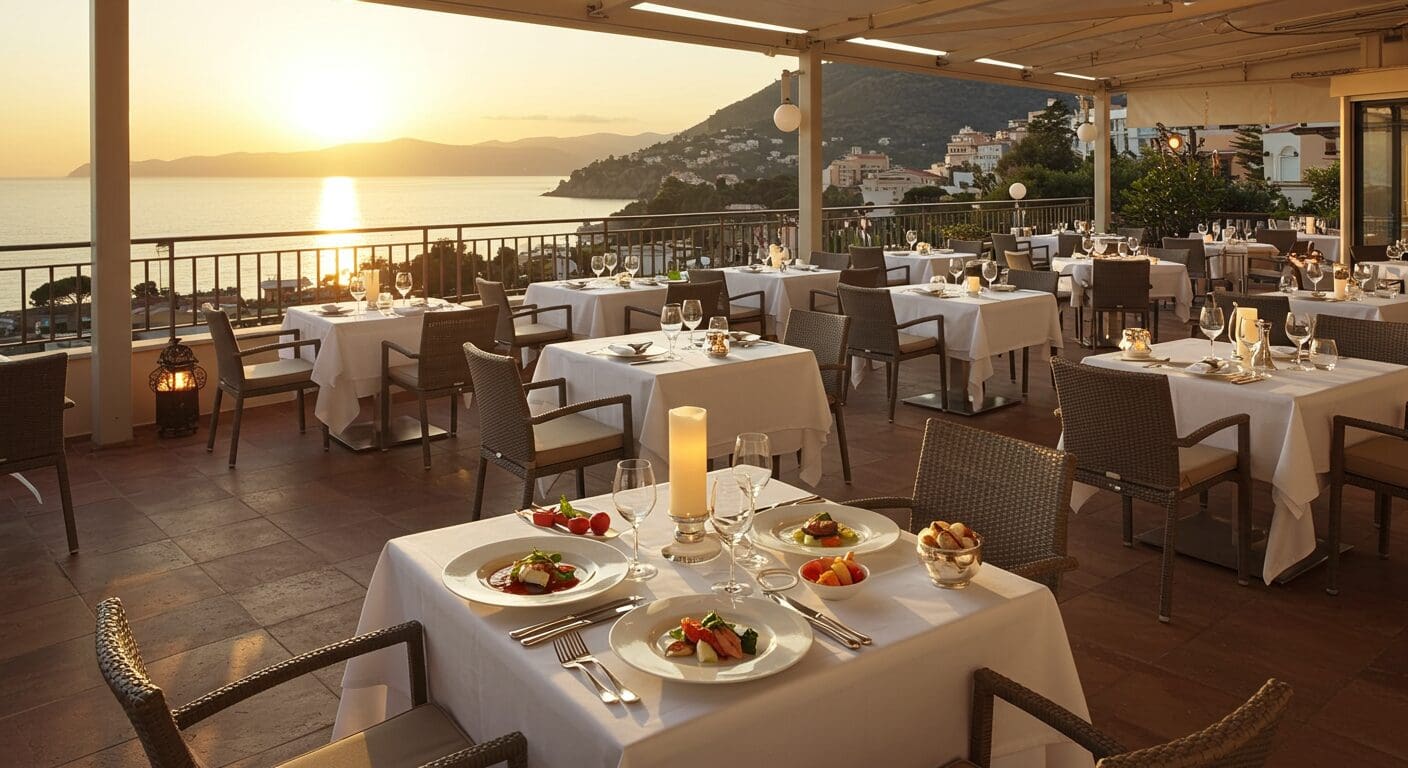
For something with a different register – French technique, Andaman views, a cliffside setting above Kalim Beach that makes it genuinely difficult to concentrate on the menu – L’Arôme by the Sea offers contemporary French fine dining at the kind of address that architects write to restaurants about, not the other way around. Listed in the Michelin Guide Thailand, L’Arôme earns its reputation through cooking that meets the view on its own terms. The panoramas of the Andaman Sea stretching out below the terrace are the kind that arrive in your memory several years later without warning. The cuisine is refined, the wine list considered, and the service carries the confident ease of a team that knows exactly what they’re doing. Arrive for sunset if you can arrange it.
JAMPA occupies a different corner of the fine dining landscape and is, frankly, one of the more exciting restaurants operating anywhere in Southeast Asia right now. Chef Rick Dingen’s kitchen is built around live-fire cooking and zero-waste principles – not as marketing language but as genuine operational philosophy. JAMPA holds a Michelin Green Star, which recognises restaurants at the forefront of sustainable gastronomy, and it earns that distinction with a seriousness that never tips into preachiness. The 4-course lunch experience and 7-course dinner experience both showcase locally-grown ingredients cooked over an open flame, which does things to texture and flavour that conventional kitchens simply cannot replicate. The smoke, the char, the precision – it is a style of cooking that rewards attention.
Nitan – the Thai word for “determination” – makes good on the promise of its name. This Michelin Guide-recommended restaurant constructs its seasonal menu around produce from its own farm in Surat Thani and seafood sourced from local Phuket suppliers, and the resulting dishes are a genuine celebration of the flavours of southern Thailand approached with fine dining precision. The commitment to provenance here is not performative. It shapes every plate that leaves the kitchen, and the menu changes to reflect what is actually growing and swimming rather than what is commercially convenient.
Then there is Tambu, which arrived in 2024 with the kind of momentum that restaurants spend decades trying to build. Inspired by the palatial tents of the Mughal Emperors – which, it turns out, is an architectural brief that translates remarkably well to a Phuket rooftop – Tambu holds a place in the Michelin Guide 2025, ranked sixth among the Top 25 Restaurants in Phuket, and earned the title of Asia’s Best New Restaurant in 2024. It also features in Thailand’s Favourite Restaurant list for 2025. The setting is theatrical without being absurd. The cooking matches the ambition of the room. It is the sort of restaurant that makes you wonder, pleasantly, how it all ended up here on this island in the Andaman Sea.
Local Gems: Where Phuket Actually Eats
The fine dining credentials are real and worth celebrating. But any honest guide to where to eat in Phuket has to account for the fact that some of the most compelling food on the island is consumed at plastic tables under fluorescent lighting, possibly next to a moped. Southern Thai cuisine is a distinct culinary tradition – spicier and more complex than the central Thai dishes that tend to dominate overseas Thai restaurants, heavily influenced by Malay and Indian flavours, built around fresh turmeric, galangal, shrimp paste, and coconut milk in ways that reward curiosity.
Look for kaeng tai pla, a deeply savoury curry made with fermented fish innards that is not for the cautious diner but is essential for understanding what Phuket actually tastes like. Moo hong – slow-braised pork belly in a soy-based sauce with a sweetness that creeps up on you – is the kind of dish that ends arguments about whether street food counts as serious cuisine. Hokkien noodles, a legacy of the island’s significant Sino-Portuguese history, appear in various forms across Phuket Town and are worth eating as both food and history lesson. The Old Town itself, with its colourful shophouses and peeling colonial facades, is the right neighbourhood for this kind of exploration. Wander, follow your nose, and resist the temptation to photograph everything before you’ve actually eaten it.
For those who prefer their local dining with slightly more structure, Phuket Town’s restaurant scene has matured considerably in recent years, offering a range of independently run restaurants where chefs are doing genuinely interesting things with local produce in settings that don’t require a dress code.
Beach Clubs and Casual Dining: Where the Day Dissolves
Phuket’s beach club scene has reached a level of sophistication that would once have seemed implausible for an island that spent most of the nineties being recommended purely for its cheapness. Café del Mar Phuket at Kamala Beach is the standard-bearer, and it has the credentials to back up the confidence. The Ibiza-born global brand has made Kamala Beach genuinely its own – this venue ranked 45th in DJ Mag’s Top 100 Clubs worldwide in 2025, having jumped twenty-five places in a single year, which is not the trajectory of somewhere coasting on its reputation.
By day, Café del Mar Phuket is a Mediterranean poolside experience with excellent food, sunbeds arranged with the kind of precision that suggests someone cares, and the sort of Andaman Sea sunset that makes you briefly reconsider all your life choices (in a positive direction). After dark, the Pyramid Stage – capacity 3,000 – and the Temple Stage host internationally renowned DJs including Solomun and Peggy Gou, among others. It is, in the truest sense, a full-day venue. Pace yourself accordingly.
Beyond the beach clubs, casual dining in Phuket runs a wide spectrum. Kamala, Surin, and Bang Tao offer quieter beachfront restaurants where grilled whole fish and cold Singha beer remain the correct answer to most questions. These are the places where the afternoon extends into the evening without anyone particularly noticing.
Food Markets: Eating the Island at Ground Level
No stay in Phuket is complete without at least one serious engagement with its food markets. The Sunday Walking Street Market in Phuket Town (Thalang Road) is the most famous, and its fame is not undeserved – the street fills with vendors selling everything from grilled satay to mango sticky rice, pad Thai cooked to order in blackened woks, and fresh coconut ice cream served in the shell. The atmosphere is chaotic and thoroughly enjoyable. Comfortable shoes are advisable. A large appetite is essential.
The Naka Weekend Market near Central Festival is a larger, more local affair that operates on Saturday and Sunday nights and covers considerably more ground – both literally and in terms of what’s available. This is where Phuket residents actually shop and eat, which gives it a different energy from the more tourist-oriented Sunday street market. The food is excellent and the prices are what they should be.
For fresh produce and early morning atmosphere, the Chillva Market and various day markets scattered across the island are worth seeking out – though “early morning” in this context means genuinely early, which is either invigorating or inadvisable depending on what you did the previous night at Café del Mar.
What to Drink: Wine, Cocktails, and the Local Approach
Thailand’s wine scene is a work in progress, but Phuket’s better restaurants import thoughtfully and the sommelier culture at places like PRU, L’Arôme, and Tambu is genuinely developed. If you’re eating at the fine dining level, ask for recommendations rather than defaulting to a safe Burgundy – the staff at these restaurants know their lists and know what the food calls for.
For something local, Singha and Chang beer remain the reliable workhorses of casual dining, perfectly calibrated to the heat and the spice of southern Thai food. Thai rum – Mekhong, specifically – has its advocates, and the craft cocktail scene in Phuket Town and around Laguna has grown considerably. Look for bars using fresh Thai botanicals: lemongrass, kaffir lime, butterfly pea flower, which turns cocktails an improbable shade of blue that is less gimmick and more chemistry once you understand what’s happening.
Fresh fruit shakes, available at virtually every market and from roadside vendors across the island, deserve serious attention. The mango shakes alone are worth a dedicated effort. Cold coconut water, drunk directly from the coconut, remains the most effective thing Phuket offers for a warm afternoon.
Reservation Tips and Practical Advice
PRU books out weeks in advance, particularly during high season (November through April). Reserve before you leave home, not when you arrive. The same applies to L’Arôme by the Sea, where the terrace tables overlooking Kalim Beach are understandably in demand – a window table at sunset is worth planning around.
JAMPA, Nitan, and Tambu are somewhat more accessible but benefit from advance reservations, especially for weekend evenings and for larger groups. Most of Phuket’s better restaurants now accept reservations through their websites or through platforms like Quandoo and OpenTable, and a brief email inquiry never goes amiss. Dress code at the fine dining level is smart casual at minimum – which is not an invitation to see what you can get away with in flip-flops.
For beach clubs, Café del Mar Phuket offers table reservations for its poolside daybeds and restaurant areas, which is strongly advisable during high season and for event nights. Walking in on the off-chance works perfectly well on quieter weekday afternoons. Less so on a Saturday in December.
The broader dining scene – street food, markets, casual restaurants – requires no reservation and no particular planning beyond appetite and an open mind. Some of the best meals on the island arrive without any forethought at all. That is, rather pleasingly, one of the things Phuket does better than almost anywhere else.
The Complete Phuket Dining Experience
What distinguishes the dining scene here is range without compromise. The gap between a Michelin-starred tasting menu at PRU and a bowl of noodles in Phuket Town’s Old Town is enormous in price and setting but surprisingly narrow in the quality of thought behind the cooking. Both, in their own way, are serious about what they’re doing. That tension – between the global ambitions of the fine dining scene and the deeply local character of the street food and markets – is what makes eating in Phuket genuinely interesting rather than simply pleasant.
For travellers staying in a luxury villa in Phuket, the options extend further still. Many of Excellence Luxury Villas’ properties offer private chef arrangements, which means that the produce from the morning market – the fresh prawns, the fragrant herbs, the just-caught fish – can arrive at your table by candlelight without leaving your own pool terrace. It is, as dining experiences go, a fairly compelling argument for staying in.
For everything you need to plan your time on the island beyond the table, the full Phuket Travel Guide covers beaches, activities, neighbourhoods, and the rest of what makes this island worth your time.

