Eixample Food & Wine Guide: Local Cuisine, Markets & Wine Estates
There are cities that feed you, and cities that educate you about food. Then there is Barcelona’s Eixample, which does both simultaneously, usually over a glass of something cold and Catalan at a marble-topped bar while the city hums past the window. What Eixample has that nowhere else quite manages is a particular density of culinary ambition compressed into a walkable grid – a neighbourhood built in straight lines that somehow produces food with none of the predictability that implies. The Modernista architecture gets most of the press. The food deserves rather more of it.
This is a place where haute cuisine and neighbourhood tradition sit in genuine proximity to each other. A three-Michelin-star kitchen might occupy the ground floor of a century-old building, while three streets away an elderly woman is buying salt cod from a stall she has used for forty years. Understanding both is the point of this Eixample food and wine guide, and it is rather a pleasure to assemble.
For more on the neighbourhood itself – its architecture, culture and how to navigate it – the Eixample Travel Guide is a sensible place to start before you read on.
The Regional Cuisine: What Eixample Puts on the Table
Catalan food occupies a position in the Spanish culinary conversation that its practitioners feel is not always fully appreciated by the rest of the peninsula. They may have a point. This is a cuisine with genuine depth – one that predates the fashionable vocabulary of modern gastronomy by several centuries and has been quietly doing things with picada, sofregit and romesco since before most food trends were born.
In Eixample, the regional larder expresses itself with particular confidence. The neighbourhood draws on the produce of Catalonia’s varied geography: fish from the Costa Brava coast, game and mushrooms from the Pyrenean foothills, lamb from the high pastures, vegetables and olive oil from the western plains. Pa amb tomàquet – bread rubbed with ripe tomato and good oil, dressed with nothing else – is the foundation on which everything else is built. It sounds too simple to matter. It always matters.
Catalan cuisine is also one of the few European traditions to use sweet and savoury combinations with genuine sophistication rather than novelty value. Mar i muntanya – literally sea and mountain – brings together rabbit and prawns, or chicken and crayfish, in a single pot with an ease that feels completely natural once you have eaten it. Which, once you have, you will want to do again almost immediately.
Signature Dishes Worth Seeking Out
The canon of Catalan dishes available in Eixample’s restaurants and markets is long enough to occupy several visits. A few stand apart.
Escudella i carn d’olla is the great winter stew – a two-course affair in which the broth is served first as a soup, often with fat pasta shells called galets, and the meat and vegetables follow as a second course. It is the kind of dish that requires an afternoon’s cooking and no great haste in the eating. Botifarra amb mongetes – Catalan sausage with white beans – is the workaday companion: unshowy, deeply savoury, and better than it has any right to be at ten o’clock on a Tuesday morning.
Fideuà, Catalonia’s answer to paella but made with short-cut noodles toasted in the pan before the stock is added, is a dish that rewards proper versions and suffers terribly from inferior ones. In the right kitchen in Eixample, it is one of the finest things you will eat. In the wrong one, it is a beige disappointment. The good news is that Eixample has far more of the former.
Crema catalana – the original, as Catalan cooks are quite prepared to remind you – closes meals with a quiet confidence. The caramelised top, the custard beneath, the faint perfume of orange and cinnamon. The French have their crème brûlée. Catalonia had this first. The rivalry remains cordial on the surface.
The Wine World of Eixample and Catalonia
If Eixample is where Catalonia’s culinary ambition concentrates, the wine that fills its glasses is drawn from one of Spain’s most varied and increasingly celebrated wine landscapes. The Penedès region – a forty-minute drive southwest of Barcelona – is the immediate heartland, producing everything from the world’s most consumed sparkling wine to some of the country’s most interesting still bottles made from local varieties like Xarel-lo, Garnatxa Blanca and Macabeu.
The wine culture in the neighbourhood itself is serious and unsnobbish. Natural wine bars have taken root alongside traditional bodegas; wine shops with genuine depth of knowledge line the Eixample streets; and many of the neighbourhood’s better restaurants carry lists that could occupy a serious drinker for several evenings without repetition. The focus, rightly, leans Catalan – there is little reason to drink Rioja when you are this close to Priorat.
Priorat deserves particular attention. The appellation’s wines – made primarily from old-vine Garnacha and Cariñena grown in vertiginous slate and quartz soils called llicorella – carry a mineral density and concentrated power that has attracted comparison with the great wines of Burgundy and the Rhône. The comparison is not absurd. Priorat is roughly two hours from Eixample, and a visit to the region – driving the dramatic switchback roads, tasting at a small estate, looking out across terraced vineyards that cling to hillsides at angles that make viticulture seem like a form of stubbornness – is among the most rewarding day trips available from the city.
Penedès Cava is the other great wine story. The method used to make Champagne was adopted here with enthusiasm in the nineteenth century, and the best Cavas – gran reserva examples aged for extended periods on their lees – offer remarkable complexity at prices that feel almost impolite by Champagne standards. Serious Cava producers are increasingly making wines that demand to be taken seriously. Most people visiting from abroad are happy to oblige.
Wine Estates Worth the Drive
The wine estates surrounding Barcelona are not yet overwhelmed by tourism, which makes them rather a pleasure to visit. The Penedès, in particular, combines architecture, landscape and world-class wine in a way that feels unhurried – a quality that is becoming harder to find in the world’s more established wine regions.
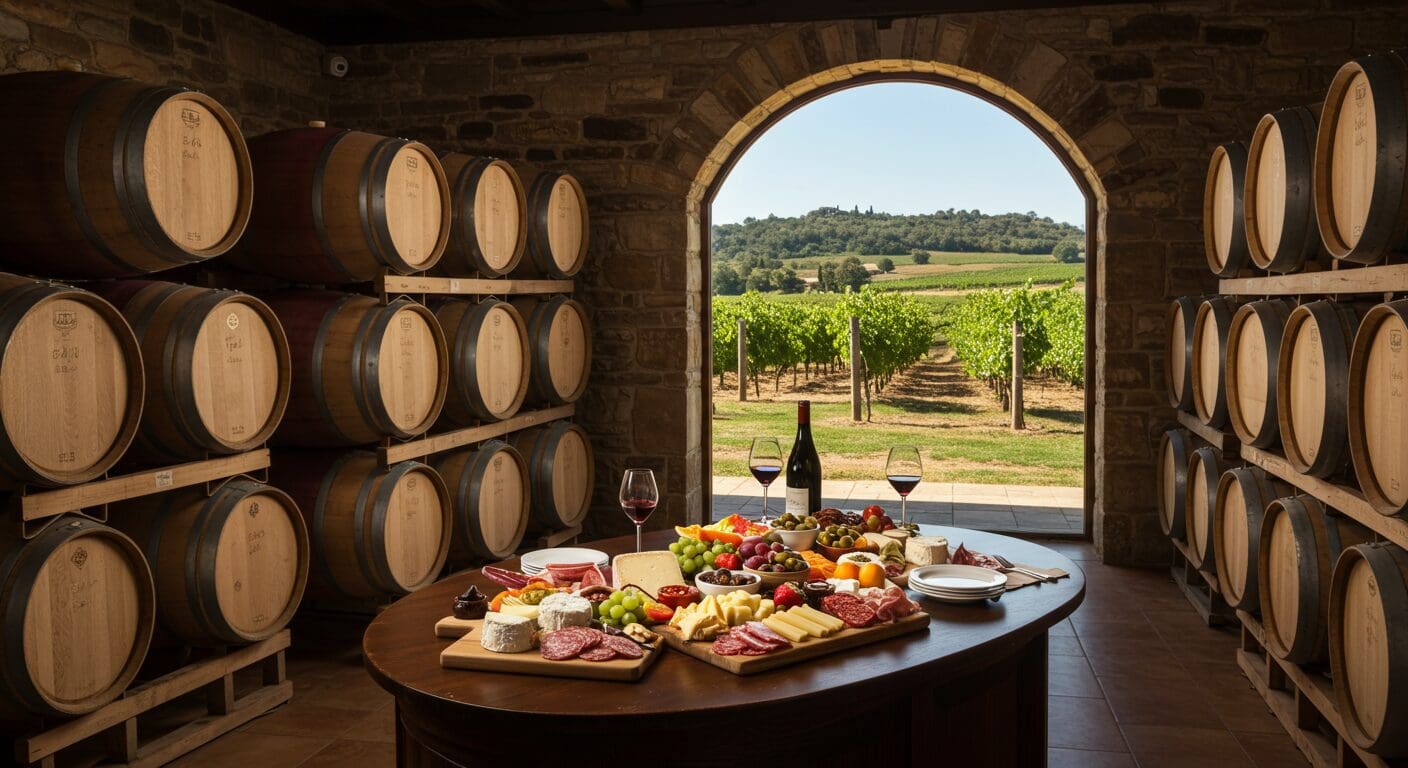
Several estates of the highest calibre offer private visits by appointment: cellar tours led by winemakers rather than guides, barrel tastings not yet listed on any public website, and lunches in the estate’s working buildings that involve neither white tablecloths nor performance. These experiences are best arranged through a concierge or specialist travel contact – the best ones rarely need to advertise. An organic estate in the Alt Penedès can make for a perfect day: vines in the morning, a tasting of reserve bottlings in the cool of the cellar, a long lunch that extends, as long lunches do, into the late afternoon.
Montsant and Priorat offer something more dramatic in terms of landscape – narrow roads that require both nerve and a good sense of direction, villages that appear unchanged in several decades, and wines that are among the most distinctive on the Iberian peninsula. A private tour of a Priorat producer, arranged in advance, often includes access to vineyards that are not typically open to visitors. The slate soils feel different beneath your feet. This is, it turns out, a meaningful part of understanding the wine.
Food Markets: Where Eixample Actually Shops
Barcelona’s Mercat de la Boqueria is famous enough that it has, in parts, become a food market largely attended by people who are looking at food markets rather than buying from them. This is not a criticism. It is simply the natural consequence of being extraordinary and very well photographed.
Eixample’s own markets operate at a different register. The Mercat de l’Abaceria in nearby Gràcia and the Mercat de la Concepció in the heart of Eixample – known locally as “the flower market” though it sells considerably more than flowers – are working neighbourhood markets where the stalls are stocked according to what is in season rather than what photographs well. The Concepció is open every day including Sundays, which makes it quietly essential for anyone staying in the neighbourhood with access to a kitchen.
At the Concepció, the produce speaks for itself: tomatoes in varieties you won’t find in a supermarket, mushrooms from the Pyrenees in autumn, salt cod in its many forms, charcuterie from producers in the Pyrenean valleys, and cheese from across Catalonia. The market also contains a small bar where the coffee is good and the clientele includes exactly the sort of people you want to be eating beside. Go early. Bring a bag. Buy more than you planned to.
Cooking Classes and Culinary Experiences
There is a particular luxury in learning to cook somewhere, rather than merely eating there. Eixample and the wider Barcelona food scene support a range of cooking class formats, from the perfunctory to the genuinely illuminating. For the serious visitor, the distinction matters.
The better experiences in the city typically begin with a market visit – moving through the stalls with a Catalan chef, understanding what to look for in a good pepper or why the salt cod needs three days of soaking – before moving to a proper kitchen to work through a seasonal menu. These sessions, usually private or semi-private for groups staying at a villa, are not performances. The chef cooks alongside you, explains technique rather than theatre, and the result is eaten at a proper table with the appropriate wine. Several operators specialising in high-end culinary tourism in the neighbourhood run exactly this format. The investment is worth making.
For those who prefer a shorter, more focused experience, a private olive oil tasting at a specialist shop or a guided tour of a charcuterie producer on the city’s edge can be equally rewarding and considerably less time-consuming. Both can be arranged through a good concierge. Most things in Eixample can, which is one of the neighbourhood’s considerable virtues.
Olive Oil: Catalonia’s Liquid Gold
Catalonia produces olive oil that receives rather less international attention than it deserves, largely because the Andalusian producers dominate the volume market and, by extension, the conversation. Catalan oils – made primarily from Arbequina olives in the plains of the Lleida region – are gentler and more delicate in character than the robust oils of the south, with a fruity, almost buttery quality that makes them particularly well-suited to raw application: over bread, over grilled fish, in vinaigrettes.
In Eixample, specialist food shops carry a range of Catalan estate oils that are worth exploring. A good shop will carry oils from several different producers, harvest years and olive varieties, and will allow you to taste before you buy – which is the only responsible way to select olive oil and also one of the more pleasant ways to spend twenty minutes in a Tuesday afternoon. The Siurana DO and Les Garrigues DO are the two appellations to look for on labels. Both indicate a product with genuine provenance and character.
Several Catalan olive oil estates also offer visits and tastings. These tend to be in the western part of the region, typically combined with a visit to a winery in the Penedès. The combination makes for a day that covers the essential building blocks of Catalan cuisine in landscape and liquid form.
The Best Food Experiences Money Can Buy in Eixample
Barcelona’s Eixample is one of the most serious restaurant neighbourhoods in Europe, and it does not apologise for this. The concentration of Michelin-starred restaurants per square metre in this particular grid of streets is remarkable – a consequence of the neighbourhood’s affluent residential base, its density of good food culture, and the fact that Spanish chefs of the current generation are producing work as technically adventurous and pleasure-focused as anywhere on the continent.
A reservation at one of the neighbourhood’s flagship tables – the kind that requires planning several weeks in advance and a degree of flexibility about sitting times – is an experience that repays every administrative inconvenience. These are not restaurants designed to impress on paper. They are designed to make you very happy at the table, which is a more useful objective and one the best of them achieve with apparent ease.
Beyond the headline tables, the luxury of Eixample’s food scene lies in experiences that money enables but cannot simply purchase: a private dinner in the private dining room of a serious restaurant, a chef’s table in a working kitchen, a Sunday morning market tour followed by a private cook-and-eat session in a villa with a well-equipped kitchen and enough counter space to actually do something useful. For guests staying in one of the neighbourhood’s private villas, the opportunity to have a private chef cook a market-led Catalan dinner at home is not a compromise on the restaurant experience. In many ways, it is the better version of it.
Wine pairing dinners, curated by a sommelier who knows the local producers personally, are available through specialist operators and represent some of the most rewarding evenings you will have in the city. Four courses of serious Catalan cooking against a progression from fresh Cava through an aged Penedès white to a Priorat of proper weight – this is a sensible use of an evening. The bill will reflect the quality. So will the memory.
If you are ready to make Eixample your base for this kind of eating, explore our luxury villas in Eixample – properties selected for their kitchens as much as their terraces, and for their position within walking distance of everything described above.